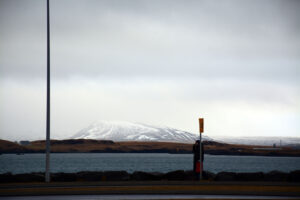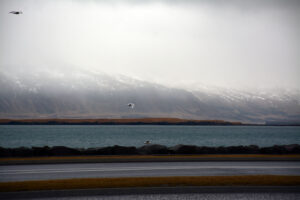
Reykjanesskagi: Mountains

Into another world.

“If we go by the book, like Lieutenant Saavik, hours could seem like days.”

Spock understood the peculiar consequences of time dilatation. And why wouldn’t he? This is the same guy who could calculate the coefficient of elapsed time in relation to an acceleration curve while accounting for the variable mass of whales and water in a time reentry program. Granted, some of the parameters were programmed from memory: the availability of nuclear fuel components; the mass of a 23rd century Klingon bird of prey vessel through a time continuum; and the probable location of humpback whales on Earth—but even he had to make a best guess at some of the values when it came down to it. Yet I, like Kirk, would tend to place more confidence in Spock’s best guesses than in some other people’s facts, a confidence formed long before Spock returned from the dead.

Today it will be four years since I visited the mountains in Iceland, but it’s only been a couple of months since I headed toward them from this narrative’s perspective. Time is strange: a peculiar consequence of motion. Yet sometimes it feels exceedingly like it’s going nowhere. I’ve been trying to finish this post for weeks now, each time slowing to a halt after only a few sentences, after only a few moments. There’s no movement—I find myself blocked in a place of infinite time.

It’s incredible the difference a little direct sunlight can make. Without it there are no shadows. Contrast fades and colours recede, as if everything is being lit by a single, dismal bulb screwed into an imaginary ceiling that’s both everywhere and nowhere. What’s doubly funny about noticing how grey and monotonous the light was in Reykjavík is knowing now what was waiting for me in Berlin—but I’m not there yet. Instead, I’m in a parking lot noticing the changing light as I get into a rental car.

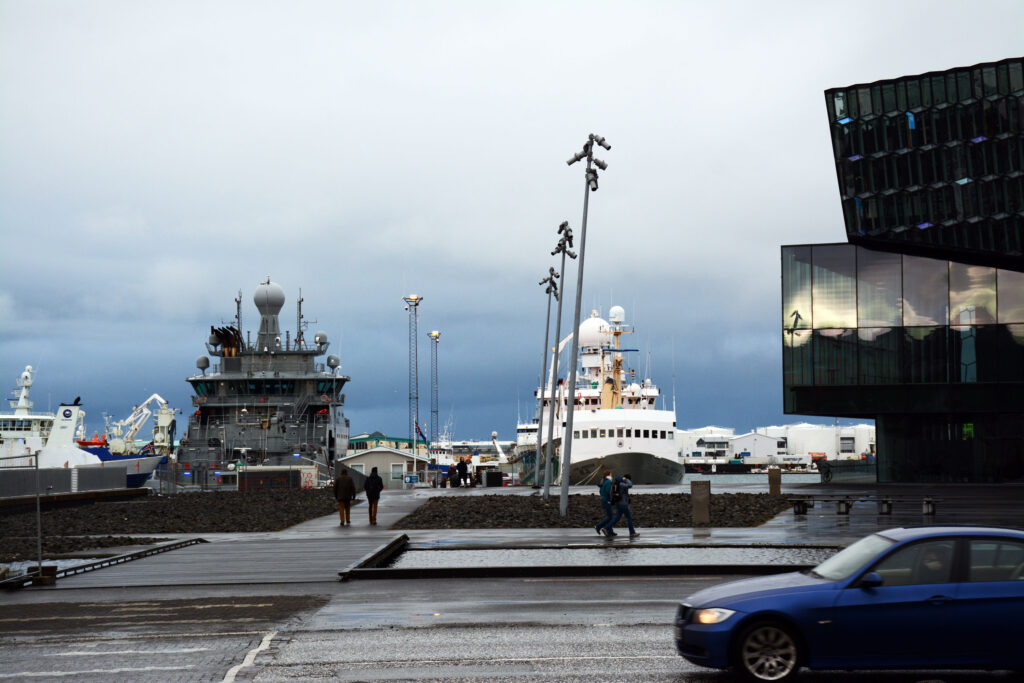
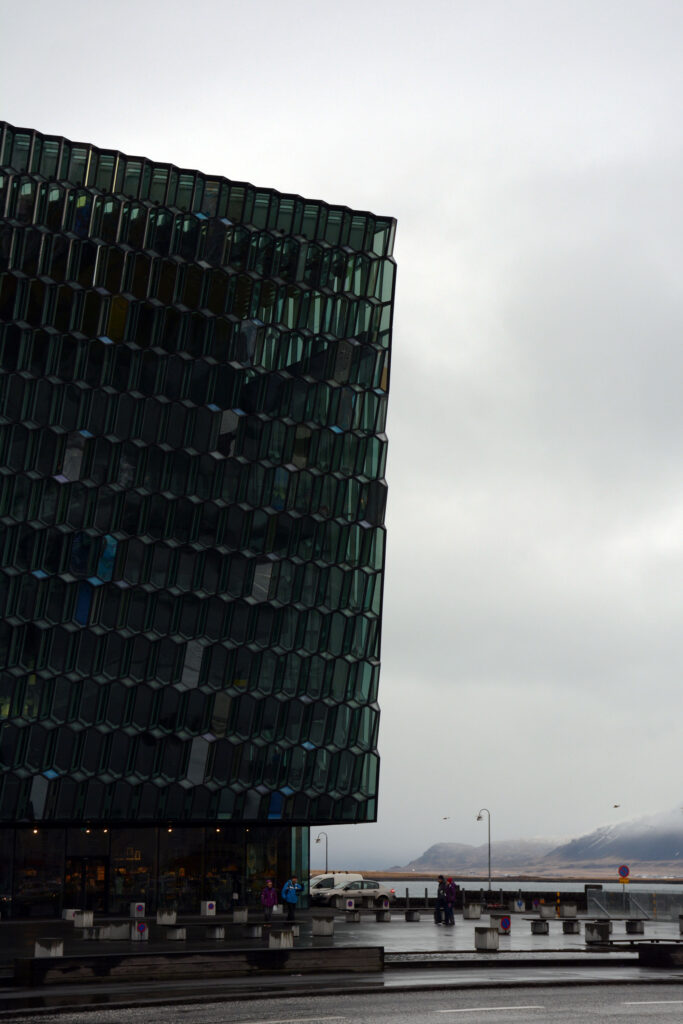
Driving back along my walking route I find it transformed. Up until now, I found Reykjavík to be cold and damp, but above all: grey. It set a strong tone. I wasn’t having a bad time because of it by any means, but I was certainly on my way to forming a similarly monochromatic impression of the place. Now, as I went back to my room, as I went past the metallic, cold harbour, past the dark, imposing Harpa, past the grey clouds, rocks, cement, and grass… I found everything was as it was—but with more. The hard lines of the boats stood out against the water and made perfect sense. Harpa shimmered as its glass honeycomb structure reflected colourful sunlight in all directions. There were gaps in the clouds. The rocks were full of holes. The cement was covered in texture. And the grass was never grey to start with, but now there was no doubt: it shone brilliant brown.

Back in my temporary neighbourhood, the morning sun confirms a population of colourful buildings at full volume. The air itself is bright. My tiny house fills with light.

Before heading out, I use the WiFi included with my room to download a map of the route I’ll be following out of Reykjavík. I’ll be using my tablet as an offline GPS so I don’t have to depend on—or pay for—an unknown mobile data network while driving, plus I can keep my phone fully charged just in case there’s an emergency. I also download all the road maps for Reykjanesskagi, the name of the Iceland’s southern peninsula and the area I’ll be travelling through on my adventure.

As I am leaving a day early, I stop to let my host at the front desk know that the room was very comfortable, that I was indulging in a flight of fancy, and that I was departing before check‐out time hoping someone else might be able to stay in the room that evening. I’d prepaid for two nights anyway, and I knew there was no partial refund possible, and I also knew I didn’t have to do or say any of what I did that morning, but also didn’t want to just disappear.

With the car packed, I drive down the street and away from the tiny house. I roll down the window and listen: though not as pronounced as on the cobblestone roads in the city centre, I can hear the muffled tap dancing of the car’s studded snow tires on the pavement.

The clouds are all but gone as I leave my familiar walking streets behind and am guided through places unknown. Reykjavík is revealed in new light, full of foreign shapes and colours and configurations. It’s a beautiful sendoff, one I’m happy to have experienced after arriving in the city during the middle of the night. There is no denying I am in another place now. I feel far away. It’s wonderful. I turn on the radio. Of Monsters and Men is playing—I smirk and feel immediately at home again, as if I’d stumbled across a Tragically Hip track while driving through rural Ontario.

In just a few minutes I’m outside the city and arrive at the junction with the secondary road which will take me into the mountains. As soon as I complete the turn, the landscape transforms again.

There is nothing of Ontario here.
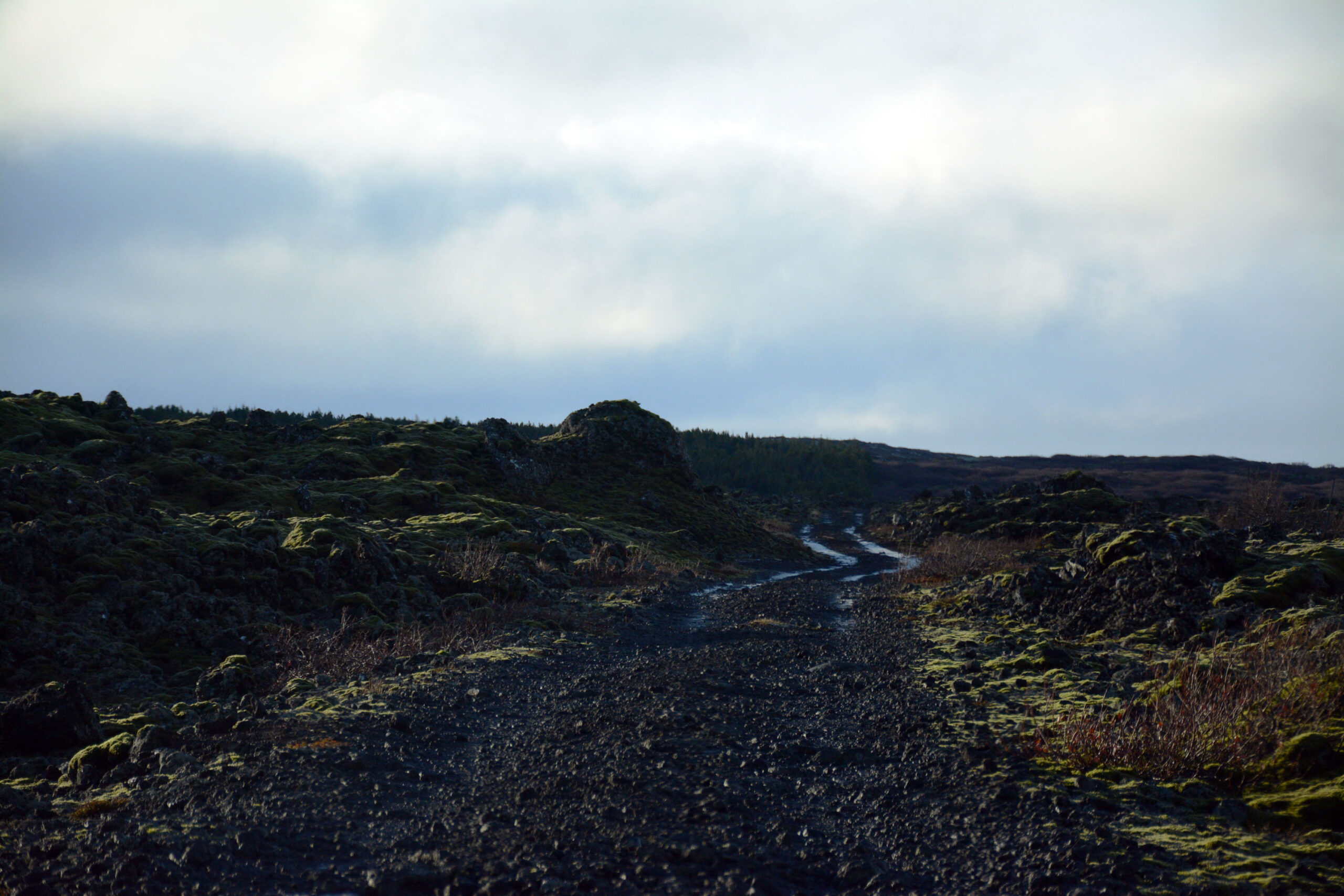
I pull over into the bottom of a driveway—pausing just for a moment to wonder if I’m already in violation of my rental agreement before reassuring myself that by definition a drive way is a road. But I still confine the car to an area I am comfortable to consider the most road‐like as the driveway itself appears to trail off into a vagueness of definition I’d rather not deal with.
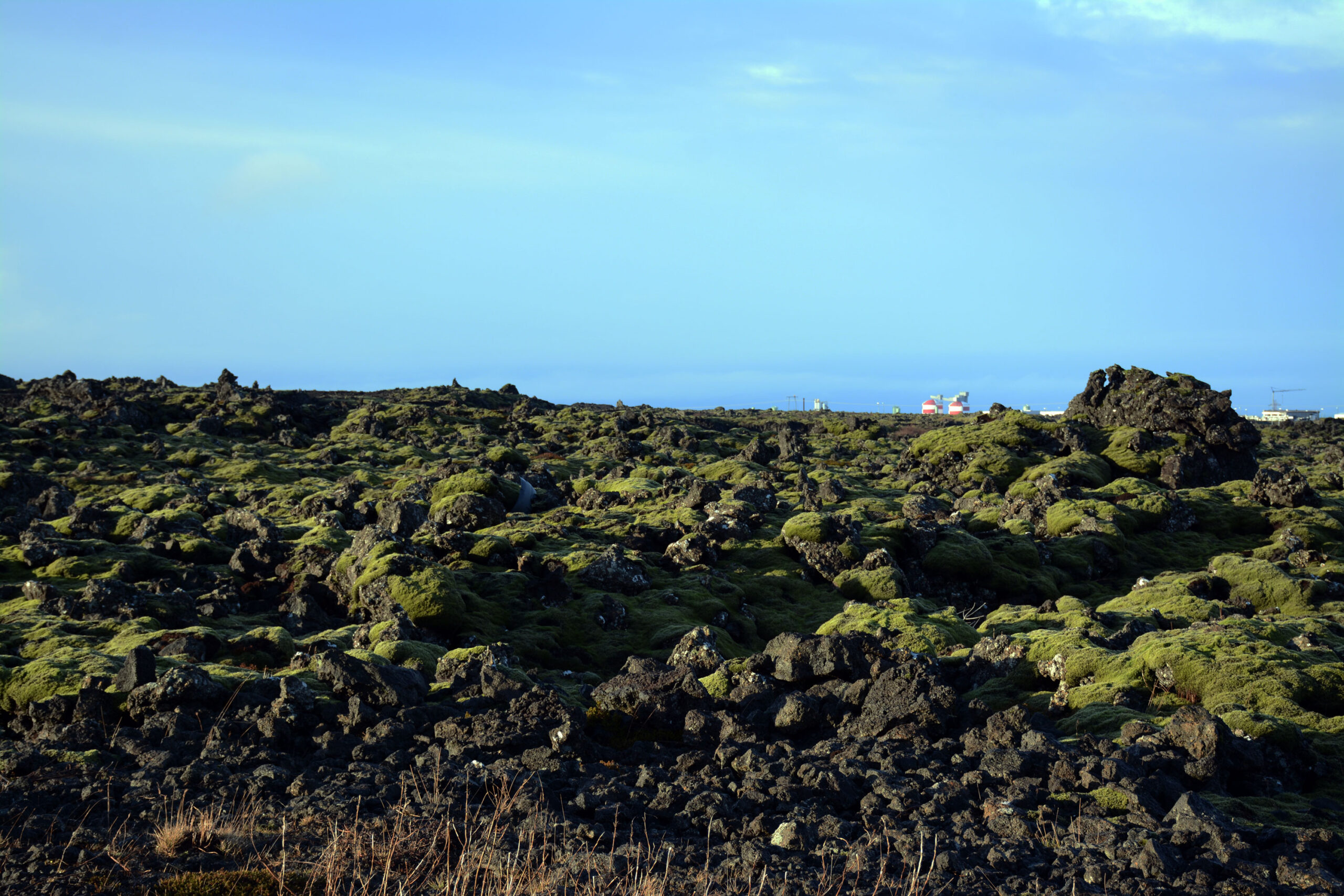
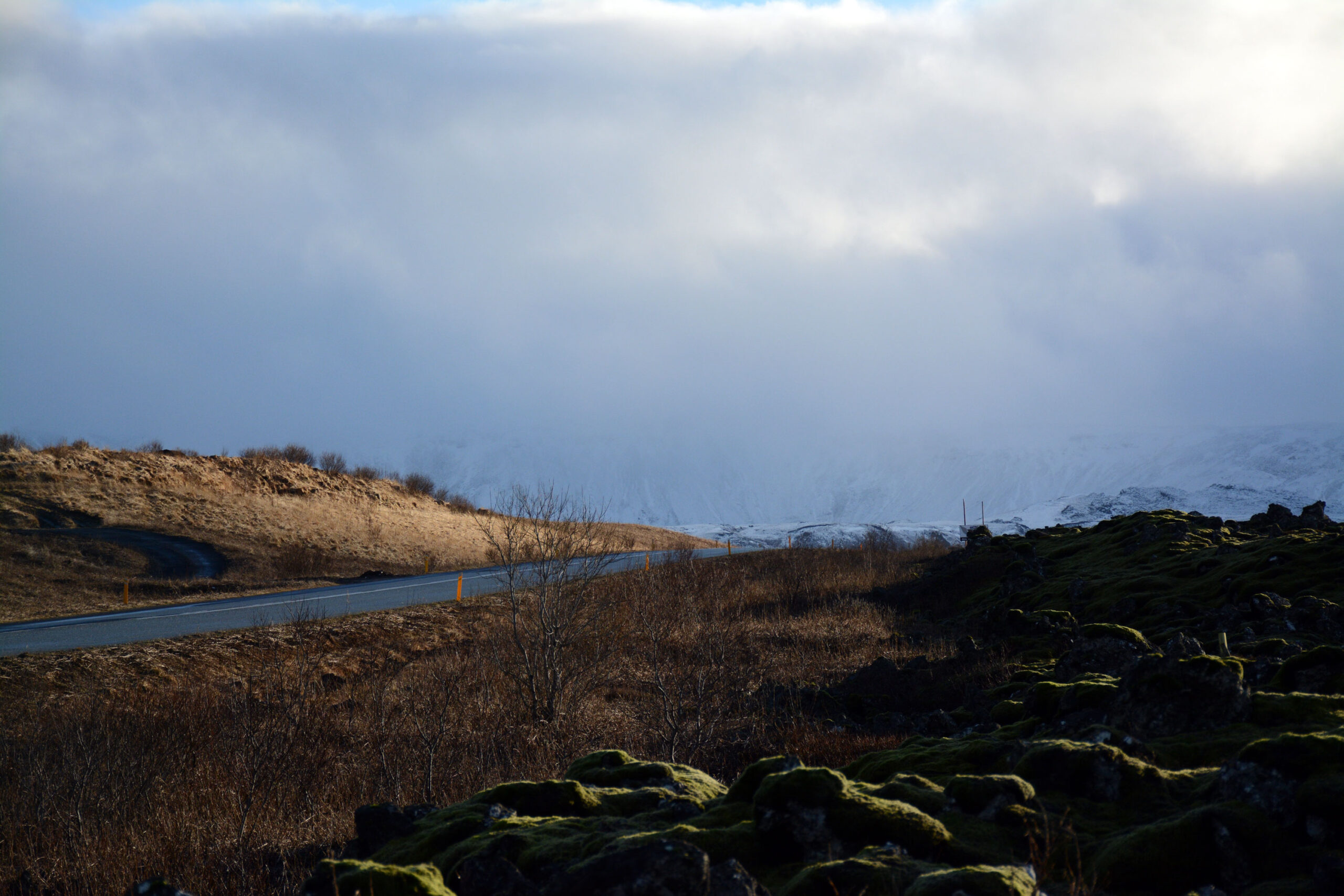
The land is covered in dark volcanic rock covered in green fluffy moss. Even the rocks themselves look soft and comfortable up close, like sea sponges under water, and I imagine being able to climb in among them, pull some of the fuzzy green blanket over me, and enjoy a nap in the sun.
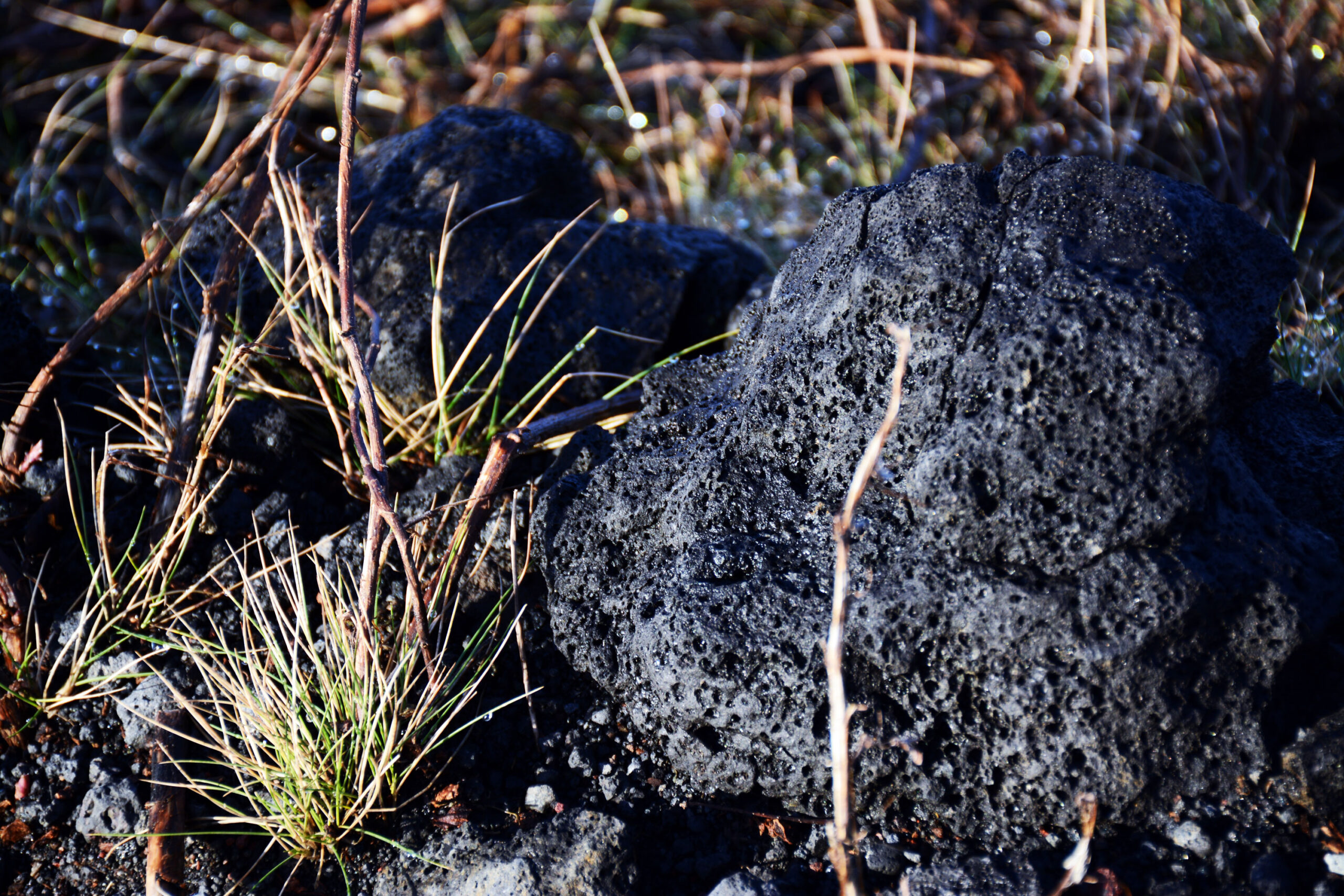
My travelling companion is a 4th generation Mazda 2 in silver—which is another way of saying it was grey. The 3rd generation of the 2 was sold in Canada for about seven years until being discontinued around 2014. Tracing its linage back, this little Mazda is related to the original Ford Festiva, a car Mazda designed and built during a time when the two companies were working together, a partnership that lasted just over 40 years. Now Mazda and Toyota are working together, a fact reflected in Canada’s more recent Toyota Yaris hatchbacks: under the surface they’re the same Mazda I drove in Iceland.
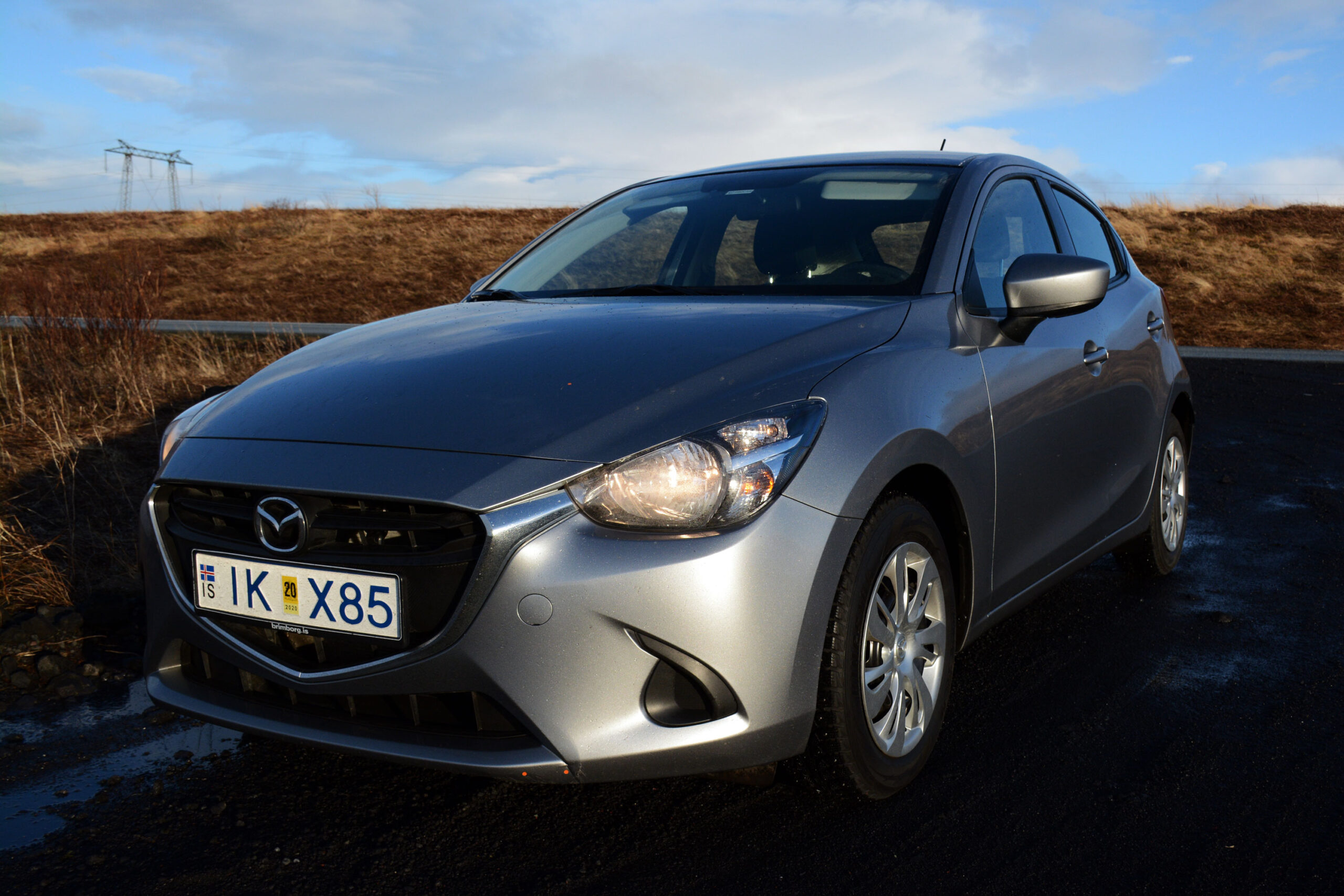
Also at the bottom of the driveway is this sign facing the main road. Apparently the next 5 kilometres will have something to do with vatn, or water, which is what the first part of the second word is referring to.
There is an amount of making words with other words in Icelandic, a trait the language shares with its distant, distant German cousin, although words might be too literal in this instance. Making and reinforcing concepts out of other concepts could be more accurate, like my pínulítið hús back in Reykjavík. The Icelandic word for tiny looks like puny and little mashed together, and it sits beside a concept so universal it’s understood by two languages which diverged anywhere from fifteen hundred to over nineteen hundred years ago. That said—other than appearing to have attracted bullets for it—I had no idea at the time what the rest of the sign was taking about. I later found out it was to do with being in a protected watershed.

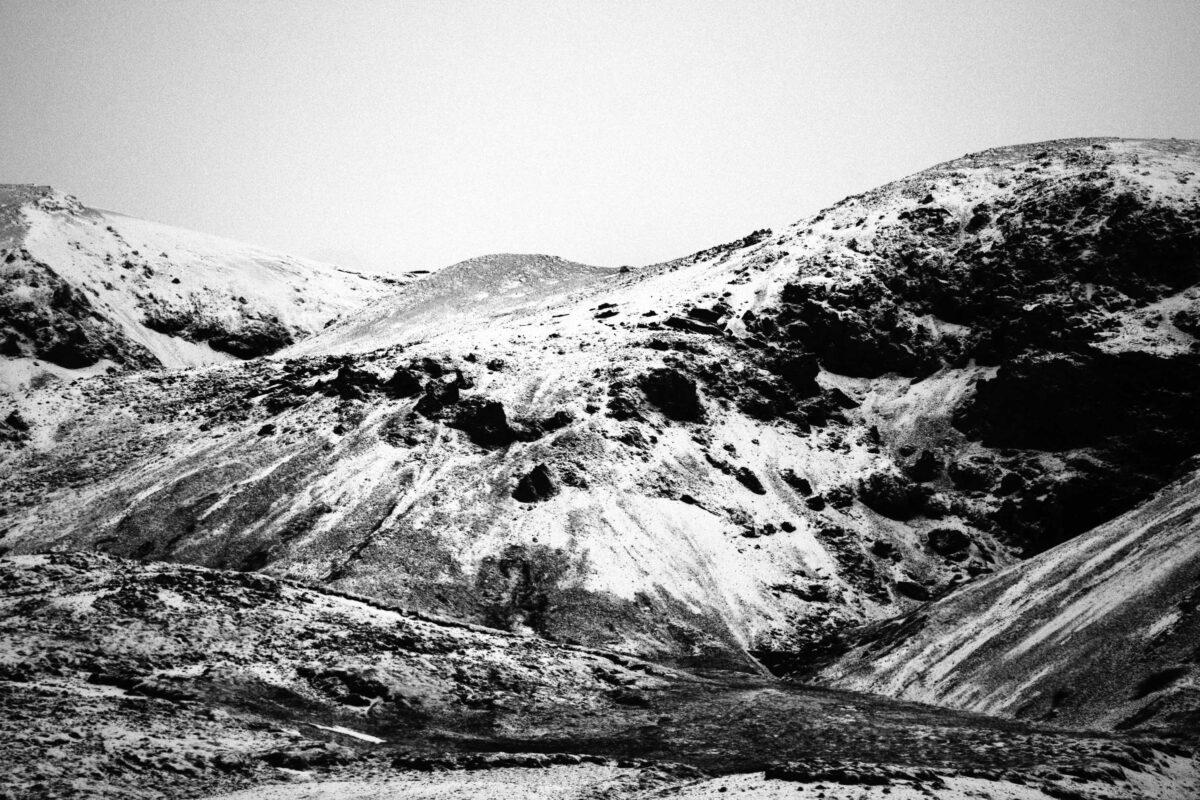
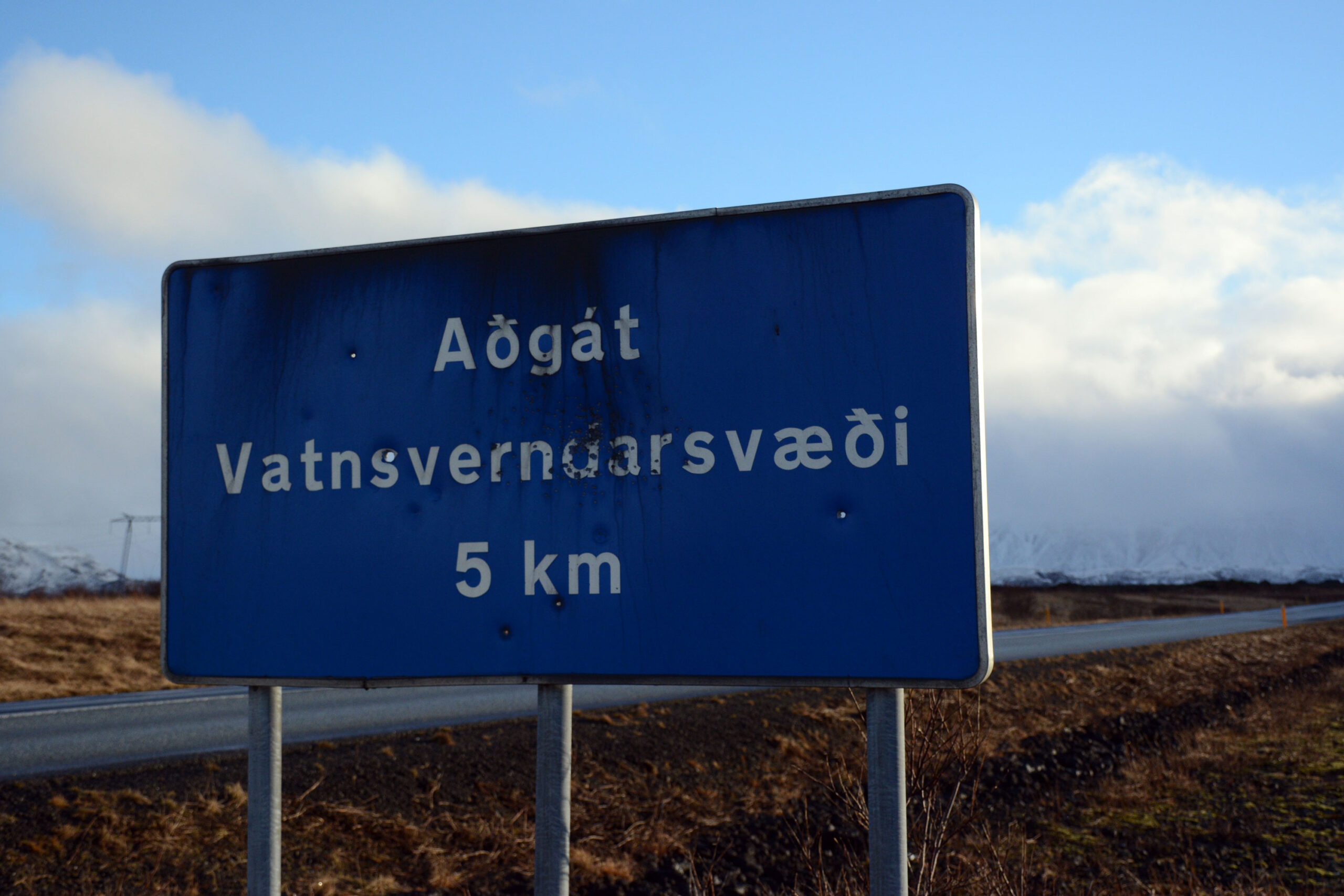
Armed critiques of resource conservation areas aside, I was more interested in what was literally—and that’s literally literally, not metaphorically literally—behind the sign. In the background, the snow and cloud covered background, are the mountains I’m headed to.
The weather is changing. I can feel it getting colder. The cloud cover is increasing and the sunlight and shadows from moments ago are fading. It’s happening faster than I’ve ever experienced before. Back toward the main road I try to take a few more pictures of my impossibly lit destination, but in the couple of steps it’s taken to get there, the blue sky is gone, filled instead with heavy grey and white clouds.

I get back in the car and continue driving. The landscape transforms again.
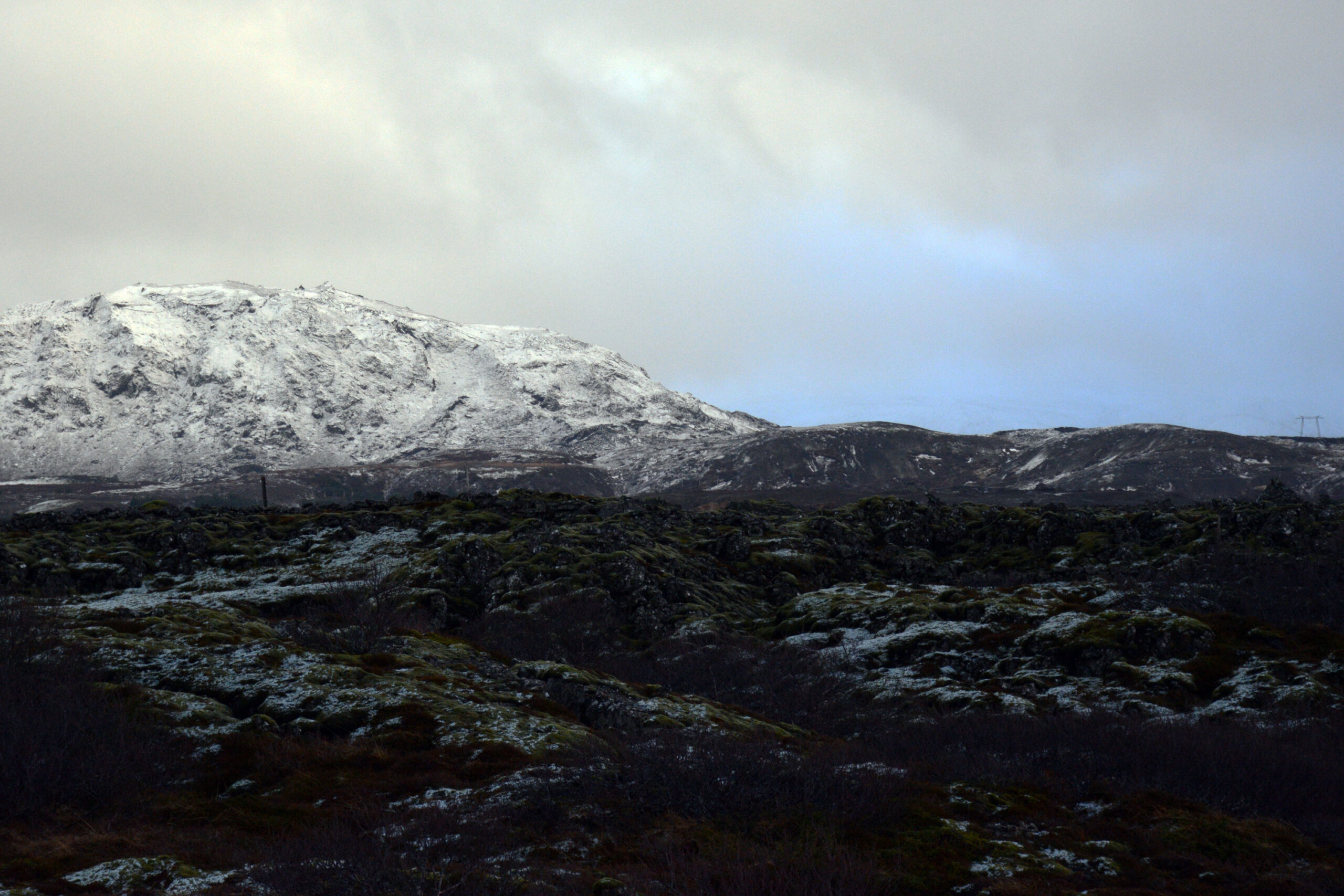
The weather closes in around me as the mountains grow larger in front of and then along side of the road, where I’ve stopped to take these pictures.
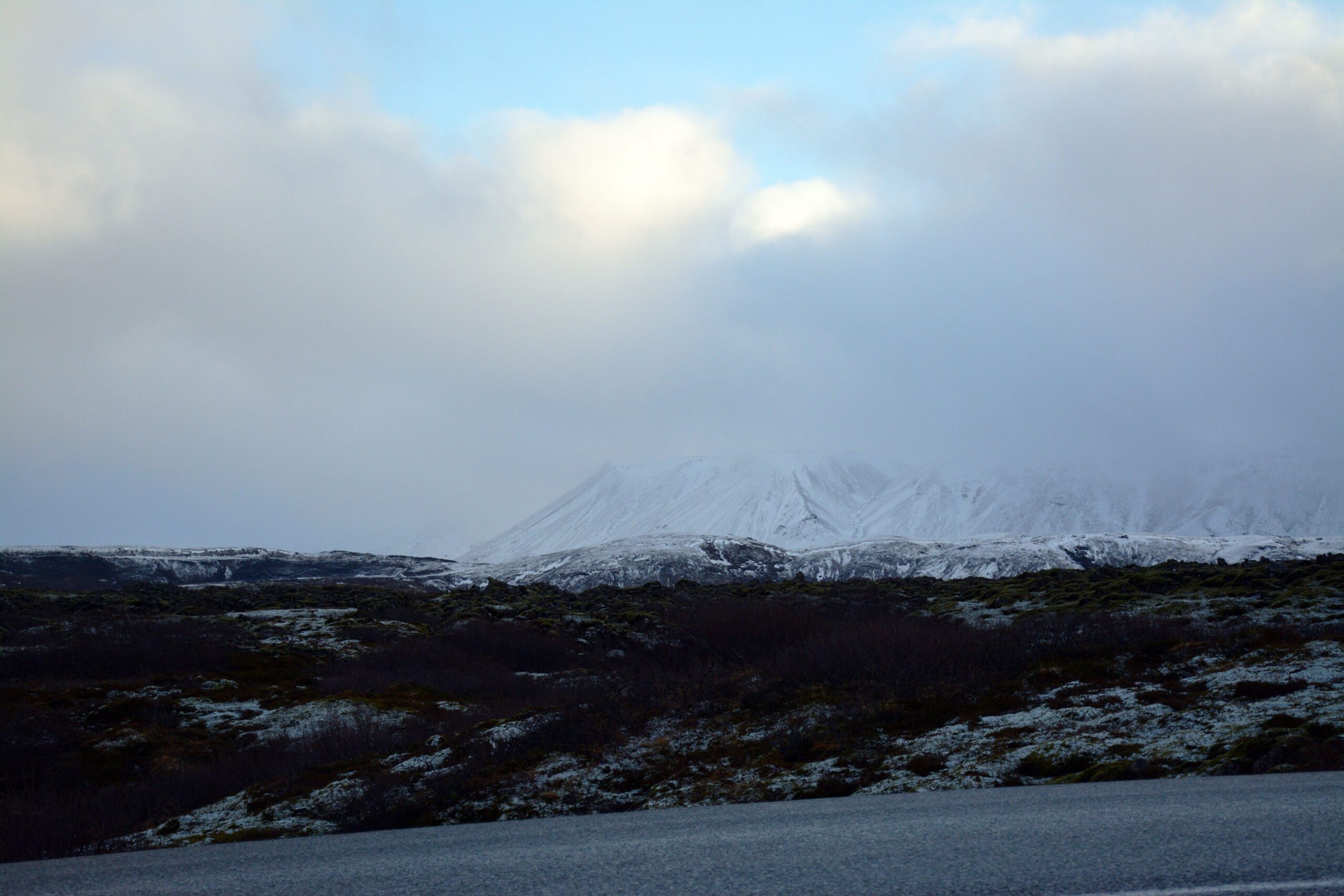
I’m climbing. The snow creeps closer and closer to the edge of the road before it’s all around me, covering more and more. I realize I haven’t seen another car since I left the main road. I’m not sure if that’s a reflection of me being in an isolated place or having stupidly driven to one, but for all their changeableness, the road and weather conditions are still not nearly as poor as what I’ve encountered in Canada.

I continue on, but it’s at this point in 2017 that I stopped taking pictures.
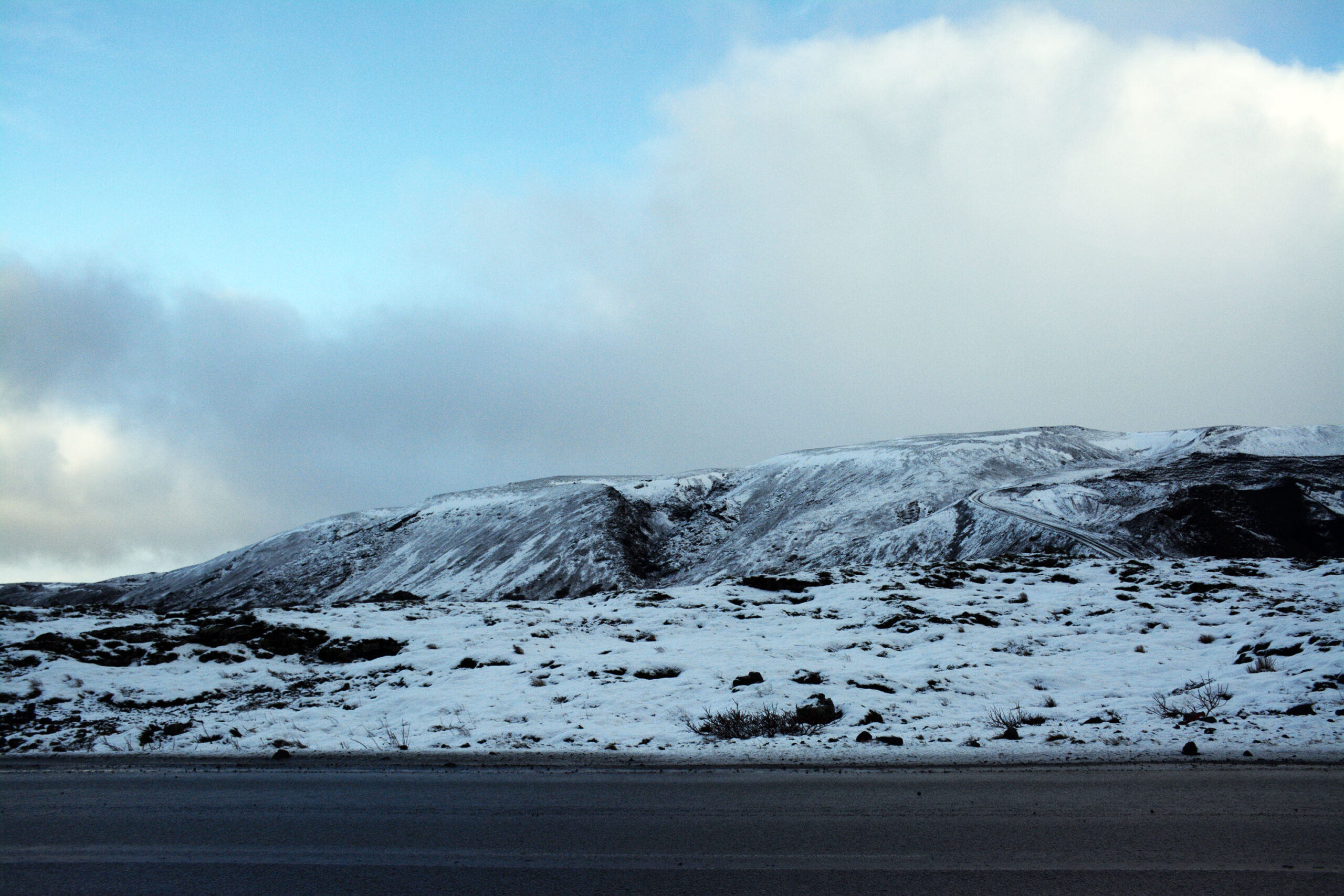
I’ve tracked down some Google Street View photography to show the road from my perspective instead. Everything isn’t covered with snow in these images, which is too bad. I think seasonal viewing options would be a great addition to Street View. Are you listening, Google? Yes—of course you are. You always are…

As I reach the top of the climb, the unfamiliar road completely disappears into the snow—leaving just a few polite marker posts with reflectors on them as hints to its whereabouts.
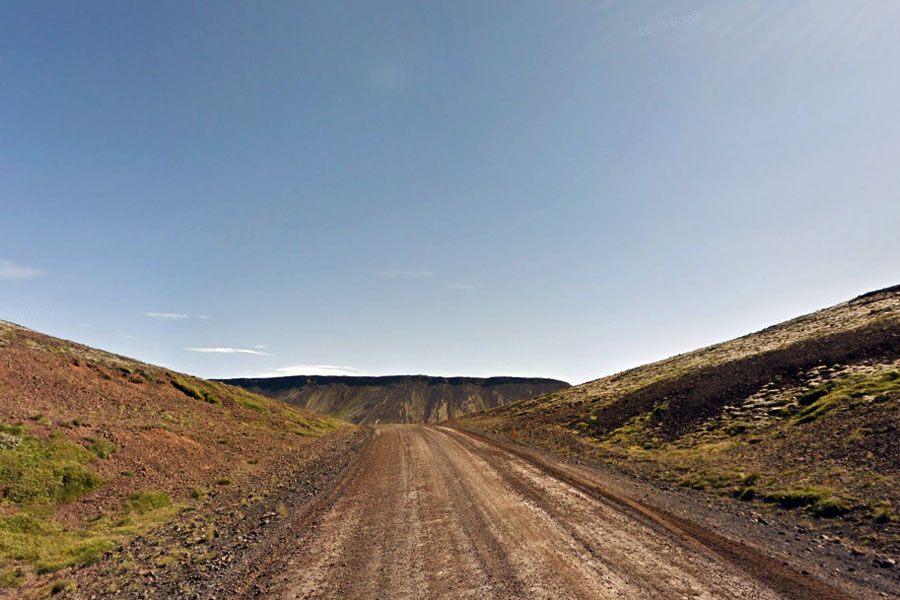
And on the other side of the climb, a goosebumps inspiring mountain decent—with snow. Lots of snow. Only snow, actually—sprinkled with just a few more marker posts that I both aim the car at and avoid simultaneously. I remember the road felt like it dropped out from under me as I went over the crest. I remember laughing out loud. I had no idea where I was.
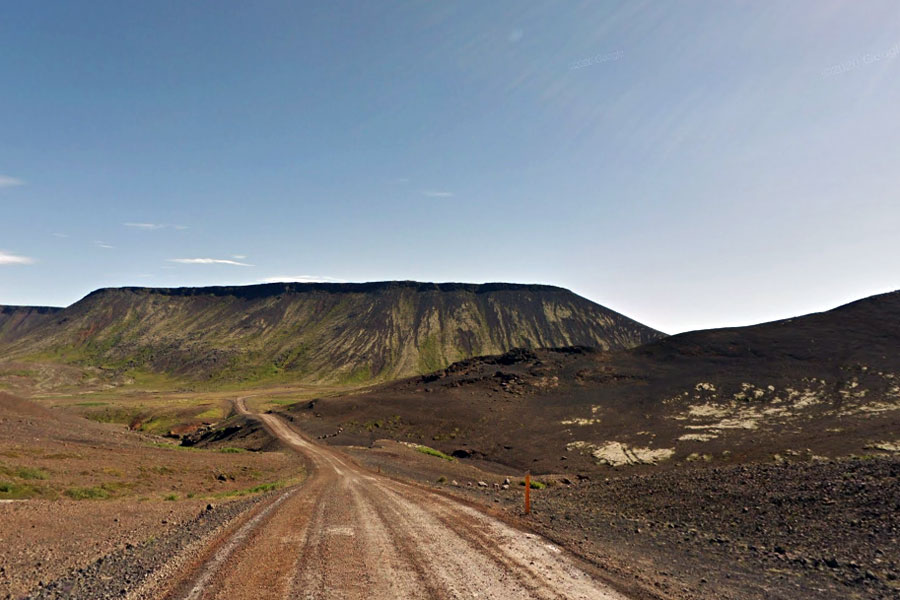
It was an absolute thrill to drive on that snow‐covered road. If I could do it again, I would. Again and again and again. I don’t know what happened to the sky: I was too busy wondering what happened to the road. But I felt like I was inside a snow cloud, driving around in my own personal blizzard. This is what I’d wanted to do while I was in Iceland. This is why I was feeling claustrophobic back in Reykjavík.

After a few minutes of attentive driving, tire tracks appear in the snow ahead of me. The road continues to descend. I can see the paths of other cars, wherever they are. I still haven’t seen a single vehicle. There’s more landscape to see as well, dark forms against where snow and sky overlap. It’s hard to resolve any more detail. Everything is either very bright or very dark—it all averages out to grey in the camera. I don’t know what to make of it either. This place is like no other. I am somewhere else.

Farther ahead, a lake begins to appear up out of the snow. I sense its magic as I approach.

I slow the car and find a small parking area near the entrance to a trail. Weather and light move at unfamiliar speeds as I come to a stop. I open the door and step out as the landscape changes with the clouds. All the sound around me is consumed by the idling car. I don’t know why I’ve left it running—something about not being stranded, I think? I don’t really remember the reason anymore as I look out over the surface of the water. Now I feel like I’m supposed to be here—so I can’t be stranded if that’s true. I turn off the engine. Quiet rushes. I can hear the air moving.
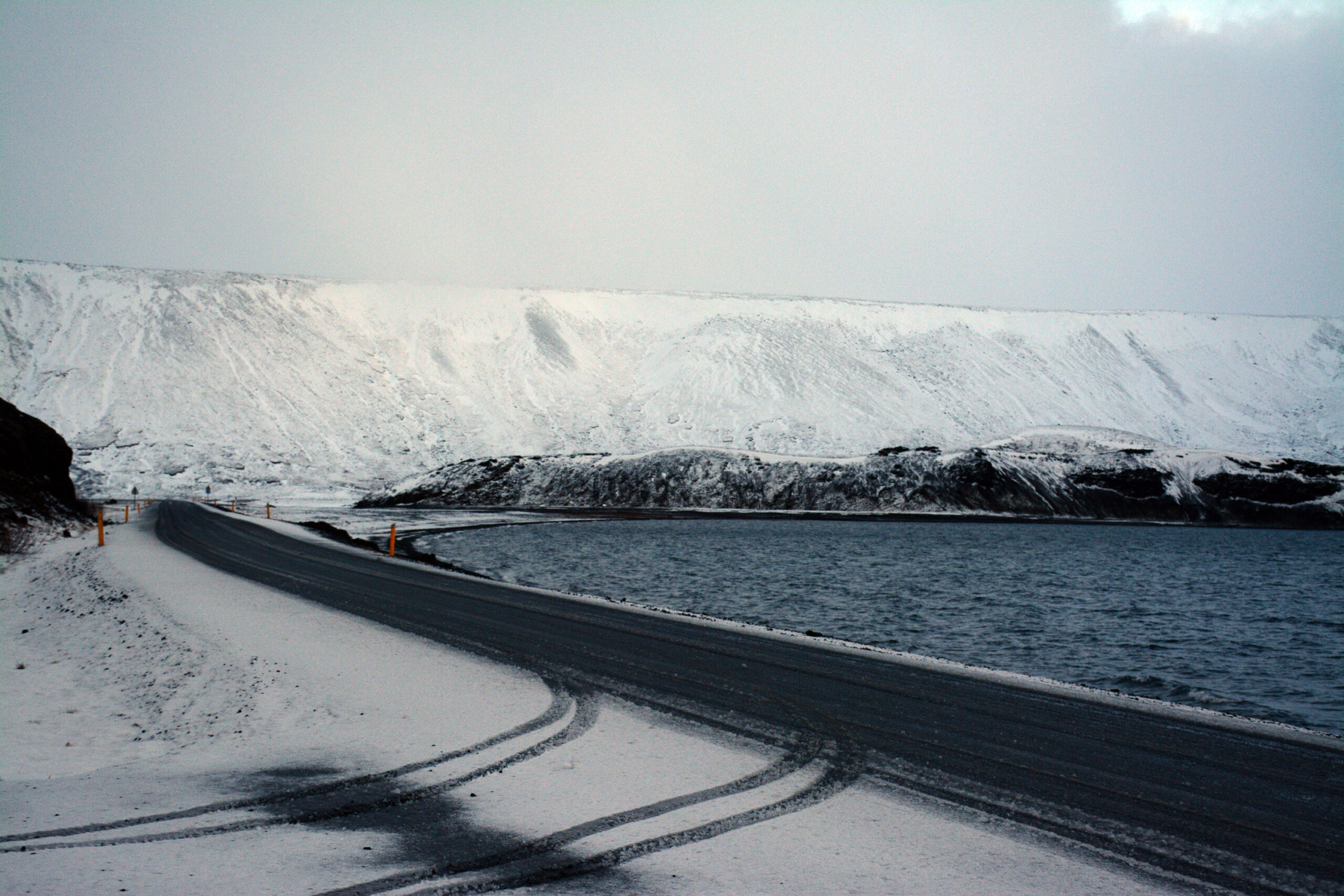
It’s rare to be in a place with such a presence. I am delighted. The lake sits across the road, its deep colour radiating against the black and white and grey surroundings, its waves rolling softly over onto the pebbly shore. Everything is peaceful. No purpose is wasted. I can hear the last of the snow as it falls, feel each flake on my face. It’s a familiar feeling. I smile for no one but myself and maybe the lake. Wisps of sky move through the clouds. The sun is up there somewhere.

I later found out this is Kleifarvatn. It’s the largest lake in Reykjanesskagi and is almost 100 metres (just over 300 ft) deep in some places. There are no visible inlets or outlets. Water moves underground to and from the lake. After a strong series of earthquakes in 2000, Kleifarvatn slowly lost about 20% of its surface area before gaining it back just as slowly.

From where I am I can see the road following the shoreline of the lake, right up against the rock cuts at the base of the mountain foothills—just like home. There’s a sharp rise in the road and an outcropping of rock into the lake. I know there will be a good view.

And there is.
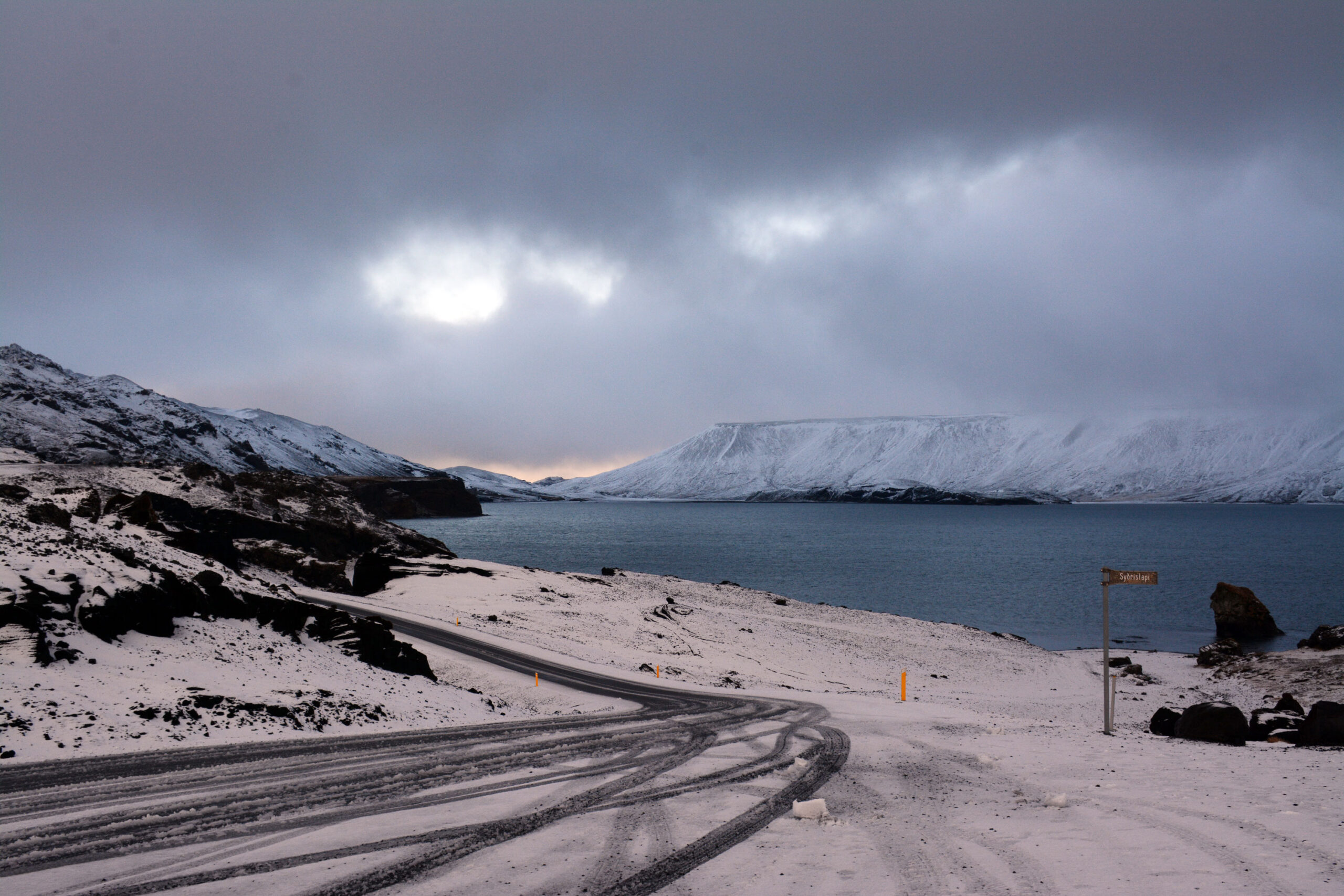
This indeed is a magic place.
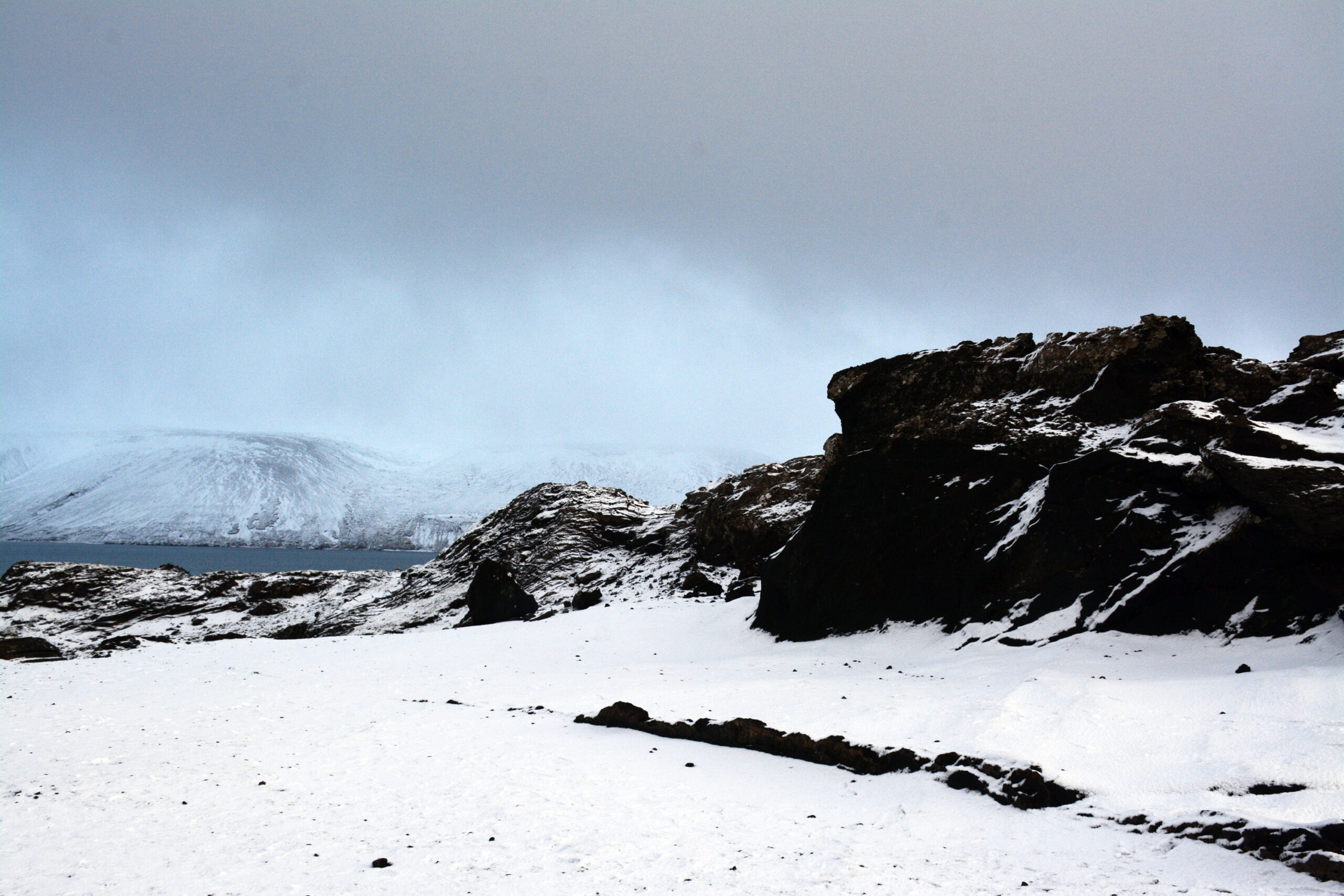
This is Syðristapi, one of the highest points along Kleifarvatn. It’s possible to see the entire lake from here, though not entirely all at once. The light changes again. Colours arrive with the sun and sky. I have absolutely no idea where I am anymore—there is no frame of reference for what I’m seeing—it’s impossible, and I love it. I don’t know how to leave this moment, or if I even want to.
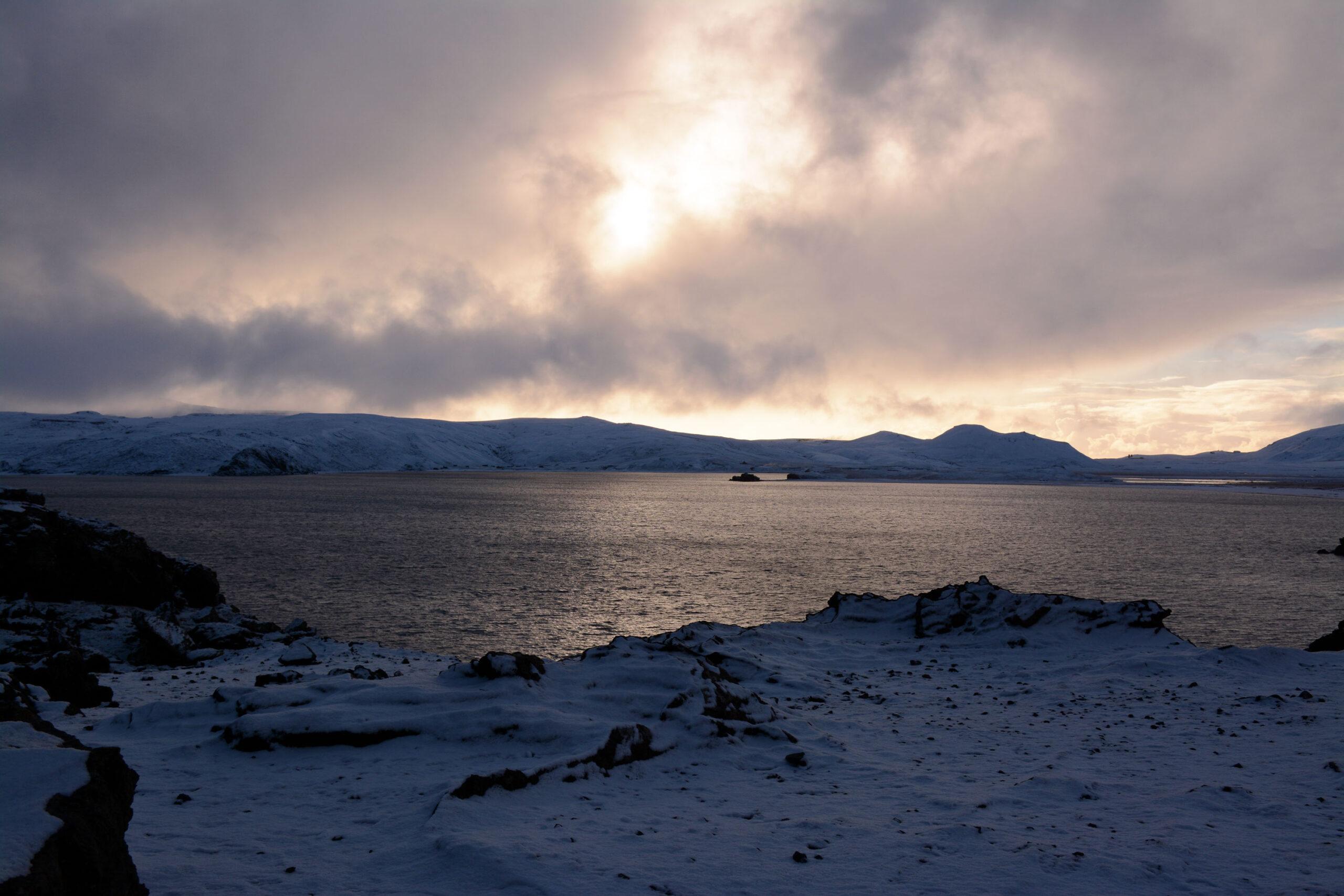
But it is just a moment. And I can also see the road ahead of me, the path I’d set out on this morning. I have lost track of what time it is now, but I feel like I’ve travelled through it rather than with it ever since I left Reykjavík.
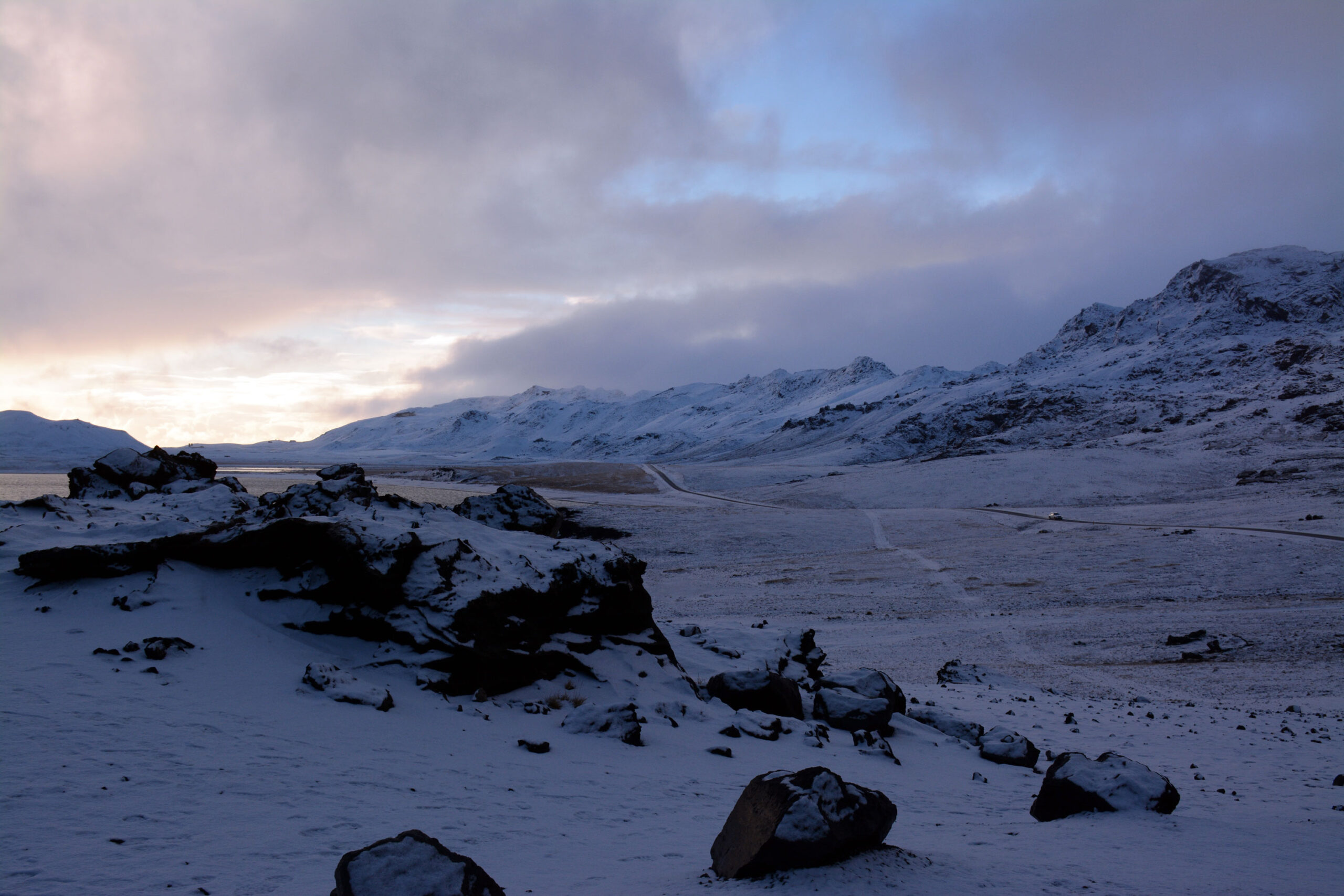
I look again at the road. There is a single car moving along it in the distance, slowly heading toward me. I hadn’t noticed it before, but seeing just that one car made me realize I hadn’t at any point felt alone during my time in this expansive place of solitude. It was difficult not to feel alone back in the city—it was always just me surrounded by other people. But in this place, I didn’t feel surrounded by anyone. Or by anything. I felt among the snow and the lake, felt among the rocks and the mountains. And I felt among peace in a way I didn’t realize was possible.

I decide to leave this moment before the other car can arrive in it. There is a timelessness I would like to maintain in my memory of this place, a purity of experience I would like to both keep for myself and offer to the occupants of the approaching vehicle, should they find themselves stopping here that is. And I don’t want to hear the sound of passing car should they not.

But I never see the other car again. I expected to encounter it sometime after I headed down the road. I thought for sure it would be coming in the other direction—it seemed to have disappeared instead.

It didn’t feel like a lonely thought, or even a sad or creepy thought, mostly because it didn’t feel like anything at all. In hindsight, it was a thought driven by distant, sleep‐deprived logic. It was the thought of one possible explanation, as absurd as it was, that happened to align with my confounding observations. If all I could see were the tracks of vehicles that didn’t seem to exist, and I was in the only vehicle that did, then perhaps I was the one who had disappeared.
Phase 2 Photography

Really unreal reality.

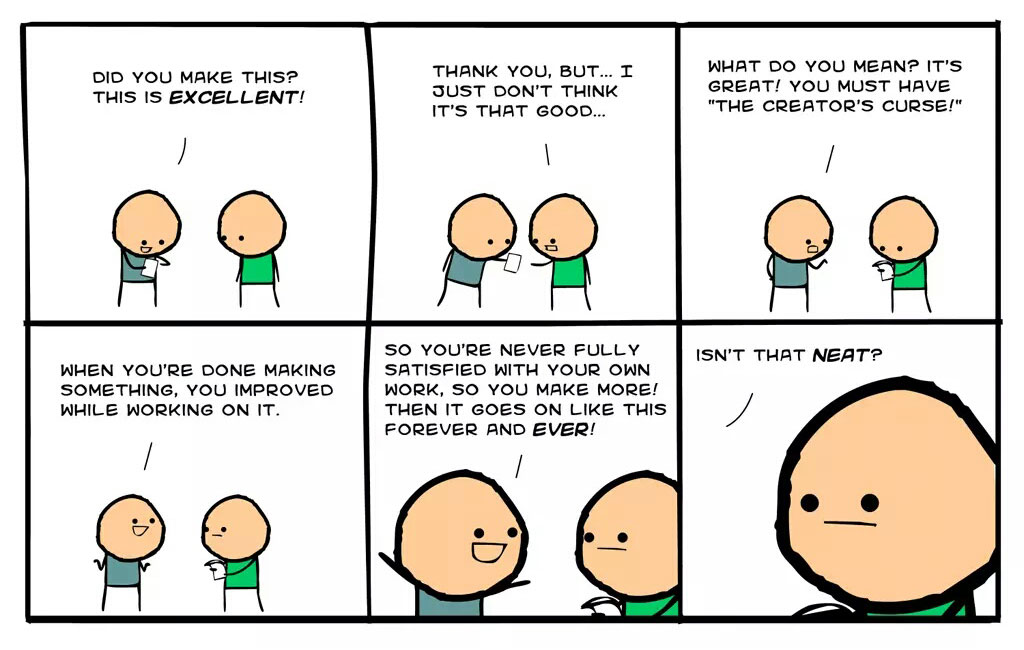
I came across the following web comic a while back.

What has taken just as many years for me to fully appreciate is neatly summed up in six small panels. It’s representative of a previous relationship with creativity I didn’t understand, a peculiar mix of success that fuelled the desire for future success as it simultaneously sowed doubt over the legitimacy of previously success. Put more simply: was it really talent, or just luck?

Determining the answer tempted obsession. But the question itself was flawed. It assumed success was the need my creativity satisfied. But I don’t pursue creativity because I need to feel success. I pursue creativity because I need to be creative. Success got tangled up in the act, mistaken for a motive when it’s actually a result—not an unfair conclusion when, in general, my most successful feeling creative projects tend been the ones I felt the most need to pursue. But that’s only when viewed in retrospect. Correlation does not demonstrate causation. I don’t start a project because I think it’s going to be great when it’s complete. History has shown this precarious path to success is highly dependant on if the project is completed at all. But when is a project completed? Is it when I can’t advance the work any further because everything I wanted to do with it has been accomplished? Or is it when I can’t advance the work any further because I’ve trapped myself in a creative corner and am sick of the sight of it? In either case, the work will end up published for all to see, or lurk—possibly forever—in the shadows of past drafts. And if I’m honest, the outcome in either case resolves my need to be creative.

Or as the great Mitch Hedberg once posited: Did you find your wallet? Yeah—but I kept looking for it.

I’ve been sitting on a number of images I took with my dad back in June. He’d come to visit just before Father’s Day and we took advantage of some recently relaxed public health restrictions to enjoy walking around outside on a sunny day while we did some photography. It had been a few years since our last photo adventure together, and after weeks of not being able to see each other, I was happy we got the opportunity. The afternoon walk and subsequent pizza dinner stand out as some of the most usually expected memories of a summer that hardly existed in any usual way otherwise.

Later, as I was looking through the images I’d taken, the undeniable unusuality of the situation surrounding them was apparent. Some of this was due to a technical error I’d made. I’d inadvertently locked the camera into ISO 400 mode. I didn’t notice this until almost the end of the afternoon. I ought to have noticed it earlier—particularly as the camera itself was trying to alert me to my mistake by constantly proposing bizarre exposure settings—but it had been a long time since I’d used any camera other than the one in my phone. The weather on the day of was warm with an initial mix of brilliantly bright and blue skies producing wonderful shadows, but cloud cover later intensified and blocked out direct sunlight. The shadows disappeared and were replaced with defused, uniform light. Colour receded. It was workable, but it wasn’t ideal as my earlier error was akin to having loaded a camera with indoor film and then using it outside to take pictures on a bright day.

All the pictures looked a bit off as a result. I’m usually happy enough with what comes directly out of a digital camera that I’ll use the images as they are, perhaps only with minimal brightness adjustments, a purist nod to my learning photography on film first. But in this case, accidentally simulating a film photographic experience failed me. I really wasn’t happy with most of the pictures. Nothing looked correct. Colours were weird. In‐camera attempts at coaxing details from the monotonously lit day would blow‐out the sky and kill contrasts. It was all very frustrating and unnatural. Not at all unlike the circumstances created by the pandemic I’d sought to escape from, if only for an afternoon.

But there was no escape. There still isn’t. And as the prospect of a second lockdown looks less looming and more likely, the unnatural quality to my pictures from June makes much more sense. That some of them feel weird is correct. That there’s always something off about them is accurate. If there’s tension or discomfort or strangeness—it’s all good, ’cause it actually wasn’t. Not by a long shot.

In previous posts I’ve shared photo shoot photos as a single gallery arranged in chronological order. The visual narrative is literal: the viewer sees the images in the same order I took them in, free to construct any additional narrative on their own. This post is different. This time is no time for anyone to be left figuring things out on their own.

So—off into the world of outside…

But first, a couple of sighting laps with the camera to be sure I’m still familiar with the controls before leaving.

Under‐exposed and out of focus—zeitgeistic perfection.

This is the entrance to a magic tunnel, connecting a residential cul‐de‐sac to a city park.

A small wooded area is just off the park, joined by old alleyways where cars roamed free.

And train coaches rest quietly among the trees.

Greenery gaps crumbling infrastructure.

In the midst of despair, hope can be a tricky sight. Its light is fleeting. Like punching in a dream.

All the lights go down as I crawl into the spaces…

…Fight, flight, or the screams, life tearing at the seams1

The clouds are turning out. The sky is changing.

The grass in another park is sprinkled with regal and exploded clover.

And a playground sits silent and empty on a warm and sunny Saturday. Merriment and nonsense is still forbidden.

But there is a sense of something else.

A departure of sorts.

A reimagining of structure, of future.

And on another path, they appeared as they always did—among the vegetation and fencing surrounding the industrial bakery. They were beautiful, these donuts in the brush. But the greatest sight of all had to have been the sliced bread.

Or perhaps this antennaed heart and friendly decapus sharing a moment of prohibited proximity.

Hey sky. What’s going on up there?

Or over there—where a train car full of cars blocks a road blocked to cars. Delightful.

And while this red light shines for no one, I for one want to get in on this hamburger loop.

The shadows are back as the sun sets.

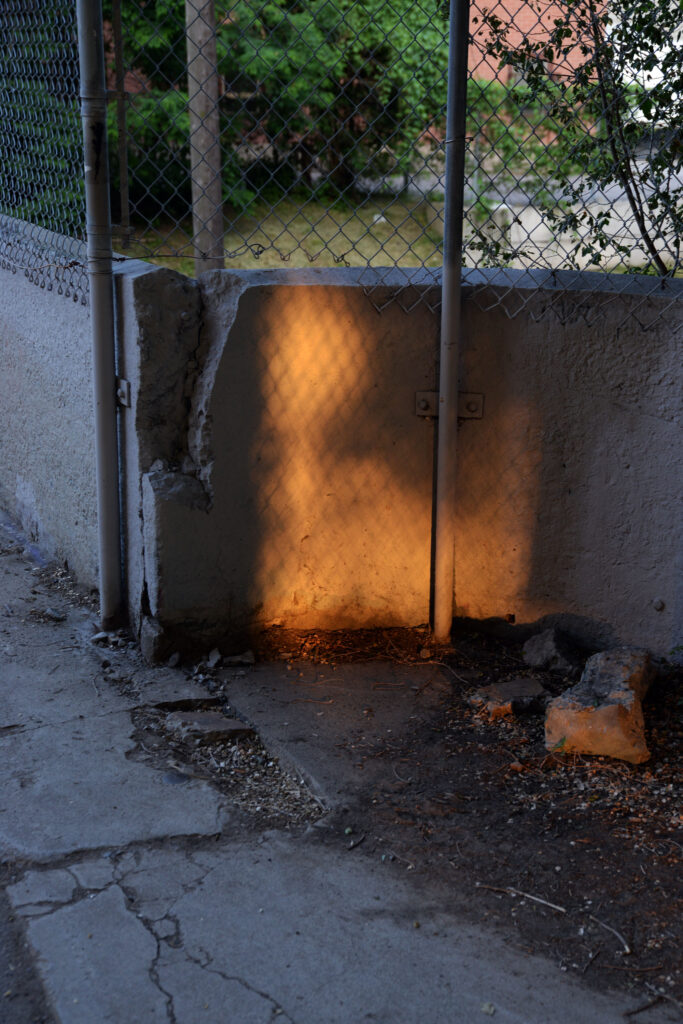
Impossible lighting presents. It’s my favourite time of summer evenings.

I don’t know it, but this ended up being a perfect image, one that went straight from the camera to the screen. Everything looked just as it did. Nothing needed fixing.

If the empty playground stirred feelings of melancholia, then consider this distant and solitary dog at the dog park, the canine equivalent of one kid sitting on a seesaw.

More improbable lighting.

Highlighting an improbable fence.

I call this the fire place.

See…

The current iteration of the Claremont Access began construction in 1969—a time when the car could do no wrong. Now the land it stands on is part of Ontario’s protected Greenbelt.

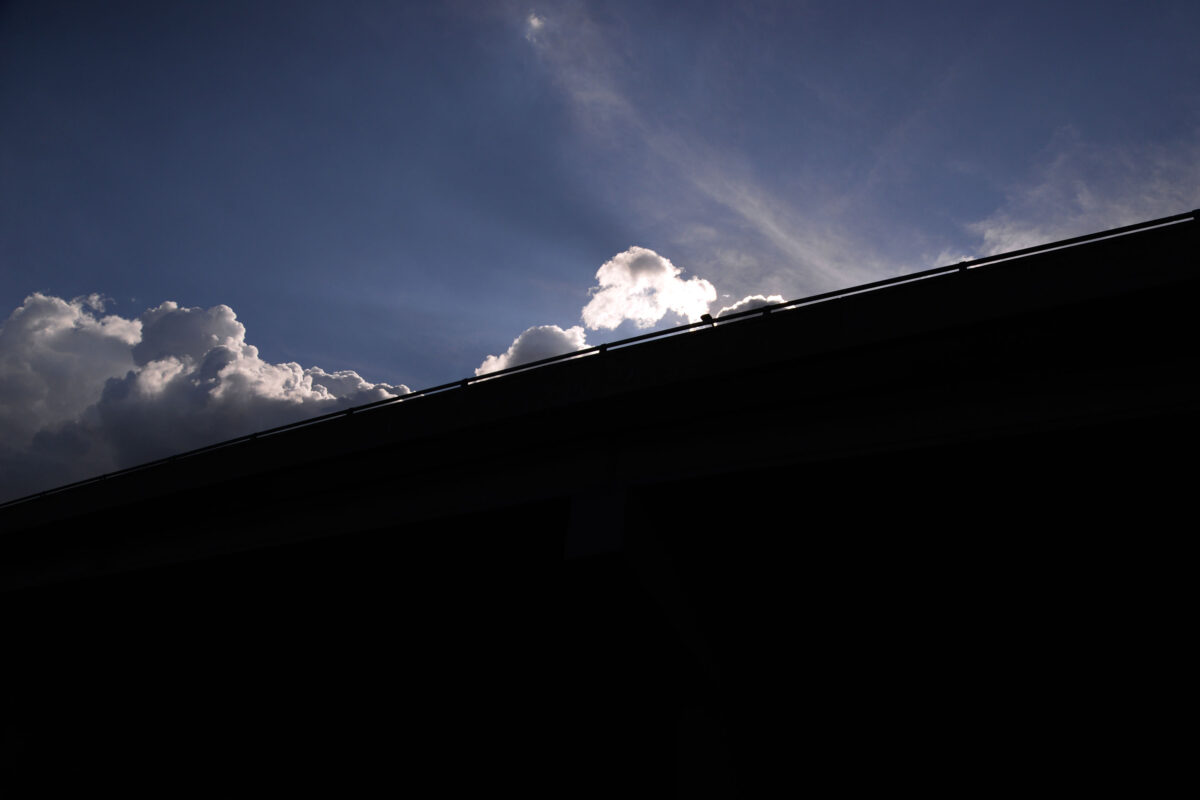
The massive support structures for the roadway are omnipresent. They formed some of the impossible lighting conditions found throughout this post.

Arkledun Avenue and the Jolley Cut scar themselves across the Niagara Escarpment, a reminder of yet another time when the natural world was to be dominated rather than respected.

Ironic as children are usually taught the implications of tempting forces beyond their influence.

The exit from the magic tunnel—having just gone through the entrance for a second time. Magic abounds.

An interpretation of the The Empire of Light, a painting I first saw at the Peggy Guggenheim Collection in Venice.

Having only previously seen this nondescript building during the daytime or not at all during the nighttime, it’s brutal charm is revealed at dusk.

Official city sidewalk scrawl. Graffiti is for the horizontal.

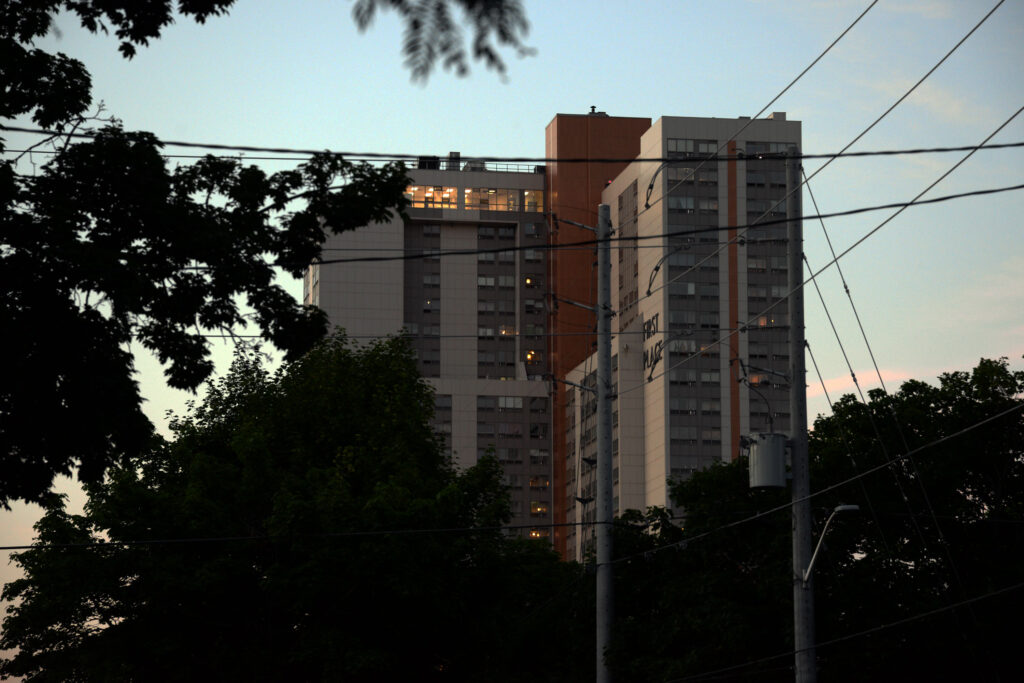
With daylight fading, the shoot finishes up in a distant First Place.


1. The Naked And Famous. Punching In A Dream. Passive Me, Aggressive You. 2010.

Reykjavík: Departure

Until next time.

I’ve been making black and white featured images for each of my Icelandic posts so far, but for this post I’m using a colour image instead. Yup. Reykjavík is an incredibly grey place. It’s a beautifully colourful city as well—but when it wants to be grey. Yup. Incredibly grey.

For the moment today’s colours are muted, fleeting, and gorgeous.

In a previous post I’d referred to Harpa as being covered in a glass honeycomb structure. While incredibly honeycomb like, the shapes are technically referred to as quasi bricks. Each quasi brick is a twelve‐sided polyhedron consisting of rhomboidal and hexagonal faces. Once assembled together the quasi bricks form substantial portions of the building itself, so Harpa actually isn’t covered in a honeycomb structure—it is a honeycomb structure.

I’m on my way to get a rental car. The no plan plan is to drive around and lightly explore the area between Reykjavík—where I am now—and Reykjanesbær—another city about 50 kilometres away and very near where I need to be by tomorrow morning for my flight to Berlin. I’m looking forward to my road adventure, and this change in the no plan plan happens to solve a couple of logistical challenges I’d inadvertently created for myself through—somewhat obviously in retrospect—poor initial planning.

And yes—it’s as chilly as it looks. The deal I made with myself was whatever the distance I needed to cover on foot in the cold—turns out it was just over one and a half kilometres—would be distance I’d travel back while seated comfortably in a warm car: hardly a hardship all things considered.

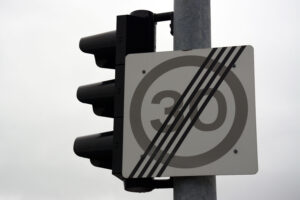
Plus the walk gives me time to study the road signage. I legitimately enjoy signage because there’s a reason why it’s there. It’s a form of communication. There’s a story behind every sign.

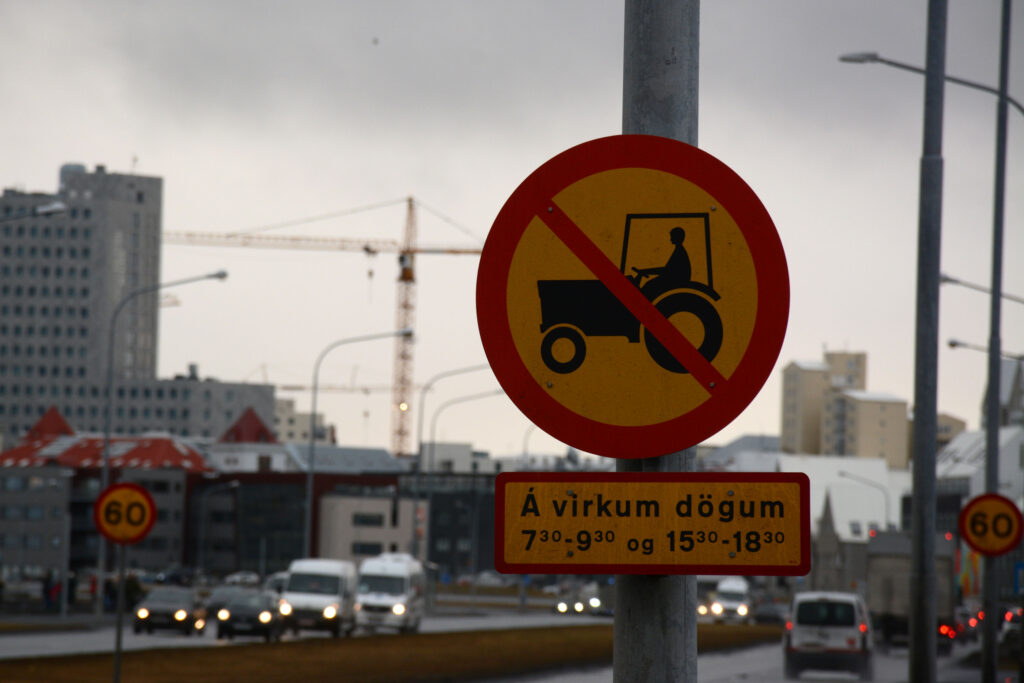
I’ll need to understand at least some of the stories the road signs are telling because soon I’ll be quickly moving past them in a car. Walking along the road I plan to drive back on gives me a glimpse into my future automotive experience. And as long as it’s not during peak traffic times, that future automotive experience could include the operation of farming equipment on a major thoroughfare. Noted.

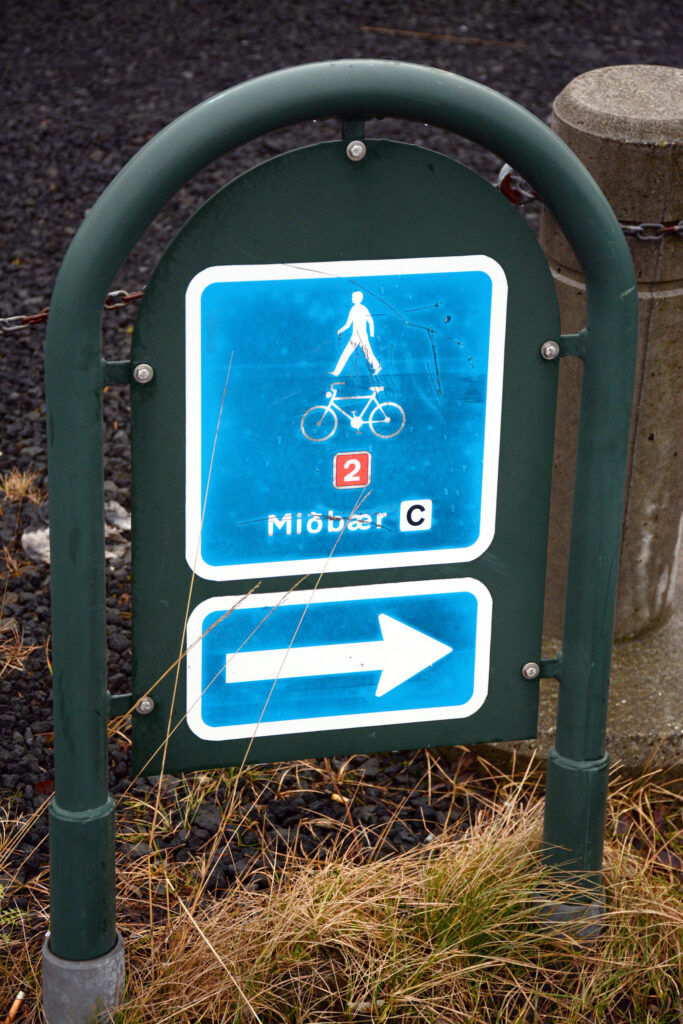
Sometimes the story is on the sign instead of behind it.

Greetings. Walking and biking (and possibly walking‐on‐biking) may not continue to be happening where you’ve up until now perhaps expected it to be happening. If you or your bicycle is facing as indicated on this sign, you could be about to be going the wrong way. Here are some numbers and letters and names and colours to help you identify if this is the path you intend to be on, and if so: follow this giant arrow until the next giant arrow or otherwise instructed. In any case, our time together draws to a close. Fare thee well.

You know—wayfinding.

Languages are stories—just like signs they end up on. Languages are full of characters and metaphors, symbology and theme, and rules and syntax. The rules and syntax are argued as being the most important part of the language story: communication is easier when it’s performed in a standardized manner. But I can string together all sorts of correctly spelled or arranged words and still not be saying anything particularly useful. Or even understandable. Like what was I talking about earlier: something to do with dozenal‐sided rhomboidal polyhedrons based on hexagons. A twibbled spind hab neather a fab shot indwind. Yes—rules keep language in‐line, but there’s often nothing to read when there’s only rules.

There are around 380 million people whose first language is English. Then there are around 610 million more people whose second or other language is English. That’s close to a billion people who all, in theory and to an extent, have the potential to understand each other. At least linguistically. Mostly. But still—the consequences of almost 1 in 7 people on Earth understanding English means I can walk into a rental office in the capital of Iceland and book a car for the day without any meaningful understanding of the local language. English was widely used throughout Reykjavík both in signage and in conversation. I felt tremendous gratitude in having a language I understood to use while I was a guest in the house of another language.

It might be a different story in other parts of Iceland, outside the major tourist destinations, as far as the use of English goes. But I wouldn’t be able to find out on this trip by missing a turn and getting stranded somewhere out in the middle of nowhere, rescued by some local hero whose recently unshakable melancholia is due to a perceived shortcoming surrounding a skill which I am coincidentally proficient in, and for some reason I take it upon myself to mentor a total stranger who, despite the fractured understanding of a common language, I feel an overwhelming amount of formulaic appreciation for and wish to repay in kind—like how travel happens in movies? No. I had to agree not to drive the car on anything that wasn’t a road or on any road that was closed—both of which seemed like completely reasonable and would go with out saying requests, but what are rules if not little signs made of words. What are words if not little stories. And how many ruined natural landscapes and destroyed rental cars are in those stories.

I also had to promise not to drive the car on any F‐roads. These mountain roads run across the highlands found in the centre of Iceland. They require a 4×4 vehicle to use—the serious ones with chunky tires—because there are often no bridges available for river crossings. Surface conditions can also be treacherous, so the roads are only open for a brief time in the summer—depending on how long it takes to repair each road after the damage caused by the winter.

With it now very much confirmed that my driving will be confined to only the most open and the most official roads, I head back outside—rental car keys at the ready—and find a surprise is waiting for me.

The sun is out, the sky is blue, and the colours are back. It’s another sign: time for adventure.

Distant Stars

Now the cities we live in—could be…

My feelings of Suddenly September are slowly yielding to ones of OMG October. I don’t have anything for November yet—perhaps No Way It’s November. But I’m definitely going with Decimated December when the time comes. Combining two common and a bit incorrectly used words relating to the quality of tenness is a fitting end for 2020.

I have more pictures and stories from Iceland to post, so many I’m thinking of adding a new section to this website dedicated to photography from places I’ve visited. I’m sitting on hundreds if not thousands of travel pictures—digital and printed—most of which have never been seen by anyone but me. The work I did on my most recent post was like getting to visit Iceland again—a welcomed feeling of being somewhere else in the midst of an unusual time for travel.
Growing within is sense of interior inevitability. The heat came on in my building the other night. The luscious greens of spring and summer are incorporating more yellows, reds, browns, and purples—this time of year is among my favourite times of the year: it’s the best of so many worlds. And for balance: my least favourite time of the year is the last couple of weeks in winter when all that’s left of the season is mostly sharp, icy brown snow filled with gravel, cigarette butts, and what I always assume is just dog poop.

Earlier in the summer I shared some pictures from inside and around my building. They were all taken with my phone’s camera, but this time I’m sharing some pictures I’ve taken with my new digital SLR. It’s been a while since I’ve had full access to an image’s depth of field and exposure—I have to remind myself a photograph need not always be flat and uniformly exposed. I’d say it’s just like remembering how to ride a bicycle, but that’s traditionally an outside activity. I also remember bouncing my chest off the handlebars of the bike a few times before I actually learned how to ride a bicycle, so perhaps some analogies are best left in the past.
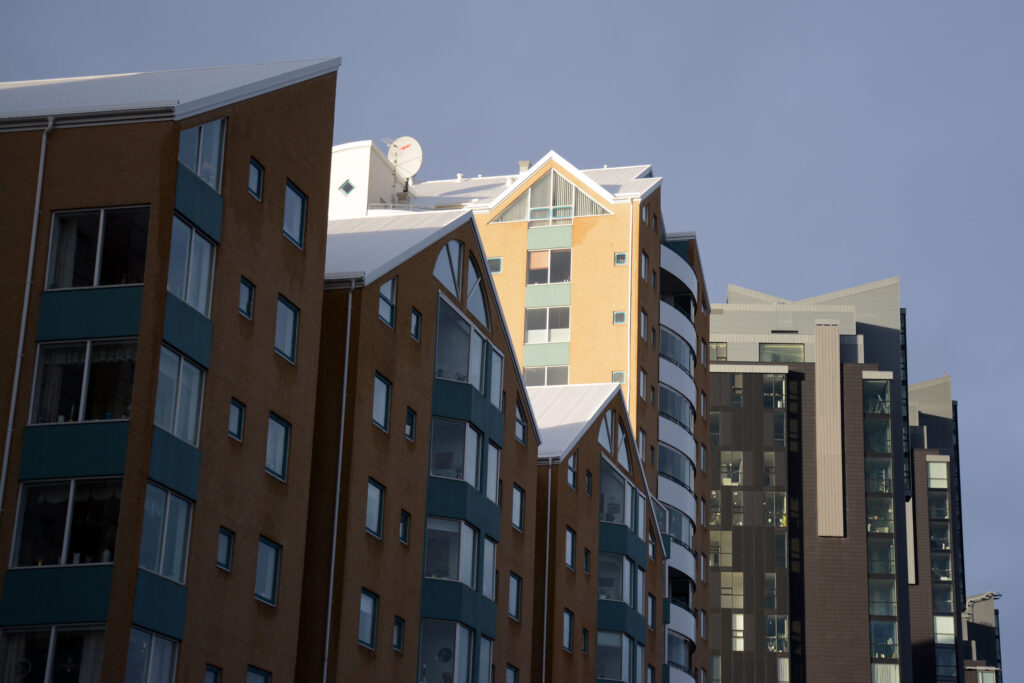
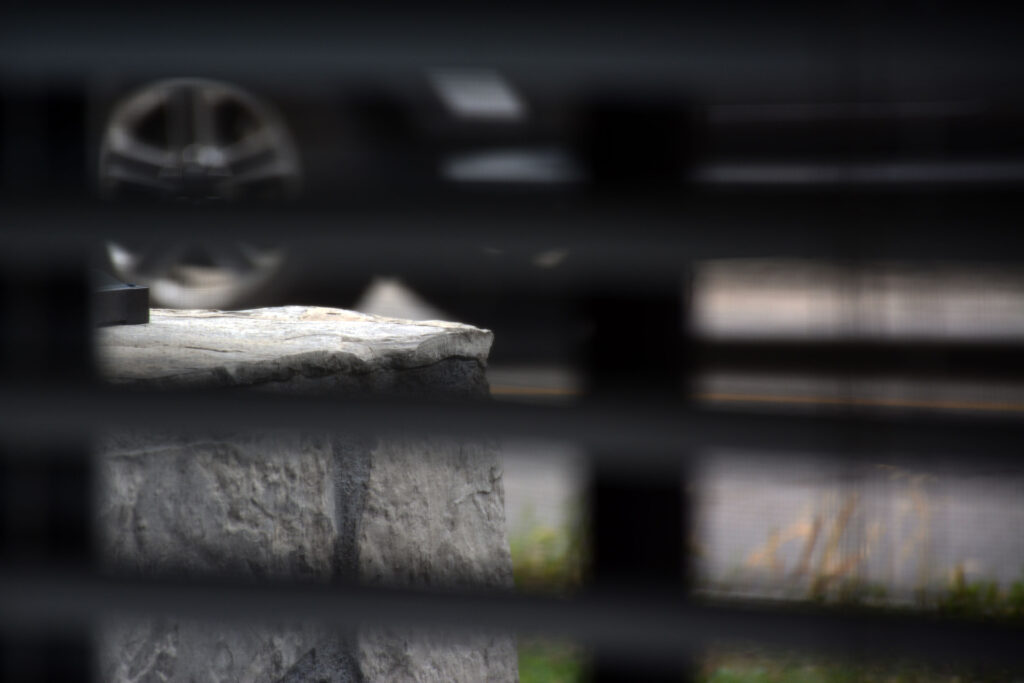
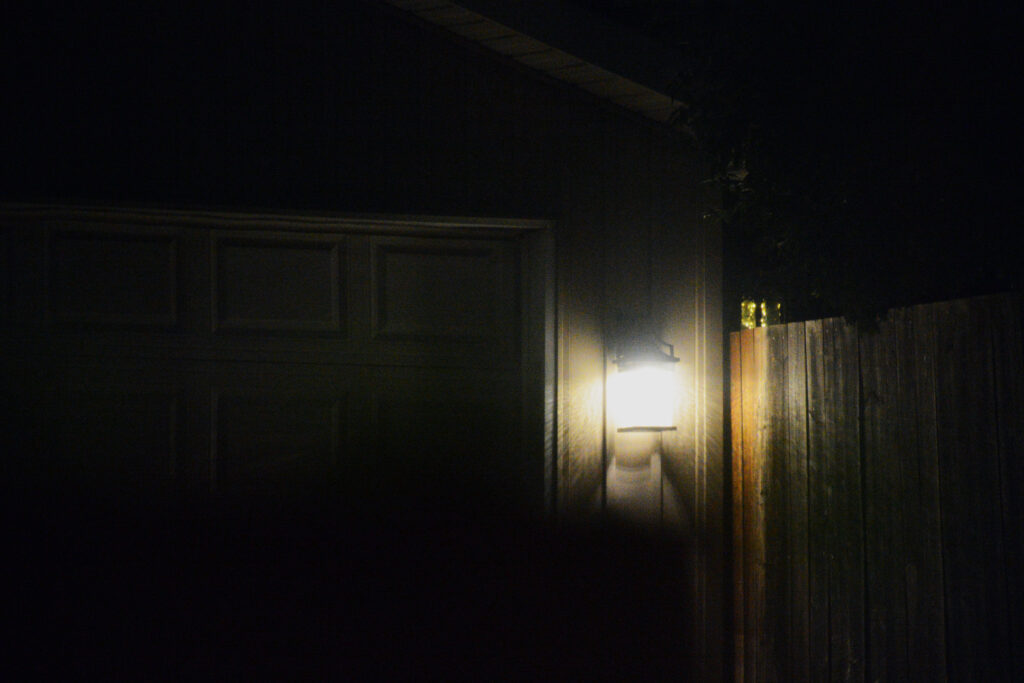
Given the current public health climate, sometimes I feel like I’m conducting surveillance on the outside when I take pictures from the window inside the apartment.

With just a few colour and point of view adjustments now it looks like I’m stalking the outside.

As well as a paper dragon, if you look carefully.

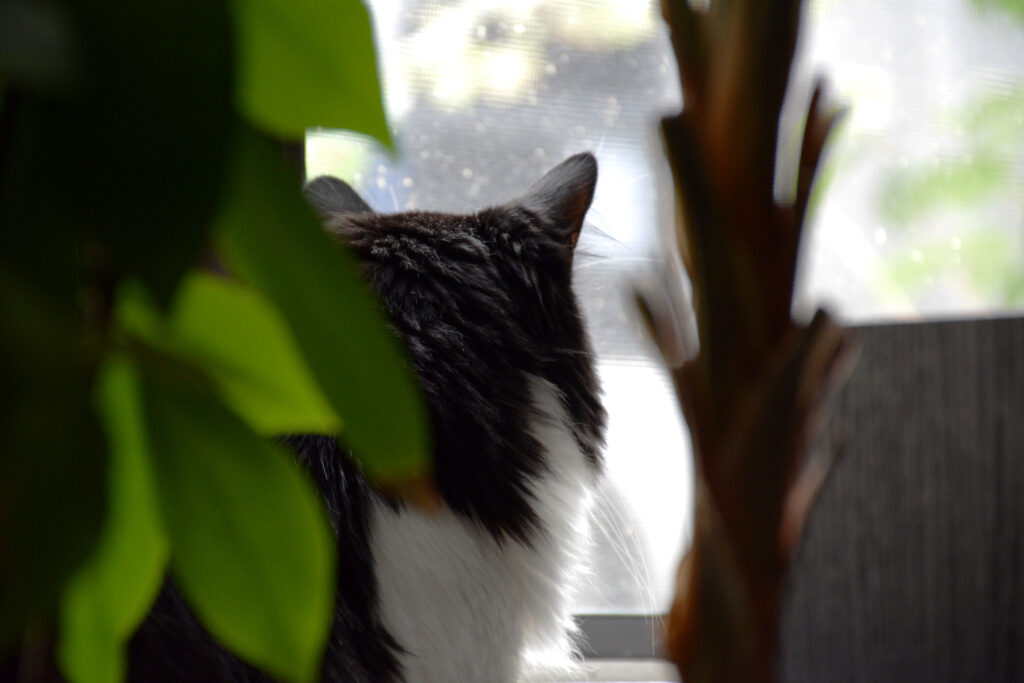
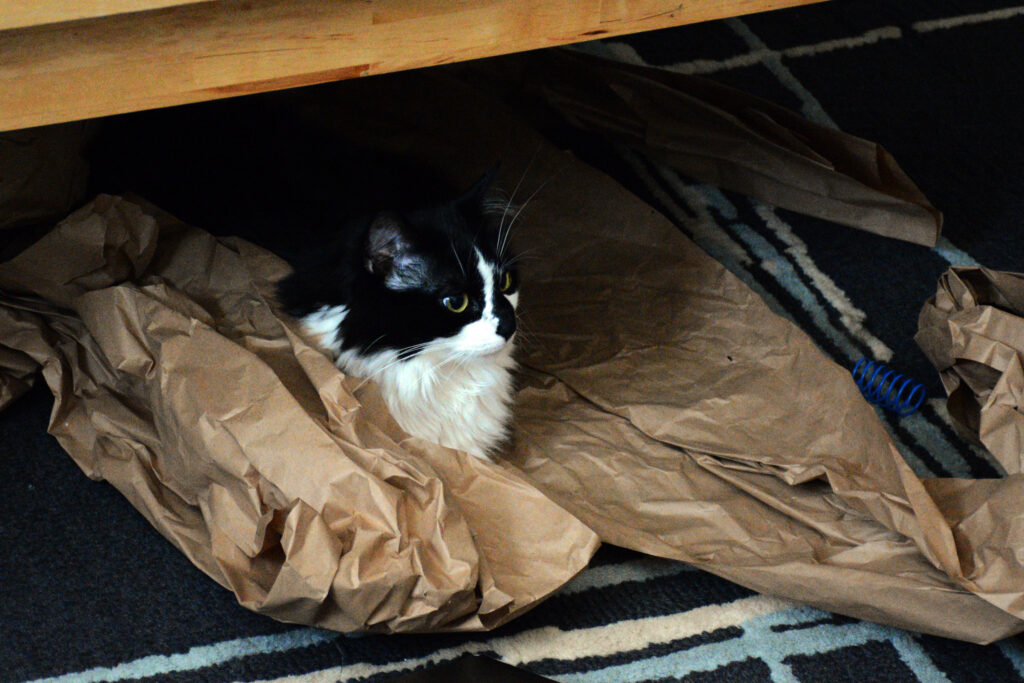
Luna loves looking out the window, and sometimes I’ll watch her as she does. Sometimes she’ll notice.

And sometimes she doesn’t.

Paper dragon number two.

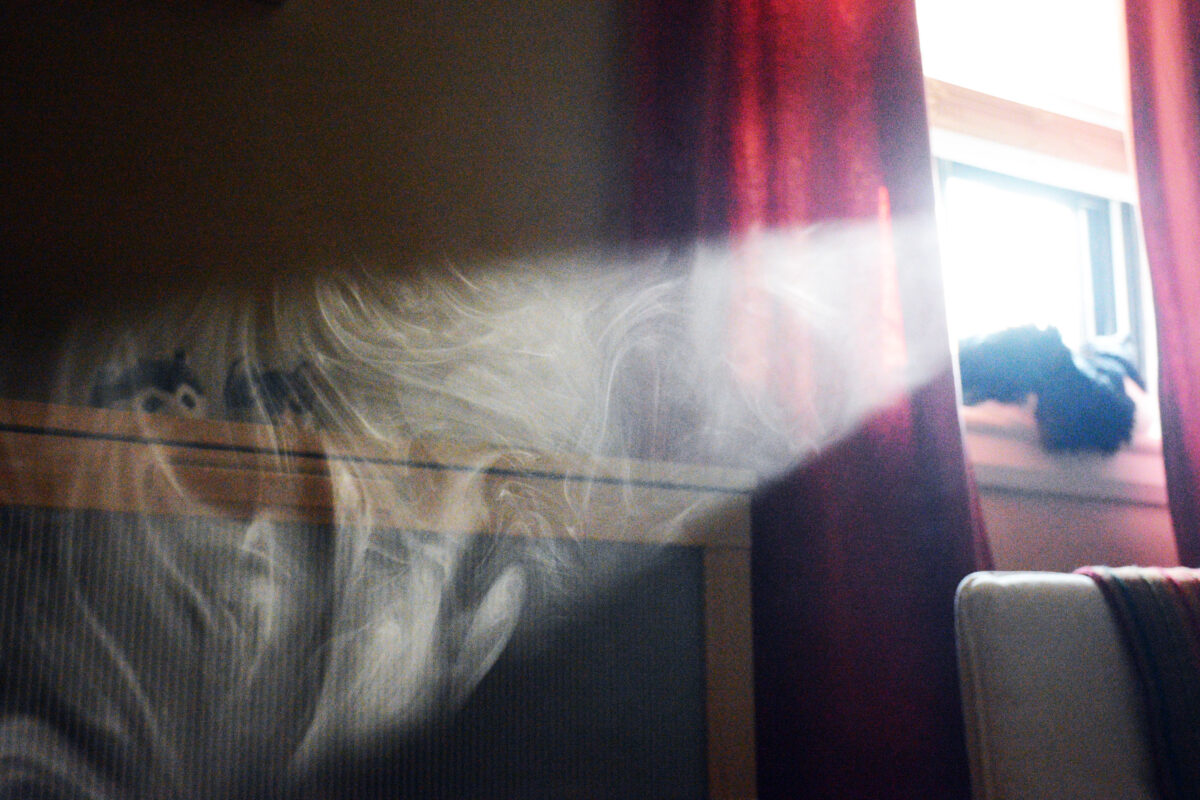
Extreme exterior surveillance mode activated—but I’m still inside.

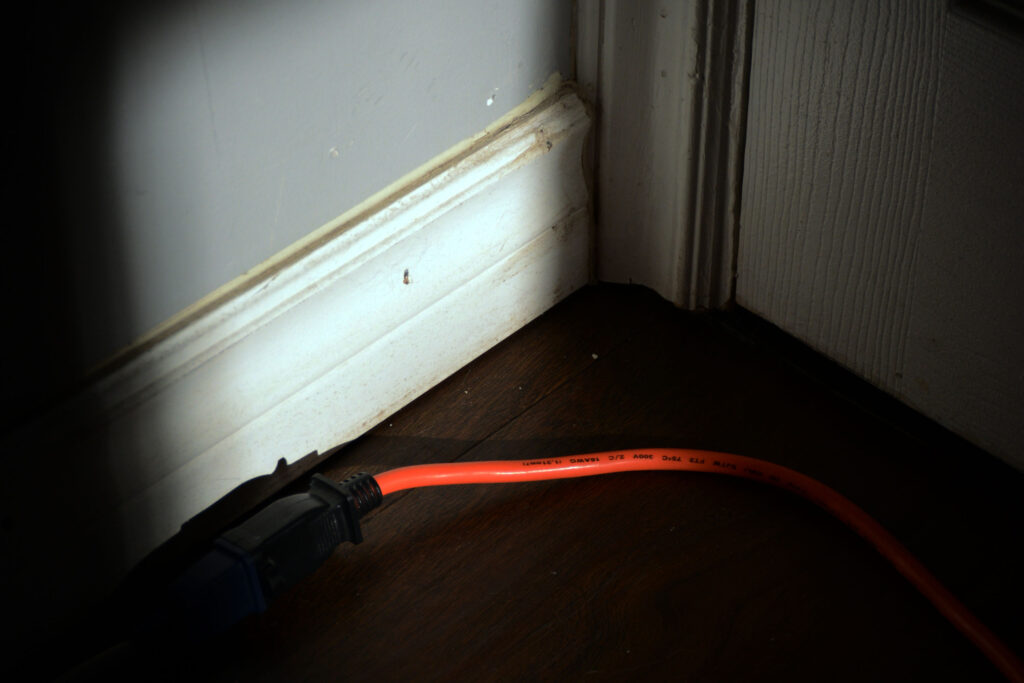
Brightness abounds.

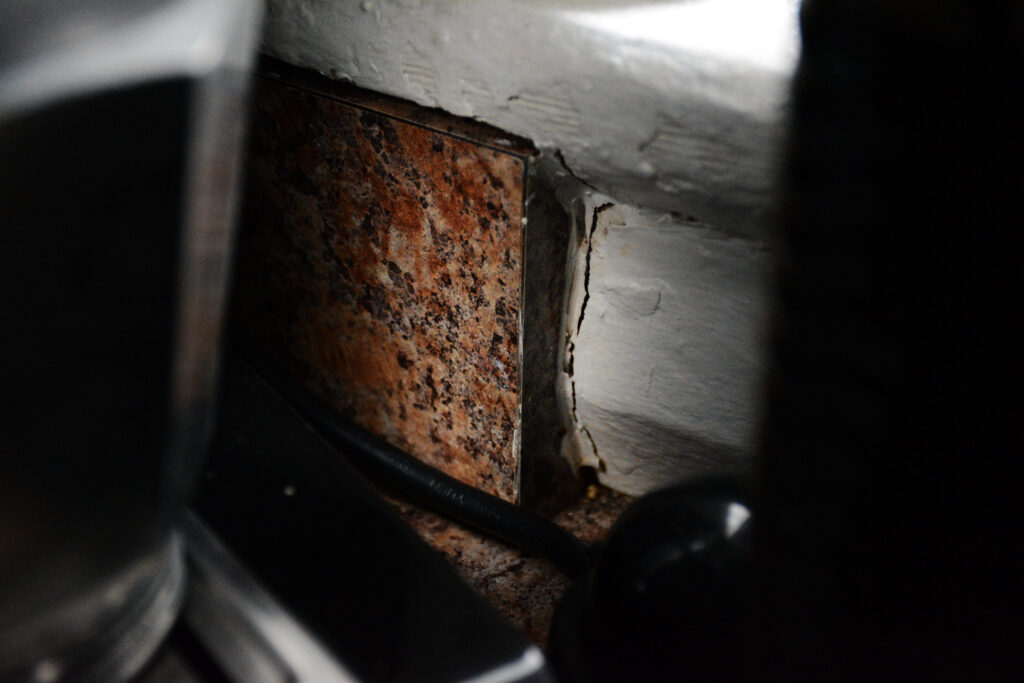
Even in the darker corners.

Or the unexpected ones.

I’ve been listening to Arcade Fire’s The Suburbs again. It’s an older album of theirs—from 2010—but I think it’s one of the best albums I’ve ever heard. It’s one of the few albums I have on record because of how interesting it is. Or have on an LP. Or have on vinyl… —the word choice can be highly age‐dependant, but the words are all referring to the same thing: phonographs—pictures of sound.

We Used to Wait is still my favourite track, but Suburban War is a good one too. Have a listen, if you’d like.

Reykjavík: Post‐Nap

Asleep for years.

As far as my Icelandic adventure goes, I disappeared into a guest house while in Reykjavík sometime during early 2017 and haven’t been seen since.

Back here in 2020: a few too many started and dead‐ended writing and blog posts sit accusingly on my desktop along with a folder of unfinished photography work. It’s suddenly September, and my subconsciousness is rebelling hard against the slightest suggestion things are in any way headed back to a new normal—will incongruent circular nonsense be an all the time thing now? The thought of checking the local, national, or international headlines provokes an immediate anxiety response, and I’ve probably experienced more than 5 years worth of per hour inside time in less than 5 months. My latest movie‐based life metaphor is a precarious mix of Groundhog Day and I Am Legend.

It’s a perfect time to reappear.

I awake after a warm shower and a long nap. It’s now late in the afternoon—about 10AM for me—and having temporarily tricked my body into thinking it got more sleep than it did I head back out to explore more of the city. It’s still January 31st. My flight to Berlin isn’t until the morning of February 2nd. I’ve got the remainder of the current day and the entirety of the next one to see… I don’t know what exactly.

I didn’t pick a same‐day connecting flight to Berlin very much on purpose. I was feeling impulsive and wanted to experience a bit of solo travel, something I’ve never done before. I also wanted to see some of Iceland, someplace I’ve never been before. The only plan I had was a plan would eventually take shape.

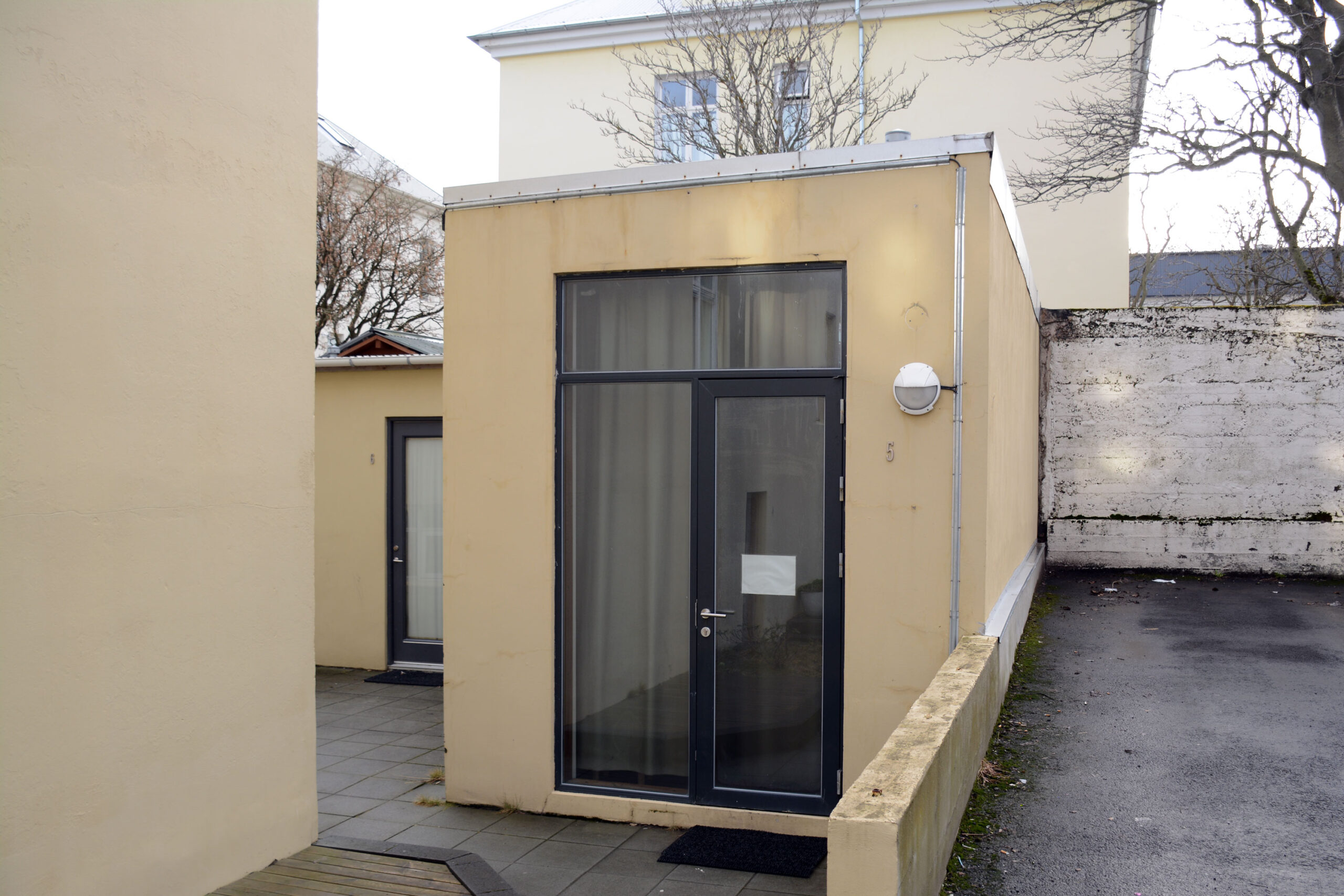
When I said I had a room in a guest house, what I actually ended up having was a room behind a guest house. The building above contained my entire room, complete with a delightfully tiny kitchenette, a hilariously tiny bathroom, and a stylishly tiny loft space—basically my own tiny house. An extensive tour will be available in another post.

The omnidirectional wind and ever‐present mist from earlier are gone—most pleasing—but there are still only hints of a blue sky mixed among the white and grey clouds. The sunlight is punching through where it can. Reflections are everywhere. Bright colours and dark shadows appear with an end of day intensity. It’s only just after 3PM, and at this latitude and time of year the sun is already setting. Had I been in Reykjavík at the start of January there would have only been about 4 hours of daylight, so I’m glad to be here now instead. Colours and shadows make me happy—relentless greys and uniform mid‐tones not as much.

I decide to check out the other gallery near where I was staying. This one is dedicated to photography and is featuring a collection of images from day‐to‐day life in and around the city. The gallery happens to be on the top floor of the local library—one of the taller buildings in the immediate area at five stories—so I’m keen to check out the view as well.

It’s a curious view—one which highlights how most of the buildings in the area are three to four stories and are all rather close to each other—I’m slightly underwhelmed otherwise. But at least it’s been confirmed: somewhere out there clear skies exist!

The photo gallery itself wasn’t as expansive as I’d pictured either. It coexisted along with the shelves of books in the library, with prints hanging along the exterior walls and in the stairwells. Though there are millions of photos in the collection, only a handful are available to view at any given time. Images are regularly rotated, so there’s always something new to check out, but it did mean seeing the entire exhibit in just a few minutes rather than the hour or so I’d figured it would take. The photographs themselves were an eclectic mix of indoor and outdoor images from the 1960s and onward. Some are of just the city itself, others are of known and unknown people. But they were all black and white prints—and I found myself reacting quite negatively to a mood dwelling within—a closed off feeling, one of isolation. I was starting to feel claustrophobic. I couldn’t see enough of the sky and the city from the windows. The framed pictures on the walls suddenly and aggressively felt too small to be around. The walls weren’t closing in on me, but I realized needed to leave the building immediately.

The outside air hits my face and brings instant relief. Each step I take reaffirms the space around me. As I walk I look down the street toward the harbour: there are new mountains.

No longer obscured by weather, mountains like the ones I saw in the misty distance earlier that day are now sitting just a few kilometres away. They feel closer than before, though that may just be lingering claustrophobic feelings from moments ago. Mountains as a sight bring me great comfort. They’re calm in their presence, yet unyielding in their purpose. They simply are, and I feel much better.

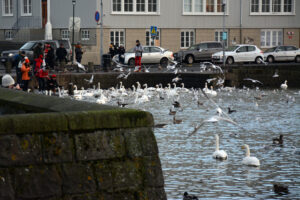
I return to the pond I’d first walked by yesterday—wait, no—earlier that day. Much earlier that day. Time is becoming disorganized in my mind. My body is starting to figure out I’ve tricked it into thinking it was more rested than it was. The smattering of late afternoon sunlight and shadows has been replaced with grey cloud cover. The feel of the air has changed: now it’s dry and cold instead of wet and cold. As I look out over the pond focused on nothing in particular a single and unanticipated quack demands my attention.

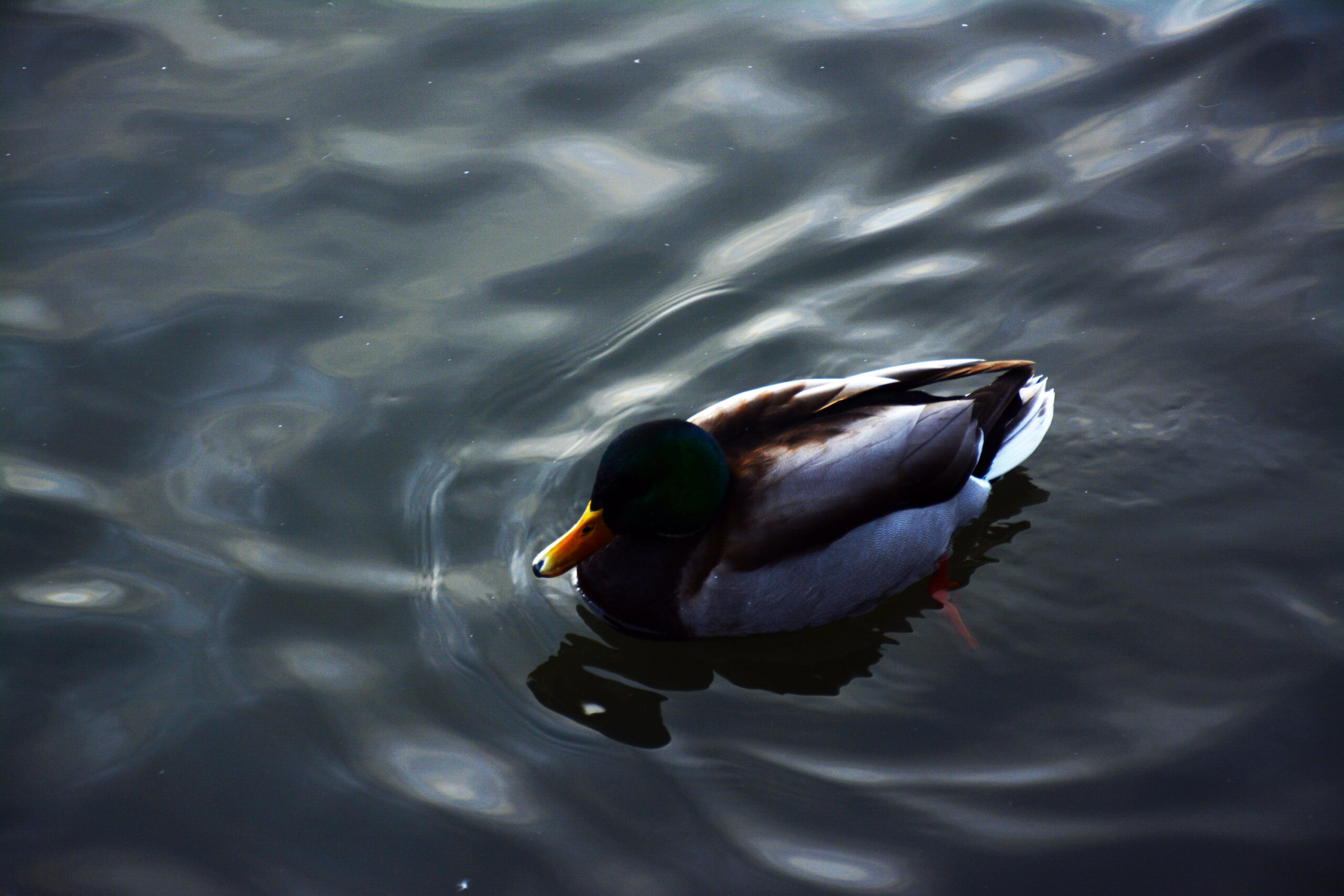
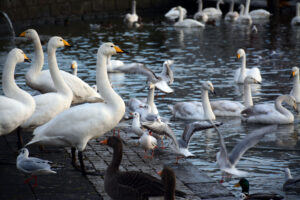
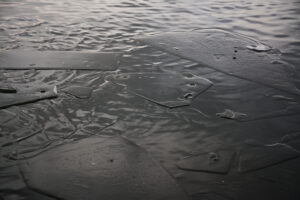
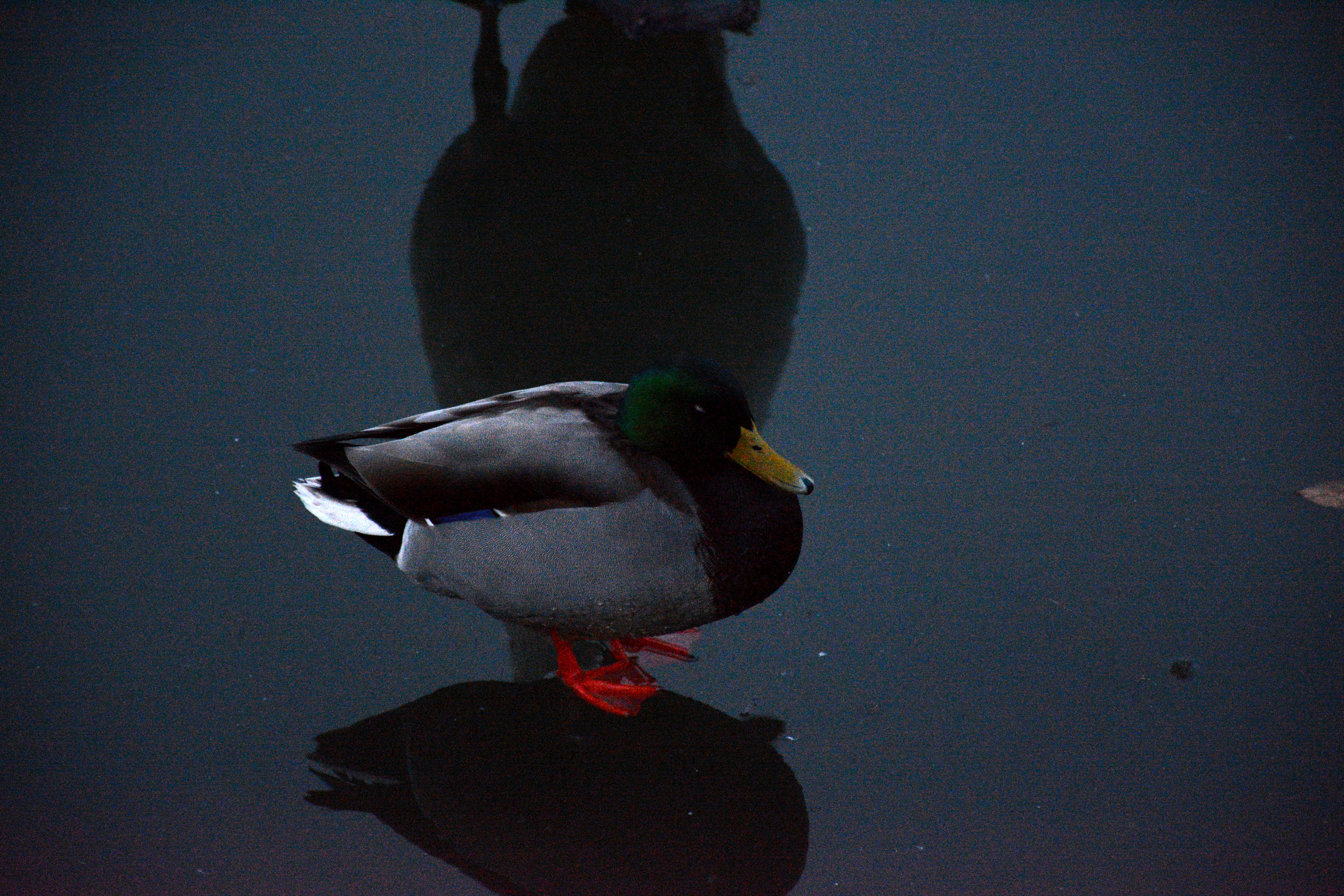
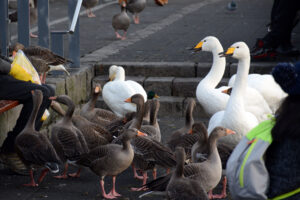
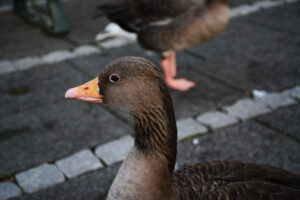
Swimming all by themselves, this mallard reminded me of the one I’d seen earlier, the one standing on a floating sheet of ice looking particularly cold about it. I watch them swim past and wonder if it was colder standing on the ice then or floating in the water now. There’s another quack from another duck, and then another, and more ducks swim past. They’re all headed to a group of people who’ve started feeding what they think is a small number of ducks—what they haven’t seen yet is every bird in and around the pond converging on their location.

Pictured above in addition to the mallards are white whooper swans, brown greylag geese (I had to look these up because I’d never seen them before), Iceland’s version of seagulls, and, as far as I could tell, a single pigeon—which seemed like an impossible amount of pigeons. When has there only ever been one pigeon?

Having lived for over twenty years among the millions of people in the Toronto area I’ve grown acclimatized to a particular scale of experience when I’m out and about. The population of Reykjavík is about 130,000, almost half the national population of about 330,000. That means there are more people living in just the city of Markham than in all of Iceland.

Suddenly I am the pigeon, the only one among groups of others. Normally there are so many other people around me I don’t notice who’s in a group and who’s solo—they all just blend into the crowd. But it’s different here. Here it seems everyone is grouped together. Here it seems I am the only one by myself. My tired mind seeks to defuse what is growing into a mild existential crisis. I turn to see nothing that helps.

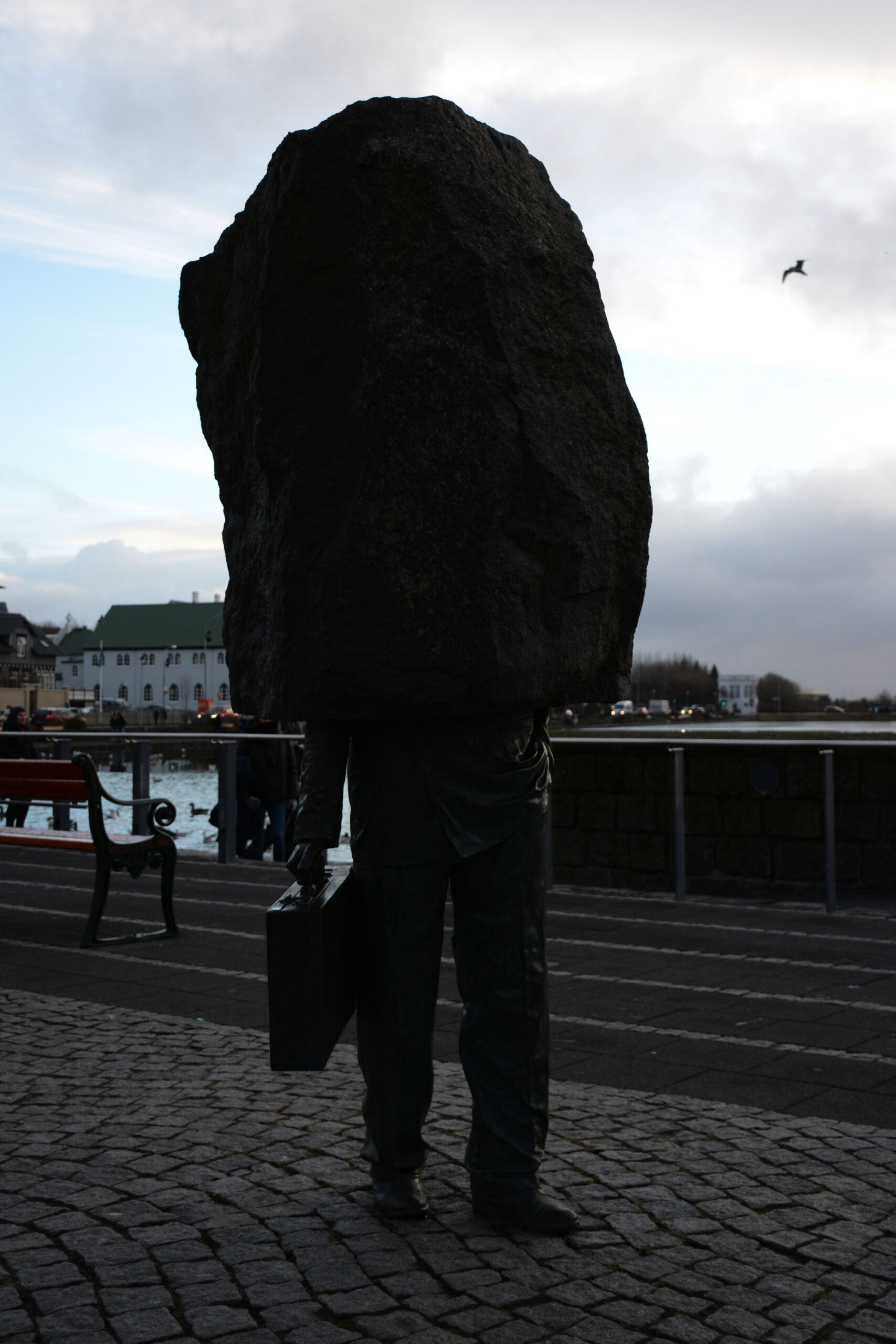
The uncomfortable form of the business rock and its ironic appearance during my fowl‐based experience is the perfect amount of jarring.

What was the pigeon doing out by themselves? Heading over with all the others to get something to eat, something I needed to think about doing myself but was too tired to realize. My big breakfast had been many hours ago, ditto for my hot dog snack. I wasn’t sure how much sleep I’d gotten in the past 48 hours, but I had to acknowledge it hadn’t been enough to be doing this much walking around in this much miserable weather. I was tired above all else, then hungry, then just a bit lonely. Now everything made sense. Clarity superseded. I was no longer the pigeon. I never was. But I was having fish and chips for dinner.

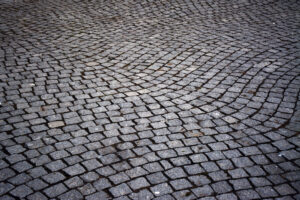
With re‐renewed vigour—it’s my forth or fifth wind by now—I head back to the city centre, back to the prospect of a feast of fish and French fries. En route are the many textures I’ve come to know during my outside time.

Prevailing clouds have returned along with Reykjavik’s palette of infinite greys. Anything with even a hint of contrast leaps out of the mid‐tones, as does anything with saturated colour—almost to an artificial extent.

Mac users will recognize the symbol in the above middle photo as the command key—in use on Macintosh keyboards since 1984—but in use as a places of interest marker in Nordic countries since the 1960s. The symbol itself goes back over fifteen hundred years and has been found on objects throughout northern Europe. It also appears on artifacts from the Mississippian cultures of North America. I didn’t know any of this at the time—I was busy wondering what mix of compounds would be required to produce a polar bear approved chemical warmer before being completely distracted by what was around an unknown corner.

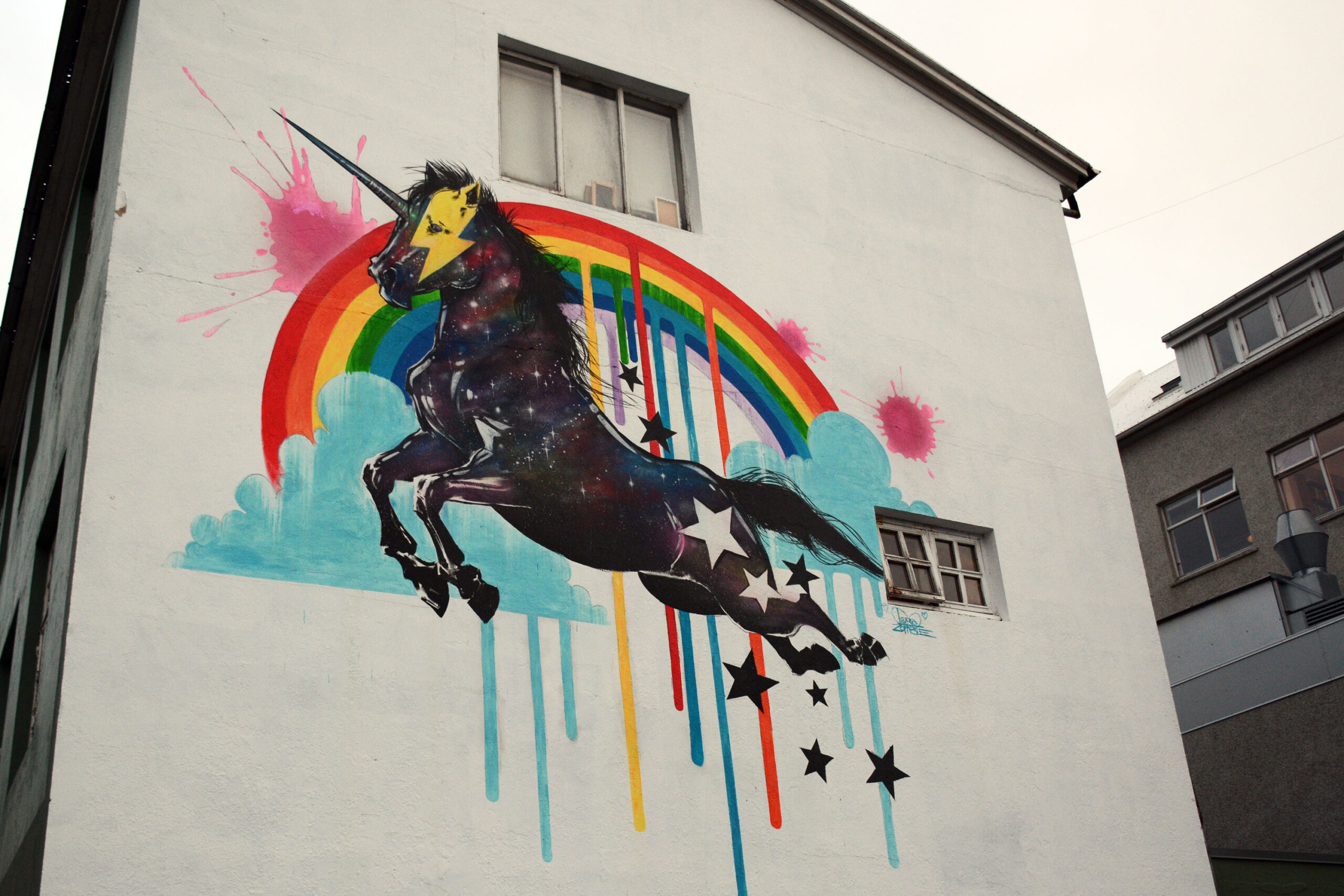
As if responding to my developing chroma deficiency, a building‐sized David Bowie unicorn mural appears out of the grey streets and white buildings to remind me: there are colours, they do exist here, and here they all are at once just in case the clouds are covering them. Also keep walking—face the strange. It’s dinner time.

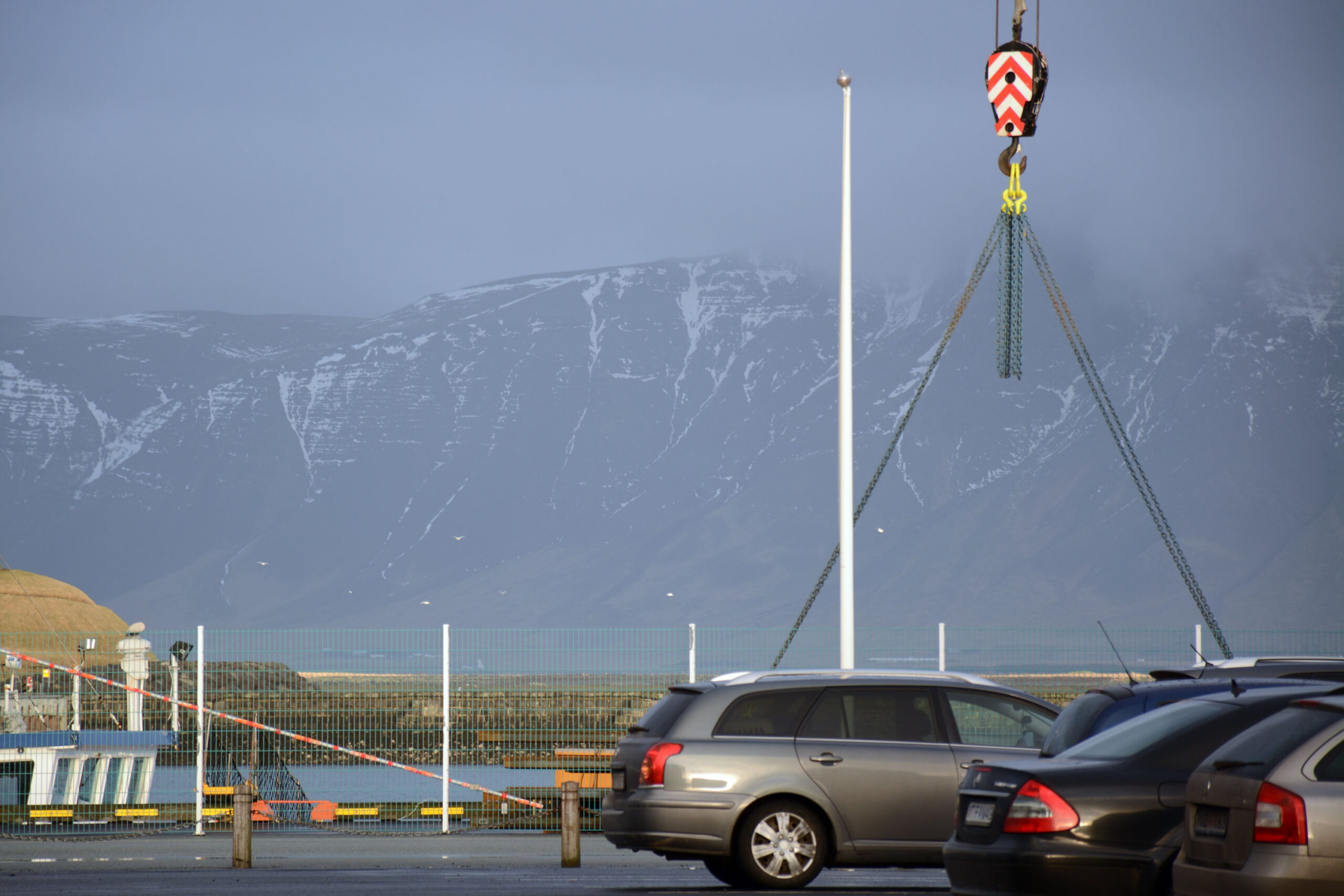
Back near the harbour the mountains are even more clearly defined than they were earlier in the afternoon, now looking like I could touch them—yet still a feeling of them being just out of reach.

Where I decide to eat is more than just a restaurant. It’s also a geology exhibit with a documentary film theatre and information centre detailing some of the volcanic history and activity throughout Iceland. Featured are the eruptions of Eyjafjallajökull in 2010—responsible for a dust cloud which disrupted air travel over most of Europe for more than a week—and Eldfell in 1973—which required the evacuation of an entire island off the southern coast of Iceland for several months. The island itself, Heimaey, is a product of on‐going volcanic activity. It’s still new in geologic terms at only 10‐12,000 years old. The lava from the 1973 eruption destroyed half a town and grew the island by about 2 square kilometres. Ten years prior, an underwater eruption of another volcano lasted almost 4 years, producing a new island estimated to exist for about 100 more years before erosion from the sea washes it back below the surface of the water.

I’m too hungry to wait for and watch the next set of documentaries, plus I’ve noticed it’s happy hour at the restaurant bar: there’s a special price on a gigantic beer when ordered with fish and chips. It doesn’t come in a glass shoe though—perhaps that’s more of a Greenland thing. The dinning area looks out over the harbour. I enjoy the view. I watch the mountains. The fish and chips are crispy and steamy at the same time, perfection as far as I’m concerned. The beer is as advertised—gigantic.

The light has changed during dinner, and it’s bringing about curious sights and colours while I walk back to my room, just around the corner from the restaurant. I’m not generally drawn to hastily scrawled tags as they tend slightly more toward vandalism than street art on my graffiti spectrum, but sometimes the forms and interactions they create intrigue me.

In this case it was being able to see the path the paint took as it was being applied, where it doubled back on itself, and where it had collected as it was drying. The implied motion from both the applier and the paint combined well with the shadowy dark and inset background, giving the red paint a floating quality.

I don’t know if it was painted all at once to give it that effect or if it’s a poor attempt to cover up the blue paint after the fact. Either way I find it compliments the crooked 5 in the fifteen quite nicely.

And check out that window.

But more so, check out that reflection in the window. The clouds have broken in a most spectacular way, both concealing and revealing a pallet of sunset colour unlike any other I can remember. There’s still some blue in the sky the camera can see to highlight some of the muted coral pinks and water colour purples, but I’ve never seen such intensely varied oranges or such heavily faded greys both approaching darkness before.

I’m at the street outside my room now and standing in roughly the same spot for the pictures above. It’s all the same sky, but I’ve rotated my view by about 45 degrees for each shot.

And then—for a balanced perspective—a shot of the ground I’m standing on.

I’ve done my best to crash though jet lag by doing whatever local time expects me to do, but my mind has turned to goo. My body is so tired—filled with fish and chips and beer. The setting sun is communicating only one local time expectation: sleep.

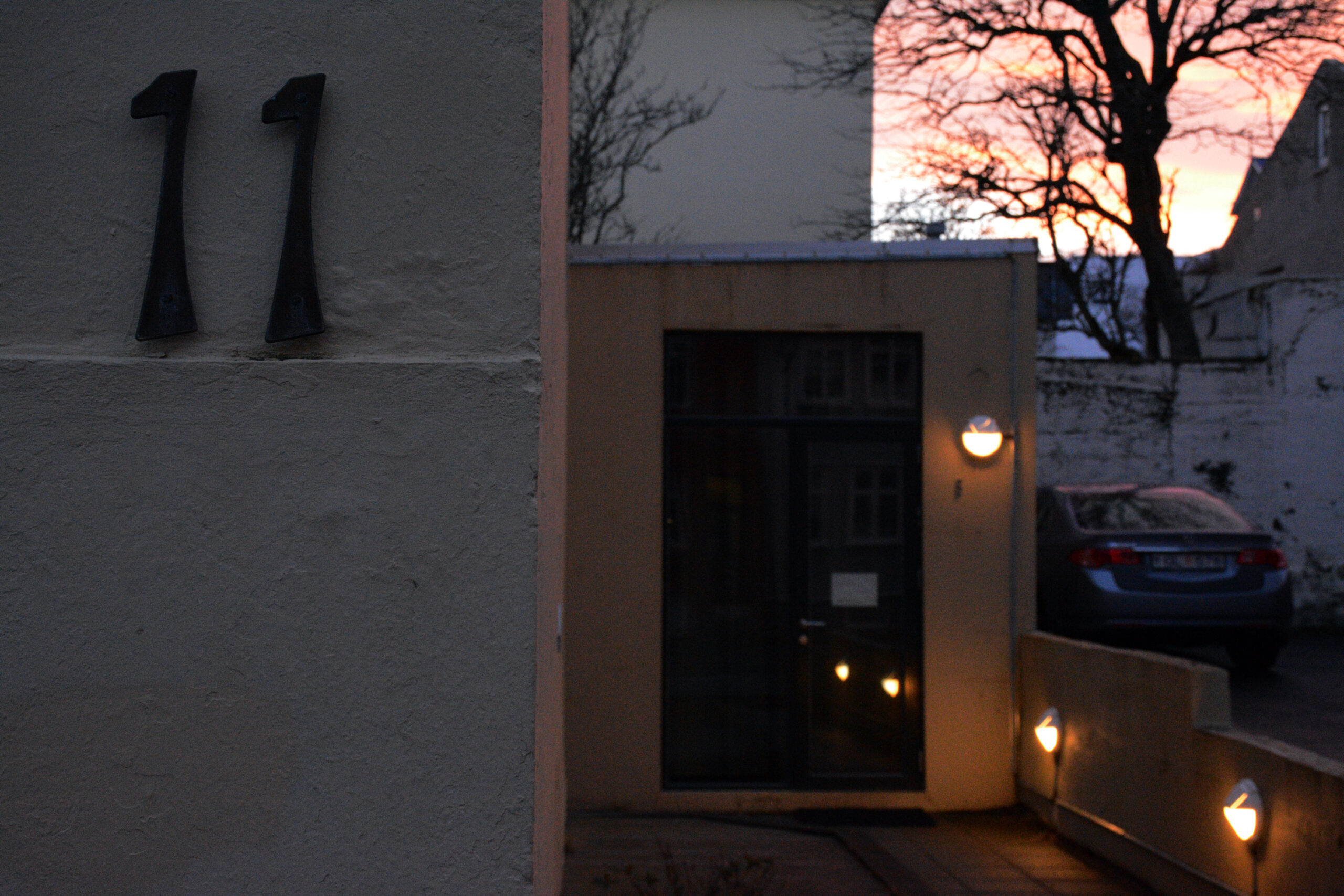
Three Dog Night says one is the loneliest number, and that’s why I find 11 amusing: one embracing the antithesis of singularity by being near another.

My tiny house awaits.