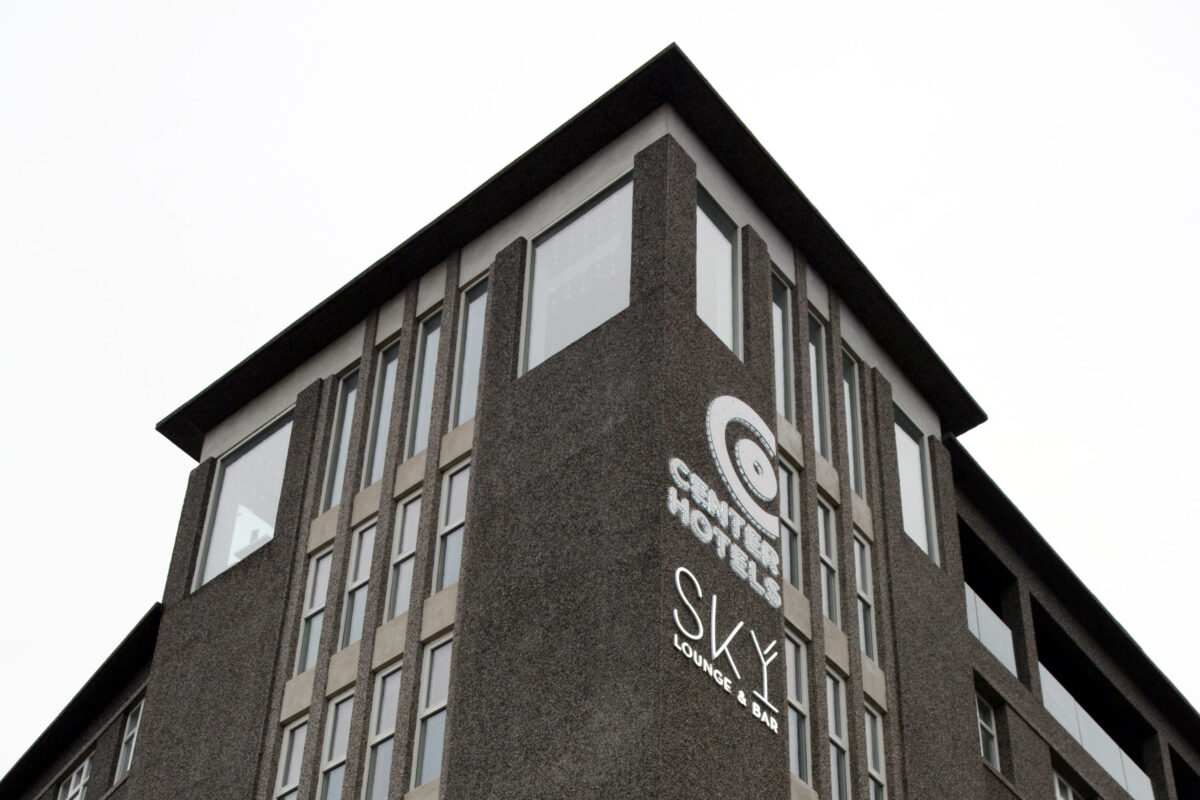
I’ve been making black and white featured images for each of my Icelandic posts so far, but for this post I’m using a colour image instead. Yup. Reykjavík is an incredibly grey place. It’s a beautifully colourful city as well—but when it wants to be grey. Yup. Incredibly grey.
For the moment today’s colours are muted, fleeting, and gorgeous.
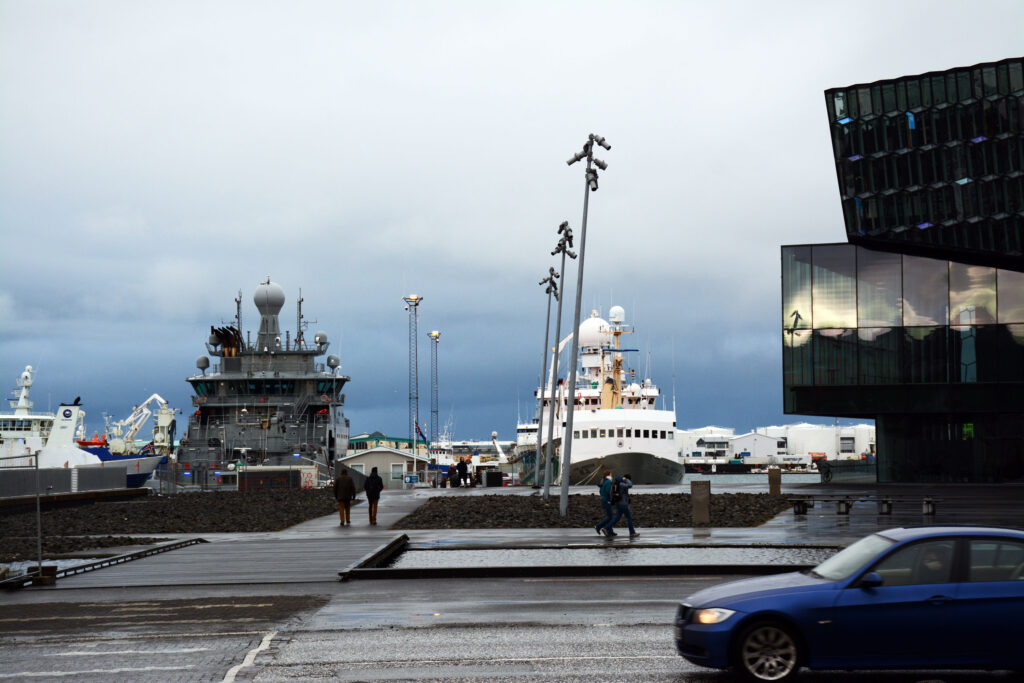
In a previous post I’d referred to Harpa as being covered in a glass honeycomb structure. While incredibly honeycomb like, the shapes are technically referred to as quasi bricks. Each quasi brick is a twelve‐sided polyhedron consisting of rhomboidal and hexagonal faces. Once assembled together the quasi bricks form substantial portions of the building itself, so Harpa actually isn’t covered in a honeycomb structure—it is a honeycomb structure.
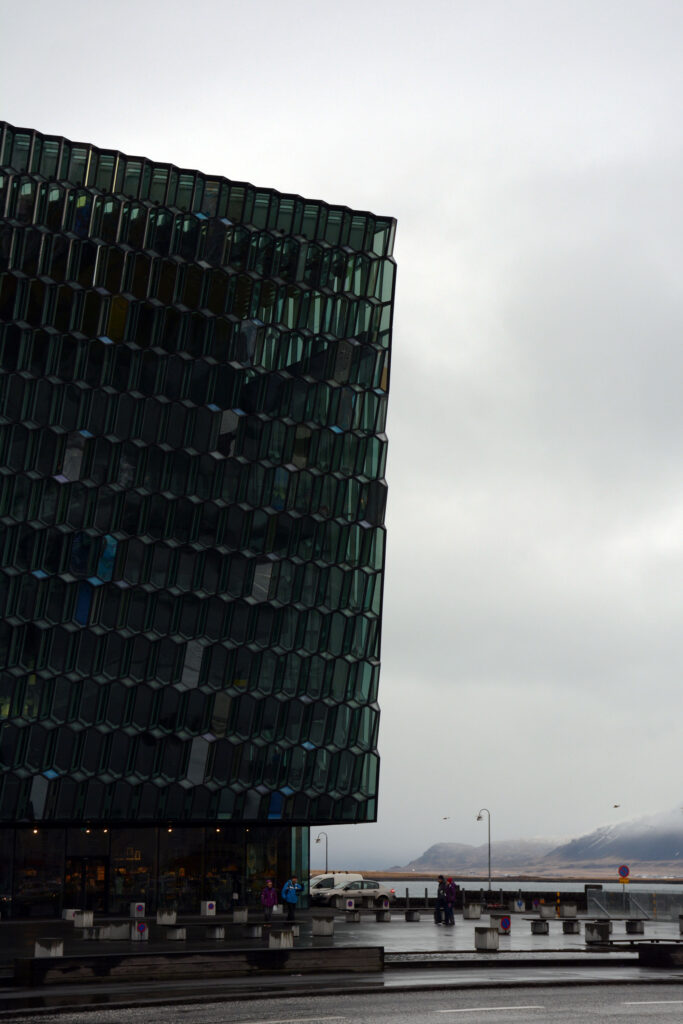
I’m on my way to get a rental car. The no plan plan is to drive around and lightly explore the area between Reykjavík—where I am now—and Reykjanesbær—another city about 50 kilometres away and very near where I need to be by tomorrow morning for my flight to Berlin. I’m looking forward to my road adventure, and this change in the no plan plan happens to solve a couple of logistical challenges I’d inadvertently created for myself through—somewhat obviously in retrospect—poor initial planning.
And yes—it’s as chilly as it looks. The deal I made with myself was whatever the distance I needed to cover on foot in the cold—turns out it was just over one and a half kilometres—would be distance I’d travel back while seated comfortably in a warm car: hardly a hardship all things considered.
Plus the walk gives me time to study the road signage. I legitimately enjoy signage because there’s a reason why it’s there. It’s a form of communication. There’s a story behind every sign.
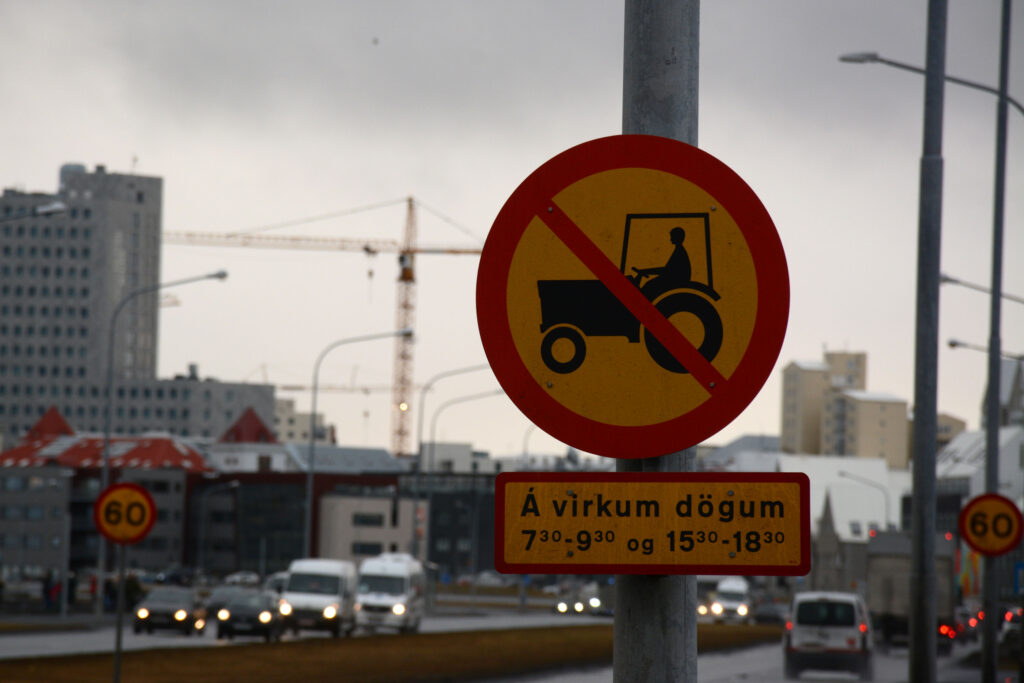
I’ll need to understand at least some of the stories the road signs are telling because soon I’ll be quickly moving past them in a car. Walking along the road I plan to drive back on gives me a glimpse into my future automotive experience. And as long as it’s not during peak traffic times, that future automotive experience could include the operation of farming equipment on a major thoroughfare. Noted.
Sometimes the story is on the sign instead of behind it.
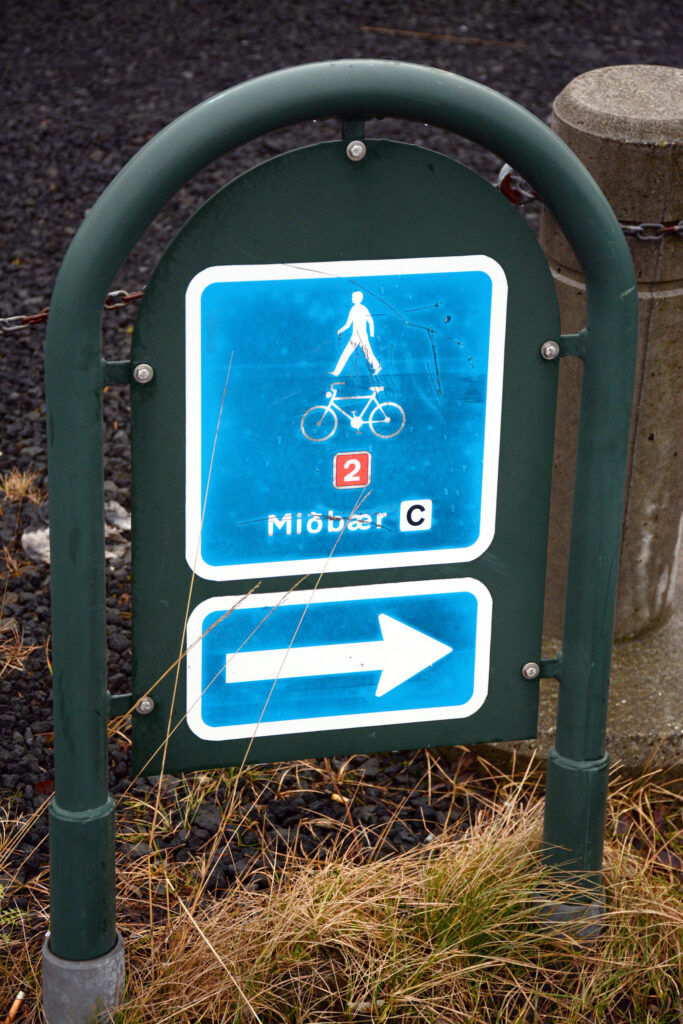
Greetings. Walking and biking (and possibly walking‐on‐biking) may not continue to be happening where you’ve up until now perhaps expected it to be happening. If you or your bicycle is facing as indicated on this sign, you could be about to be going the wrong way. Here are some numbers and letters and names and colours to help you identify if this is the path you intend to be on, and if so: follow this giant arrow until the next giant arrow or otherwise instructed. In any case, our time together draws to a close. Fare thee well.
You know—wayfinding.
Languages are stories—just like signs they end up on. Languages are full of characters and metaphors, symbology and theme, and rules and syntax. The rules and syntax are argued as being the most important part of the language story: communication is easier when it’s performed in a standardized manner. But I can string together all sorts of correctly spelled or arranged words and still not be saying anything particularly useful. Or even understandable. Like what was I talking about earlier: something to do with dozenal‐sided rhomboidal polyhedrons based on hexagons. A twibbled spind hab neather a fab shot indwind. Yes—rules keep language in‐line, but there’s often nothing to read when there’s only rules.
There are around 380 million people whose first language is English. Then there are around 610 million more people whose second or other language is English. That’s close to a billion people who all, in theory and to an extent, have the potential to understand each other. At least linguistically. Mostly. But still—the consequences of almost 1 in 7 people on Earth understanding English means I can walk into a rental office in the capital of Iceland and book a car for the day without any meaningful understanding of the local language. English was widely used throughout Reykjavík both in signage and in conversation. I felt tremendous gratitude in having a language I understood to use while I was a guest in the house of another language.
It might be a different story in other parts of Iceland, outside the major tourist destinations, as far as the use of English goes. But I wouldn’t be able to find out on this trip by missing a turn and getting stranded somewhere out in the middle of nowhere, rescued by some local hero whose recently unshakable melancholia is due to a perceived shortcoming surrounding a skill which I am coincidentally proficient in, and for some reason I take it upon myself to mentor a total stranger who, despite the fractured understanding of a common language, I feel an overwhelming amount of formulaic appreciation for and wish to repay in kind—like how travel happens in movies? No. I had to agree not to drive the car on anything that wasn’t a road or on any road that was closed—both of which seemed like completely reasonable and would go with out saying requests, but what are rules if not little signs made of words. What are words if not little stories. And how many ruined natural landscapes and destroyed rental cars are in those stories.
I also had to promise not to drive the car on any F‐roads. These mountain roads run across the highlands found in the centre of Iceland. They require a 4×4 vehicle to use—the serious ones with chunky tires—because there are often no bridges available for river crossings. Surface conditions can also be treacherous, so the roads are only open for a brief time in the summer—depending on how long it takes to repair each road after the damage caused by the winter.
With it now very much confirmed that my driving will be confined to only the most open and the most official roads, I head back outside—rental car keys at the ready—and find a surprise is waiting for me.
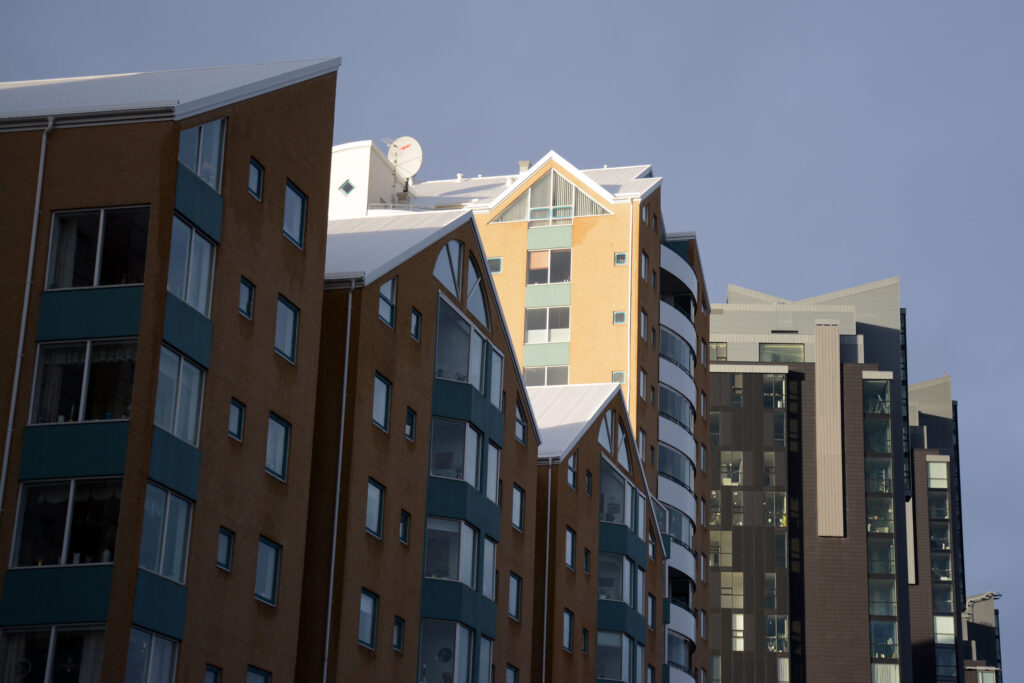
The sun is out, the sky is blue, and the colours are back. It’s another sign: time for adventure.