“If we go by the book, like Lieutenant Saavik, hours could seem like days.”
Spock understood the peculiar consequences of time dilatation. And why wouldn’t he? This is the same guy who could calculate the coefficient of elapsed time in relation to an acceleration curve while accounting for the variable mass of whales and water in a time reentry program. Granted, some of the parameters were programmed from memory: the availability of nuclear fuel components; the mass of a 23rd century Klingon bird of prey vessel through a time continuum; and the probable location of humpback whales on Earth—but even he had to make a best guess at some of the values when it came down to it. Yet I, like Kirk, would tend to place more confidence in Spock’s best guesses than in some other people’s facts, a confidence formed long before Spock returned from the dead.
Today it will be four years since I visited the mountains in Iceland, but it’s only been a couple of months since I headed toward them from this narrative’s perspective. Time is strange: a peculiar consequence of motion. Yet sometimes it feels exceedingly like it’s going nowhere. I’ve been trying to finish this post for weeks now, each time slowing to a halt after only a few sentences, after only a few moments. There’s no movement—I find myself blocked in a place of infinite time.
It’s incredible the difference a little direct sunlight can make. Without it there are no shadows. Contrast fades and colours recede, as if everything is being lit by a single, dismal bulb screwed into an imaginary ceiling that’s both everywhere and nowhere. What’s doubly funny about noticing how grey and monotonous the light was in Reykjavík is knowing now what was waiting for me in Berlin—but I’m not there yet. Instead, I’m in a parking lot noticing the changing light as I get into a rental car.
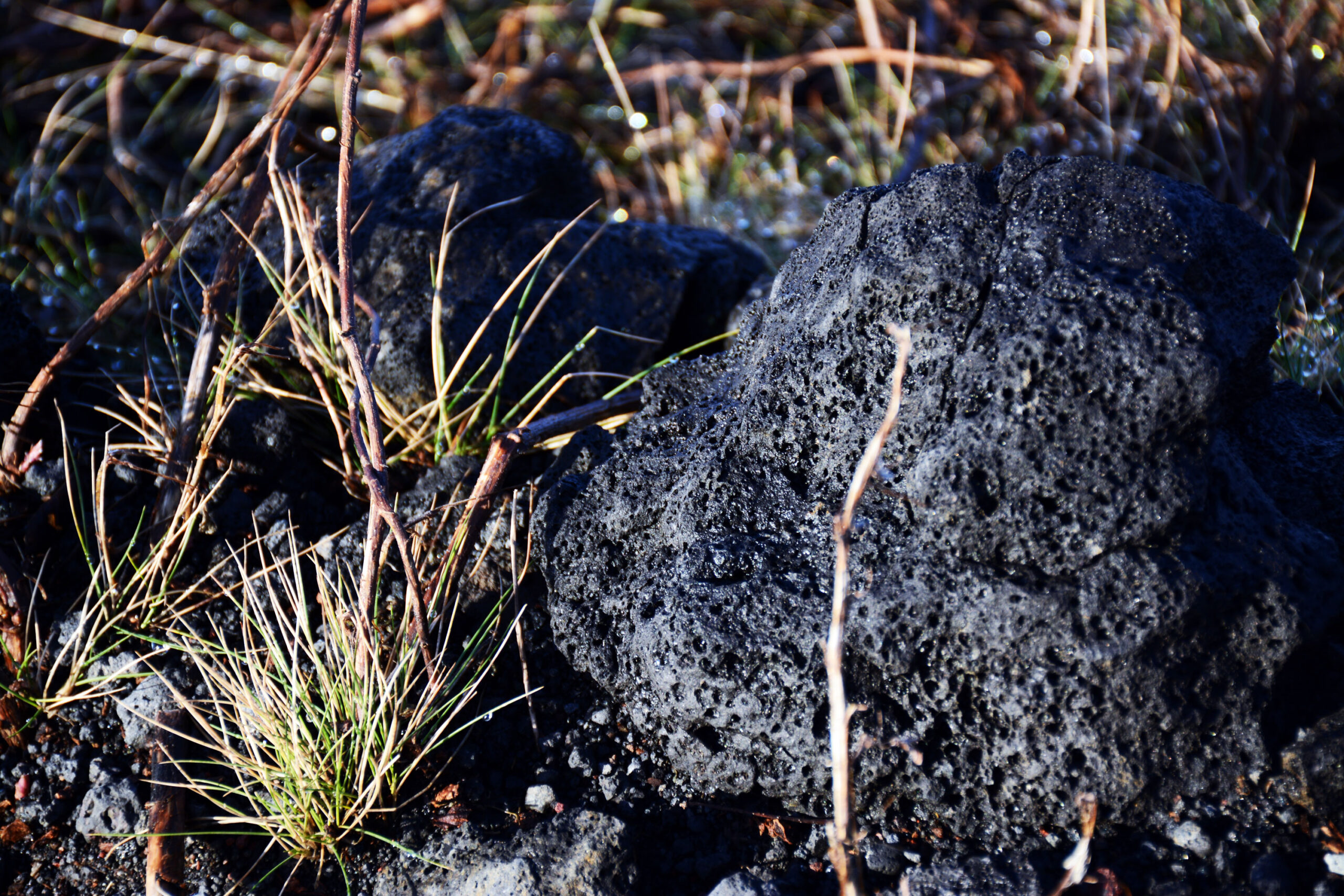
Driving back along my walking route I find it transformed. Up until now, I found Reykjavík to be cold and damp, but above all: grey. It set a strong tone. I wasn’t having a bad time because of it by any means, but I was certainly on my way to forming a similarly monochromatic impression of the place. Now, as I went back to my room, as I went past the metallic, cold harbour, past the dark, imposing Harpa, past the grey clouds, rocks, cement, and grass… I found everything was as it was—but with more. The hard lines of the boats stood out against the water and made perfect sense. Harpa shimmered as its glass honeycomb structure reflected colourful sunlight in all directions. There were gaps in the clouds. The rocks were full of holes. The cement was covered in texture. And the grass was never grey to start with, but now there was no doubt: it shone brilliant brown.
Back in my temporary neighbourhood, the morning sun confirms a population of colourful buildings at full volume. The air itself is bright. My tiny house fills with light.
Before heading out, I use the WiFi included with my room to download a map of the route I’ll be following out of Reykjavík. I’ll be using my tablet as an offline GPS so I don’t have to depend on—or pay for—an unknown mobile data network while driving, plus I can keep my phone fully charged just in case there’s an emergency. I also download all the road maps for Reykjanesskagi, the name of the Iceland’s southern peninsula and the area I’ll be travelling through on my adventure.
As I am leaving a day early, I stop to let my host at the front desk know that the room was very comfortable, that I was indulging in a flight of fancy, and that I was departing before check‐out time hoping someone else might be able to stay in the room that evening. I’d prepaid for two nights anyway, and I knew there was no partial refund possible, and I also knew I didn’t have to do or say any of what I did that morning, but also didn’t want to just disappear.
With the car packed, I drive down the street and away from the tiny house. I roll down the window and listen: though not as pronounced as on the cobblestone roads in the city centre, I can hear the muffled tap dancing of the car’s studded snow tires on the pavement.
The clouds are all but gone as I leave my familiar walking streets behind and am guided through places unknown. Reykjavík is revealed in new light, full of foreign shapes and colours and configurations. It’s a beautiful sendoff, one I’m happy to have experienced after arriving in the city during the middle of the night. There is no denying I am in another place now. I feel far away. It’s wonderful. I turn on the radio. Of Monsters and Men is playing—I smirk and feel immediately at home again, as if I’d stumbled across a Tragically Hip track while driving through rural Ontario.
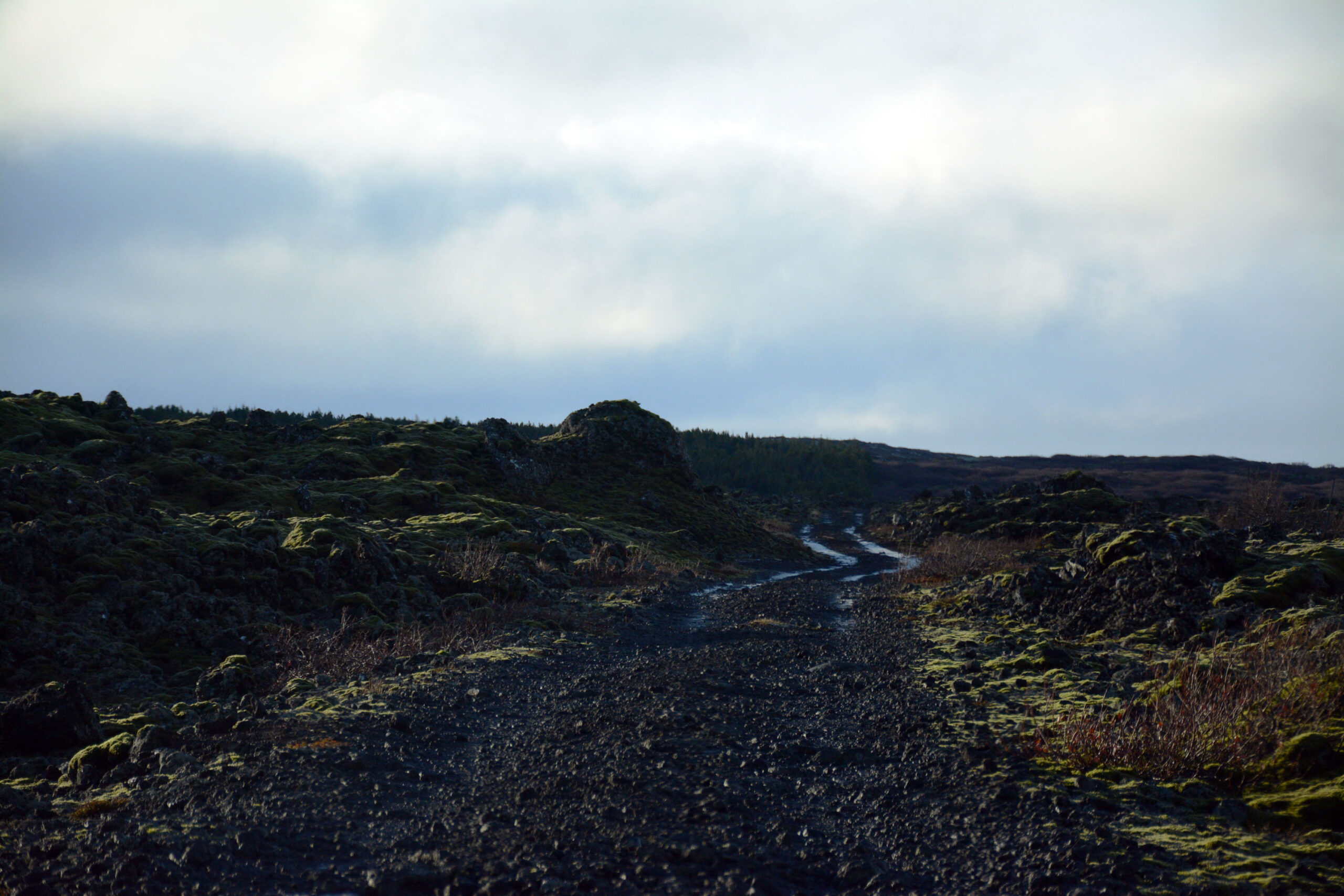
In just a few minutes I’m outside the city and arrive at the junction with the secondary road which will take me into the mountains. As soon as I complete the turn, the landscape transforms again.
There is nothing of Ontario here.
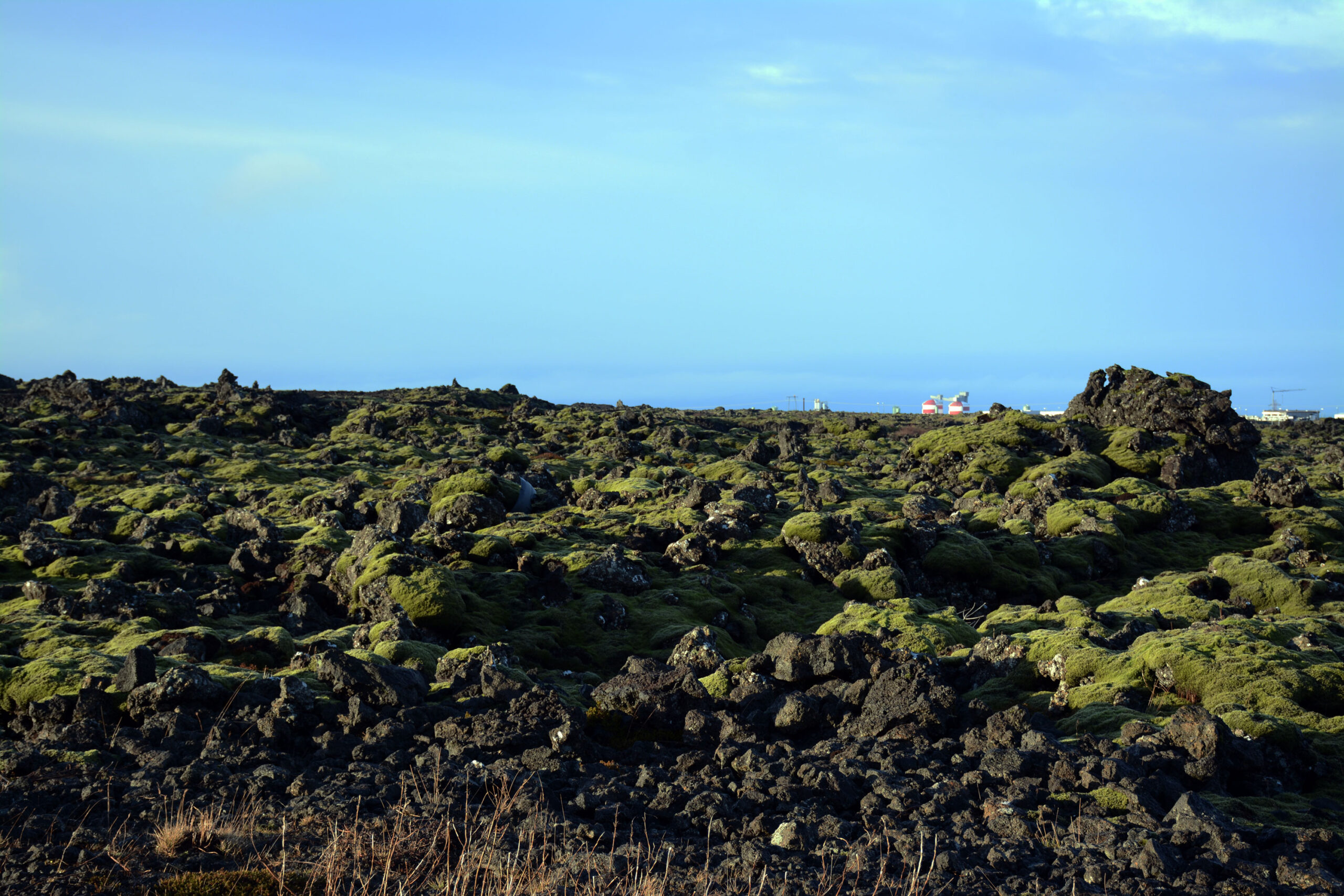
I pull over into the bottom of a driveway—pausing just for a moment to wonder if I’m already in violation of my rental agreement before reassuring myself that by definition a drive way is a road. But I still confine the car to an area I am comfortable to consider the most road‐like as the driveway itself appears to trail off into a vagueness of definition I’d rather not deal with.
The land is covered in dark volcanic rock covered in green fluffy moss. Even the rocks themselves look soft and comfortable up close, like sea sponges under water, and I imagine being able to climb in among them, pull some of the fuzzy green blanket over me, and enjoy a nap in the sun.
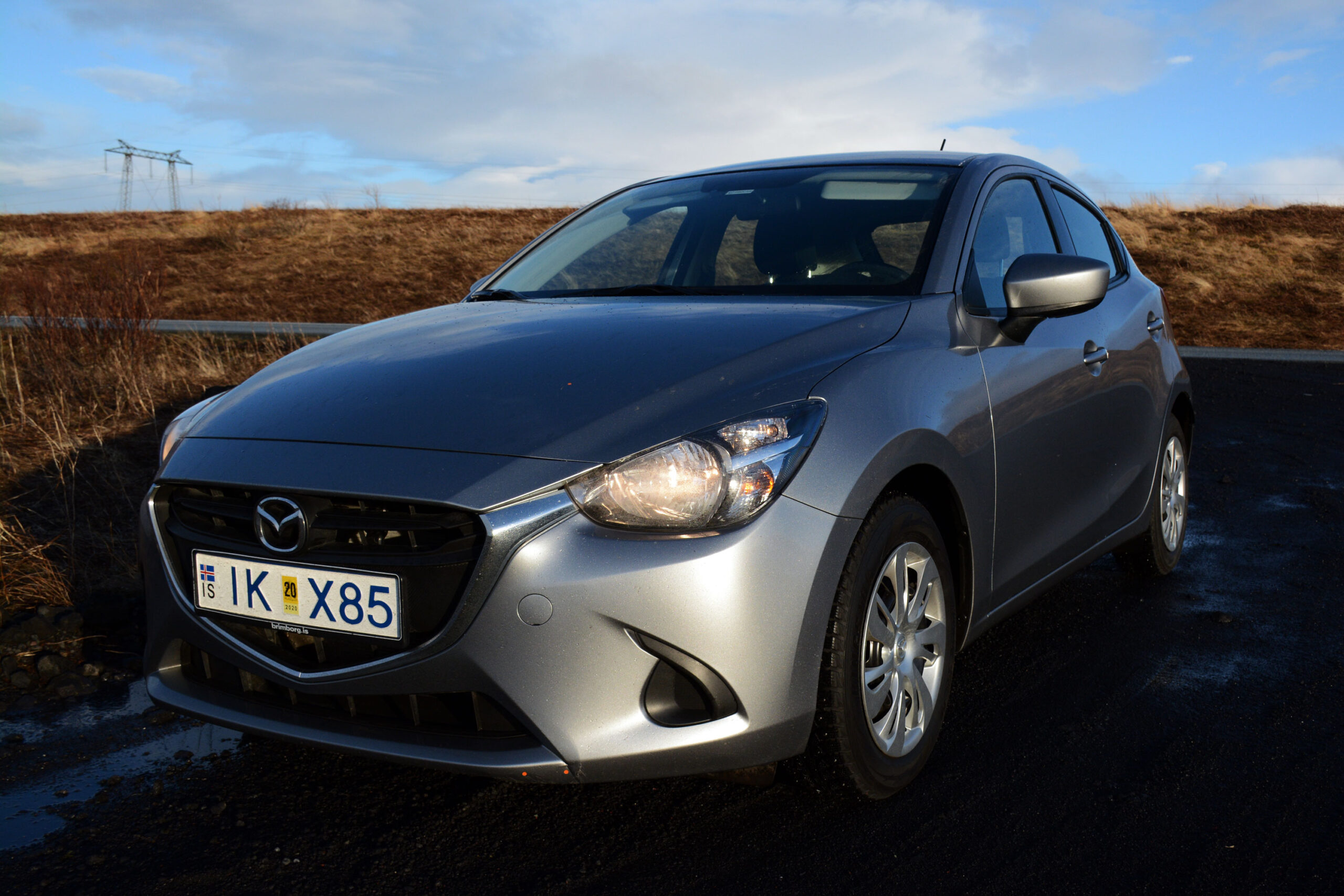
My travelling companion is a 4th generation Mazda 2 in silver—which is another way of saying it was grey. The 3rd generation of the 2 was sold in Canada for about seven years until being discontinued around 2014. Tracing its linage back, this little Mazda is related to the original Ford Festiva, a car Mazda designed and built during a time when the two companies were working together, a partnership that lasted just over 40 years. Now Mazda and Toyota are working together, a fact reflected in Canada’s more recent Toyota Yaris hatchbacks: under the surface they’re the same Mazda I drove in Iceland.
Also at the bottom of the driveway is this sign facing the main road. Apparently the next 5 kilometres will have something to do with vatn, or water, which is what the first part of the second word is referring to.
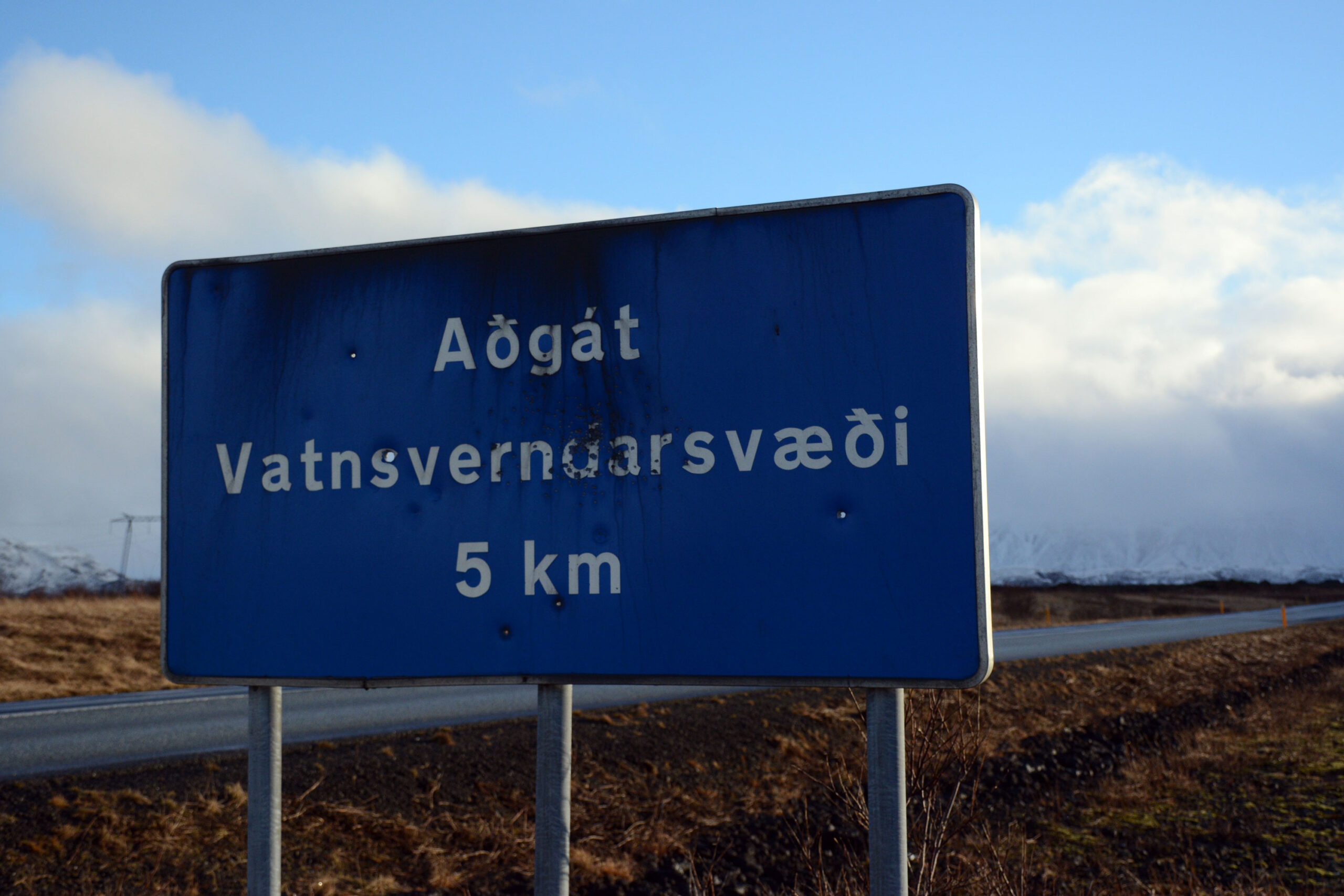
There is an amount of making words with other words in Icelandic, a trait the language shares with its distant, distant German cousin, although words might be too literal in this instance. Making and reinforcing concepts out of other concepts could be more accurate, like my pínulítið hús back in Reykjavík. The Icelandic word for tiny looks like puny and little mashed together, and it sits beside a concept so universal it’s understood by two languages which diverged anywhere from fifteen hundred to over nineteen hundred years ago. That said—other than appearing to have attracted bullets for it—I had no idea at the time what the rest of the sign was taking about. I later found out it was to do with being in a protected watershed.
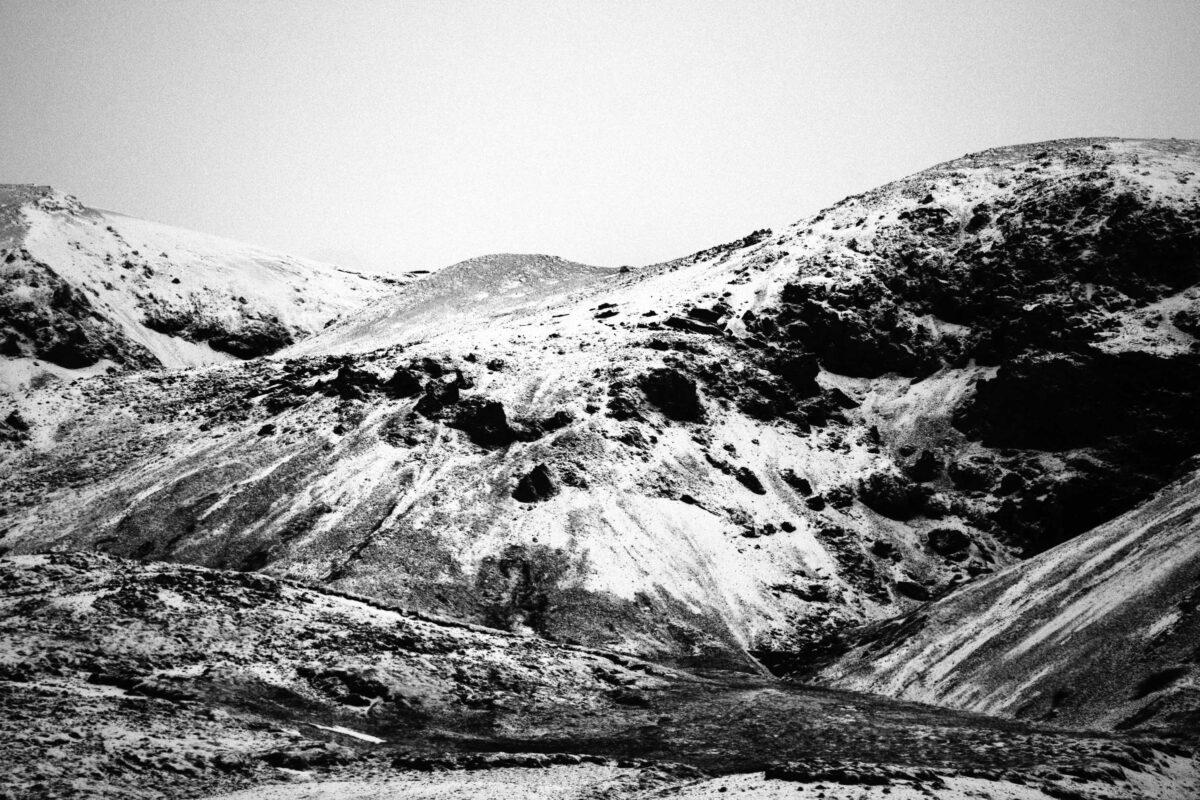
Armed critiques of resource conservation areas aside, I was more interested in what was literally—and that’s literally literally, not metaphorically literally—behind the sign. In the background, the snow and cloud covered background, are the mountains I’m headed to.
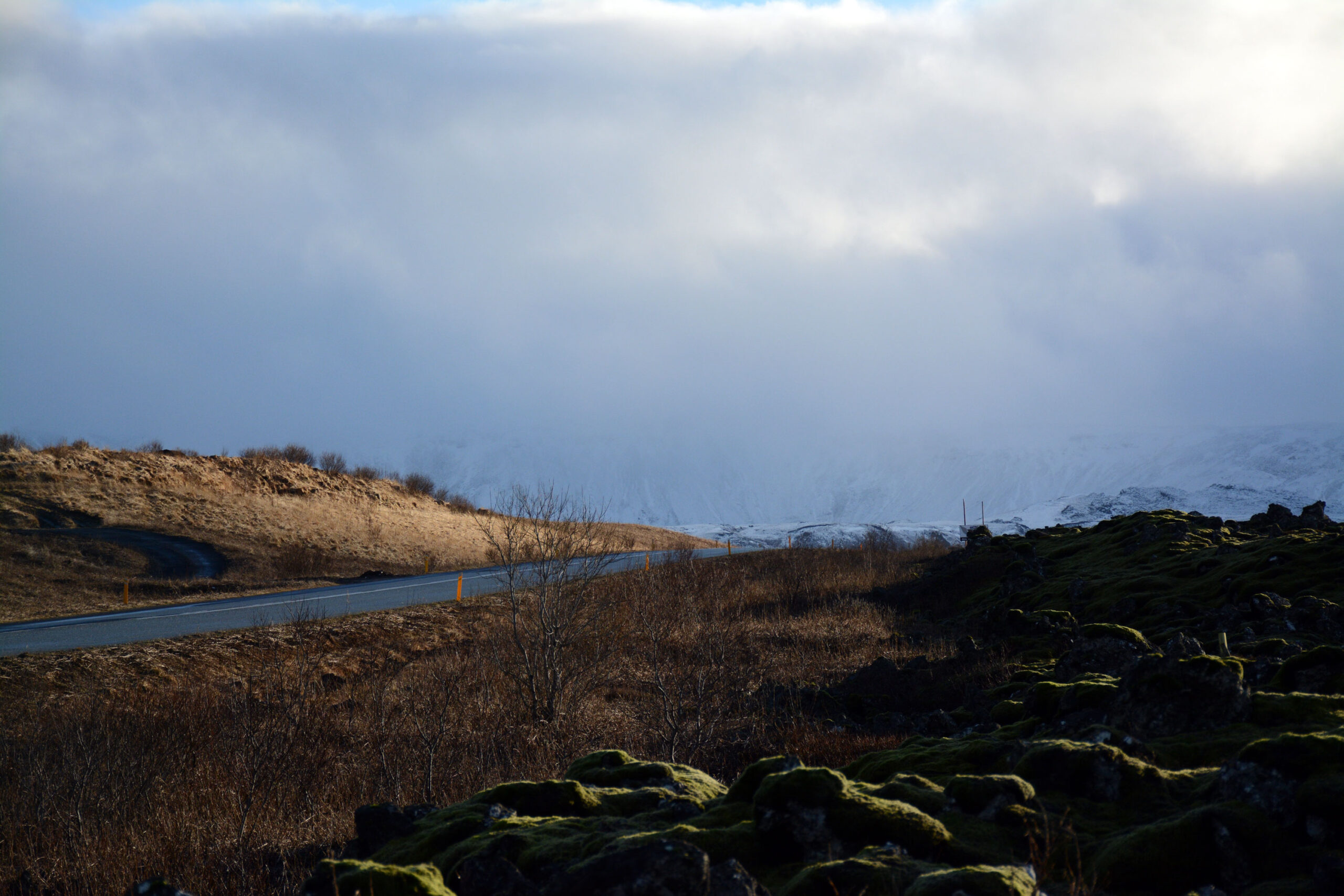
The weather is changing. I can feel it getting colder. The cloud cover is increasing and the sunlight and shadows from moments ago are fading. It’s happening faster than I’ve ever experienced before. Back toward the main road I try to take a few more pictures of my impossibly lit destination, but in the couple of steps it’s taken to get there, the blue sky is gone, filled instead with heavy grey and white clouds.

I get back in the car and continue driving. The landscape transforms again.
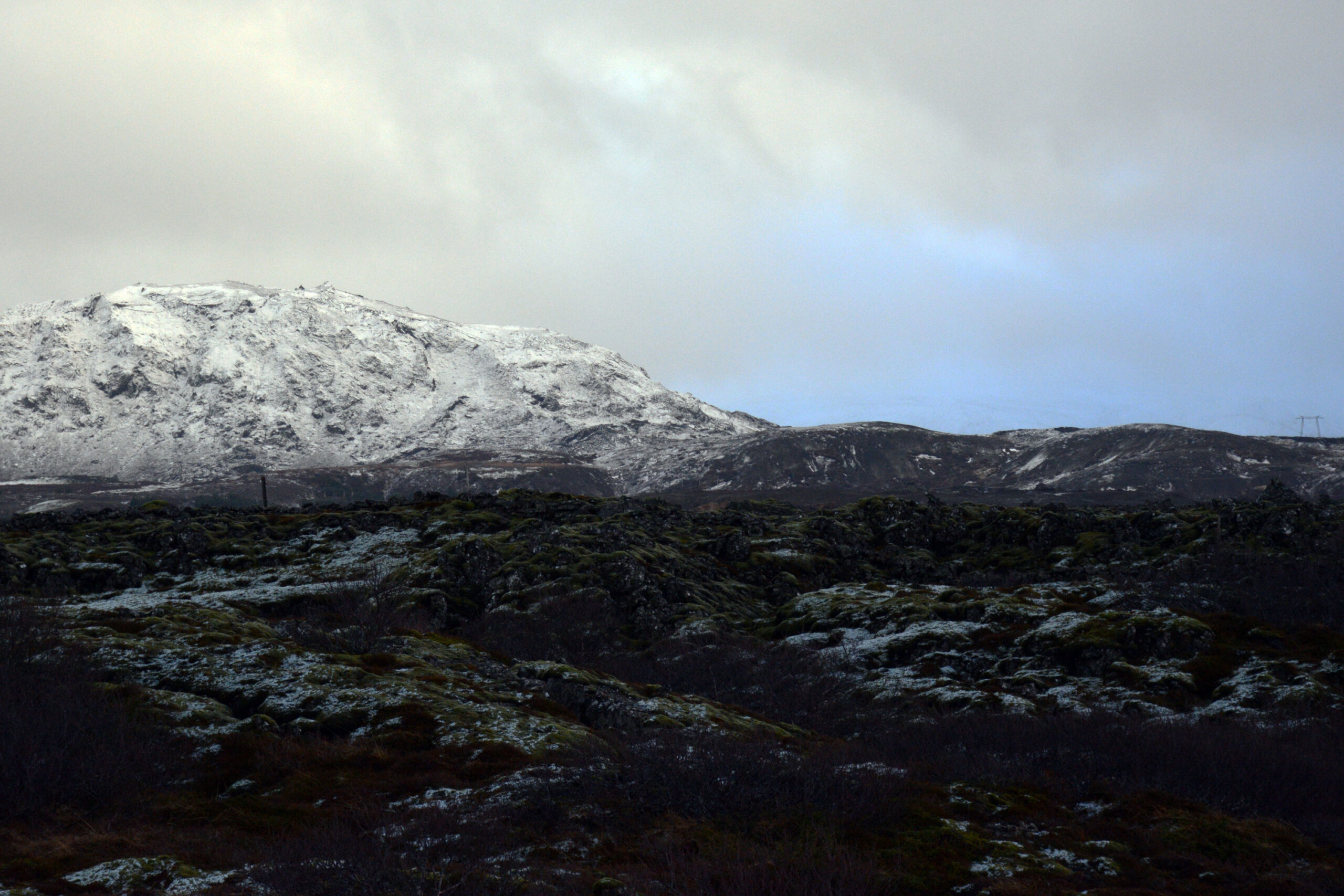
The weather closes in around me as the mountains grow larger in front of and then along side of the road, where I’ve stopped to take these pictures.
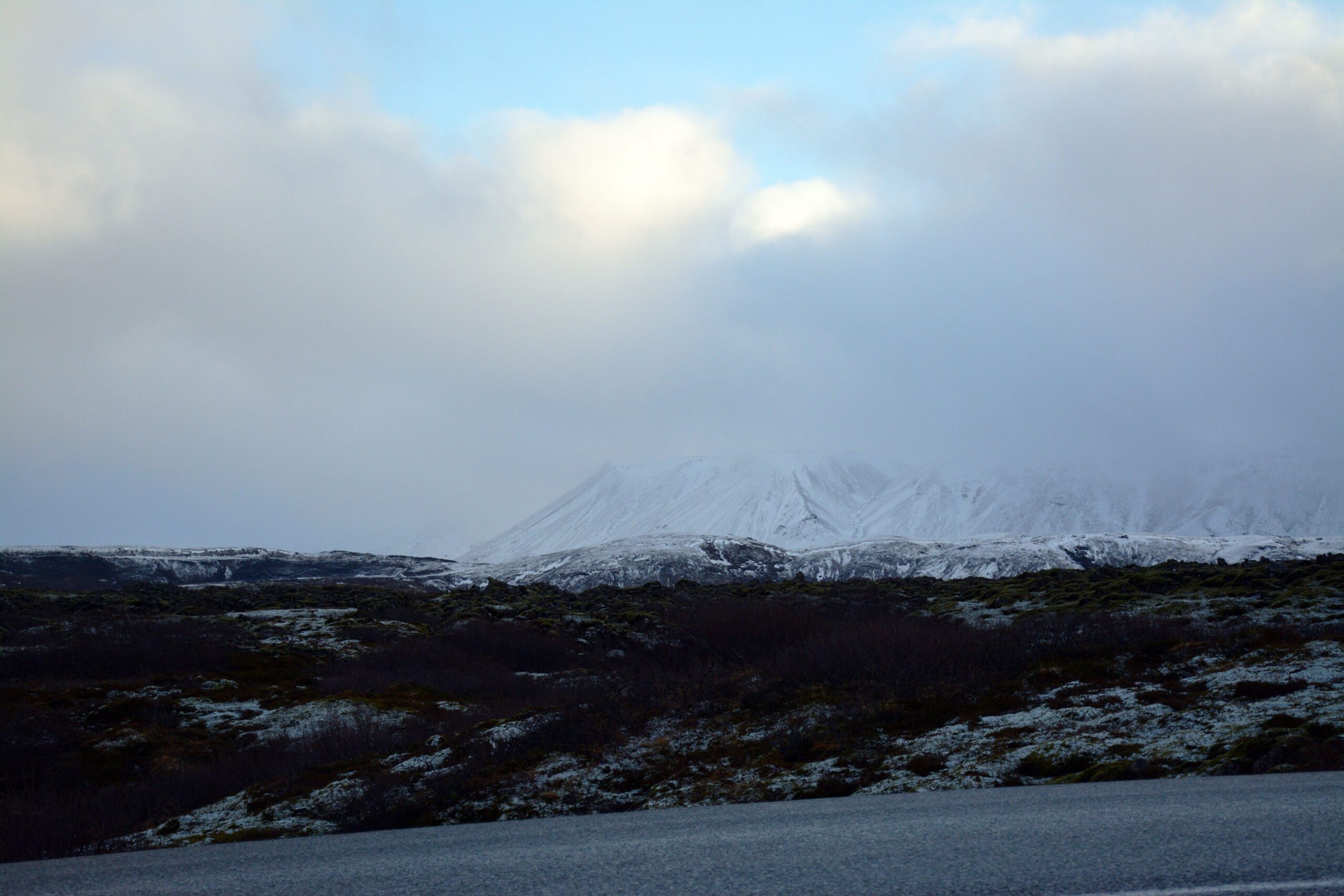
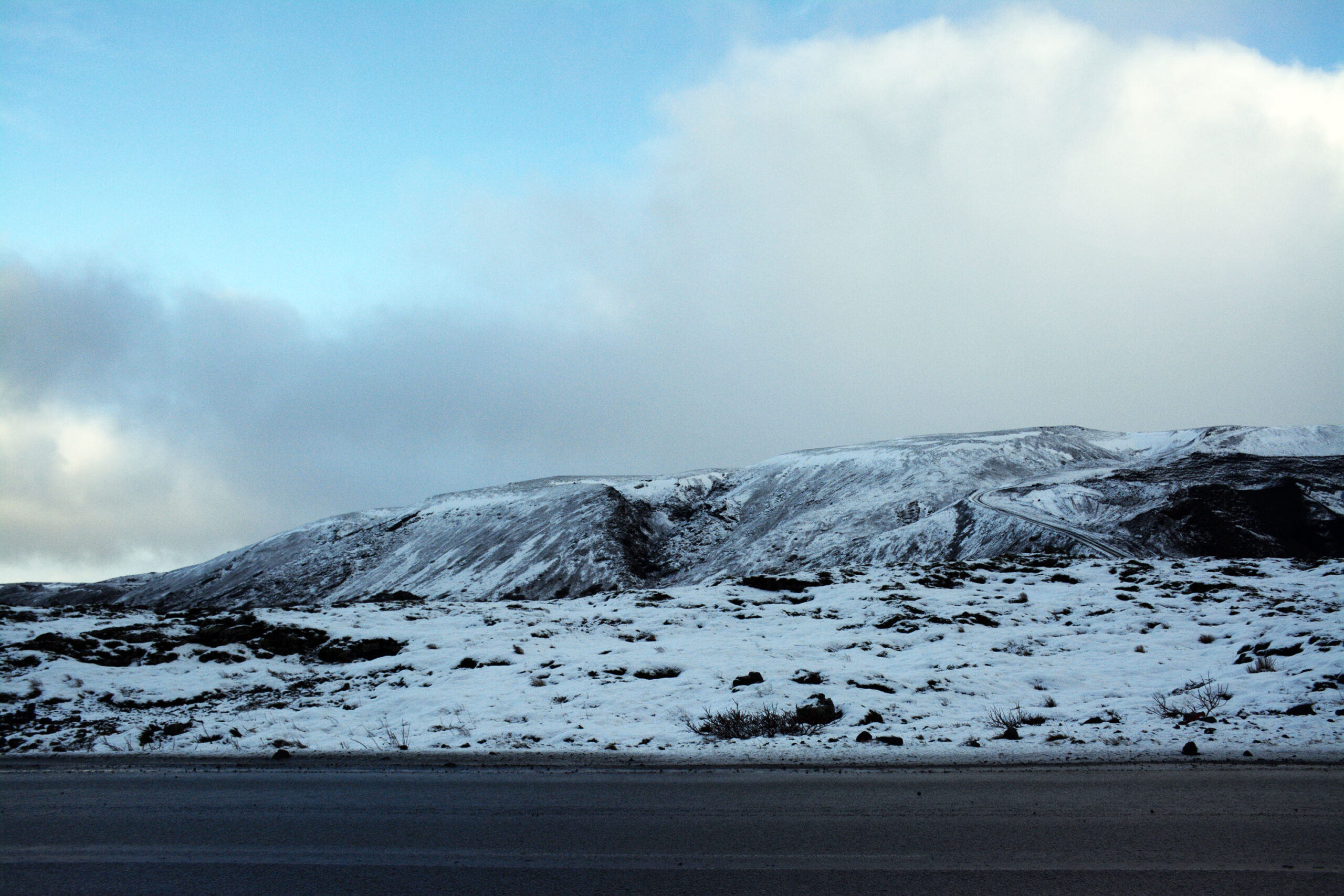
I’m climbing. The snow creeps closer and closer to the edge of the road before it’s all around me, covering more and more. I realize I haven’t seen another car since I left the main road. I’m not sure if that’s a reflection of me being in an isolated place or having stupidly driven to one, but for all their changeableness, the road and weather conditions are still not nearly as poor as what I’ve encountered in Canada.
I continue on, but it’s at this point in 2017 that I stopped taking pictures.
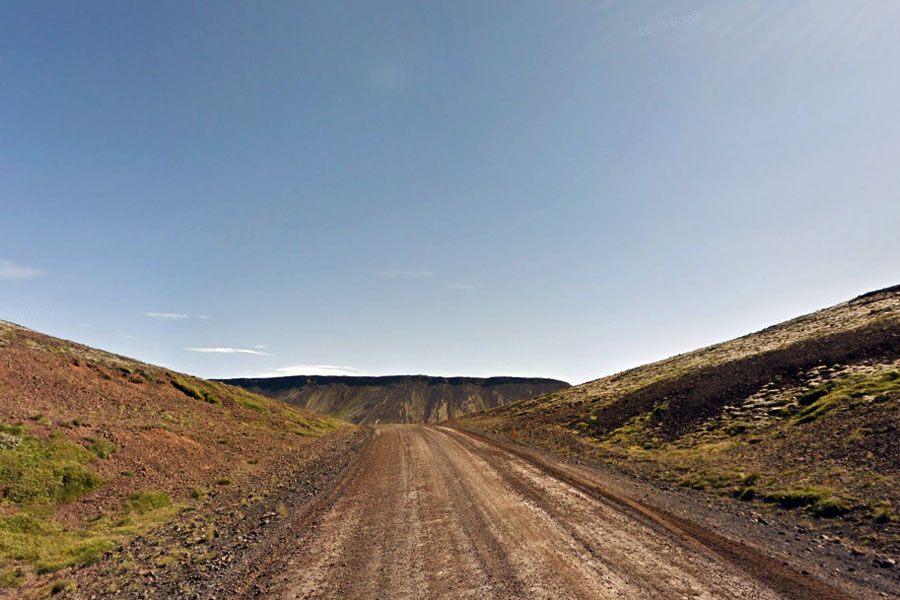
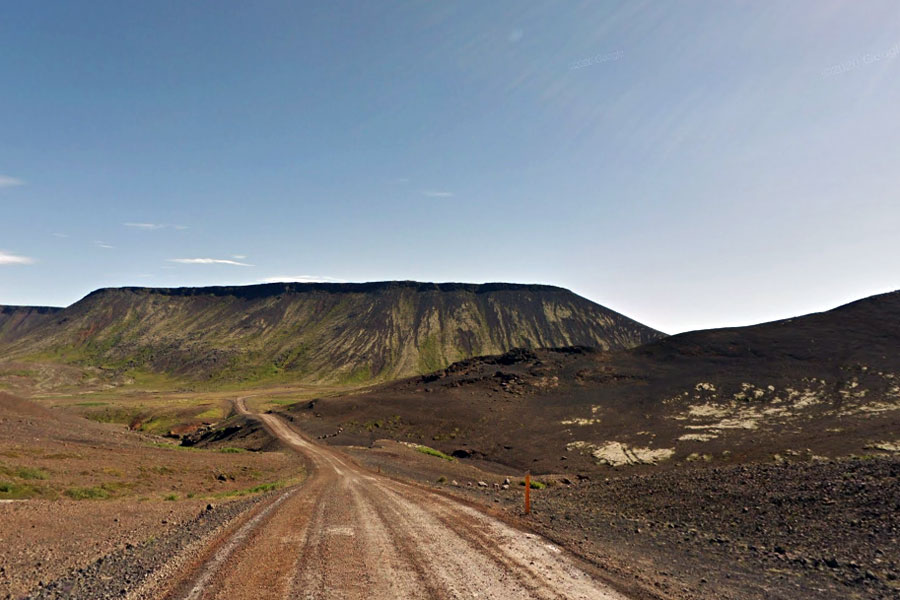
I’ve tracked down some Google Street View photography to show the road from my perspective instead. Everything isn’t covered with snow in these images, which is too bad. I think seasonal viewing options would be a great addition to Street View. Are you listening, Google? Yes—of course you are. You always are…
As I reach the top of the climb, the unfamiliar road completely disappears into the snow—leaving just a few polite marker posts with reflectors on them as hints to its whereabouts.
And on the other side of the climb, a goosebumps inspiring mountain decent—with snow. Lots of snow. Only snow, actually—sprinkled with just a few more marker posts that I both aim the car at and avoid simultaneously. I remember the road felt like it dropped out from under me as I went over the crest. I remember laughing out loud. I had no idea where I was.
It was an absolute thrill to drive on that snow‐covered road. If I could do it again, I would. Again and again and again. I don’t know what happened to the sky: I was too busy wondering what happened to the road. But I felt like I was inside a snow cloud, driving around in my own personal blizzard. This is what I’d wanted to do while I was in Iceland. This is why I was feeling claustrophobic back in Reykjavík.
After a few minutes of attentive driving, tire tracks appear in the snow ahead of me. The road continues to descend. I can see the paths of other cars, wherever they are. I still haven’t seen a single vehicle. There’s more landscape to see as well, dark forms against where snow and sky overlap. It’s hard to resolve any more detail. Everything is either very bright or very dark—it all averages out to grey in the camera. I don’t know what to make of it either. This place is like no other. I am somewhere else.
Farther ahead, a lake begins to appear up out of the snow. I sense its magic as I approach.
I slow the car and find a small parking area near the entrance to a trail. Weather and light move at unfamiliar speeds as I come to a stop. I open the door and step out as the landscape changes with the clouds. All the sound around me is consumed by the idling car. I don’t know why I’ve left it running—something about not being stranded, I think? I don’t really remember the reason anymore as I look out over the surface of the water. Now I feel like I’m supposed to be here—so I can’t be stranded if that’s true. I turn off the engine. Quiet rushes. I can hear the air moving.
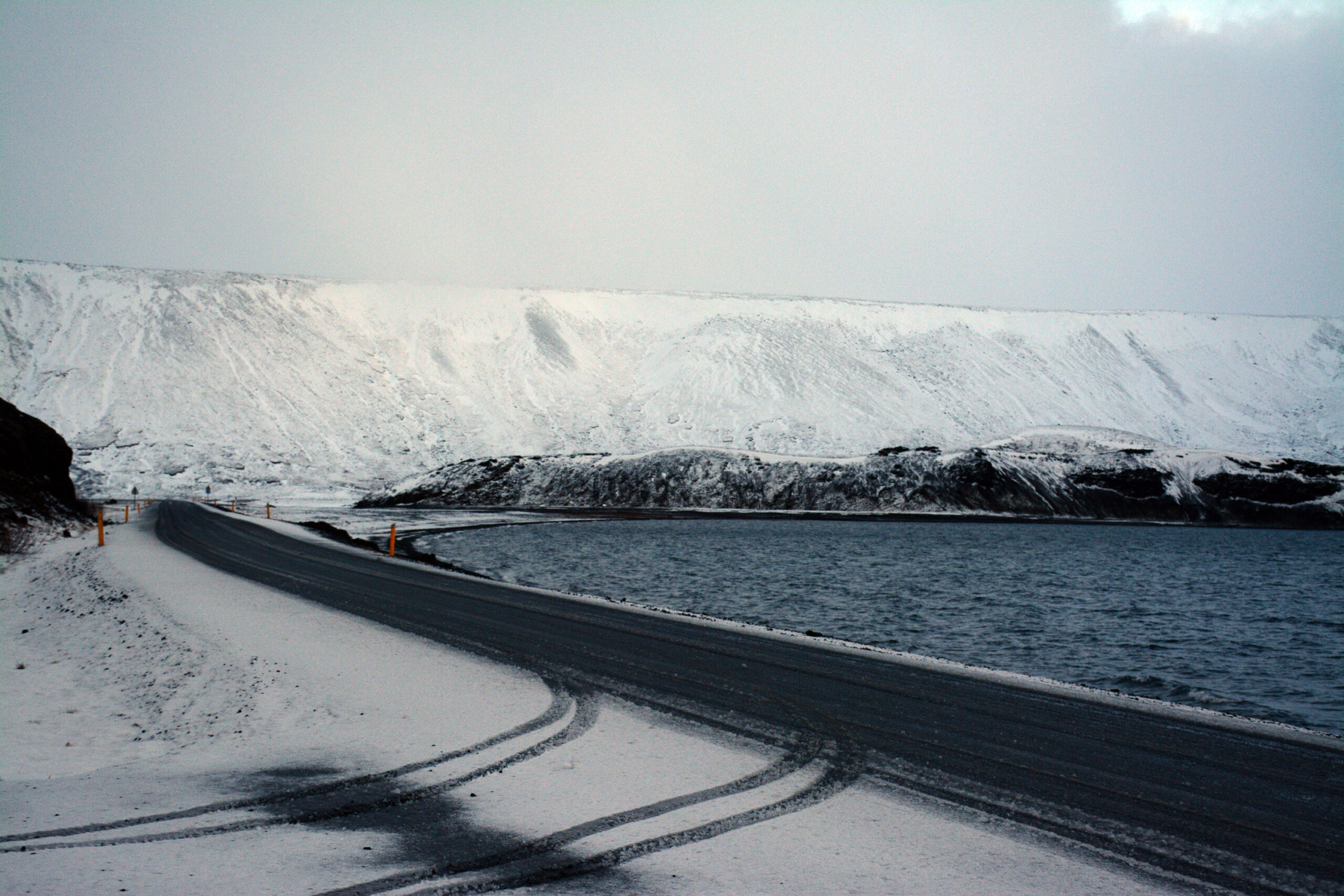
It’s rare to be in a place with such a presence. I am delighted. The lake sits across the road, its deep colour radiating against the black and white and grey surroundings, its waves rolling softly over onto the pebbly shore. Everything is peaceful. No purpose is wasted. I can hear the last of the snow as it falls, feel each flake on my face. It’s a familiar feeling. I smile for no one but myself and maybe the lake. Wisps of sky move through the clouds. The sun is up there somewhere.

I later found out this is Kleifarvatn. It’s the largest lake in Reykjanesskagi and is almost 100 metres (just over 300 ft) deep in some places. There are no visible inlets or outlets. Water moves underground to and from the lake. After a strong series of earthquakes in 2000, Kleifarvatn slowly lost about 20% of its surface area before gaining it back just as slowly.
From where I am I can see the road following the shoreline of the lake, right up against the rock cuts at the base of the mountain foothills—just like home. There’s a sharp rise in the road and an outcropping of rock into the lake. I know there will be a good view.
And there is.
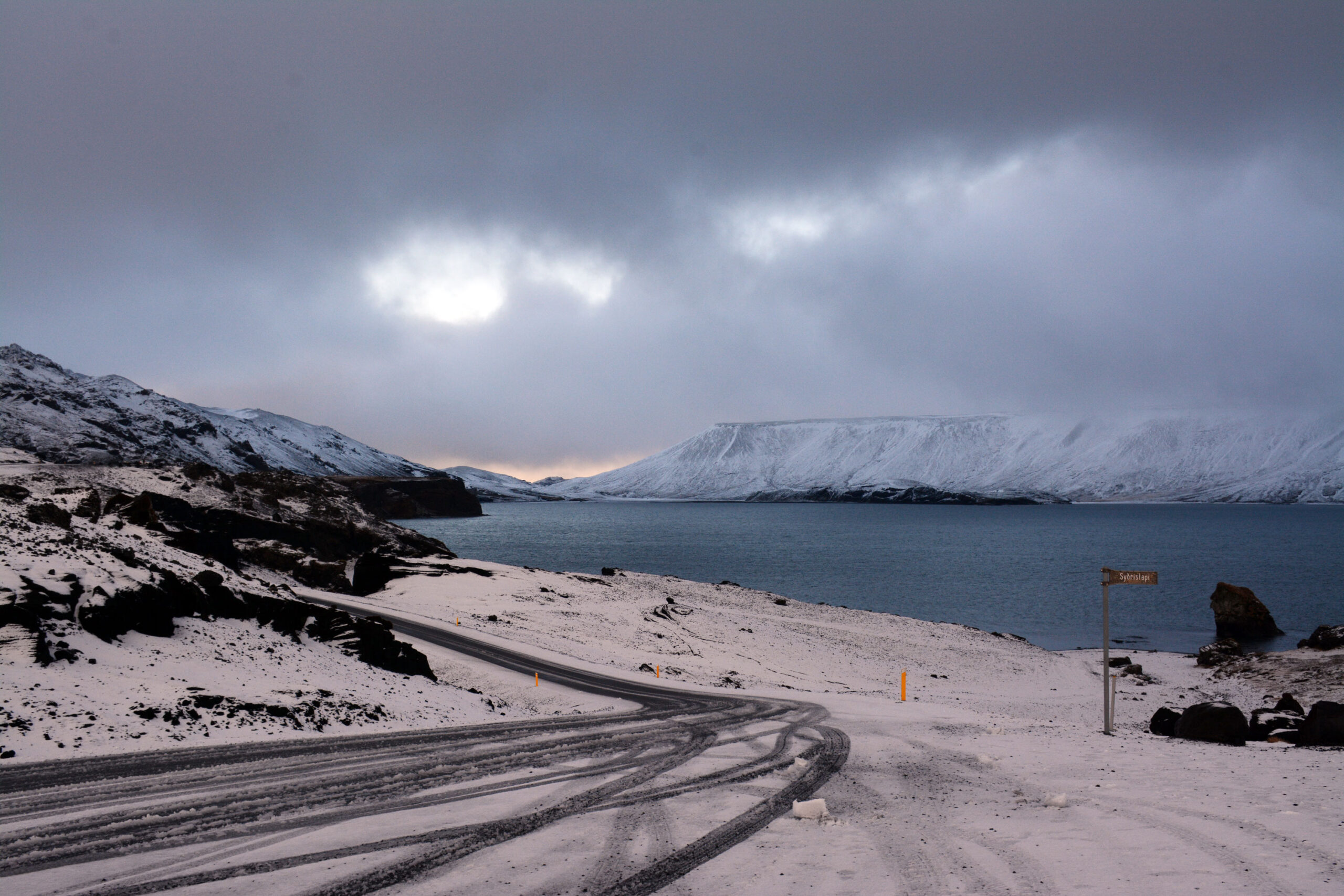
This indeed is a magic place.
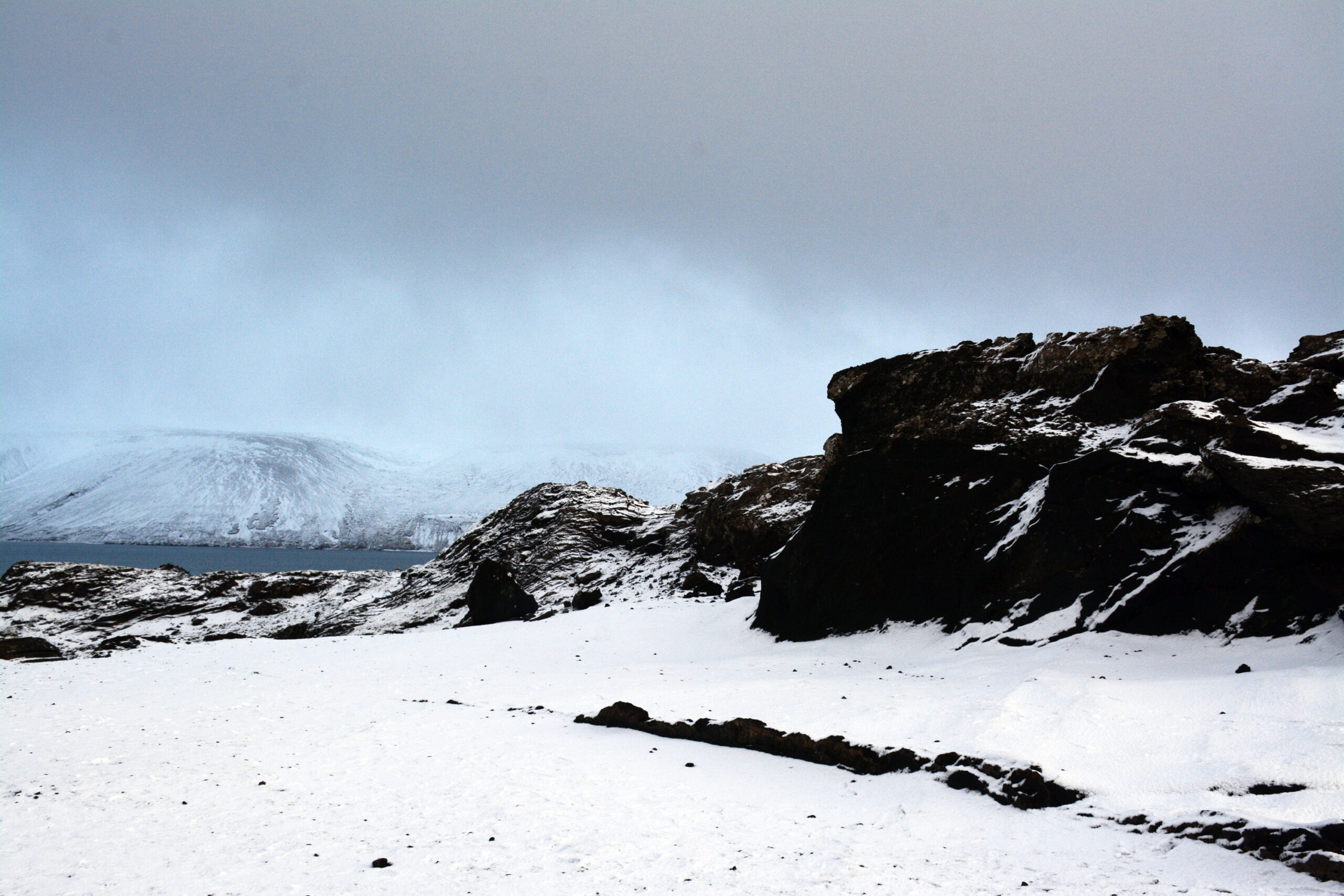
This is Syðristapi, one of the highest points along Kleifarvatn. It’s possible to see the entire lake from here, though not entirely all at once. The light changes again. Colours arrive with the sun and sky. I have absolutely no idea where I am anymore—there is no frame of reference for what I’m seeing—it’s impossible, and I love it. I don’t know how to leave this moment, or if I even want to.
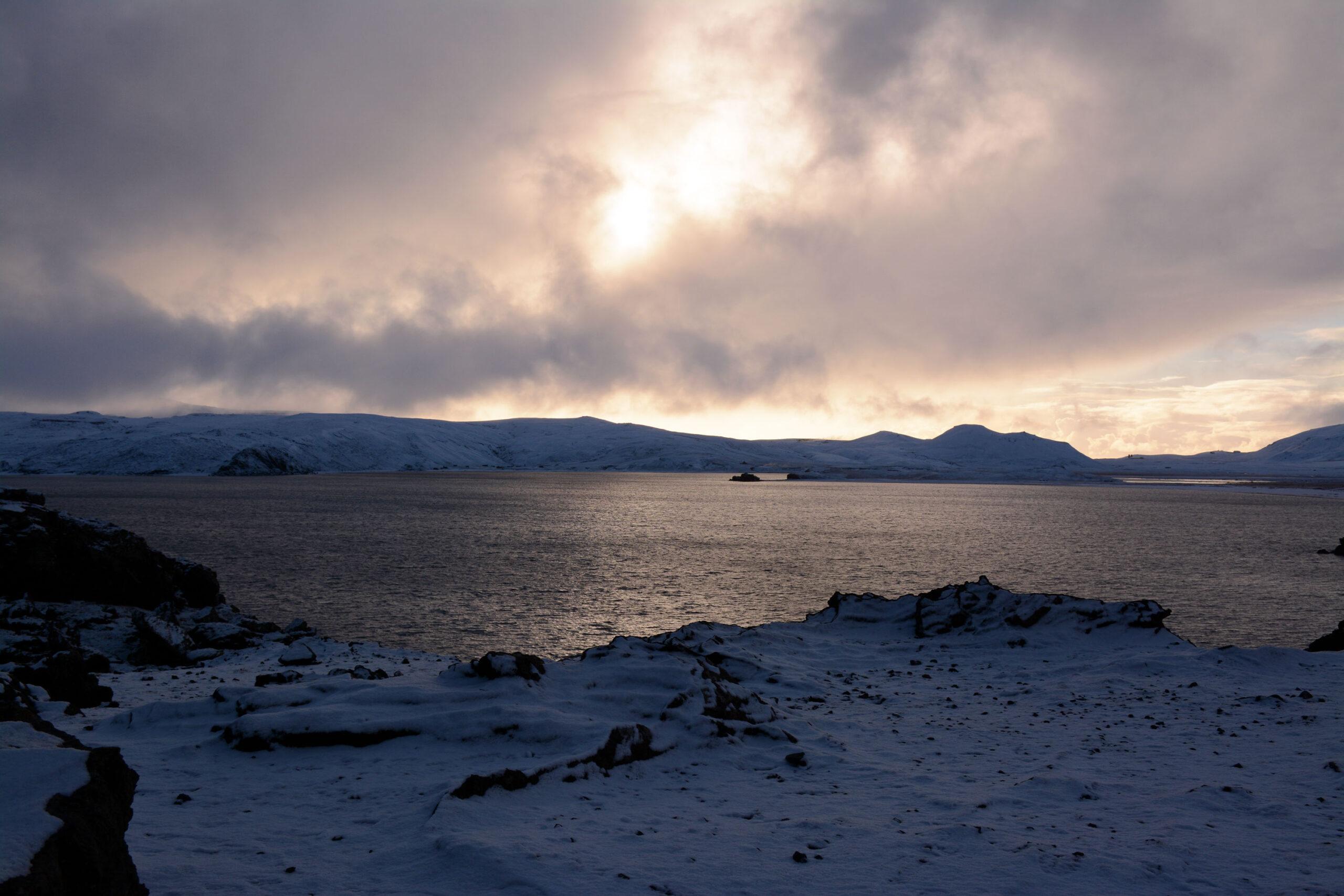
But it is just a moment. And I can also see the road ahead of me, the path I’d set out on this morning. I have lost track of what time it is now, but I feel like I’ve travelled through it rather than with it ever since I left Reykjavík.
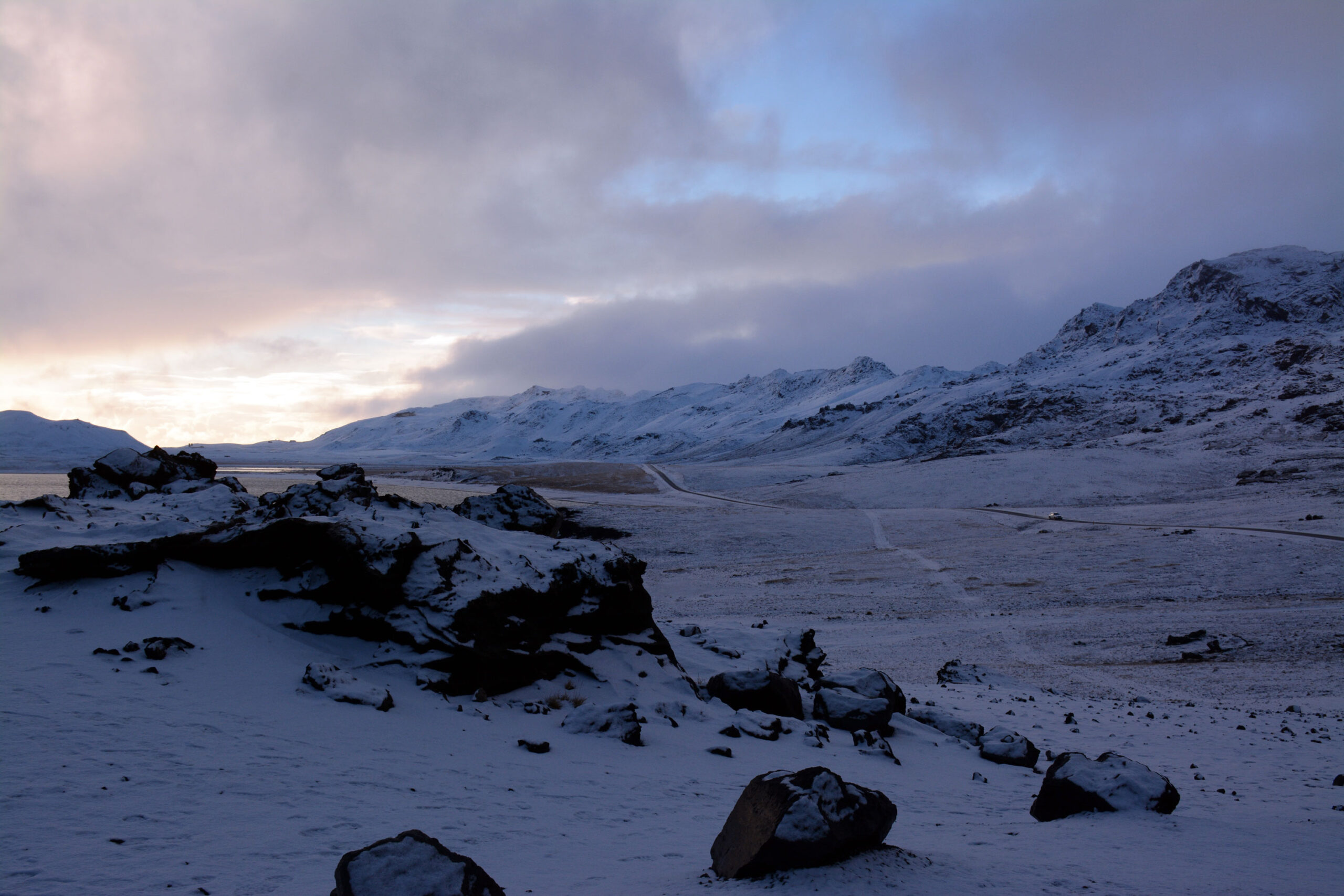
I look again at the road. There is a single car moving along it in the distance, slowly heading toward me. I hadn’t noticed it before, but seeing just that one car made me realize I hadn’t at any point felt alone during my time in this expansive place of solitude. It was difficult not to feel alone back in the city—it was always just me surrounded by other people. But in this place, I didn’t feel surrounded by anyone. Or by anything. I felt among the snow and the lake, felt among the rocks and the mountains. And I felt among peace in a way I didn’t realize was possible.
I decide to leave this moment before the other car can arrive in it. There is a timelessness I would like to maintain in my memory of this place, a purity of experience I would like to both keep for myself and offer to the occupants of the approaching vehicle, should they find themselves stopping here that is. And I don’t want to hear the sound of passing car should they not.
But I never see the other car again. I expected to encounter it sometime after I headed down the road. I thought for sure it would be coming in the other direction—it seemed to have disappeared instead.
It didn’t feel like a lonely thought, or even a sad or creepy thought, mostly because it didn’t feel like anything at all. In hindsight, it was a thought driven by distant, sleep‐deprived logic. It was the thought of one possible explanation, as absurd as it was, that happened to align with my confounding observations. If all I could see were the tracks of vehicles that didn’t seem to exist, and I was in the only vehicle that did, then perhaps I was the one who had disappeared.