The Forest

Everyone’s going to be there.

I have on more than one occasion talked of the forest being for everyone. It, like every word on this site, is a metaphor. When I talk about the forest in this way, being for everyone, I’m talking about the future. So when I say the forest is for everyone, what I’m saying is the future is for everyone.

What does that mean? Well—it would appear to be straightforward enough to me: the future is for everyone. Once more? The future is for everyone.

…I can tell from the latest Ontario election results some of you are still not getting it. I can tell from a lot that’s going off the rails all over the world that a lot of you are still not getting it.

Perhaps a distillation into the simplest of terms will help: since the future is for everyone, it’s logical to presume everyone will be in the future. Who is everyone? Who do you think? Again—it’s fairly straightforward: everyone.

So if you want to be in the future and you’re sexist, sorry—everyone is going to be there. If you’re racist, sorry—everyone is going to be there. If you’re homo– or trans–phobic, sorry—everyone is going to be there. Basically, if you have a problem with anyone because of what they are, you’re going to have to get your shit together, because—and I hope it’s starting to sink in—the future is for everyone.

I like the metaphor of the forest for the future because a forest represents a complex system of interconnected processes which combine into something larger than the sum of its parts. Any disruption in those processes threatens the existence of the forest, yet no one process is any more important than any other other. A forest works because all within it have come to understand the inherent rules of the forest—the pursuit of balance, the cultivation of stability, and the need for resilience since what’s pursued or cultivated does not always come to fruition.

To the people in Ontario who thought cheap beer on Tuesdays was more important than developing a sustainable and profitable wind energy industry—congratulations: you can use the money you’ve saved on drinking to pay for the soon to be rapidly rising price of non–renewable energy. To all those Ontario parents who didn’t want their child exposed to a modern sexual education program—congratulations: the child you claim to be protecting is now an easier target for sexual predators. And to all those Ontario motorists celebrating 10 cents off the price of gas, again—congratulations: you now owe the federal government about $3 billion dollars starting in January.

I could go on, but I won’t. All I will say is Rob Ford didn’t understand the forest—now he’s dead. Doug appears just as ignorant…

This post doesn’t have the usual refinement, structure, or nuance I usually like to weave into my writing. My words are solely fuelled by my waning patience for those who do not understand the difference between being a taxpayer and a being a citizen.

So—to the taxpayer: remember…

…the forest is for everyone.
Equality & Equity & Taxes

More school work. More progress.

I’m spending more time writing this semester than I did last semester. I like it. It’s reminding me of my way with words, something I’d thought I’d lost or forgotten in the wash‐rinse‐repeat nature of my working afternoons and evenings from last year or the assassination of my spare time and energy by the unending homework of school this year. What’s also helpful is some of the unending homework is writing…

One class I’m particularly enjoying happens to be mandated by the college for all students to complete. It’s focused on the concept of global citizenship—the idea of acting as an individual who is aware of not only their immediate community, but of the many different communities around them and around the world. This is distinctly different than the idea of globalization, which for all intents and purposes (or at least in terms of observable results), is a fancy new word to disguise terrible old colonialism.

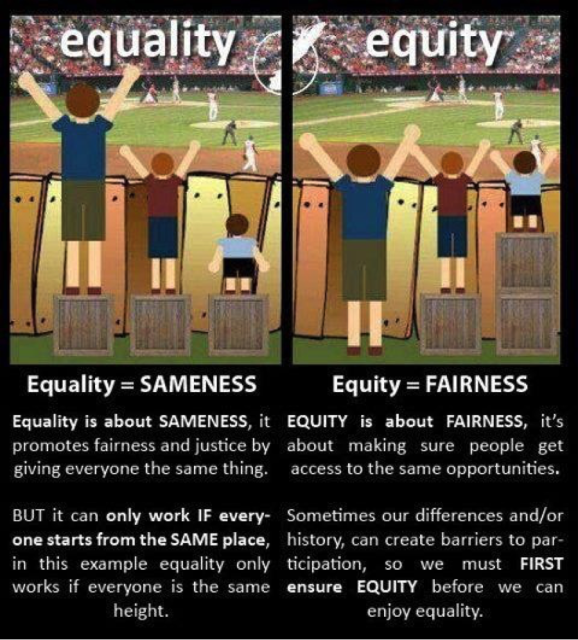
Each week we are to write a small response to the themes in whatever chapter in the textbook we’re reading through, and last week’s topic was the difference between equality and equity—something I had never fully understood until seeing this little graphic:

For my written response I was to give an example of equality and equity and how each impacts me as an individual along with references back to the text book. I figured something out, and it’s included here.


From my many experiences filing my taxes I can see elements of the Canadian personal tax system attempting to treat citizens both equally and equitably. Whether these attempts are ultimately successful is debatable, but the premise is to treat equally everyone’s income first and then consider equitably everyone’s tax payable second.

Each citizen is charged the same tax rate as a percentage of the same amount of income. This treats everyone’s income the same as everyone else’s income and is an example of equality. As each citizen’s income goes up the corresponding tax rate charged will go up as well. This is an example of attempting to create equity as those with less income will not be required to pay as much tax as those with more income. Further attempts to create equity through the tax system exist in the form of tax credits. These credits attempt to reconcile the different circumstances citizens are in when earning income and the additional expenses incurred in the process of earning income, such as a parent requiring day care services or an employee needing to pay transit fares to get to work. This reduces the taxes owed by citizens who must spend a higher amount of their income to earn income and shifts any shortfall in tax revenue to those who spend little to none of their income when earning income.

However; as outlined in the course textbook throughout chapter 7, inequalities present within social structures will hinder the progress of equity and therefor prevent the achievement of equality. How something like the personal tax system can exert its influence on the concepts of identity outlined in chapter 6 of the course textbook can by revealed by examining the consequences of some of the tax credits available to some citizens. In the case of intersecting identities (p.113), and prior to the legalization of same‐sex marriage in Canada, married couples were taxed at a lower overall rate than single individuals and had access to tax credits they could share with their spouses. At the time same‐sex couples could not get married so they had to pay more tax as single individuals and did not have access to the same tax credits a married couple did. This created an inequity in the form of financial power and privilege (p.133) which was extended to married couples but unavailable to same‐sex couples. More insidiously, this also created an ideological inequity (p.137) where the lifestyle associated with marriage was incentivised by the government through financial subsidies via the personal tax system.


Like I said, I’m particularly enjoying this class. It’s helping me articulate with far better language a sense I’ve had for a long time about the discrepancy between the claims Canada’s institutions make about supporting a diverse and equal population and what is actually experienced by those living here. We’re making progress, but we’re not there yet. And sometimes that’s the trouble with progress: in the act of moving forward you see just how far there is to go—but you still have to get there.

Midterm

In the absence of any new personal writing fit to post, here’s my in-a-hurry midterm from this semester’s English class.

A few weeks ago was my English midterm test, and it was my least favourite style of testing: write a well‐structured and properly referenced essay on blah blah blah… oh, and you have just two hours. Go! And remember—it’s gotta be good and gotta be done in 2 hours…

I loathe being asked to preform creatively (and intellectually for that matter) on-the-spot. It’s not a fair test. It’s not realistic.

I completed my writing just before time was up knowing I didn’t write the essay I knew I could write and generally not being pleased with the conditions of the test. Turns out I wrote an A+ paper that was only criticized for being more of a summery essay than the requested analytical essay, but because it was well‐structured and properly referenced I still got the grade.

School has been challenging. I often feel lost and confused with the material. I sit at my desk with a test in front of me as my mind blanks and my head gets confused: it doesn’t know what it knows it knows and what it thinks its forgotten. I’ll complete the test in misery and then I get an A, but I don’t know if it’s a real A or a lucky A. It’s stressful…

Anyway—what follows is almost word for word what I wrote in the two hours I had to write it. I’ve made minimal corrections just because I repeated a few phrases in the original essay, and even then it still reads a little safer than I normally would write. But it did its job better than I thought it would—so that’s one more lucky A for me.


With a world filled with multimedia undreamed of only ten years ago, in an increasing entertained age, the roll of traditional printed literature is viewed by some as old fashioned, its sole purpose seen as nothing other than time filler for the reader—disposable words to distract while riding a bus. In “With Pens Drawn” Mario Vargas Llosa maintains this trend of thinking about literature risks undermining the freedom taken so for granted in free places in the world. Throughout his essay, Llosa illustrates the changing role of traditional literature today against new forms and sources of both challenging social commentary act pure entertainment. Llosa’s effective use of the compare and contrast rhetorical mode solidifies how important the role of literature is now more than ever in maintaining a free and democratic society.

Llosa first compares the attitudes held by some of the critics that “…literature is already dead” (p.218) or the authors who will not write another novel because “the genre now fills them with disgust” (p.218). These statements, Llosa says, are made in countries where literature can exist as pure entertainment, where books can be a hobby (p.219). However; Llosa also effectively reminds the reader of all the place where the writer is “feared” (p.218) and being a writer is an act against the state and punishable by imprisonment or death. These writers are jailed, Llosa argues, by fulfilling literature’s purpose to not only entertain, but “to address itself to the problems of its time” (p.219).

It is this dual role Llosa suggests literature is at its most disadvantaged. As he states: “If the only point of literature is to entertain, then it cannot compete with the fictions pouring out of our screens, large or small” (p.219). Reading is work, and with today’s TV and movies getting easier and easier to watch each day, Llosa argues this results in viewers who are “allergic to intellectually challenging entertainment” (p.219). It is with this allergy in mind Llosa stresses the importance of literature filling in the intellectual gaps left by new audio and visual media’s role as pure entertainment. As opposed to the immediacy of something on a screen, passively consumed by instant gratification, Llosa states literary fiction “holds us captive for life” (p.219) and goes so far as to claim referring to the works of Mann, Faulkner, Kafka, Joyce, etc… as entertaining would be “to insult them” (p.219). Without literature as a forum for truth, Llosa maintains, our singular consumption of entertaining media “condemns us to a state of passive acceptance, moral insensibility, and psychological inertia” (p.220). This very state, Llosa says, is “the kind of lethargy dictatorships aspire to establish” (p.220).

This precarious balance of entertainment and tyranny is where Llosa believes good, true literature takes on its most important role. In a bold claim Llosa says literature is our best defence of freedom, our greatest weapon in preventing war. He argues wars in the last one hundred years have been fought between dictatorships or by totalitarian regimes against democracies, but not between two democracies (p.221). Llosa states, “the best way to promote peace is to promote democracy” (p.221). And from Llosa’s statement of what good literature taught him, that “in all our diversity of cultures, races, and beliefs, as fellow actors in the human comedy, we deserve equal respect” (p.219), he is also aware of literature’s role of being able to “detect the roots of the cruelty human beings can unleash” (p.219). An awareness of both of these truths is a requirement of democracy and a consequence of literature.

Llosa says his ideas of literature are old fashioned, comparing himself to a “dinosaur in trousers” (p.219), but with the role of intellectually challenging entertainment left vacant by new forms of instant media, literature is facing a role more critical than ever: the responsibility of fuelling the intellectual process so critical in a functioning and free democracy. By contrasting the life or death situations faced by those writers in other places against the luxury of writers in free places to declare literature dead, Llosa clearly demonstrates how intellectual literature must remain in public consumption in order to preserve peace and democracy. Complacency as a threat to democracy is fought by literature’s ability to express “indignation in the face of injustice and demonstrating there is room for hope” (p.221). Despite Llosa’s comparison to both himself and his vocation as something of a relic, his words suggest otherwise—these relics are more important now in our comfortable democracies than ever before.

Reykjavík: Harpa

I’ve been up for over 36 hours—I think?

I had it all planned out: I was going to go back to work part‐time, watch math, science, and energy videos on YouTube, and work on my photo and writing projects. I felt better, and the prospect of a continued school strike or a lost semester didn’t concern me anymore: either way I was going to be fine.

But then the college employer council decided to force the government’s hand: they requested a lengthy voting procedure on a contract known to be unpalatable to the union membership, the union overwhelmingly rejected it, and, unsurprisingly, the government stepped in, right on cue, to legislate the entire thing into independent binding arbitration—the dry hump of labour dispute resolution.

In the midst of all the post‐strike school nonsense, I forgot I was walking disoriented around Reykjavík waiting for my room to be ready. At this point I am tired and my legs are starting to hurt. It’s not raining anymore, mostly. There is a fine mist blowing around from every direction. It’s loathful, but it’s also unlike any weather I’ve experienced, so a part of me is fascinated by it and attempts to figure out what exactly it is making the experience so truly terrible as I continue to walk.

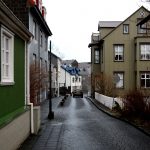
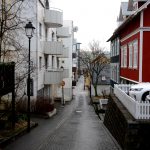
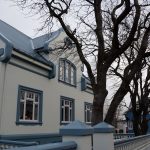
Most of the city streets are narrow, lined with brightly coloured buildings, and sprinkled with volcanic rock.

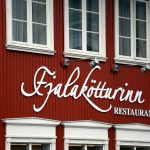
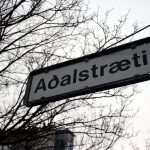
There’s something about written Icelandic I love: familiar Latin letters with little bits of otherness balance a visual pacing of characters to create beautiful words I cannot understand.

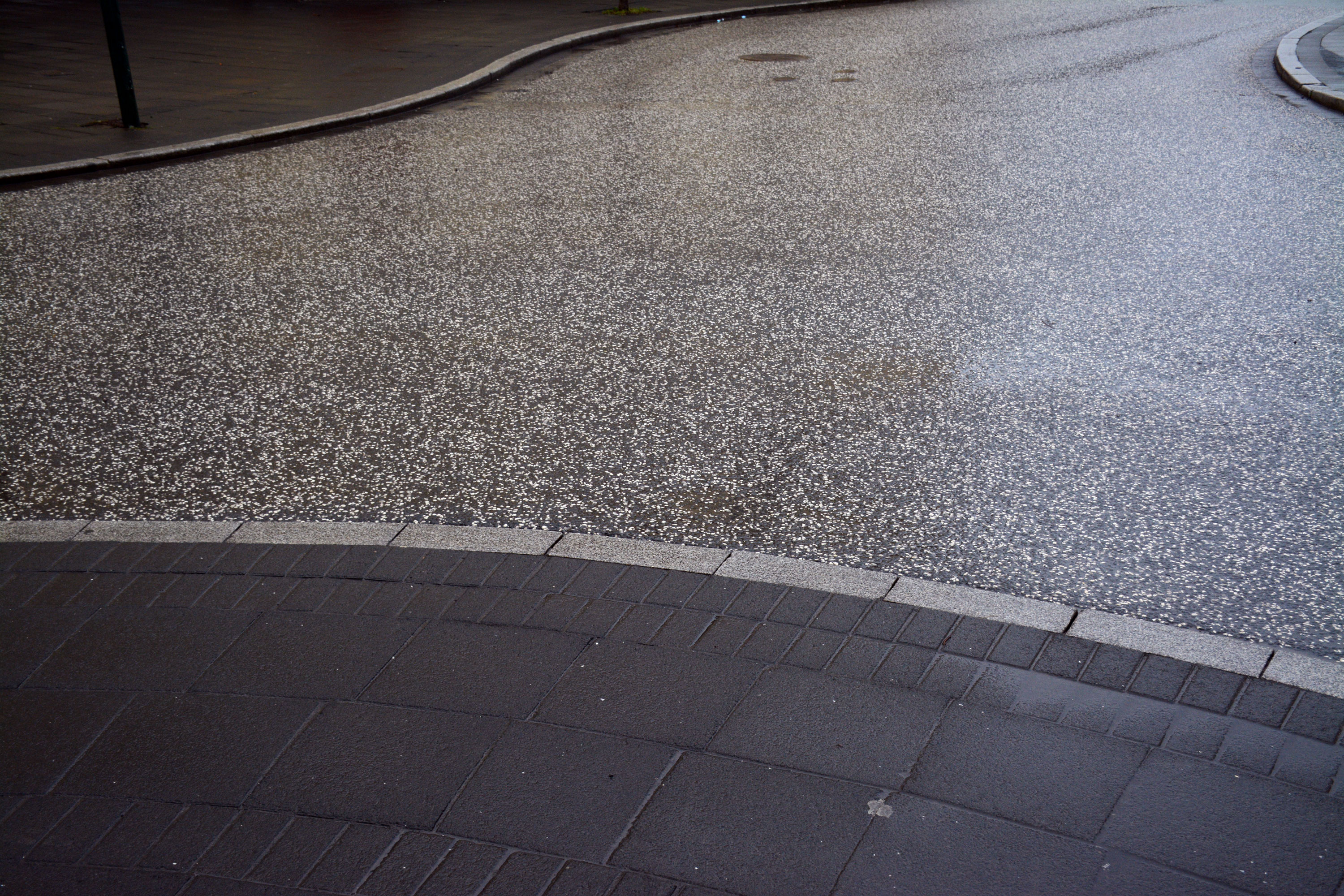
Each and every road, curb, and sidewalk is stone. The cars and trucks with their studded snow tires tap dance down streets in a sound I still hear in my head.
Not a single piece out of place. Will whoever did this please come over here and show us how to do stone like this?

A coworker of mine told me to have a hot dog when I got to Iceland, so I did at this small square not far from where I’d be staying.

I’m not sure what the hot dog itself was—that’s the allure of the hot dog—but it came with crispy fried onions stuffed into a soft and crusty bun along with an unfamiliar mayonnaise‐mustard hybrid sauce: delightful!

I’ve also determined the terribleness of the weather is because there is no way away from it. No matter where you are, no matter what piece of cover you think you have, the omnidirectional wind and ever‐present mist are right there with you, reminding you it’s just warm enough to keep things from freezing, but not cold enough for a warming snow fall.

And then I see it: American Bar. Giant lettering lit up with marquee bulbs alerts you to its presence, and, just in case, flashing red neon arrows and waving flags point you to the front door where loud music pours out. Much like the terrible weather and America itself, it’s hard to miss…

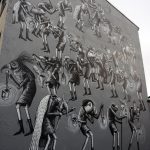
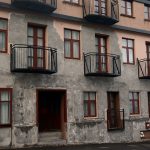
Leaving the city centre again I’m struck by the variety in building style and repair, or that entire sides will be covered in pristine murals.

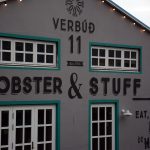
Just down the road from the last picture is the harbour, and by this point I am just an hour away from being able to check into my room and rest. I’d read about Iceland’s playful use of English and saw a few examples of it—the “& Stuff” construction being my favourite. I’ve never been around English like that before: I like it.

I’m also very cold now. As the first little patch of blue sky appears above the city and out to sea, I see what looks like a glass honeycomb in the distance. I decide I’m going to walk over, see what it is, see if I can get inside it, and by my guess that will occupy the last hour of time before a warming shower. Oh—and I figure there is a non‐zero chance I will be able to at least spend some time inside of a heated structure before the walk back across the harbour.

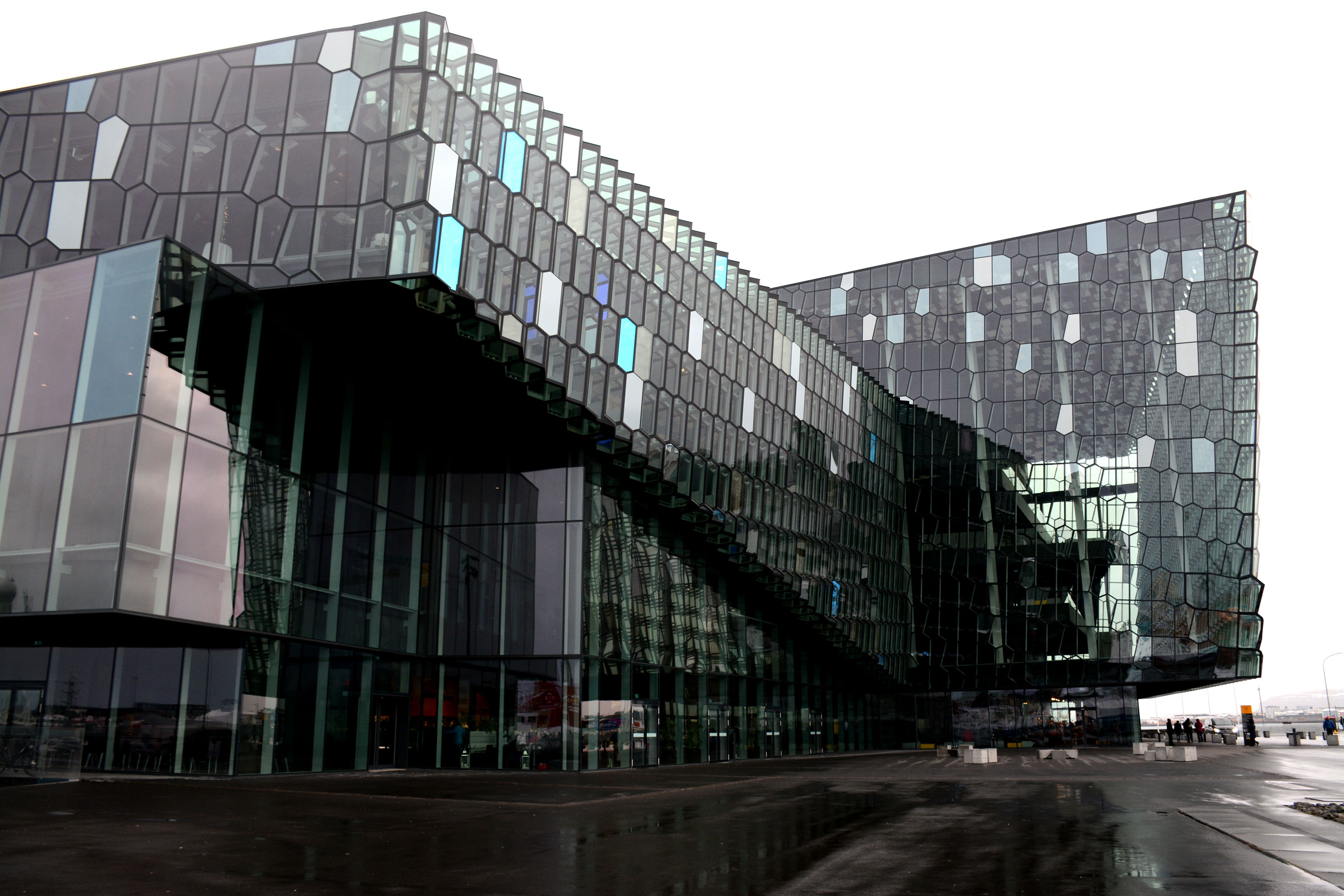
The building gets closer slowly as I realize it’s taller and father away than I thought. But I arrive eventually at Harpa—a concert hall completed in 2011.

Much like everything else in Reykjavík, there are volcanic rocks sprinkled around the building.

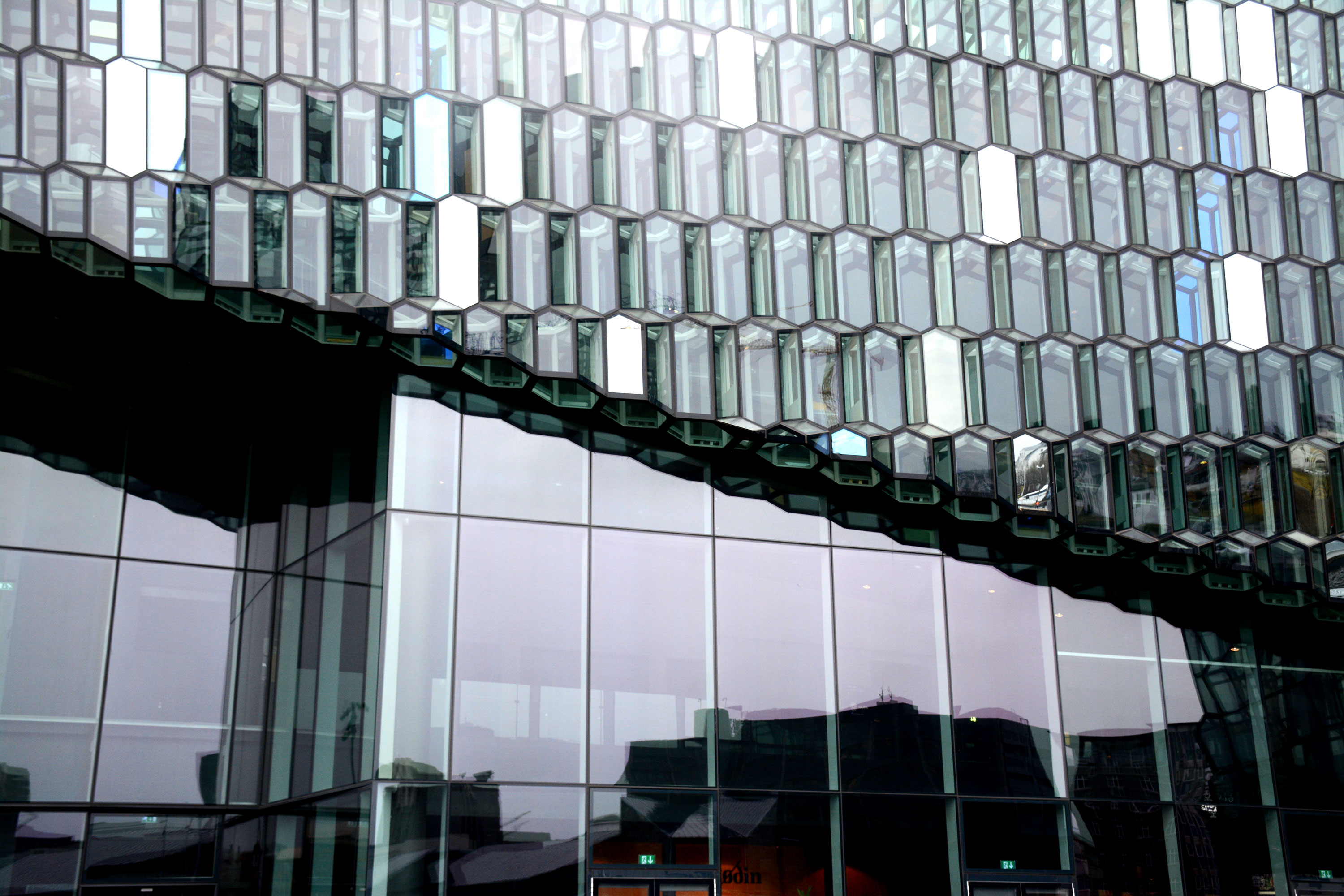
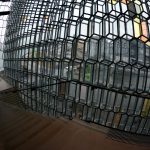
And the outside of the structure is indeed covered in a glass honeycomb.

But the best part—I can get inside where it’s warm and dry!

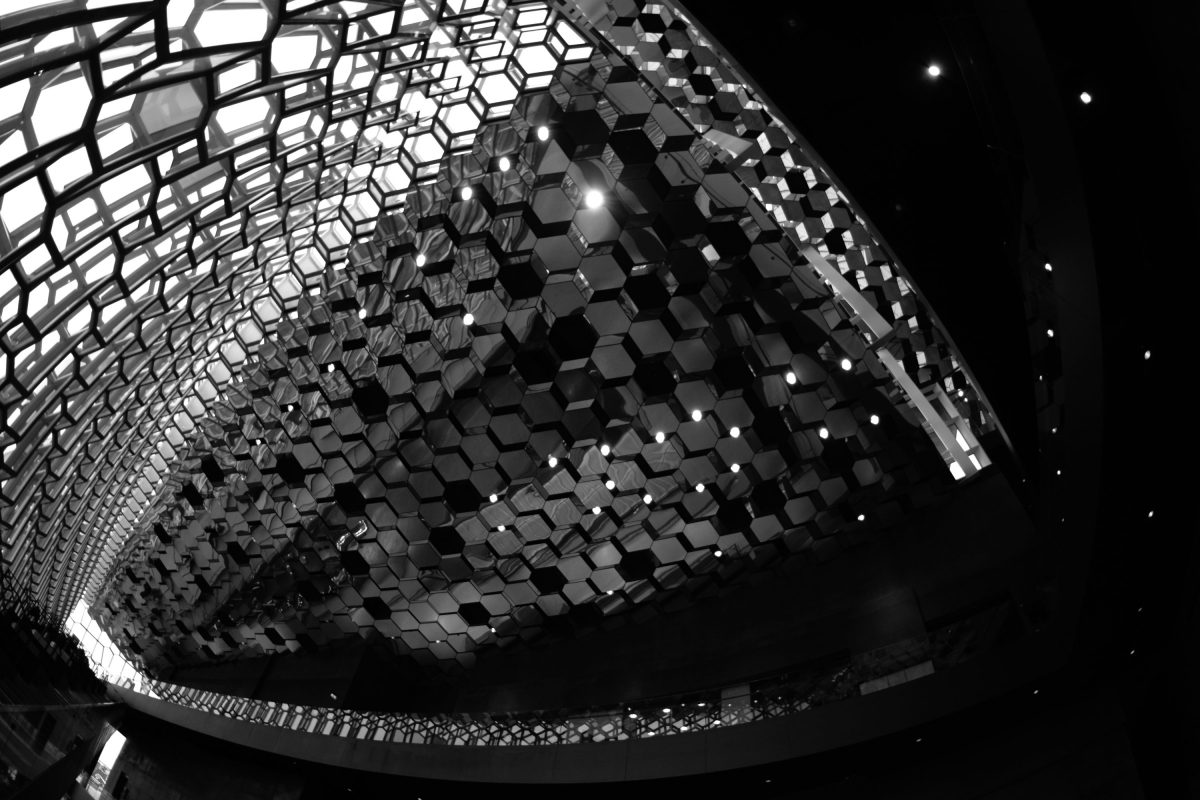
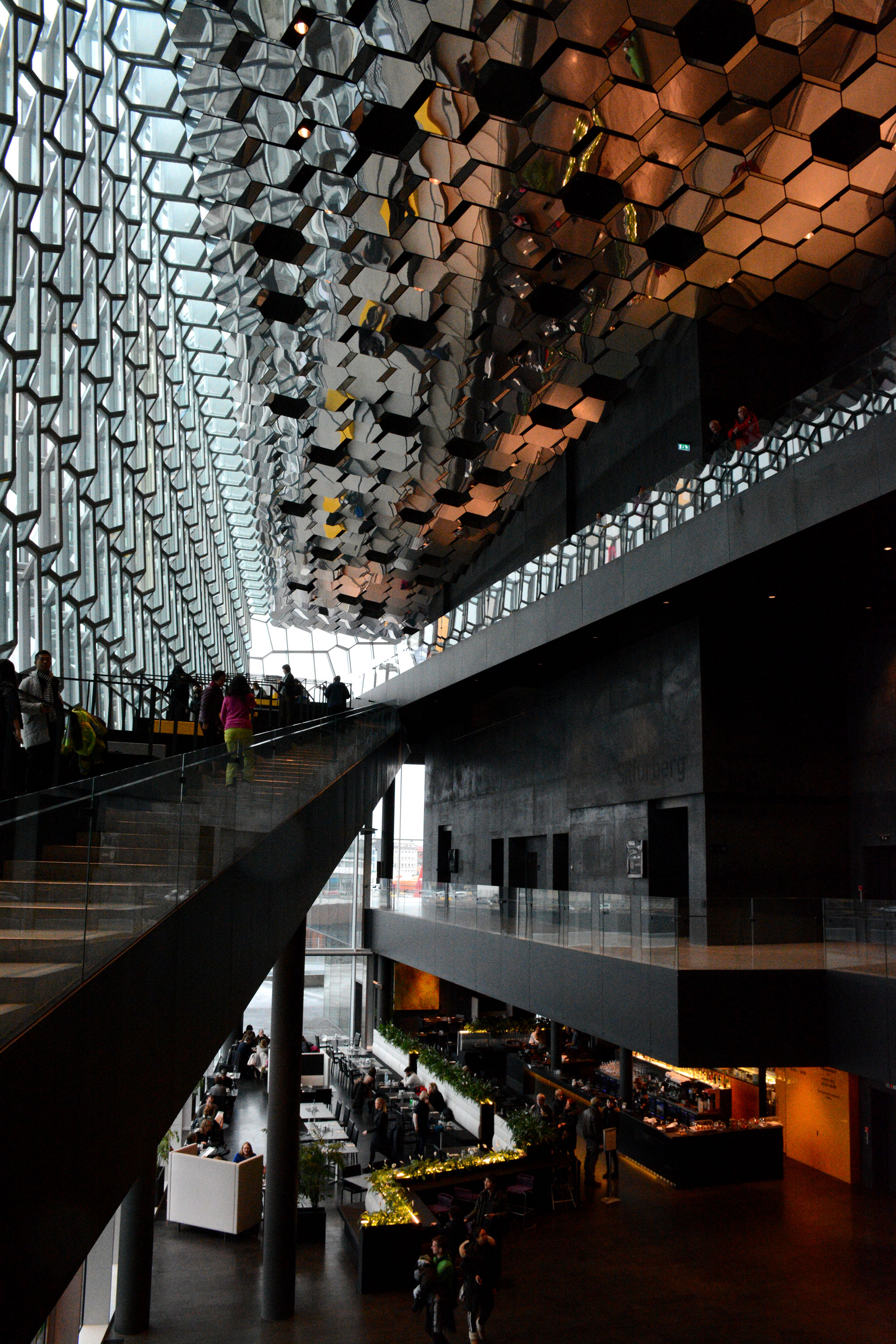
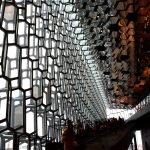
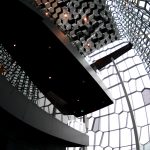
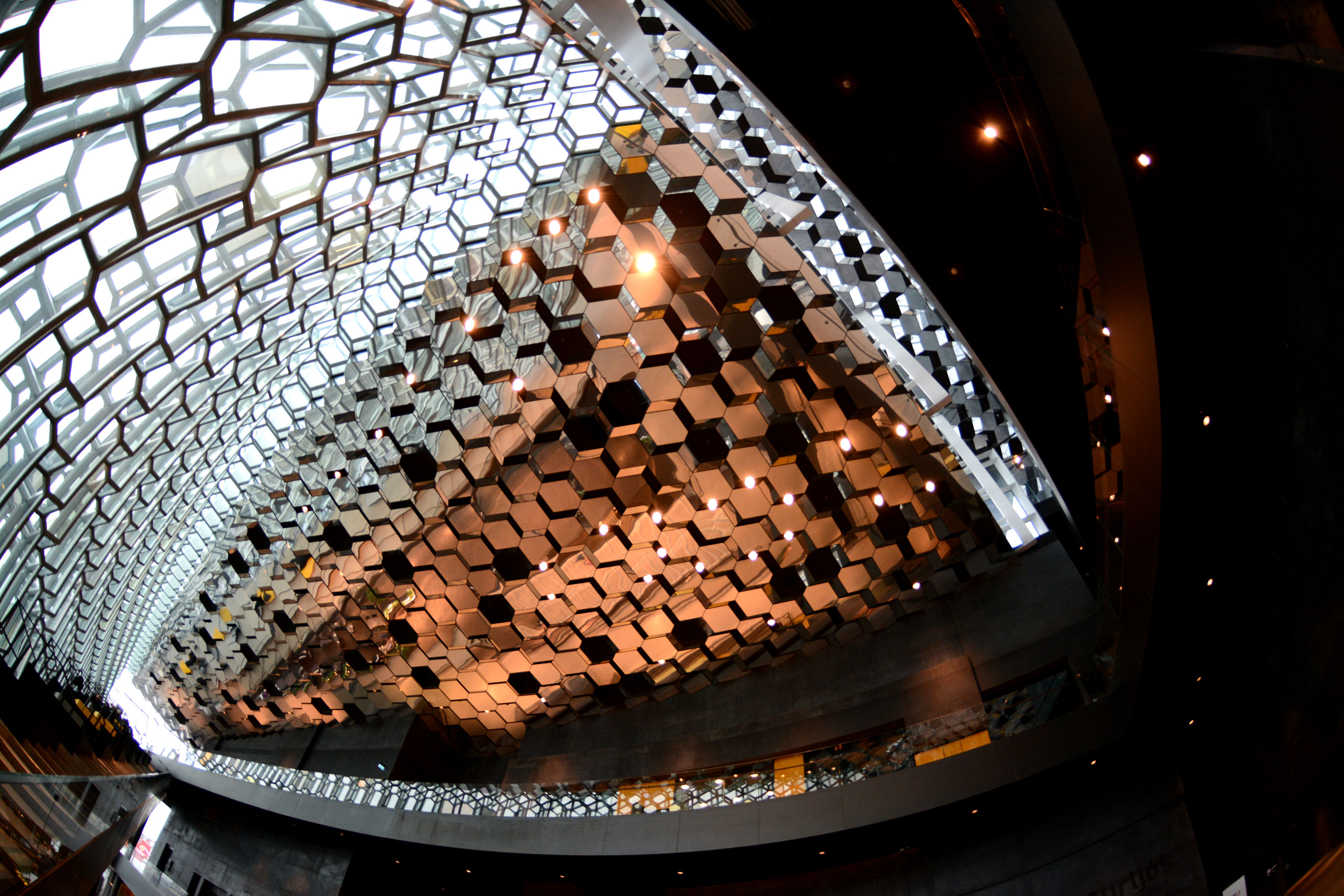
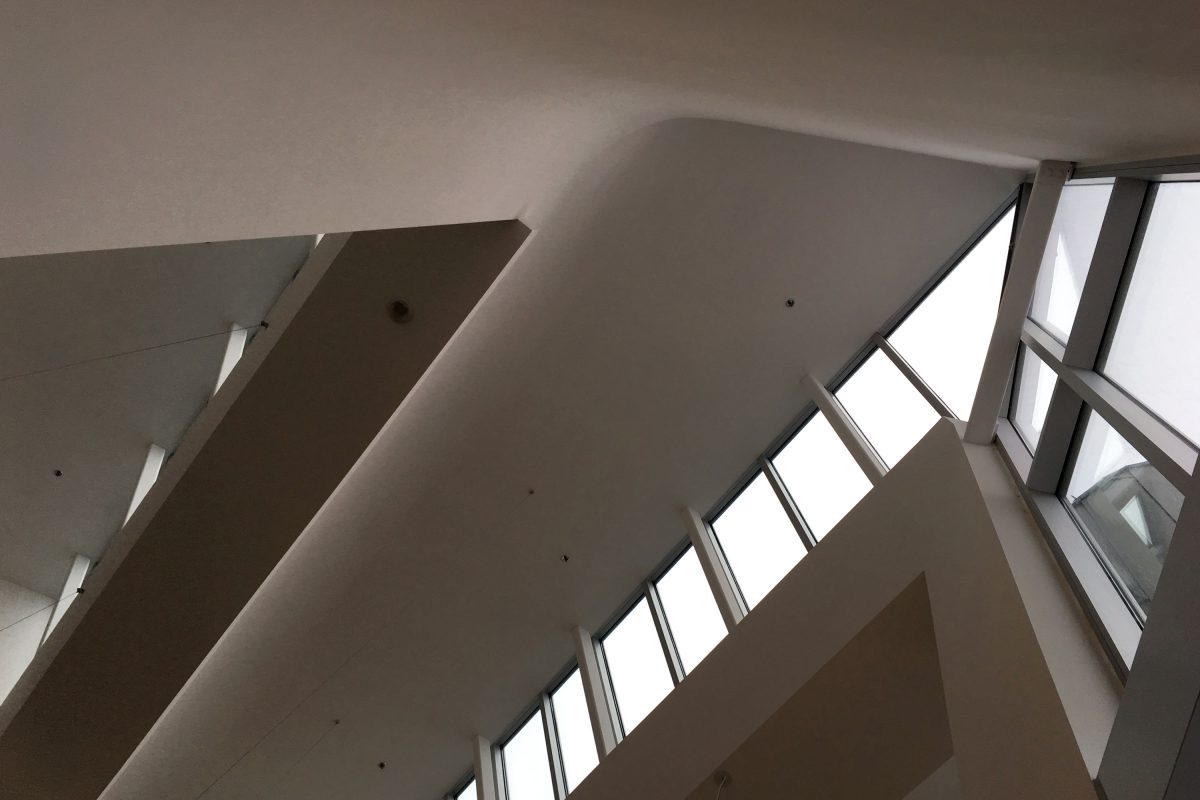
I am in love with this structure and the space it creates. The reflecting glass making up sections of the ceiling remind me of the mirrors inside large telescopes on mountain tops. The multi‐level lobby makes for amazing views inside and out.

There are so many angles and hard edges with lines everywhere going everywhere, so it’s time to bend them all: fish eye lens—go!

Whatever event was occurring at Harpa started up and the lobby emptied. I now had the place to myself—despite arriving being alone.
It’s just after noon local time. I have been exploring on foot since arriving at the bus terminal six hours ago and arriving in the country after a near‐sleepless flight after a sleepless night back home. I feel… incredibly strange. But my room is ready now—just in time for a nap.
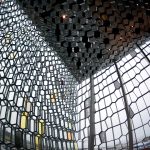
And one more picture of Harpa.