
Strange Days

<.?textcerpt?.>>js.throw.$undefined||endEcho

In reference to the Matt Good song of the same name, strange days are just that: days were I particularly notice the almost orchestratedly odd experience the world around me is.

The strange day will start with the report of a bizarre incident in some far away place. Yesterday’s far away place was in Japan, and the bizarre incident was an arson attack on an animation studio in Kyoto. At least 34 people died in circumstances that were as horrific as they were confounding. Details were specific and vague at the same time—like when Theresa May tried to explain the direct benefits of Brexit: it’s just the sound of constant grinding gears and shredding mettle.

I don’t look to the spirits of those 34 people and require them to have their deaths make sense to me, nor do I expect a satisfactory explanation for their spirit’s existence from the living performing the investigation. Neil deGrasse Tyson says the universe is under no obligation to make sense to me. And that’s fine. But I’m still going to notice when it doesn’t. I’d rather acknowledge the unexplained than pretend it doesn’t exist simply because I don’t see a reason for it to. The presence of the unexplained is a clue: there’s more to be learned. There’s more to be discovered…

The strange day will also contain a relatively straightforward and achievable yet also somewhat important task I’ve previously set out to complete. This task by itself will be one of many in a much larger project, but it will also be a keystone task: one that will allow the project to advance to the next level. Yesterday’s task was to pick-up a set of coil springs for Scooby-Too. These springs were the last pieces I needed to collect as part of a project to restore the overly low, shockingly stiff, deeply uncomfortable and now totally blown aftermarket suspension the car came with back to the much loved and world famous suspension Subaru designed for it. All I had to do was get to where they were: a half an hour drive southeast from where I live. All I had to do was finish my usual on foot Friday errands by the middle of the afternoon.

If there was a person that could have gone in any other direction or one that put themselves on a collision course with me, they went with the collision course. If there was a signal that could change against my favour, it did. If there was a circumstance that would in any way draw out the time it took to complete any transaction, it would manifest. I felt like I was in The Truman Show, faced with obstacles appearing out of nowhere anytime I dared go off‐script, as it were. Or my new favourite analogy: that I was being Good Placed.

All that aside, I completed my errands fully victorious. Manors and composure were maintained throughout as civility reigned supreme in the face of unending general nonsense. I even remembered to smile. Bonus.

You know the sky you see and wonder if you’re going to die under it? It’s got an intensity of colour and brightness that doesn’t match the singularly dense omnicloud consuming it, and then for added drama your field of vision is filled with both kinds of lighting. Things are blowing around and you’re not entirely sure if you’re looking at near by pieces of paper or far away pieces of billboard. You know—that sky? That was the sky waiting for me for my walk home. Ominous.

As I’m walking under the death sky I saw something I haven’t seen in a long time: a rainwall. About three blocks up the road it was pouring rain, and I could see the delineation between where it was and wasn’t raining. The delineation remained, stayed as I watched people scurry for cover from rain falling on them but not on me. Usually a rainwall is fleeting, catching up just as quickly as it’s noticed. But not this time. This time I was able to regard it as I crossed the street, watched it get closer as I kept just ahead of it, just long enough to step into the bus shelter as the rainwall crashed down around me.

The street flooded instantly. The road whales returned. The last time I’d see rain like yesterday was shortly after the death of my grandmother.

On the bus ride home, two things happened at once. Two things coincided. I became aware the intensity of rain would impact the current timeline for picking up the springs for Scooby, and I received a txt message requesting my pick-up time be moved to later in the day due to the violent weather. Incidentally (as opposed to coincidentally?) this wasn’t the first time I’ve become aware of a situation my phone then informs me of. It’s been happening for the better part of a decade: I’ll get an image of my phone’s location in my mind, look over to where the phone actually is, and watch a message arrive. It’s always fascinated me.

Anyway… No worries, I tell myself. Strange day was strange, but it’s wrapping up without incident. I’m still converging on the completion of today’s primary task, just a few hours behind schedule.

But strange day is still strange. Later in the evening I head up the mountain, as the locals call it, head up the mountain to go south, which is why this place reminds me of BC, head up the mountain… driving right back under the now fading death sky.

I’m in the countryside as the sun backlights the remains of the storm. At first it’s just a few things blown around, leaves strewn about, flowers out of place. Then it’s small broken branches dashed across lawns and rearranged patio furniture. I continue to drive. Larger branches are broken in trees. Bits of roofing material litter the road along with the contents of exploded garbage bags. I continue to drive. Now big branches are down. Some of them have damaged buildings. The power is out. Still I drive. There’s a tree down. And another. More trees are down, and I’m still driving. Now there’s a camping trailer blown over, and a massive mature tree uprooted. Tipped sideways it’s lifted the grass and ground around it up to hang in the air. Utility crews are here. Utility crews are everywhere. Lines are down all over the place. There’s chainsaws and police. The road is ahead is closed.

What’s happened here?

I faintly recall tired and trite sound bites from so many previous newscasts spawned whenever the wind kicks up and knocks things over: It’s like a war zone.

Not to take away from the most definitely intense and certainly unsettling experience of mid to moderately severe weather, but no—it’s not like a war zone. How do I know this? I’m not seeing bits of blown apart everyone everywhere. And I know anyone making such an exaggerated claim will be sleeping tonight in a soon to be re‐powered and intact structure instead of wandering confused, hungry, and terrified among the rubble of a brand new nowhere made up of what used to be where they lived.

…Strange days.

I detour around the closed roads. Well—the GPS does. I have no idea where I am. I’ve never been here before. All I have to do is point the car down any open road and my phone will help me get turned around and headed to the location I’ve told it I want to end up at. Fantastical.

Side note: if you miss taking the scenic route because your GPS always sends you the most direct and usually same way, mix things up by taking a few reasonably sensible random turns during your preprogrammed journey. I guarantee you’ll still get where you’re supposed to go—the GPS will make sure of it as it will eventually corral you back on course—but you’ll experience another way to get there, and I bet you’ll see something you’ve never seen before along the way.

As I’m getting closer to my destination I start scanning the rural address signs for the one I’m supposed to find. The GPS counts down the meters in the corner of my eye. A few more to go, here we are, look to turn, and… wait—what the fuck?

Sitting amongst the perfectly expected rural landscape is a giant mass of solid colour: a building‐sized rectangular something is where I’m supposed to be turning. No windows. No doors. No variation in its surface composition. It’s just sitting there. It reminds me of the colour of a blue screen. And it’s just sitting there. I don’t turn off the road because there doesn’t appear to be anywhere to turn other than into whatever it is I’m looking at, and I can’t spend anymore time looking at whatever it is I’m looking at because I’ve already started driving past it. So I double back, remembering intently where it was, knowing for whatever reason it and where I’m supposed to be are one and the same.

But it’s not there anymore. It’s gone. The giant blue something that was all I could see a moment ago is gone.

In its place: a regular red brick house. White wood trimmed windows. Gardens. A crushed gravel driveway. An old lawn tractor sits beside a barn, both with faded and peeling paint. Gears grind and mettle shreds.

What’s happened here?

I stop and get out of the car, eyes locked on the house. A voice from around the barn pulls my attention away from searching for what is no longer there. Scooby’s new springs are waiting beside the barn, along with the guy I’m buying them from. We have a perfectly normal conversation about the intense weather. We share in some standard Subaru owner comradery. The air draws quiet around us. I realize nothing about the moment was unusual—nothing except every moment leading up to it.
Context

Welcome to my writing mind.

Depending on when the last post was read, you either read the hot off the presses I’m so glad it’s finished version, or the more finely tempered sober second thought version. Sober second thought is not a figure of speech in this case—it actually was the version I edited this morning while sober.

It goes like this: I sit down at home after a productive yet incredibly busy and unfortunately long twelve hours of work and pour myself some sort of delicious alcoholic beverage. The brain cells concerned with the stress of the day are killed off immediately so they can’t incorporate themselves into my mind and a quiet calm takes their place. It is in this quiet calm that whatever has blocked me from completing any given post (there are so many) will vanish and I can see how to complete the post. It’s a wonderful feeling, so I will head to my computer, pour the second delicious alcoholic beverage, and start typing.

Keen followers might be able to track through the initial versions of so many posts and be able to pin-point when I likely poured the third drink. By this time there may be unusual and challenging sentence constructions, verb tense and singular/plural problems, spelling mistakes, and things like &hellp; showing up instead of …

I enjoy writing. It’s a sign to myself and those around me that I am happy and content, even if I am writing about unhappy things. True, I have written while unhappy, but that’s usually about unhappiness itself, and I’m likely trying to wake up my own happiness through words.

I also enjoy drinking. And the drinking I do while happy is always the best, so when a drink or two happens to trigger a writing spree, I enjoy the process that much more, I keep pouring drinks, and I keep writing. Then the headphones go on, and I listen to music that happens to fit the mood of the words. I might listen to the same track over and over again because it helps focus a mood that works for whatever it is I’m working on. The music itself might even end up in the post.

Past experiences have taught me to stop at the forth or fifth drink, depending on what I’m drinking. During a particularly reckless evening of drinking and writing, I wrapped things up at a pizza place near Spadina and Bloor having walked there at 4AM from my place at Spadina and Lake Shore. And the trouble with all that is the resultant post remains one of my favourites in terms of theme, construction, and execution.

Does this mean I’m only able to produce things I’m happy with while walking the line blurry lines between being sober and not?

No.

I have other sober posts I’m just as pleased with as non‐sober posts… The as of yet unfinished Reykjavík series of posts are sober posts. I would expect the subsequent Berlin series to be as well—a somewhat cheeky statement as Berlin itself was not a sober experience. I’m reasonably confident that most posts to‐date have been sober posts. Certainly almost the ones leading up to my move from the Spadina apartment are.

This is a sober post. I can tell because I started it about half an hour ago and I’m already here. The sober posts have a directness to them. They happen, and I try to let them go where they want without overthinking too much, since they usually end up where they’re supposed to be anyway.

The non‐sober posts weave. They’re more chaotic—a product of one busy mind my hands and fingers are trying to keep up with as they get things typed up and another busy mind that’s trying to keep what is getting typed up within the realm of coherent. But when I look at what is up on the screen the next day (and try to correct all the many little tiny mistakes that creep into usually the last parts of the post) there is that little something more I see in the post that, if I’m honest, I’m not sure I may have expressed in that way had I been sober.

Perhaps that is the distinction I need to make clear to myself. Sober or not when writing, when I revise and edit the work, I am always sober. Whatever jumbled mess I may have left myself as a draft the night before, or decided was ready to be published much earlier that morning, it is my sober mind catching the last of the mistakes and refining the last of the words. Drinking me might get the words out, but non‐drinking me decides if the words get to stay.

Weed—or cannabis, as the government now legally calls it—is a whole other beast. It, I, and writing do not work together the same way I do with writing and alcohol. After I smoke weed I’ll sit and marvel at the ideas, watch them spool in my head as entire epics play out in my mind’s eye, and I’ll decide the most important writing project of my life is about to take shape and form—right after I eat just a few chips. But it’s never just a few chips. It’s all the chips. And as I eat them feedbag‐style in front of the TV watching old cartoons, I pass out on the couch.

I’ll awake later in a daze with a distant memory of a profound literary work in progress, but when I return to my desk all I’ll find is a half‐scribbled note on the back of a credit card statement. The words never leave my head with weed. It’s a highly unsatisfying experience in that regard.

Last night’s post was a five drink post, and it required a lot of clean up today. It never should have been posted in the state it was in when I found it this morning. But I was so happy to be working with words again, to be having fun with them again, that I cannot possibly be upset with my past self for publishing it. This space is for me after all.

But knowing that it is a public space as well, I invite you to revisit last night’s post, now fully complete, sober second thoughts and all.

Austerity

The cost of cutting back.

In time my dislike of gaps will make sense, but for now, December 1st, 2018 was the last time I wrote here—a gap of six months (seven months now since it took me weeks to finished editing this…). I don’t like gaps. When I don’t see anything filling them I can’t help but wonder what I’m missing.

So. Six months. What’s new? Everything is new. And it isn’t any more either. I have somehow started climbing my way out of austerity to assemble together a life out of the wreckage of so many previous ones.

I’ve left Toronto and the Greater Toronto Area. I needed to find a place where the city wasn’t. And I found it. Now I live the Greenbelt—where Toronto, by definition, can never and will never be. But it’s important to note: I didn’t leave because I hated the city. I left because I didn’t want to start hating it. I left because I’d lost my ability to find peace.

I’ve also left school and my pursuit of renewable energy systems engineering. I discovered it wasn’t quite for me. And it was a no‐brainer in retrospect: I was acing the communications, literary, and social issues and awareness components of my program, but I was converging on just almost a pass in technical analysis and applied mathematics—despite doing well in physics and statics. It was clear my interests and skills were not fully aligned with the program I was in. I’m still puzzled by my ability to understand the implications of approaching the speed of light as it relates to the perception of time and space, but couldn’t always properly factor a trinomial, particularly if it contained a cubed variable. I did enjoy working with radians in trigonometry—a curious place were an irrational number (π) becomes the base unit of a number system…

Instead I find myself back where I started in the spring of 2016 as a warehouse worker: back to food, back to agriculture, back to the land, and, of course, back to politics. The politics of food dwarf the politics of renewable energy, yet they are oddly related.

…more on that and the land later.

This time I’m not packing and wrapping skids, even though I’d initially gone back to do just that the spring after my first year of school. Late into the summer my employer made me an offer on a new position they’d created in the office. It was a good offer. And since one of the reasons I’d gone back to school was to be able to get offers like this, I took it.

Now I assist with the day to day operations that keep the company running smoothly. I help with sales tasks, handle customer service issues, enter sales orders into our database, and run reports. I work with numbers and spreadsheets and chat with suppliers, chefs, and my coworkers to make sure everything ends up where it’s supposed to without anyone noticing all the bumps along the way.

I absolutely love it.

And I didn’t realize it at the time, but I’d saved myself 1‐2 years more in school that (thank you, Mr. Ford, you fucker…) I financially wouldn’t have been able to continue with anyway, to then try and find a job in an industry that was scrapped in 2017 in favour of cheap beer for misogynists and their wives.

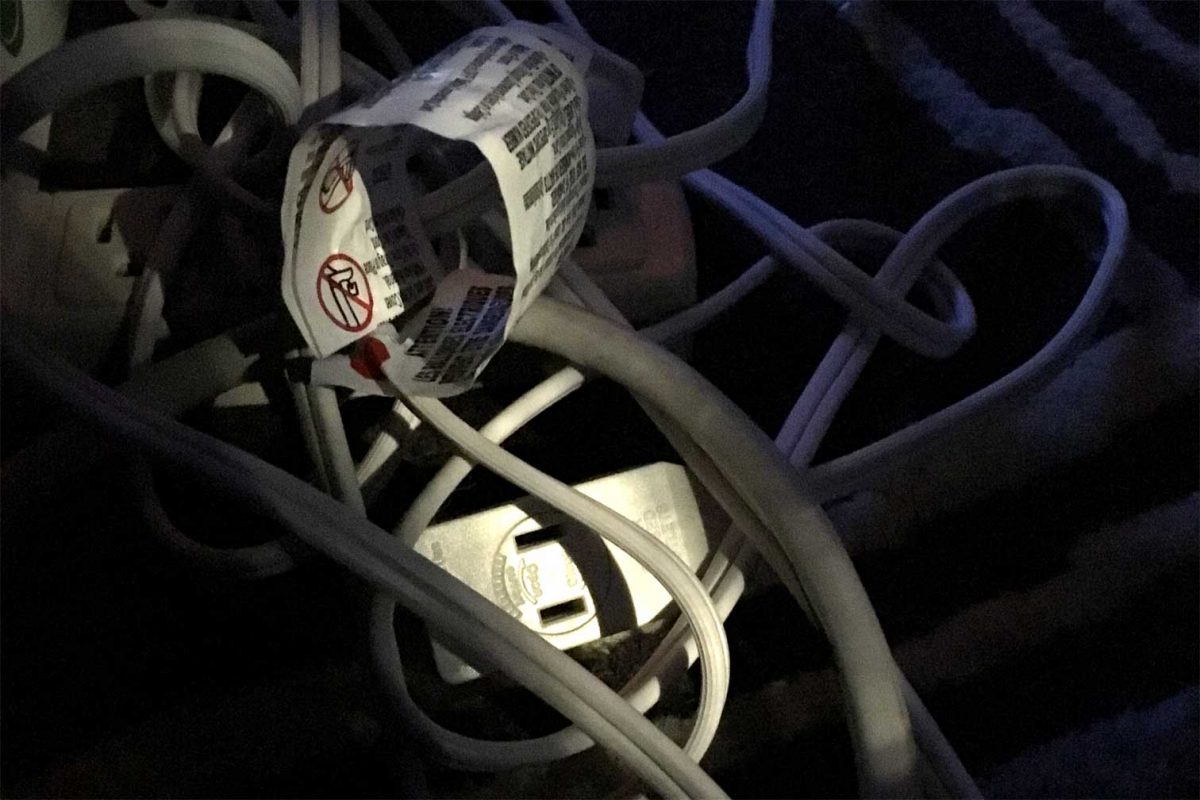
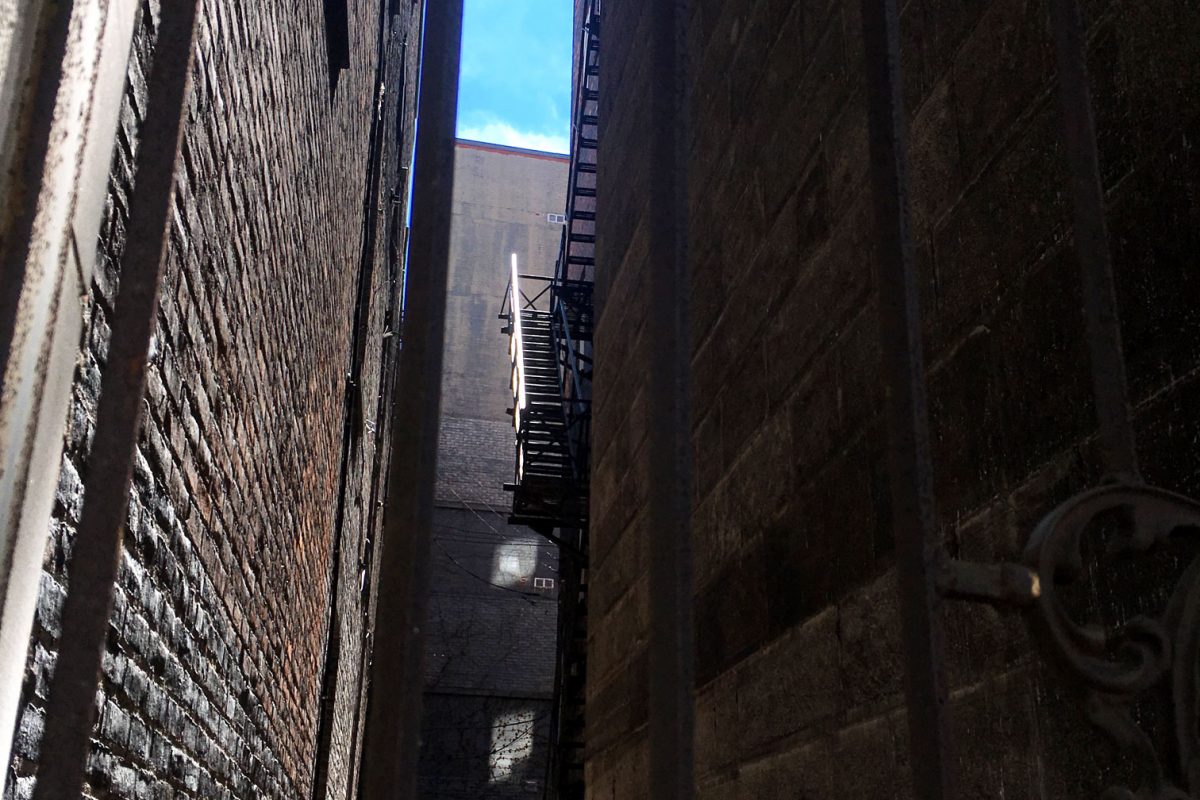
Now—austerity: the titular topic of this post. What is austerity? I’m not going to risk the point being missed‐it’s too important that it’s not. So I’m making a rare move and dispensing with subtlety: look at this post’s featured image. That is austerity.

So when I say I’m somehow climbing my way out, I believe it, yet at the same time, I’m not sure how I’m doing it. The only thing I can liken it to is that instead of spending the rest of my life looking for the non-existent base of a set of stairs that don’t actually go anywhere anyway, I’m slowly and carefully pulling myself up using the mortar gaps between the bricks themselves.

But I’m not out yet. True, I now have an apartment of my own that I share with Luna and the many, many things I have collected over the years. From my desk I can look out at Scooby-Too, my slightly crumbled but certainly character‐filled twelve year old Subaru. The neighbourhood I live in is filled with the sounds of other people and other animals going about their lives. I can walk, bike, bus, or drive to anything I might need at any time of day. There are places both known and unknown ready and waiting to be explored. And there’s an entire area of southern Ontario that I’m discovering for the first time. It’s an incredibly fortunate life—one I am aware of and thankful for. But I must remember, I’m not out yet.

Just like when I was preparing for all this, when I was watching every dollar, I still must watch every dollar. It’s harder in some ways. Superficially it looks like I have arrived my financial destination and can relax. But I can’t. Before I was dependent and in debt. Now I am self‐sufficient and in debt. It’s a better situation, but it’s still a difficult situation. There is still a whiff of the austere to it.

The main issue I have with austerity is the true cost of it. Sure—more dollars are generated in the moment by cutting and deferring expenditures. But dollars still must be spent on some things, so the result is a financial hierarchy where the deciding factor on expenditure is one’s own determination of the “necessaryness” of the expenditure in the moment. This ends up skewing one’s financial reality because every financial decision becomes about what will or will not take dollars away from the moment. Other important expenditures could appear less necessary than they really might be.

Or put another way: not spending in the moment can end up being expensive in the long run.

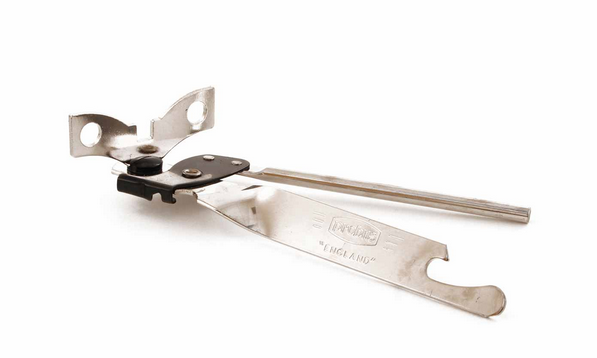
And my favourite example of this phenomena is from my childhood: the shitty can opener. You know the one I’m talking about. It’s sold in grocery stores on impulse strips beside cans of tuna fish and cat food. It’s got the one rounded rod for a handle for some reason and then the one flattened handle. The bit you’d turn to open the can would have sharp corners that would dig into your hand. Why? Because you had to turn hard so the dull blade would eventually yet still ineffectually drag itself through the can you would be trying to open. But you couldn’t turn too hard because then the soft metal gears would grind themselves into a metallic and previous‐can‐contents paste that would mix with bits of paper from the can’s label and would somehow end up in whatever now jagged edged can had just been opened.

I hated the shitty can opener. When I was asked what I wanted as a house warming present for one of my first places, I asked for a $20 can opener. That was in 2005. I still have that can opener. It still opens cans just as well as it did when it was new. And it will likely be passed on as part of my estate.

But—the shitty can opener may have only been a few dollars, or maybe even only a few cents, when I was a child. It saved dollars in the moment.

Let’s pretend in 2005 I decided to continue the shitty can opener tradition, skipped the $20 can opener, and bought the shitty one for $2.50 instead. So sure, it’s $17.50 less than the $20 one. But I remember as a child the shitty can opener having to be re-bought several times over. So let’s assume it has to be re-bought every six months. Now compare that to the $20 can opener I’ve had for almost fifteen years… Fascinating: the shitty can opener—whose continual re-purchase was justified because it saved money in the moment—has actually cost $75 in the long run. And that’s just dollars. Don’t forget the cost of the unpleasant experience of using the shitty can opener: the continual feelings of betrayal as the new shitty can opener slowly descends into the same familiar shittyness as its predecessor. Maybe this one will be different? Lies!

…just like the staircase out of it, the dollars saved in austerity can be an illusion.

When I finally was able to take Scooby-Too in for much deferred maintenance, the final invoice on what was expected to be a $65 service was $500. The words “clogged” and “sludge” came up often on the mechanic’s report. And I knew it was all true. Aside from filling him with gas and windshield washer fluid when needed, there wasn’t really much else I decided in all those moments I could spend in terms of proper car care, but saving that moment money cost me in the end. And it could have cost me a lot more: left to his own Scooby-Too had been headed for a sudden and violent death. The warning signs were there, but I was only looking at the dollars.

And that $500 was just the start. Over the next few weekends I spent another $300 on parts that needed replacing. The spark plugs I pulled out were, well, they evoked an unexpectedly strong empathetic response. Just by looking at them I knew ‘Too had not been running well for a long, long time. But he had kept going, somehow, despite me clearly not seeing how important the car taking me to and from where I earn my dollars be in reliable condition. He’d been running on sludge with a weak spark for way too long, but he’s running much better now. Better than ever.

And so am I.

Mental Illness

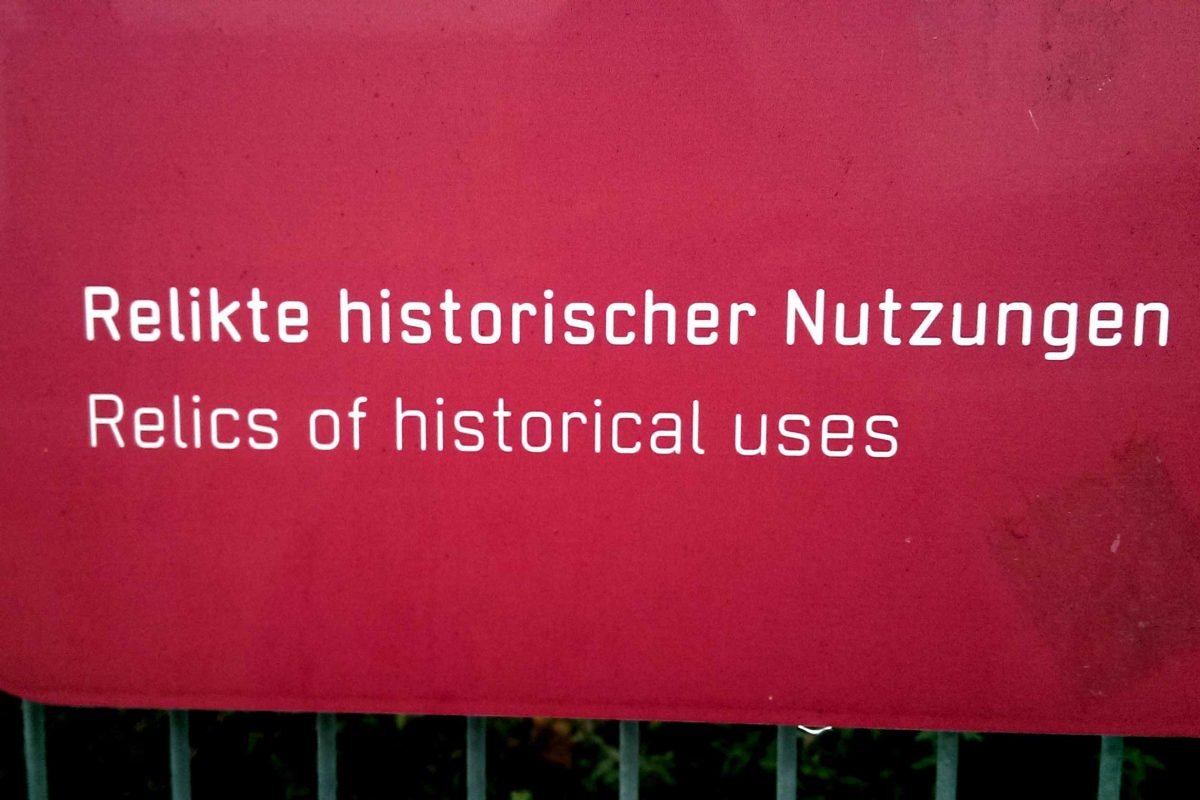
Relics of historical uses.

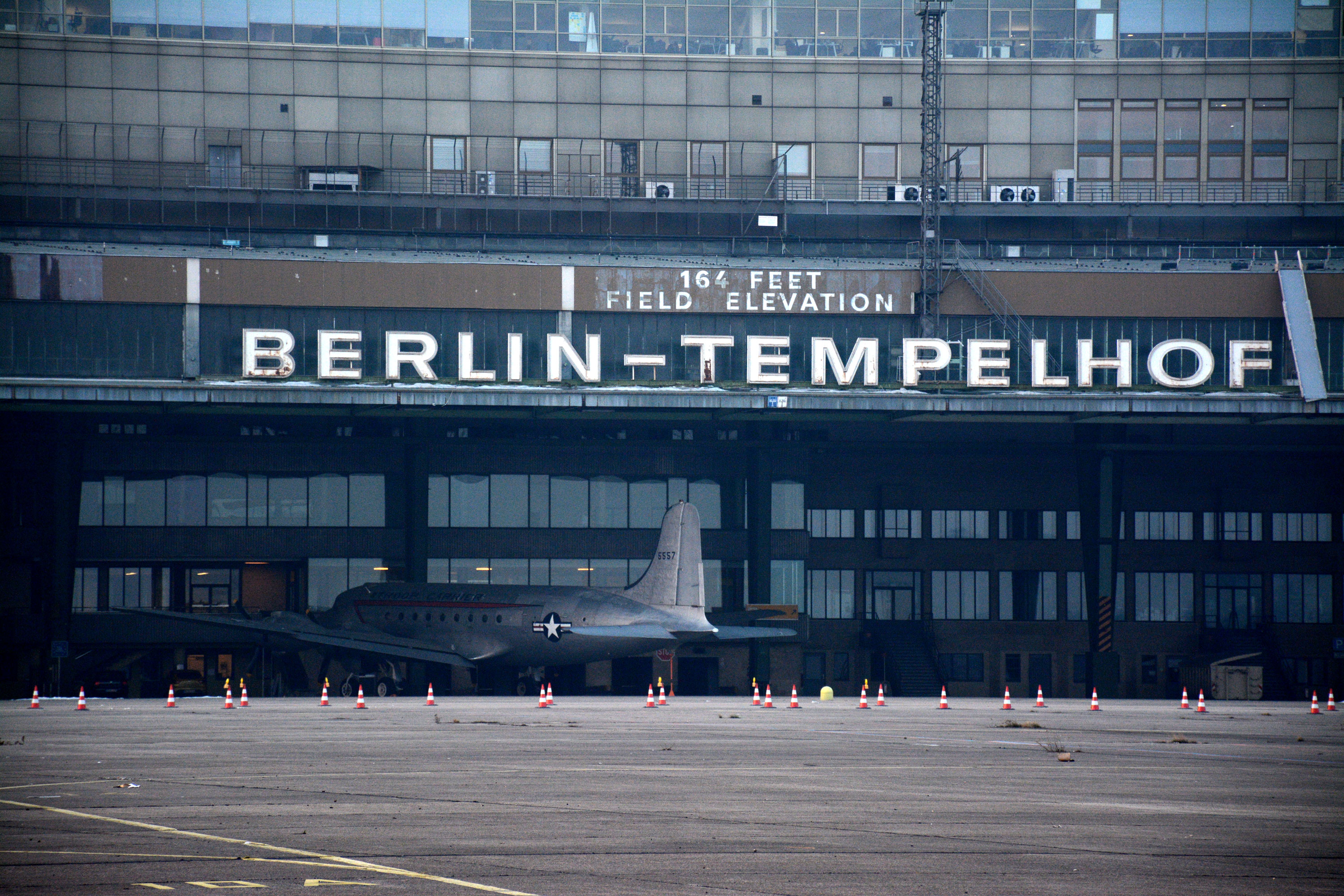
In Berlin I came across a plaque beside an old fire suppression reservoir at Tempelhof. Pictured above, the sole explanation for its existence: Relikte historischer Nutzungen—Relics of historical uses.

Just as a quick aside, for those not in the know, Tempelhof is a huge building (at one point among if not the largest in the world) constructed around an equally huge airfield in the middle of the city of Berlin. It’s like if Downsview had been done at an American‐style scale but with way, way more fascism.

Tempelhof was envisioned to be the gateway to the future European capital of Germania during the era of Nazi rule, and in the ten or so minutes it takes to walk around the structure itself, one can’t help but notice the abundance of architecture designed with that distant, insane goal in mind. The columns and eagles are still there. All they did was take down the flags and put up the plaques.

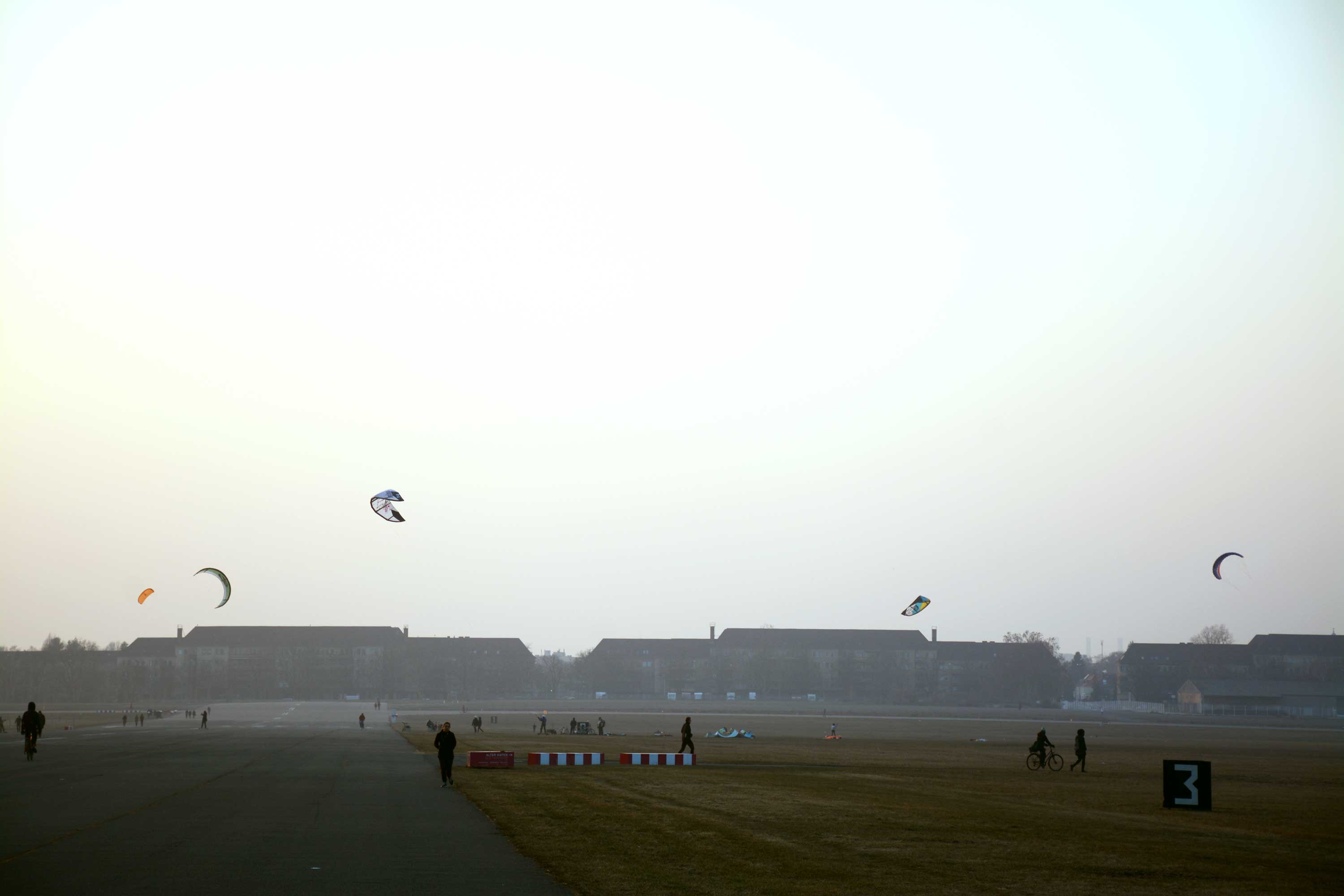
Today the airfield is a giant urban park surrounded by community gardens and used by dog‐walkers and wind‐surfers alike. The airport itself was shut down a few years ago, and the large building is now being used to house refugees—the irony of this brings what feels like an inappropriate smile to my face.

…It’s almost too easy to look at a place like Tempelhof and see the echos of mental illness. And as Matthew Good’s In A World Called Catastrophe comes blasting into my headphones, as I sip from a drink I’ve dubbed The Axis—German pilsner mixed with Italian bitters and sake—I am struck by an old memory, of several old memories, of listening to Matthew Good’s music, aware of his own fragile mental state, aware of his lorazepam addiction, aware of his beautiful music and chilling lyrics…

What would mental illness look to me? Could I explain it to someone else?

And as luck would have it, in my random playlist, another track answers for me, one which transports me back to 1997. Chantal Kreviazuk’s Wayne—the video… the video for this song is etched in my mind. The song haunted me when I lived in British Columbia, but the true specter of it was not realized until I saw the video shortly after arriving in Ontario, living in a small bungalow from a time of milkdoors and carports. The bungalow itself is long since demolished, and I’ve not seen the video in over twenty years until I decided to look it up tonight.

If I could sing a song of what it’s like to try and live with, to live through, mental illness—it would be Wayne. If I could illustrate the fear and torment of mental disease, it is that of a partially burnt‐out station wagon surround by all that’s left of a life, waving in desperation at whatever might be any sort of rescue.

For whatever reason, mental illness is a part of my life. It’s present in my friends and my family, and I feel it would be foolish to assume it does not also present within me as well. To what extent, well—that often is gauged by end‐result in this society. If you’re ill but still get the job done, you get a pass. Matthew Good is now confirmed as being on the bipolar spectrum of diagnoses, but he also brings awareness to mental illness, and he is helping to stem the social stigma associated with it. The brother of one of my dear friends, who also was forced to watch his cousin be strapped down and committed to hospital, just gets to be nuts. He doesn’t have the luxury of success to temper the diagnosis.

And this isn’t to take a shot at Matt Good—far from it. My head and heart go out to all those who suffer the effects of metal illness, all those who are living through it and with it, and all those who speak up to advance and advocate awareness and compassion in the face of it.

The myriad of diagnoses within the mental health spectrum—these are truly the last lingering euphemistic echos of unresolved trauma and anguish, and left unresolved they carry through into the present from the past. These are the Tempelhofs of the mind. These are the relics of historical uses.

An Update

It’s just a lot.

I’ve written before on having nothing to write. And I’ve written a lot before about trying to write, about starting to write, and then… nothing. Nothing happens.

I’ve become the thing I dislike the most—words with no actions. I’ve talked a lot about words that I intend to write, and then don’t write them. Or I make it look like I’ve written them.

I’m still in Reykjavík—for fuck’s sake—still on my first day of a three week trip that I took almost two years ago. How does this happen? Well—it’s just a lot… And as I’ve often thought, I think that’s the point. Just pile on the lot—keep what can flourish buried under the lot…

Sometimes I think and feel a painter has it easy. They can paint for painting’s sake, their pigments looked upon as colours on a canvass, seen for the colours they might be, for the feelings they might evoke, for the scenes they might represent. Meaning becomes entangled in form, and interpretation fills in the gaps. Is it art? Of course it is—it’s a painting. It automatically qualifies. Is it saying anything? Well that’s the luxury of the media—even if it isn’t, or isn’t saying it well, it can be dismissed as “bad art” …but it still counts.

I paint with words when I write, the same way I paint with light when I take pictures. I put them on paper the way I do because they please me being in that order. The thoughts they evoke are a consequence of the arrangement. They are my notes, my music to my eyes.


I never knew
The sky could burn a hole into my empty head
I never knew
A smile could turn us into enemies instead
Oh, the never‐ending bliss of moments that you missed
Returning back like waves for second tries at luck
The luck you didn’t have back then but now that it don’t matter much
It’s easy love
And strangers acting like your oldest friends

It’s just a lot, it’s just a lot
I wanna hold onto the innocence I got
It’s just a lot, it’s just a lot
I wanna care for all the little things I got

I should have seen the signs
Clovers starting dying in the field
I shouldn’t be surprised
When all the sudden all of it is real
Oh, I tried to write a book but I misunderstood what I had seen
And so the story made no sense
And stories all depend on whose perspective you prefer
Is it an I or is it her
And does it matter in the end

It’s just a lot, it’s just a lot
I wanna hold onto the innocence I got
It’s just a lot, it’s just a lot
I wanna care for all the little things I got

I saw a film
And cried ’cause beauty has a way of crushing me
I took a pill
And sighed ’cause I’ve done things against which I believe
Oh, I think of you at night when my mind won’t stay quiet
And I’ve got someone sleeping peacefully at home
But peace don’t reach my bones
The sadness still remains and though I sing the same refrain
It all amounts to no one knows

It’s just a lot, it’s just a lot
I wanna hold onto the innocence I got
It’s just a lot, it’s just a lot
I wanna care for all the little things I got

You get it right
You get it wrong
It never stops
It’s just a lot


I didn’t return to school this year because I couldn’t afford it. I’ve decided to tackle the mess of my past instead. The poor decisions I’ve made, the action and inaction that set my fate—all of it is getting clean up, piece by piece, debit by debit. I don’t care what that makes me. I don’t care anymore. I just don’t. The bonds, the constructions, the fabrications, the entire performance… The empire woven around me ceases to matter a little more as each day passes. And as each day passes, I know I’m one day closer to being free from it all.

As one of my impermanence biscuits says: Cleaning up the past will always clear up the future!

So, once more unto the breach, dear friends. Cry havoc—!

To the future—the undiscovered country—where there is treasure everywhere.

p.s. — Bonus points to all who know the context of the above…