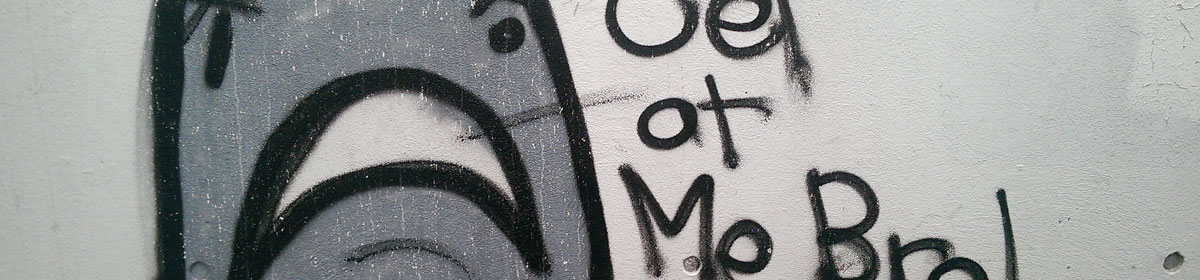

In Berlin I came across a plaque beside an old fire suppression reservoir at Tempelhof. Pictured above, the sole explanation for its existence: Relikte historischer Nutzungen—Relics of historical uses.

Just as a quick aside, for those not in the know, Tempelhof is a huge building (at one point among if not the largest in the world) constructed around an equally huge airfield in the middle of the city of Berlin. It’s like if Downsview had been done at an American‐style scale but with way, way more fascism.
Tempelhof was envisioned to be the gateway to the future European capital of Germania during the era of Nazi rule, and in the ten or so minutes it takes to walk around the structure itself, one can’t help but notice the abundance of architecture designed with that distant, insane goal in mind. The columns and eagles are still there. All they did was take down the flags and put up the plaques.

Today the airfield is a giant urban park surrounded by community gardens and used by dog‐walkers and wind‐surfers alike. The airport itself was shut down a few years ago, and the large building is now being used to house refugees—the irony of this brings what feels like an inappropriate smile to my face.
…It’s almost too easy to look at a place like Tempelhof and see the echos of mental illness. And as Matthew Good’s In A World Called Catastrophe comes blasting into my headphones, as I sip from a drink I’ve dubbed The Axis—German pilsner mixed with Italian bitters and sake—I am struck by an old memory, of several old memories, of listening to Matthew Good’s music, aware of his own fragile mental state, aware of his lorazepam addiction, aware of his beautiful music and chilling lyrics…
What would mental illness look to me? Could I explain it to someone else?
And as luck would have it, in my random playlist, another track answers for me, one which transports me back to 1997. Chantal Kreviazuk’s Wayne—the video… the video for this song is etched in my mind. The song haunted me when I lived in British Columbia, but the true specter of it was not realized until I saw the video shortly after arriving in Ontario, living in a small bungalow from a time of milkdoors and carports. The bungalow itself is long since demolished, and I’ve not seen the video in over twenty years until I decided to look it up tonight.
If I could sing a song of what it’s like to try and live with, to live through, mental illness—it would be Wayne. If I could illustrate the fear and torment of mental disease, it is that of a partially burnt‐out station wagon surround by all that’s left of a life, waving in desperation at whatever might be any sort of rescue.
For whatever reason, mental illness is a part of my life. It’s present in my friends and my family, and I feel it would be foolish to assume it does not also present within me as well. To what extent, well—that often is gauged by end‐result in this society. If you’re ill but still get the job done, you get a pass. Matthew Good is now confirmed as being on the bipolar spectrum of diagnoses, but he also brings awareness to mental illness, and he is helping to stem the social stigma associated with it. The brother of one of my dear friends, who also was forced to watch his cousin be strapped down and committed to hospital, just gets to be nuts. He doesn’t have the luxury of success to temper the diagnosis.
And this isn’t to take a shot at Matt Good—far from it. My head and heart go out to all those who suffer the effects of metal illness, all those who are living through it and with it, and all those who speak up to advance and advocate awareness and compassion in the face of it.
The myriad of diagnoses within the mental health spectrum—these are truly the last lingering euphemistic echos of unresolved trauma and anguish, and left unresolved they carry through into the present from the past. These are the Tempelhofs of the mind. These are the relics of historical uses.