Technical Difficulties

I am unhappy with my words.

I have several stalled blog entries and yet more scrapes of notebook paper littering my desk.

My room is a mess, and it feels like my head is too. I quit smoking and staying up late, but I miss doing both.

I rally my words and they falter. I crave the future, but I keep looking back expecting it to be there.

It’s a challenge to be, yet I am still here.

I just have to wait.

These lulls happen and pass, but I notice them all the same.

Go to work. Clean up your room. And the dragon always spits the sun back out…

Solo: Uh, everything’s under control. Situation normal.

Voice: What happened?

Solo: Uh, we had a slight weapons malfunction, but uh… everything’s perfectly all right now. We’re fine. We’re all fine here now, thank you. How are you?

Delusions

Where paths cross and when lines blur.

I first started writing this blog after witnessing the suicide of someone off of one the buildings in my old neighbourhood. I found myself both feeling and not at the same time—stuck telling myself how shocked I ought to be and surprised back at myself for not being more so. Regardless of my ultimate feelings, the events played out in my head over and over again until I wrote them all down. In doing so I realized how unhappy I was in my own life despite living in the urban paradise I so wanted to be happy in. I knew I needed to make changes, and I knew some of the changes would not be easy or quick. Sometimes life’s a barge.

Subsequent posts followed—and then I started writing posts about time travel, and then I started going back to talk to my past self and reposting paper journal entries from fifteen years ago when I was in school for digital media. I brought my past self into the future and we were going to figure out what it was that had happened to us. It was fun writing, and I found catharsis in being able to talk to myself from the perspective of someone who knew nothing about what was going to happen to him and from the perspective of someone who knew all too well what was going to happen to him.

There was a problem though. As I was creating the blog, and this is true for any blog, I knew any reader who began reading the blog after I’d started writing it would find the narrative running backwards before the point where they began reading. Imagine picking up a book and starting in the middle of a story. You can read normally forward from that point and you can also go back to the start of the book and catch up to the middle. But with a blog you’d have to read the pages backward from the point your started until you got to the beginning. It might not make much sense—then again, it might also make one of the funniest episodes of Seinfeld ever.

A few months later I pulled the plug on the entire thing. The back and forth dialogue was a mess. The backward and forward narrative was a mess. And it was getting far more personal than I’d ever intended. I could see what those who would want to see would see. The blog format creates an artificial intimacy, a consequence of these words seemingly spun directly from my head into my computer and onto the internet—seemingly unedited, unfiltered, unreviewed—before appearing on your screen as if I’d wrote them just for you. The blog format feels autobiographical because it is almost exclusively authored in the first–person, and I almost exclusively write in the first–person.

So—this is when the lines blur. There is an event in my head I need to get out, and much like the one which got this blog started, it’s going to be challenging to get the words right, it will be difficult not to sensationalize, and it will be impossible to keep me out of it all. How much of me is in what I write? All of me—I wrote it. But I have no interest in being my own biographer. Would this story be any more or less interesting because it’s based on real events from my real life or based on real events from my fake life? Have I blurred the lines now, or did I start with the first word of this post? Perhaps it was with the first words of this blog over a year ago. Or perhaps every word I’ve ever spoken or written is part of a crafted series of messages to position your mind exactly where it is now… where I’ll then start you wondering if you can trust anything I’ve ever written or indeed trust anything you take for granted as being known.

In early 2014 I experienced a stress–related psychosis. I lost my sense of self and sense of continuity within my own existence. I doubted my own memories and the validity of my personal relationships. I was an actor—and so was everyone else. I was an agent—but nobody knew who for. I could hear everyone’s thoughts—but I had none of my own. I was a wolf—and my life was in danger. The paranoia spread as quickly as my mind could fill in the details of why I couldn’t trust any aspect of any past, present, or future moment of my life.

I withdrew from rational thought and went into a crippling survival mode fuelled by terror. Each day, each hour, was one I had to consider as it related to whatever nonsense was streaming through my mind at the time. It was exhausting—I had to always be one step ahead of the paranoia, planning my next move and coming up with every contingency I could imagine to trick myself into thinking I had the upper hand, even if they thought they did. Yes—I became one of those people who was worried about a they. In my mind I was the target of an on–going mental and physical hijacking, and depending on the day I was having, they were either winning or losing.

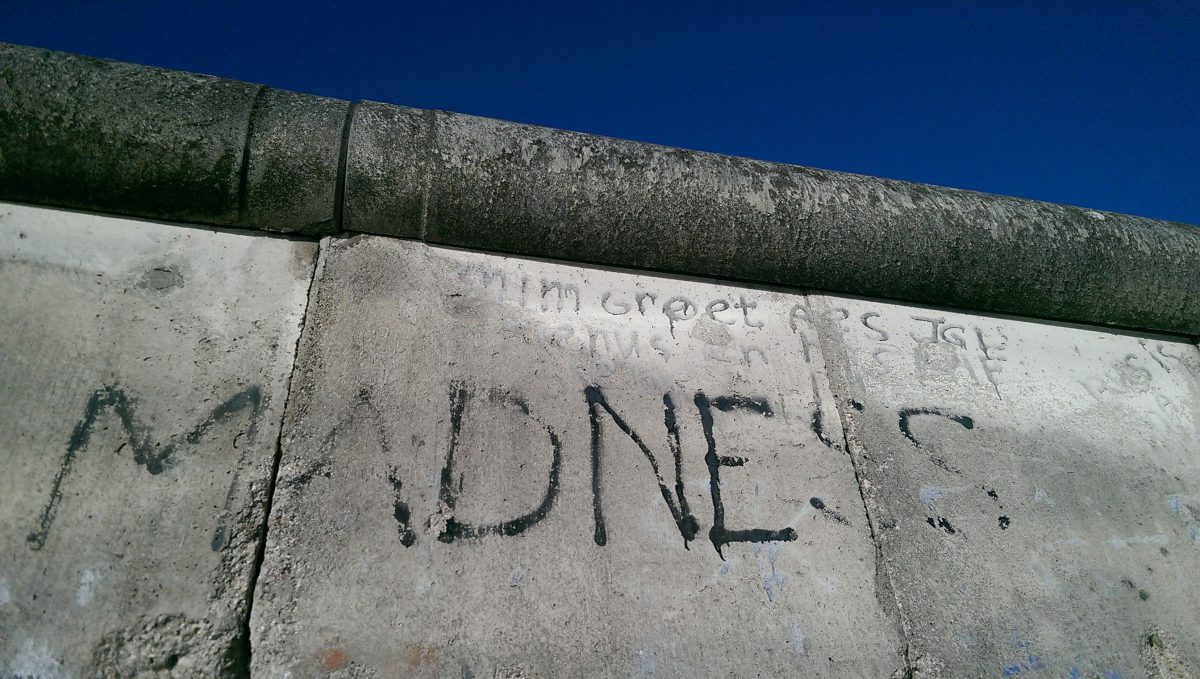
Everything suffered. I felt as if I was being monitored, spied on. I didn’t trust emails and txt messages. I didn’t want to touch objects other people had handled recently. I only ate food I had bought and prepared myself. I became confused and lonely. I said nothing about anything I was experiencing to anyone aside from carefully crafted exchanges to try and figure out if I was dealing with a friend or a foe. But there was neither past a point. It was always just me and madness.

It went on for months. I burned bridges under the guise of protecting myself. I withdrew from friends and family and kept them at arm’s length, never being able to confidently determine their alliances. I halted all online activities. I deleted accounts, pulled down all my websites, erased any trace of my digital identity which could be linked to me offline. I didn’t do anything I thought might be used to profile or identify me. I was going to disappear. Then I’d be safe.

I lost my home, my sense of family, some of my dearest friends, and any financial stability before I was able to break through my own mind. I’ve never had to fight myself so hard before, and part of why it took so long was thinking I could fight myself and somehow win. The fight is what kept it all going. I was trying to fight a fire with more fire. It was only after I stopped trying to fight did things start to get better.

In my dream I am with people. My dream sense tells me I know these people even though my waking mind doesn’t recognize their faces. We’re in a snowy place near an icy river. There are rocks jutting out of the ice as we stand by the shore. It’s overcast and cold. The air is calm. And then there is the sound of ice cracking and snow crunching. A giant polar bear is by the river right beside us. I can tell the people I’m with are slowly backing away, but I stay where I am. I’ve caught the gaze of the animal—we regard the other. Then the bear is in front of me, towering in front of me on their hind legs. But I sense no threat and in turn wish no harm—we have happened into the same moment. And then the bear’s arms are around me, lifting me up off the ground. It’s a hug. I’m getting hugged by a polar bear.

I wake and feel different—a quiet resolve surrounds me instead of my usual terror of having to face another day not knowing which delusion was going to fuel which awful thought at any given terrible moment. I remember my bear hug and a song lyric—Just ’cause you’re crazy doesn’t mean that you’re free.

My life had vanished into my delusions, my energy consumed with attempting to figure them out, my sense of self lost in trying to understand what was real and what wasn’t real—that was the trap. The escape was accepting the delusions might be real or the delusions might be imagined because it actually didn’t matter what they were, what matters was the self I wanted to be at the end of the day, or in this case, at the start of the day.

If my entire world were a Truman Show, or a Groundhog Day, or an Inception, or a Matrix, I would still want to be the gentle, compassionate, intelligent, helpful, strong, genuine person I strive to be. If I was being held captive, being experimented and spied on I would want to show the true nature of my character regardless of circumstance. I’d still want to be the best me I could be no matter if that me was happening in a computer simulation, at an alien zoo, or on the surface of a black whole.

It’s taking months to heal, but I feel it happening. Each day is a little better, and then some days I wake up and feel like I’ve slipped back. I get echoes of madness at times, if I’m under stress or under slept, but from what I’ve been told this is normal and nothing to be discouraged by. A mind doesn’t just snap—the circumstances build slowly over time, over years in some cases, until you reach the definitive moment where a new path is created—suddenly you find yourself on it—and it takes laps before you realize it’s circular.

We are the compilers of our own experience—in that sense it is only ever our own selves in this world. But, and this is the challenge, how we compile our world will impact how others compile theirs. It’s all the same source code, but every machine, every system, will interpret this code in its own way. The resultant will be the appearance of many paths to walk, many lines in time.

But, amongst these infinite paths, there is also only one path—the one you’re on right now. And whether you believe you’re able to choose to stay on this path or that path or not, it’s up to you to walk it.
Stay Fit

How the mighty will fall.

An ugly creature is undergoing an ugly death—and I feel it trying to avoid the inevitable, trying to drag the rest of the world down with it. It’s loud out there. Deafening.

“Survival of the fittest” is what we’re told Charles Darwin said about evolution. But he didn’t say it. The phrase was coined by a guy named Herbert Spencer who read Darwin’s On the Origin of Species five years after it was published. Once again school teaches the words instead of the lesson. They taught me wrong, so I’m betting they taught you wrong as well. How do I know? It’s built right into our culture. I see it over and over again: people fighting to live. Watch any nature documentary: the narrator will at some point speak of only the strong surviving.

What Darwin was actually talking about was a creature who was best adapted for its immediate, local environment. Strength—in the knuckle‐dragging, meathead sense of the word—has nothing to do with it. There is no fight. But it makes for a useful excuse—in conjunction with human nature—when we’re rattling sabres and standing proud in the face of wars won and to be fought. With all due respect to those who have fought a war—war is nothing to be proud of. To me it’s the ultimate admission of failure, like smashing something broken instead of taking the time and effort to learn why it isn’t working.

Thus by survival of the fittest, the militant type of society becomes characterized by profound confidence in the governing power, joined with a loyalty causing submission to it in all matters whatever.

That’s Herbert Spencer again. Sound familiar?

The United States, and possibly England—although they are currently and drastically attempting to pull up after seeing just how fast the ground was rushing up to them—are going down. It won’t be any one specific event—the rest of us will just have better things to do than be intimidated and, somehow—paradoxically impressed by the self‐declared coolest kid in school trying to make everyone like them.

What I see is an environmental and emotional global climate where the classical ideologies of might is right embraced by the few are endangering the lives of everyone else. It’s unacceptable. It’s unfit for survival in the context of a planet inhabited by multiple cultures—human and animal. Our environment is telling us we need to be utilizing our resources more effectively and efficiently. Our environment is telling us we need to be kinder and more understanding to our fellow inhabitants.

And if you listen hard enough, over the wretched racket of an unfit beast in its death throws, our environment is telling us there is so much more to discover about what it means to be here. There is a grand adventure out there waiting for those who are fit.

I used to tell friends to stay strong. I was wrong. Stay fit. Always stay fit.

Say Something Loving

Friend—I miss you.

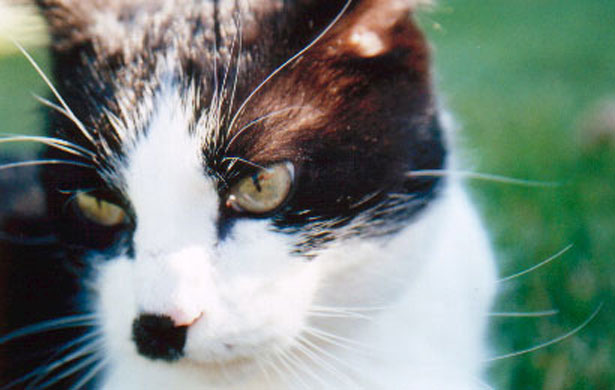
Years ago I had a cat—a black and white named Siegfried, Siggy for short. He was a rescue cat from the veterinary clinic back when I lived in British Columbia, and whether it was true or not, the day I met him was to be his last, but I did meet him, so it wasn’t. He came back to live with me and my family until his death in 2005, but I never knew how old he actually was.

Throughout his life his gentle character and welcoming personality earned him the title of Ambassador of Cats. There was a soft snapping sound I would make with one finger against my palm that if he heard he would come over to and stand up on his back legs, his front claws dug into my leg, head stretched up so I could pet him. He’d purr and all would be well. I’d whistle for him at the end of the day if he was outside and within a few minutes he’d be chirping in a way I’ve never heard a cat do before or since as he emerged from the shadows.

The topic of pets came up the other day at work—specifically how we often outlive them, and how difficult it is that we do. I told them about Siggy, the best cat in the world, and how hard it was to say goodbye to him, to feel him leave in my arms. They looked at my with pained expressions. They couldn’t believe I’d stayed there while it happened. A lump formed in my throat—I’d known this cat for fifteen years he wouldn’t have had otherwise. I saw him everyday. He was my friend, and I loved him. I knew I owed him that final respect—I saved his life, and for years he enriched not only mine but also the lives of those—human and feline—around him. And when the time came, when I knew I couldn’t save his life any longer, I also know I couldn’t leave him alone to die again. I know I wouldn’t have been able to face myself if I hadn’t in the same way I understood how my coworkers wouldn’t have been able to face themselves if they had.

I’ve been disappointed in the world lately—wasted potential angers me. I’m offended at the issues of the day—I honestly believed we were further along then it appears we are, but here we are, still trying to figure out how we all feel about access to equality and equity, still trying to figure out how we’re supposed to treat one another. Well—Siggy figured it out, despite occasionally licking his own balls in public, so there’s at least that common ground with conservatives. Gotta start somewhere, right?

But it’s not the world, actually. It’s the place that thinks it’s the world, the United States of America, the biggest frat house on the world street that shits its pants if it thinks it’s not invited to the block party, threatens to blow it up because it doesn’t like the DJ, drinks too much anyway, locks itself out of its own house, and then crashes on Canada’s porch after throwing up on it. And despite all this there is still the discussion here about being more like America.

You know that friend you used to have? You know the one you used to hang out with all the time as you helped each other with projects, you’d build stuff together, lend each other things, drink beer, laugh with, struggle with… Then one day as if overnight they became a bigoted, ignorant, misogynistic, hate‐filled, dishonest, greedy, petty, terrified little bastard. Then you realize it wasn’t overnight but something that happened so gradually you hadn’t noticed for years. And then you step even further back and realize they’d been a monster all this time but you’d only ever known this one person so you didn’t really know anything otherwise. That’s how I feel about the United States right now.

The title of this post is also the title of the song I currently have on repeat. Called Say Something Loving it’s from The xx’s third album I See You. The song, along with the rest of the album, is beautifully produced, and right now is my current pick for music perfection. Inspired by this track, I left myself a note: write something loving it said. With the dumpster fire of America raging so close by it seemed all I could write was more rage, but I know rage makes me sick. I cannot dwell on it. I cannot write rage and have it come out reading anything other than more rage, more fuel for the fire.

Siegfried—I write this for you, the Ambassador of Cats, you in simply being knew how to be kind to everyone you met. Whatever thoughts you may have had, your hopes or fears, they were yours, and they didn’t betray your actions. Here’s some news I thought you might like: Iceland recently passed legislation requiring employers to demonstrably prove they are paying men and women equal pay for equal work. Germany will be overturning the convictions of and compensating gay men prosecuted under archaic legislation prohibiting homosexuality. And a New Zealand school has introduced a range of gender neutral uniforms for students to choose from.

America will still be America, right up until it is or isn’t —but I think I’ve found some better friends anyway.

Fortune Cookies: Part II

Impermanence Continues.

I like how blogs run time backwards—the latest stuff is what you read first. If you want true chronology you have to go all the way back to the beginning, or at least, to the first post.

My fortune cookie project is finished, and I’m pleased. Small as it seems, this is a project I came up with one night, executed, and—most importantly—completed. One project down, several more to go.

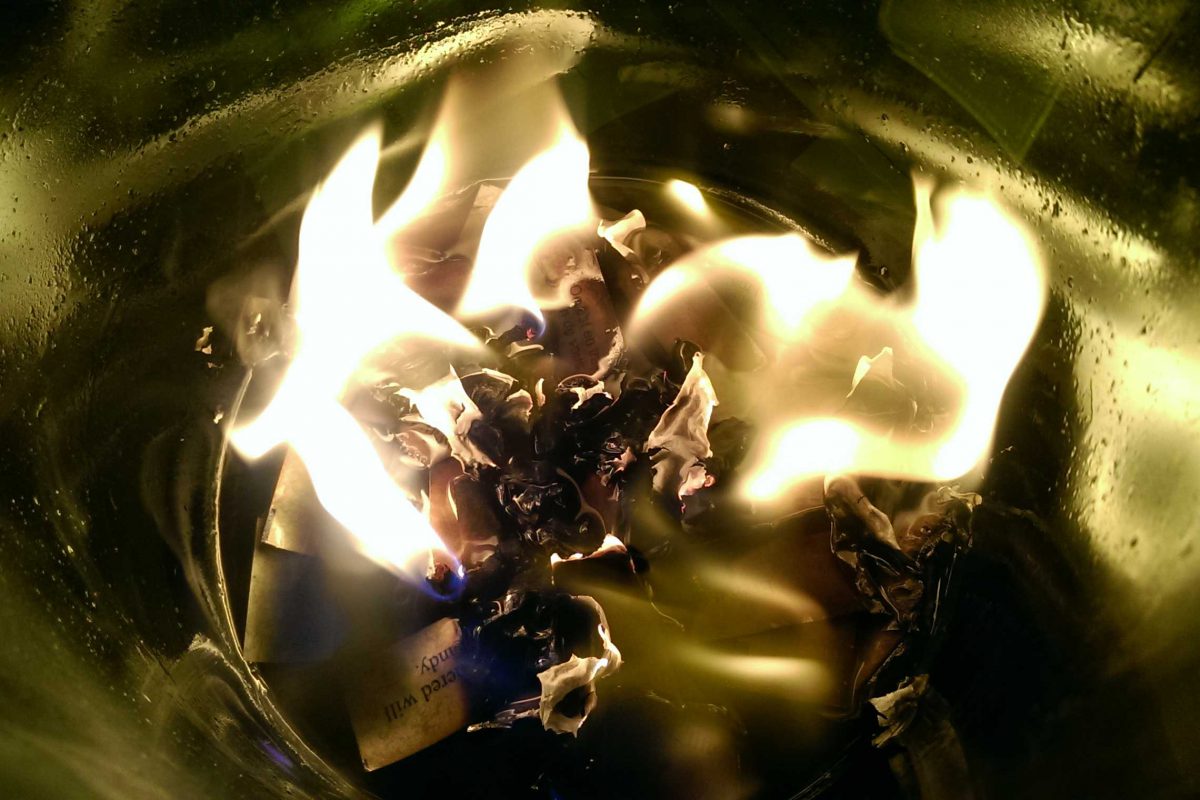
I decided to burn the remaining paper fortunes, so I lit what little remained of an old scented candle, the ones they sell in glass containers. The flames built up as I tossed in each fortune, watching it burn, watching the fire spread across each piece of paper, watching the wax soak into what paper wasn’t on fire yet. It felt all very transcendental—most pleasing.

As I watched the fire grow, a small thought floated through my mind: the glass is getting much hotter than it is usually accustomed to—there’s a lot of fire in there. And as if on cue, my moment of zen is shattered by the sound of the glass base popping and now I’m watching in slow motion as flaming wax no longer contained by glass starts to spread out and toward any number of combustible items on my desk before it’s all smothered by the collapsing glass around it. I can still see it all playing out so perfectly in my head, going from peaceful reflection to sudden panic to stunned silence of it all working out in a single motion without any intervention from me.

Object impermanence indeed.