Minutes to Midnight

In cards and flowers on your window
Your friends all plead for you to stay

On Thursday evening of last week while on break at work I read Chester Bennington had committed suicide earlier that morning. You may not know him as Chester Bennington, but you may have heard of him as the lead singer of the band Linkin Park.

I’ve always liked Linkin Park. Their music accompanies some of the best and worst times of my twenties—so it’s encoded deep. I’d heard of the deaths of Micheal Jackson, Whitney Houston, David Bowie, Prince, sadly the list goes on… but I never felt anything much other than everyone else’s sadness. This time though—I felt it, I felt my sadness along with everyone else’s. There was an emotional connection there this time, and it had formed in an unlikely but perfectly life‐like way: through death.

My life, like ours all, is one of coincidence. Among all the things that happened on May 14, 2007—my gramma dying was one of them and the release of Linkin Park’s third studio album was another of them. The two events are linked in my mind. A part of the album will always remind me of her.

It's pouring outside. Absolutely pouring. I can see it falling out of the corner of my eye now as I sit in my dark apartment listening to it hit and run down the windows. It's calming. Peaceful.

Earlier today the green sky opened up above my parent's house and within minutes the streets were flowing with water so fast and so high the curbs vanished. I stood in the open doorway of the garage and watched the sewer covers blowing jets of air and water. The streets were full of metal whales jumping and splashing in the water. It was the kind of rain that washes away everything.

On Monday night my gramma died. She's the first person close to me I have had to say goodbye to like this. I'm finding I'm mourning for myself and for all the people in my life she was a part of. It's a feeling I can't describe. I want the people I love to be okay. I want the people they love to be okay.

Thursday is the funeral. Up until then this experience will have all been words I've heard and said. I'm struck aware of how my own words will fail. The power they have will suddenly be so small in comparison.

...still raining.

I wrote that on Tuesday in 2007. The following day, not knowing exactly what I was to do with the bereavement leave work had given me, I ended up at the mall because they say to try and do normal things when you’re grieving—so I went for a coffee and to browse CDs at the record store. Linkin Park’s third album, Minutes to Midnight, had just been released. I bought it, brought it home, and put it on to listen to while I looked out the window…

The first track, Wake, an instrumental of just over two minutes starts with the unmistakable crackle and pop of a record player needle settling into the grove of an LP despite the album being on a compact disc. The second track is familiar Linkin Park—I’m my own worst enemy, I’ve given up, I’m sick of feeling, I’m suffocating—relentlessness in screams with drums and guitar.

But it slows down with the third track—I’m caught off guard—When my time comes, forget the wrong that I’ve done, help me leave behind some reasons to be missed—and this is the lyric which would the next day play in my mind as I watched the peculiar, lost eyes of my grandfather when I don’t think he thought anyone else could see them. I know he’s had a challenging life—and as a result those around him have as well. Leave Out All The Rest was the track’s name, and it wasn’t the Linkin Park I was familiar with.

As if sensing my trepidation, the forth track was back on traditional form: a mashup of driving grunge, rap, and, yes, some square dance beats…

And then it all changes again. Everything slows again for Shadow of The Day, the song I still, after all these years, can’t sing without the tears. I’ve never actually seen the video for this song until today—I don’t know if I like the video to be honest, but I almost always think most music videos are a dumb, so maybe it’s just me.

But this is the song I hear and miss my grandmother. I miss my family. I miss a time I know is forever in the past. I miss what I know is gone. I don’t write this to be melodramatic. I write it because it’s quietly true. Change—irreversible, irrevocable, change—is a part of life, and what is loss other than another form of change. We are all at some point flowers or a cards on someone else’s window. We are all always minutes to midnight.

The rest of the album plays out. I can tell the band is taking itself in a new direction, adding depth to the angst of being an alive, aware, compassionate person. I’m sad and happy at the same time. The final track—The Little Things Give You Away—is a commentary on the various forms of non‐response by the United States government to the victims of Hurricane Katrina—hope decays, generations disappear, washed away, as a nation simply stares.

Linkin Park would go on to release four more studio albums, but none have had the traction with me the way Minutes to Midnight did. And to be honest, I haven’t even heard their latest three. I’m amazed as I write this to realize I haven’t even heard half of their music. Yet they sit in my memory as this important presence in my life, and there they sat until the jarring moment last week where I was scrolling through the headlines sitting on a pile of skids outside the warehouse were I work to read their lead singer hanged himself.

Emotions make so little sense to my rational mind—a peculiar biochemical reaction aware of its own state as it attempts to reconcile one moment to the next, each moment joined to the next by an illusion of continuity. But these confounding feelings, each horrific, terrifying moment of the unknown as one part of me sees them, is seen by another part of me as a just an infinite moment, neither here nor there: only moment one of one. There is no terror, no horror. There just is—and knowing that’s also as true as anything else… it’s comforting.

But I still don’t like talking about why I’m feeling something because a lot of times I know what I’m feeling is backwards. Happy things are supposed to make you happy, but sometimes they make me sad. And sometimes sad things make me happy.

I see light when told I’m looking at darkness. I see ugly things and find them beautiful—I laugh when I’m not supposed to. Or I won’t know how to end a blog post.

So—it’s come to this: Chester—play me out.

P.S. And don’t worry—I’m still here.
To Run

Schlittenhund.

Oh yeah—months ago I travelled to Iceland and Berlin. Months ago, you say. Yes. Months.

But you were supposed to post pictures of your trip when you got back…

True. And really any time I get back is still when I get back even if it’s months later—although there is a certain spirit to the timeline I know I’m not fully adhering to.

But I do know, even if I forgot in the months since and have since remembered, there was one night in Berlin: all I can say is I caught a glimpse into the world of another animal.

Years ago I would go out with my friends and we would drink and dance—and I fell in love with a style of music where a song was over an hour long, a modern electronic symphony with many moods and movements—there nothing radio–friendly about it. In how I was almost a skater in my teens, I was also almost a raver in my twenties.

Jump to my mid–thirties in February—a Snow Moon shines brightly outside as I stand inside a smokey Berlin club at 2AM where I decide to remain because I’m holiday and I don’t feel like calling it a night yet.

The club is huge. I wander. And I find a room where the DJ is spinning trance—the multi–hour music I remember dancing to years ago. I recognize it, down to the artist and mix. It’s perfect. I start to move, not the way I had been previously that night, but they way I remember from years back, a grin plastered over my plastered face. I spin glow sticks I don’t have in my hands, the liquid motion still etched in my mind. I call out when the beat breaks. I howl when it starts up again. I get a drink of water each time I feel thirsty and another beer each time I feel like sitting down. The music keeps playing, and I keep dancing. I’ve decided I won’t stop until it does…

But the music doesn’t stop. It just gets better and better. So I dance, hydrate, dance, drink, dance—repeat. I love the moment and see no reason to leave it, so I don’t. And after what I’m sure is only a few more hours I start to feel hungry, and I know it’s the sort of hunger water or beer won’t fool.

“Danke schön!” I shout at the DJ and the remaining dancers—it’s time to go find something to eat. I know it’s late, but I’m sure something will be open. As it turns out, everything is open: it’s 10AM. I’d been dancing for almost 8 hours.

It’s disorientating being outside. The air feels far too cold and the light is far too bright. The city sounds quiet and I know it should be louder, but I’m still trying to understand where the time went, and how I was still standing. I’ve always been a sprinter, not a runner. In soccer I would play keeper because I couldn’t run up and down the field all the time. I don’t do marathons. I dash or walk, but I don’t run. Not for a long time. Not for hours. Why would dancing be any different?

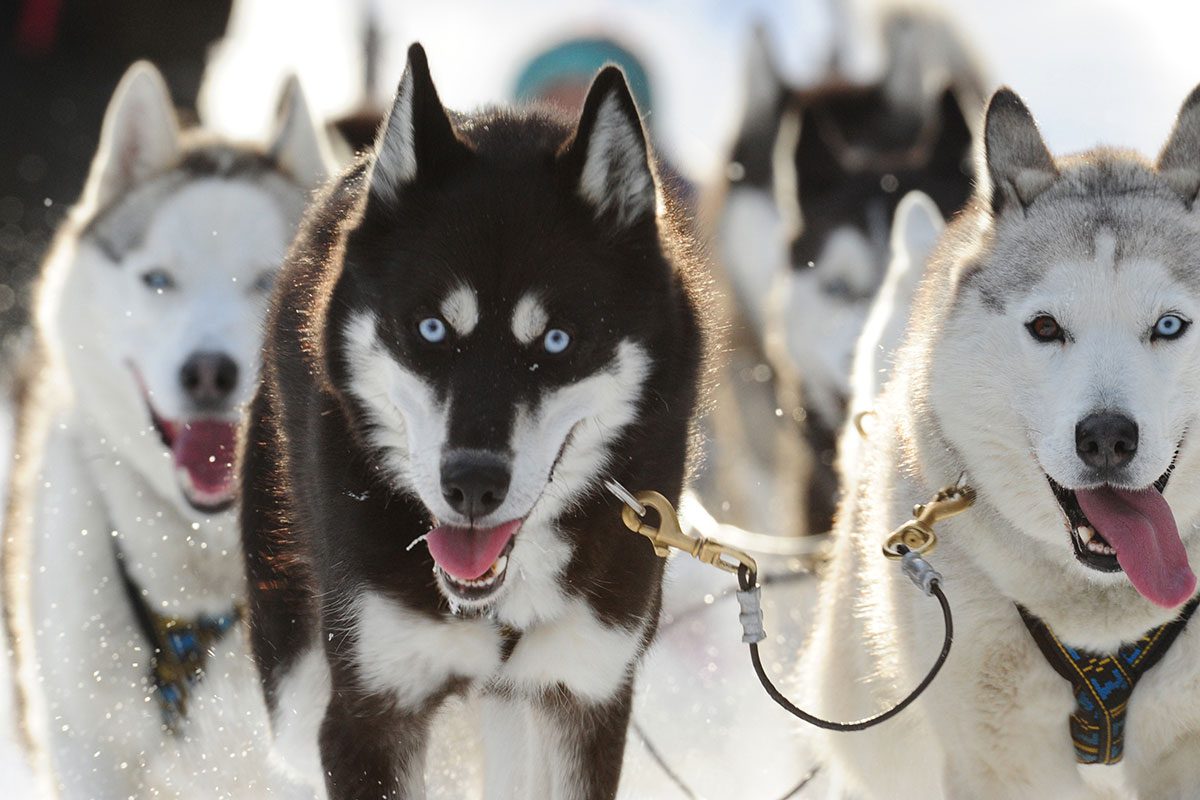
I’d watch in marvel at the sled dogs on TV, watching them run in the snow, wondering what it must be like to be able to, and in awe at the boundless energy of these animals. They run for hours, and I can only imagine it’s their version of dancing, something they love doing so much they don’t even realize they are doing it.

On the subway ride back to the apartment I reflected on the part of me who must love to dance, the part of me who must love to run. It was a peaceful part of me. I was content and exhausted and quietly pleased with how my night had gone—there was no one telling me I had to go or slow down or do this or be that. It was just me, amoung hundreds of others, but also just me.

I will often tell my animal friends I’m mostly canine when they ask—I consider myself too wolf to be dog and too dog to be wolf, and even though one does come from the other, I still feel very much between worlds, as if I was one of the first to discover how fun it is to run.

Later that morning, as I was getting ready for a little nap, I caught my eyes in a mirror for the first time since the night before. They were a blue I almost didn’t recognize, a bright, piercing, artic sky blue—familiar as mine, as old and happier eyes I knew I just hadn’t seen for while.

But they also reminded me of a sled dog’s.

Flesh Without Blood

Painting with words.

Wolf pup looks out the glass of the craft—he pilots it fast through the system.

Stars and moons race by—indicator lights and systems displays reflect on the surfaces of his helmet and the interior of the ship.

Traffic control updates chirp in his headset—his fur ruffles in the fake wind.

He drifts in Saturn’s rings.

Scooby

I part ways with another good friend.

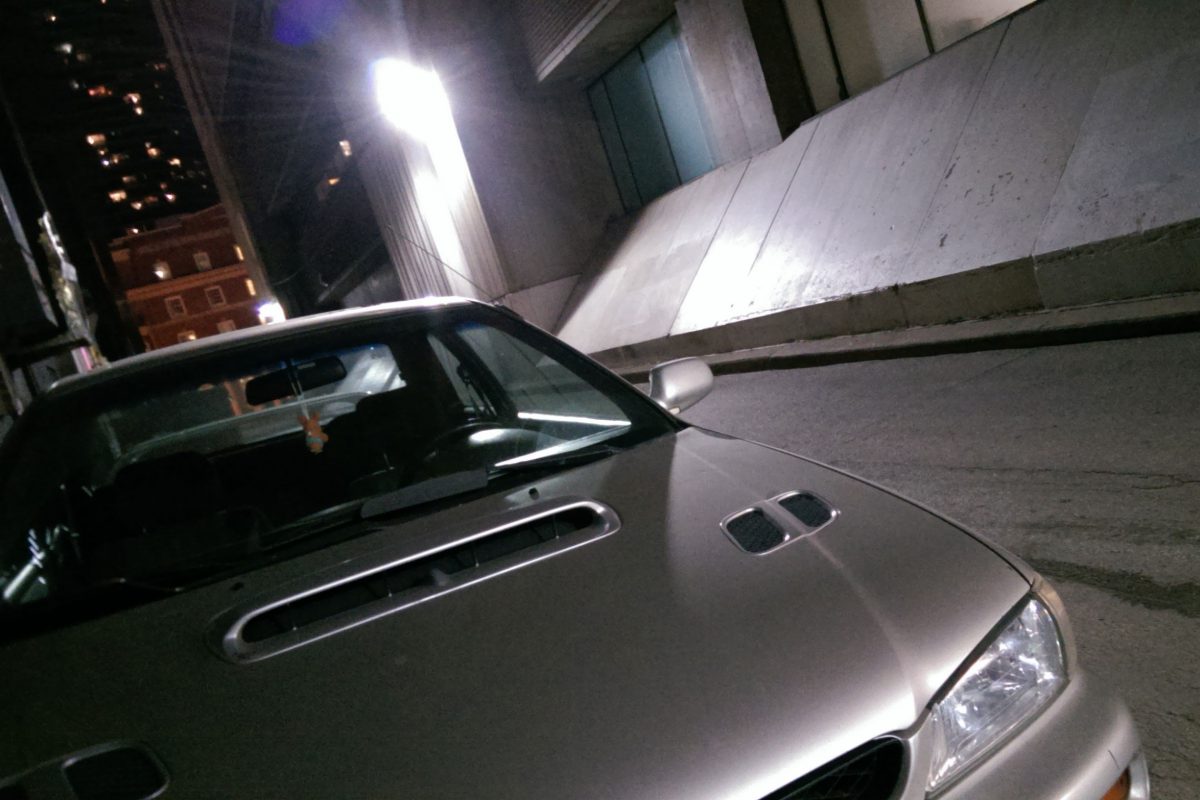
Back in 2008—after completing a run of contracts with one of my previous em(x)plo(it)yers—I decided to treat myself to a car I always wanted: a Subaru rally car. But with those prohibitively expensive, I found something that looked the part at least: a ’99 Impreza 2.5RS coupe.

I’m not sure when I started referring to the car as Scooby, but the name is based on English rhyming slang: Subaru sounds like Scooby-Doo. The cars are known as Scoobies there, and the name stuck here. Scooby quickly acquired a personality—even an account on Twitter.

As an aside, the designer of Scooby-Doo, Iwao Takamoto, previously worked at Walt Disney Studios before joining Hanna‐Barbera. He learned to draw while he and his family where held in an interment camp along with many other Japanese Americans after the bombing of Perl Harbor. His father had emigrated from Hiroshima years prior…

Anyway—Scooby was almost ten years old when I bought him, and yes my car was a him because I’m not always about traditional gender conformity. He was in excellent condition, although I knew as soon as I’d driven the car a few blocks it was a good one. I’m not sure exactly if the previous owner loved it, but it had been well‐cared for. I, on the other hand, did grow to love the car, and we went everywhere together.

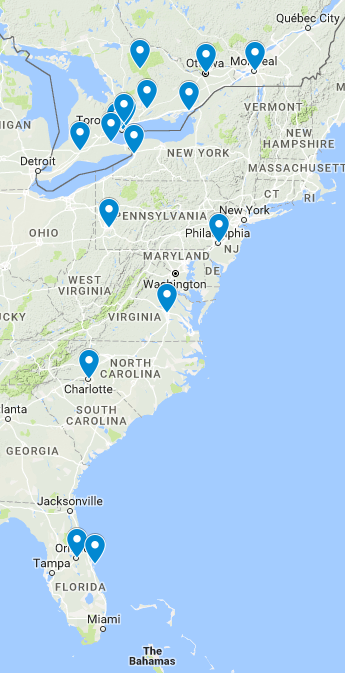
See…

In the nine years I had him, in the 130,000+ kilometres we travelled together, Scooby never once let me down. Never once was I stranded anywhere because he wouldn’t start or keep running. This car had a sled dog spirit. Subarus are notoriously reliable when they are looked after, and this one treated me better than some people I know, and I’d known it for longer than most people I know.

But at over 18 years old and with 300,000 kilometres approaching on the odometer, the car was starting to show its age despite being notoriously reliable. The bodywork was rusting in crucial, expensive areas.

I call them crumbly dogs—those wonderfully old dogs who are still clearly pups on the inside, still smiling through their eyes, still wagging their tails as they drag themselves around in a body you know isn’t long for this world. They are the best of the best dogs. Scooby was becoming a crumbly dog.

I’d always wanted to take Scooby to the moon as symbolic gesture of companionship, a nod to always being there, and that meant getting the odometer to read at least 384,400 kilometres—the average distance to the moon. Light makes this journey in just over a second. For Scooby it’d been almost 20 years, he still had a little under a third of the way to go, and I knew he was going to crumble first.

It was a tough call, but Scooby was replaced back in April with another Subaru—this one a ’07 Impreza 2.5i SE wagon. His official name is Scooby-Too, but after a few months I know the spirit of the old car is alive in the new one. He’s Scooby, of course, just in another form. There are lots of carry‐overs from the old car: the same silver colour, the same basic EJ25 engine, the same AWD system, the same gearbox that won’t go into 1st smoothly unless you’re completely stopped, the same wipers that will stall a third of the way up the windscreen if you flick the mist function too lightly, the same air filter, and the same wheels and tires—actually they are exactly the same wheels and tires: Scooby donated them to Scooby-Too.

But there are lots of things different about the new car—the gearing and throttle response, for example, which are tuned for economy on the new car vs. performance on the old car. The new car is more powerful, and it needs to be, because it’s also a little bit heavier. But it drives and rides excellent—if the brakes were stronger I’d say it would easily out‐corner the old car. Plus it’s got heated seats, tinted windows, cruise control, and a CD player.

Original Scooby—thank you for being a good car. Thank you.

Scooby-Too, you have some big shoes to fill, but you’ve got the same sled dog spirit in you. You’ll be a good car. And we’ll get to the moon this time.

Only 160,000 kilometres to go…

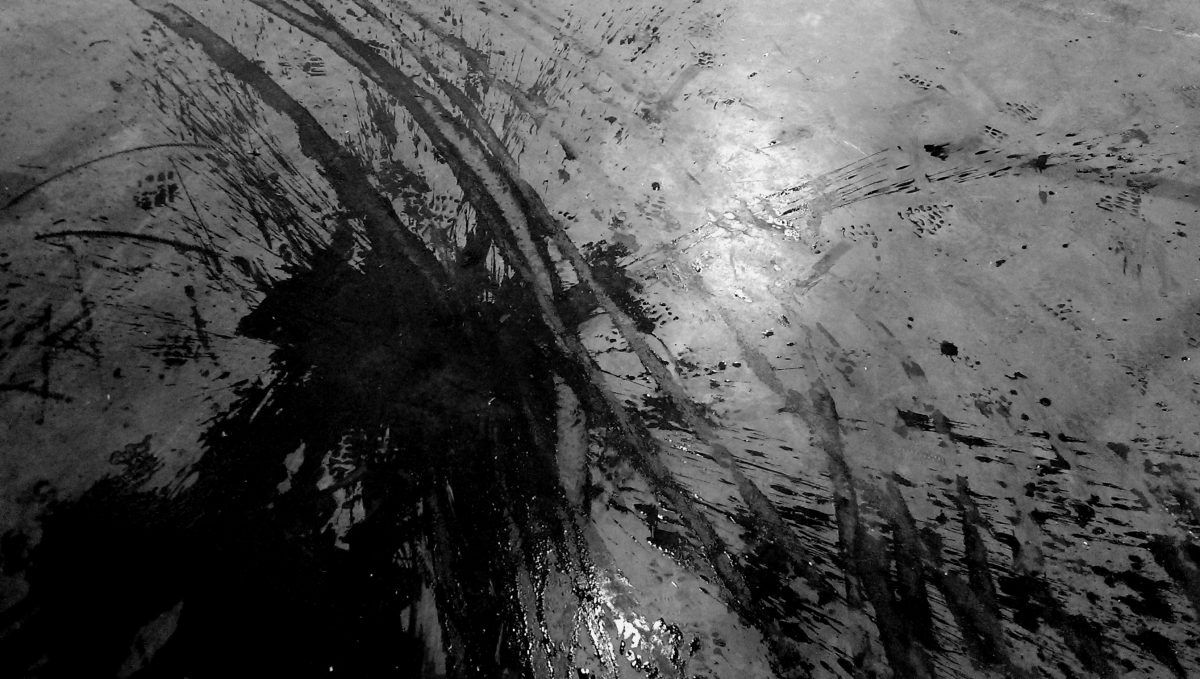
Floor Art

Words have it hard.

I wrote my last post, slept, and felt better. So…

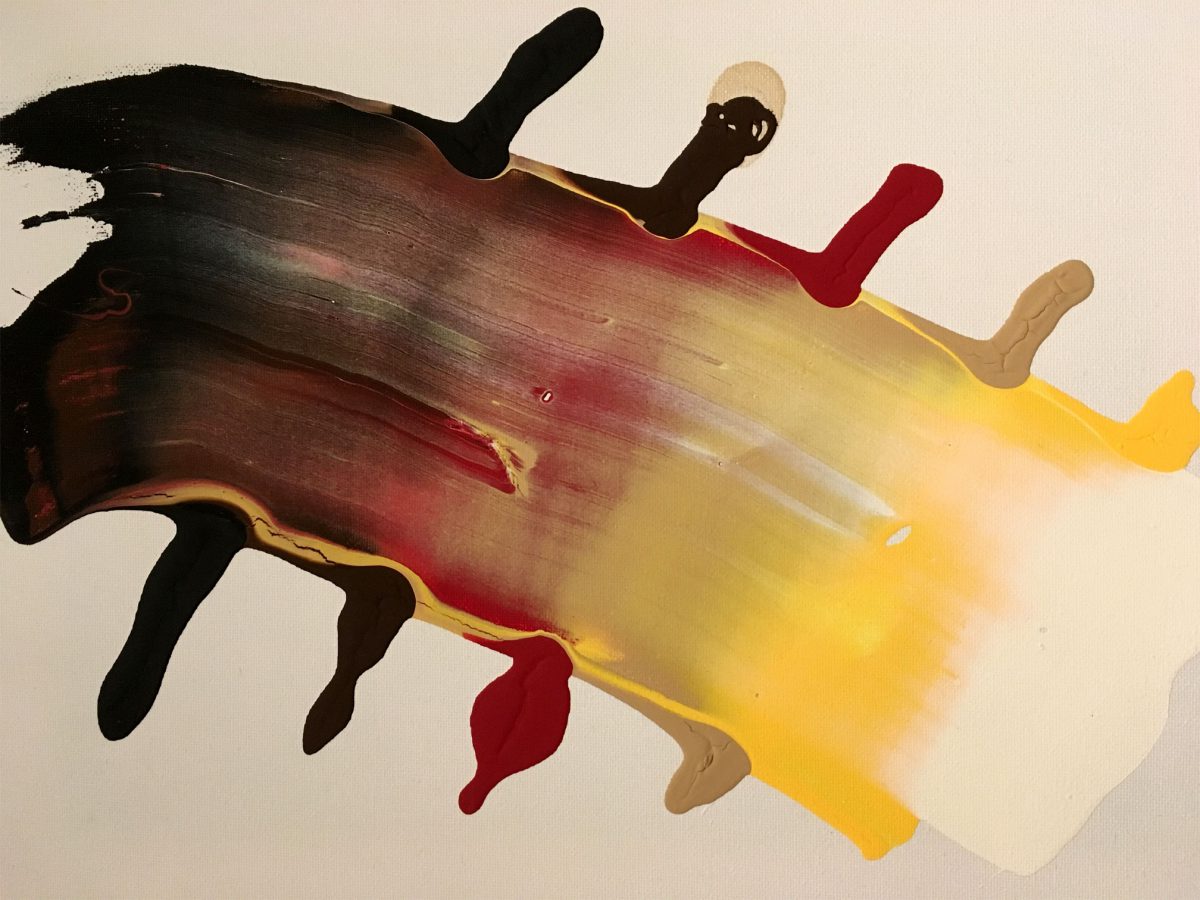
For whatever reason I have latched on to language as a media for abstraction. But this is challenging because even though language is the ultimate in abstraction, it’s so often taken literally. Words are looked upon as being real things, meaning real things—even though every single last word in the world is made up, and I like to play with what’s real until it isn’t anymore.

Sometimes I think I would be happier as a painter because I could throw paint all over something the way I do with words on my notebook paper and everyone would stand back in amazement at the movement and colour in my work instead of scratching their heads wondering what it is I just wrote. But as I review this sentance, I know there are also those who would also just wonder what it was I just painted. See? Abstraction—despite being the cornerstone of our reality—is a lot harder to land than a bowl of fruit.

Years ago I wrote a short, short essay on poetry being the art form of language, a place where utilitarian words could be formed without conformity to make something beautiful in the same way metal could be used for a sculpture instead of a bridge—although I find bridges beautiful in their own right as well.

I went through a time where I didn’t want to take pictures because I’d thought I’d lost my eye—I’d forgotten the most important part of photography was to take the picture. If I were to talk to myself now I know I’d say something along the same lines for my writing; i.e. write the words. And I know I would say this to myself because I already have.

The piles of scribbled notes sitting on my desk I lament the sight of each morning are all being transferred into a single file on my computer—a spatter of prepainted letters on an infinite canvas.

I’ve always thought of photography as painting with light.

Now—to paint with words.