Departures: Part II

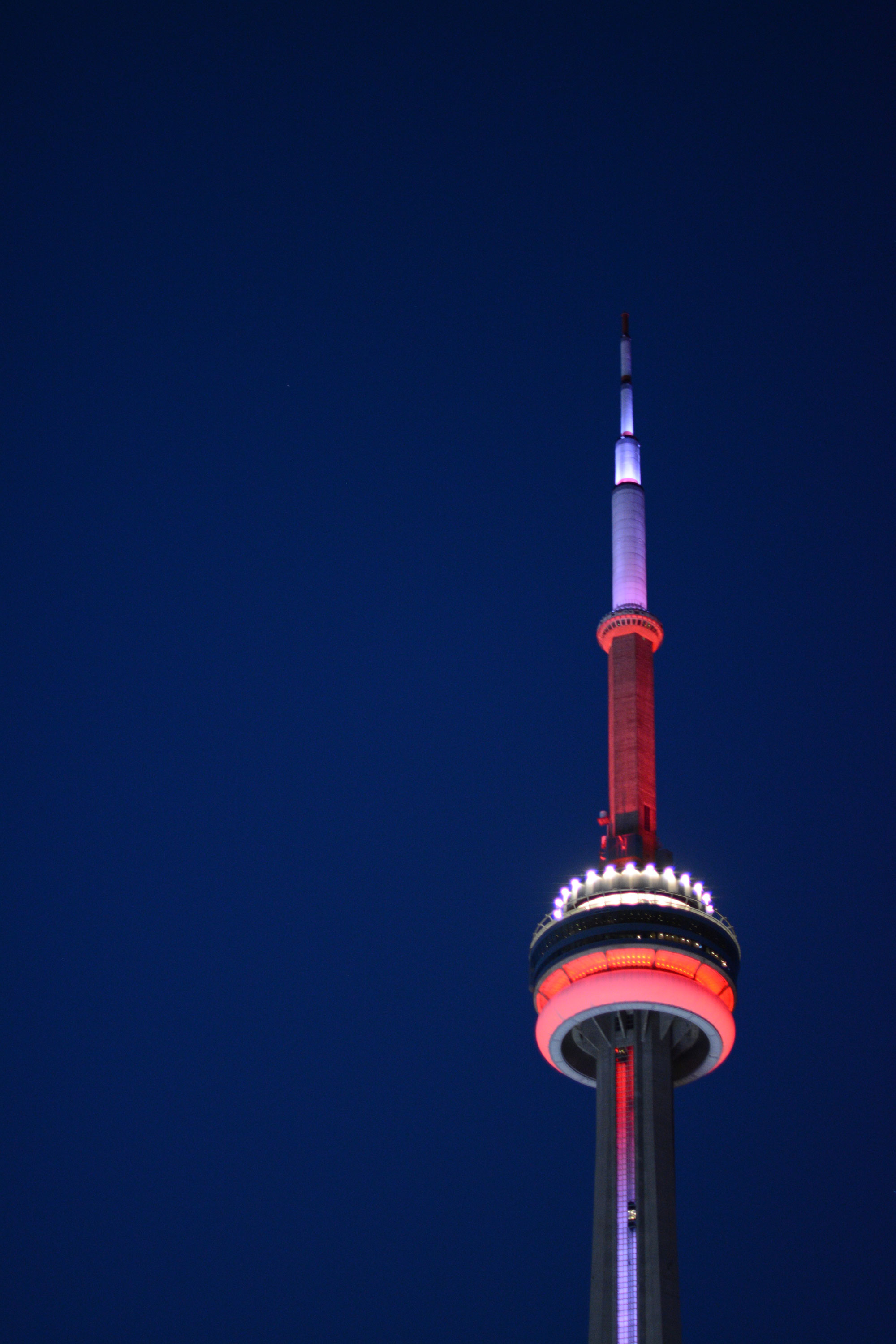
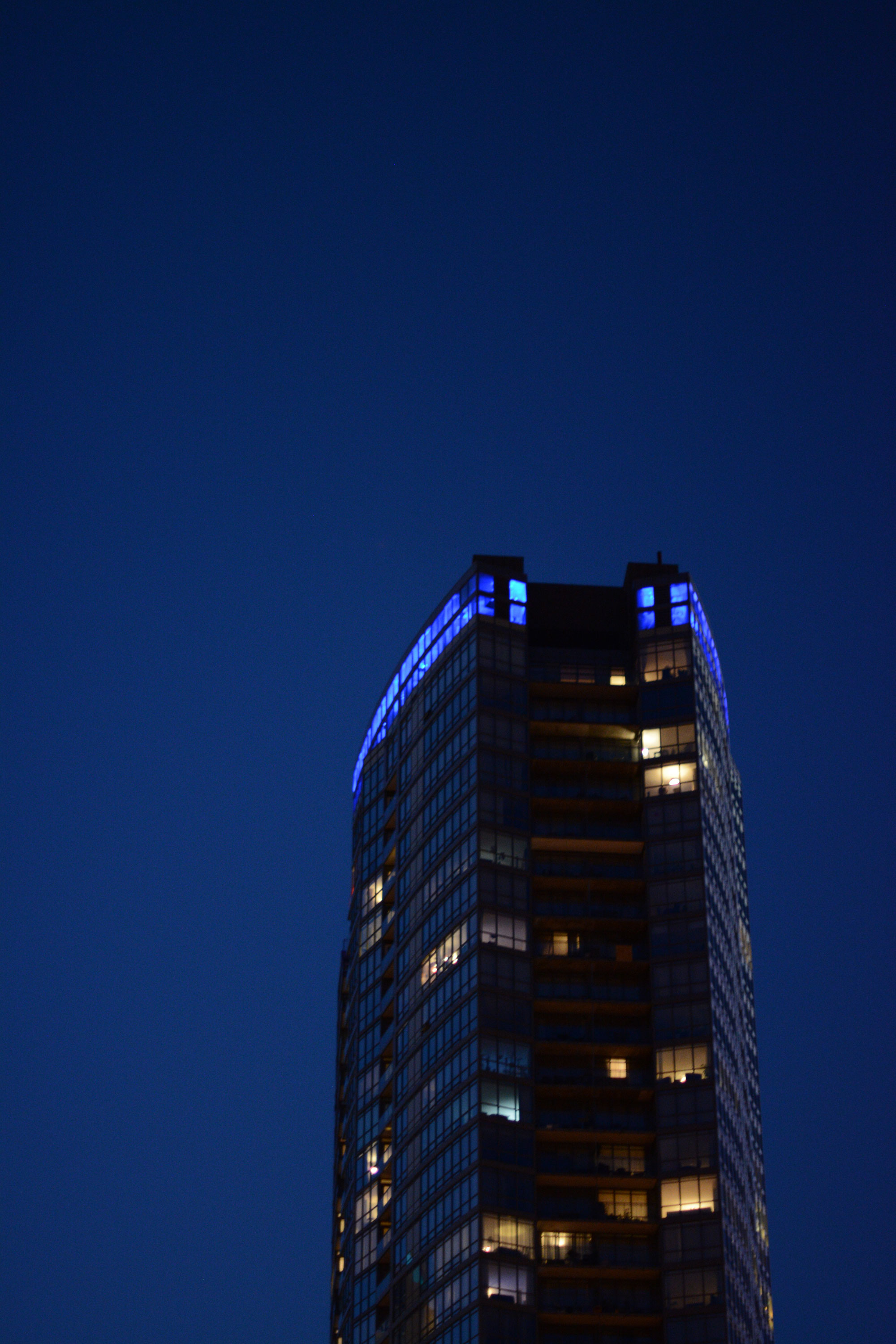
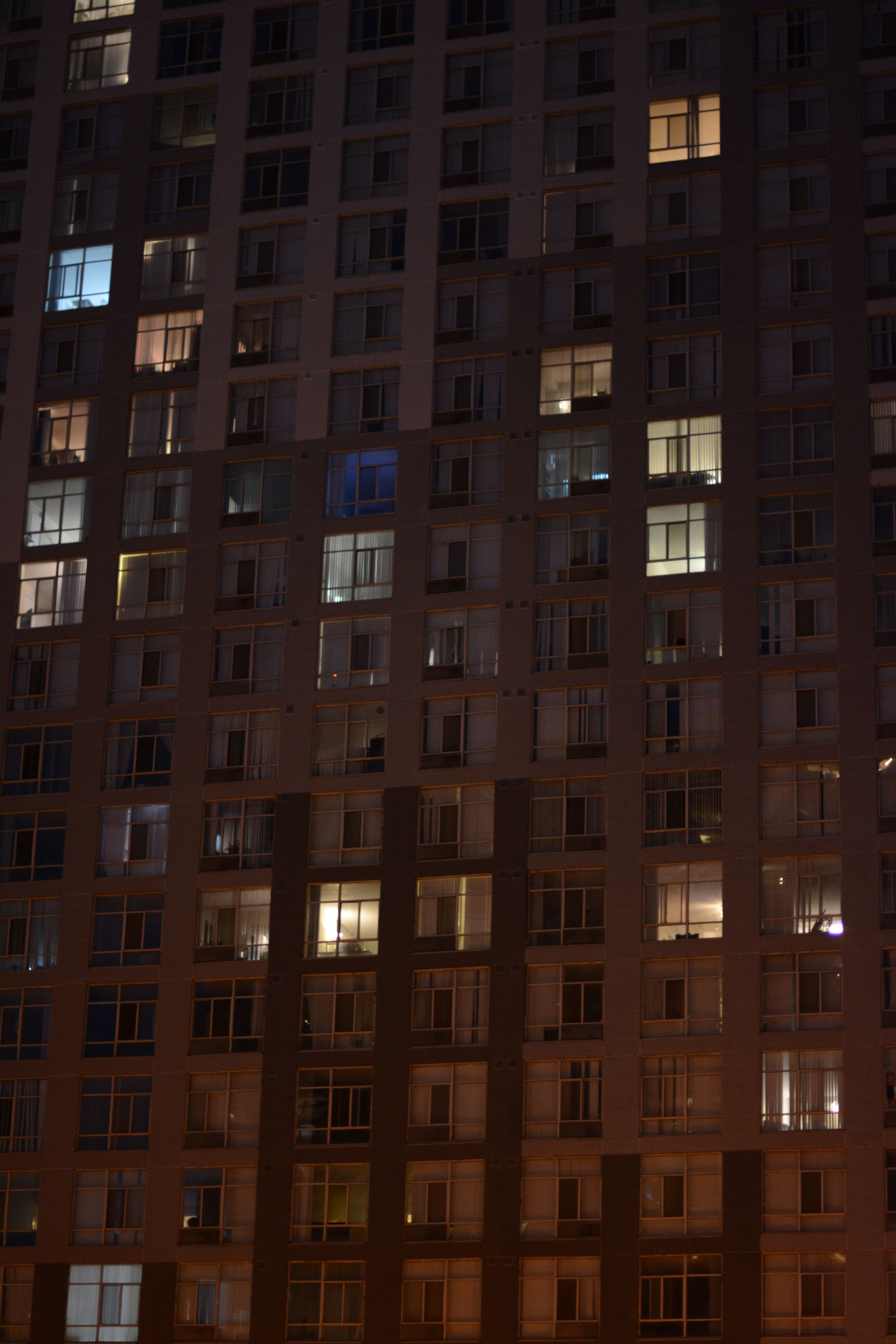
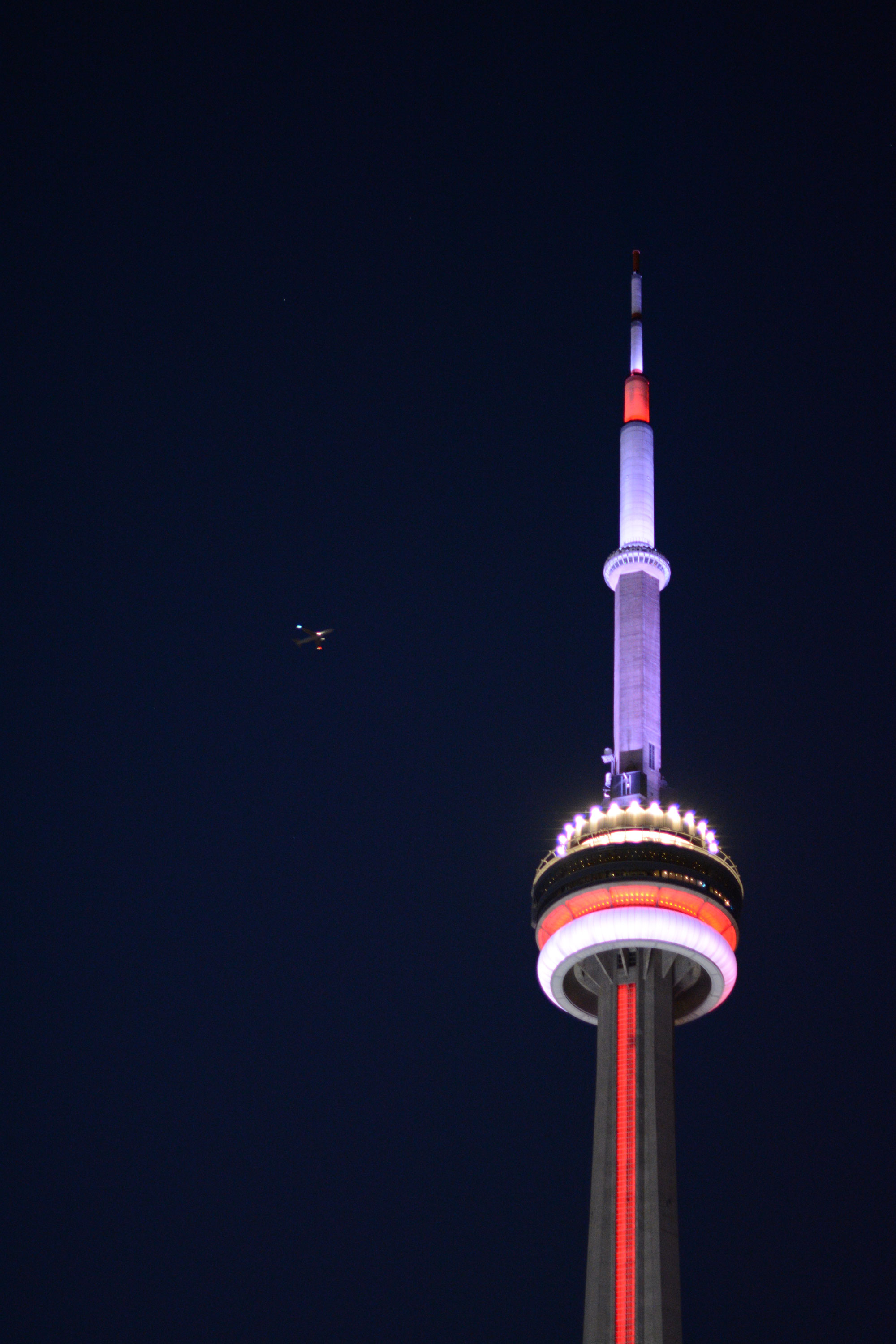
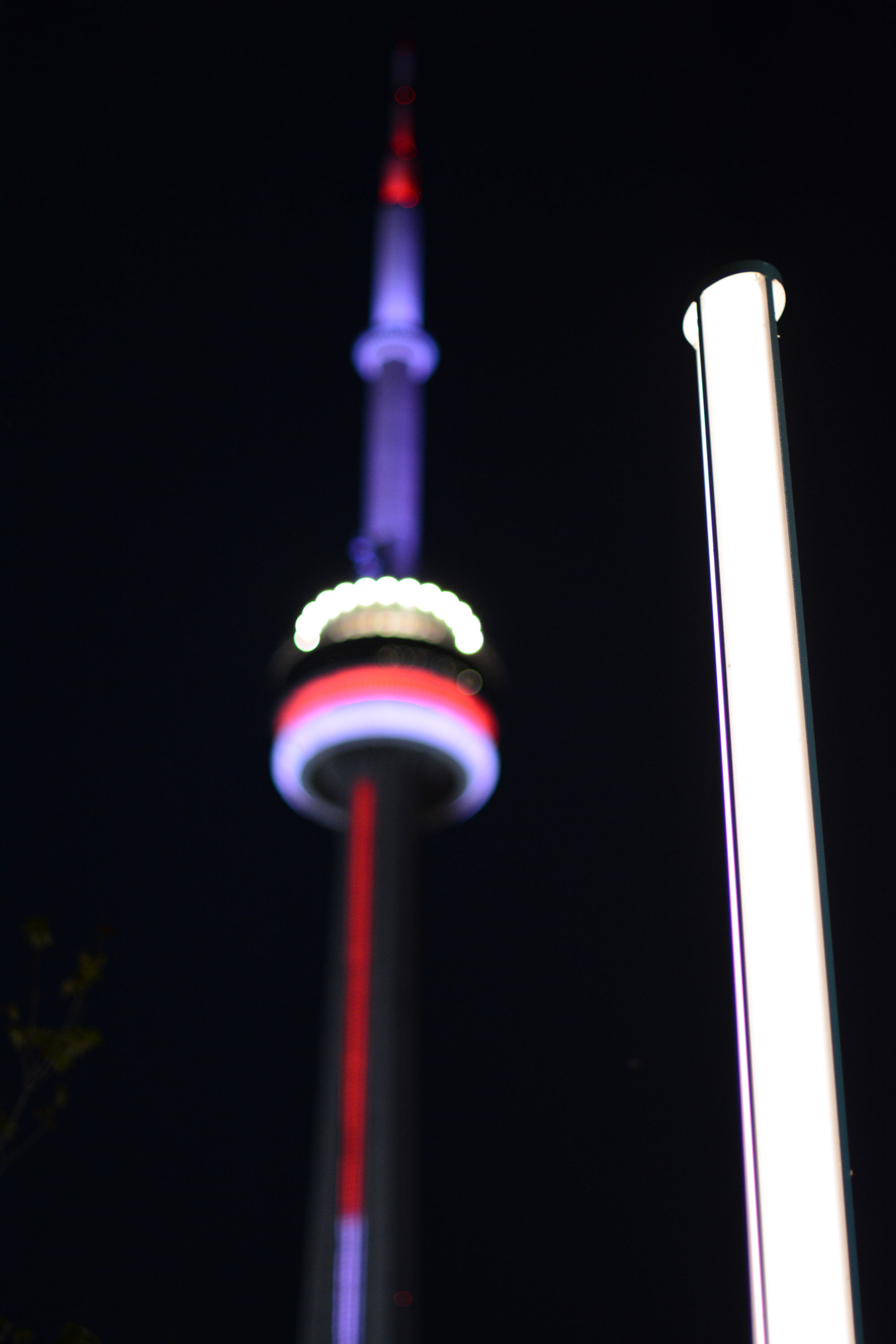
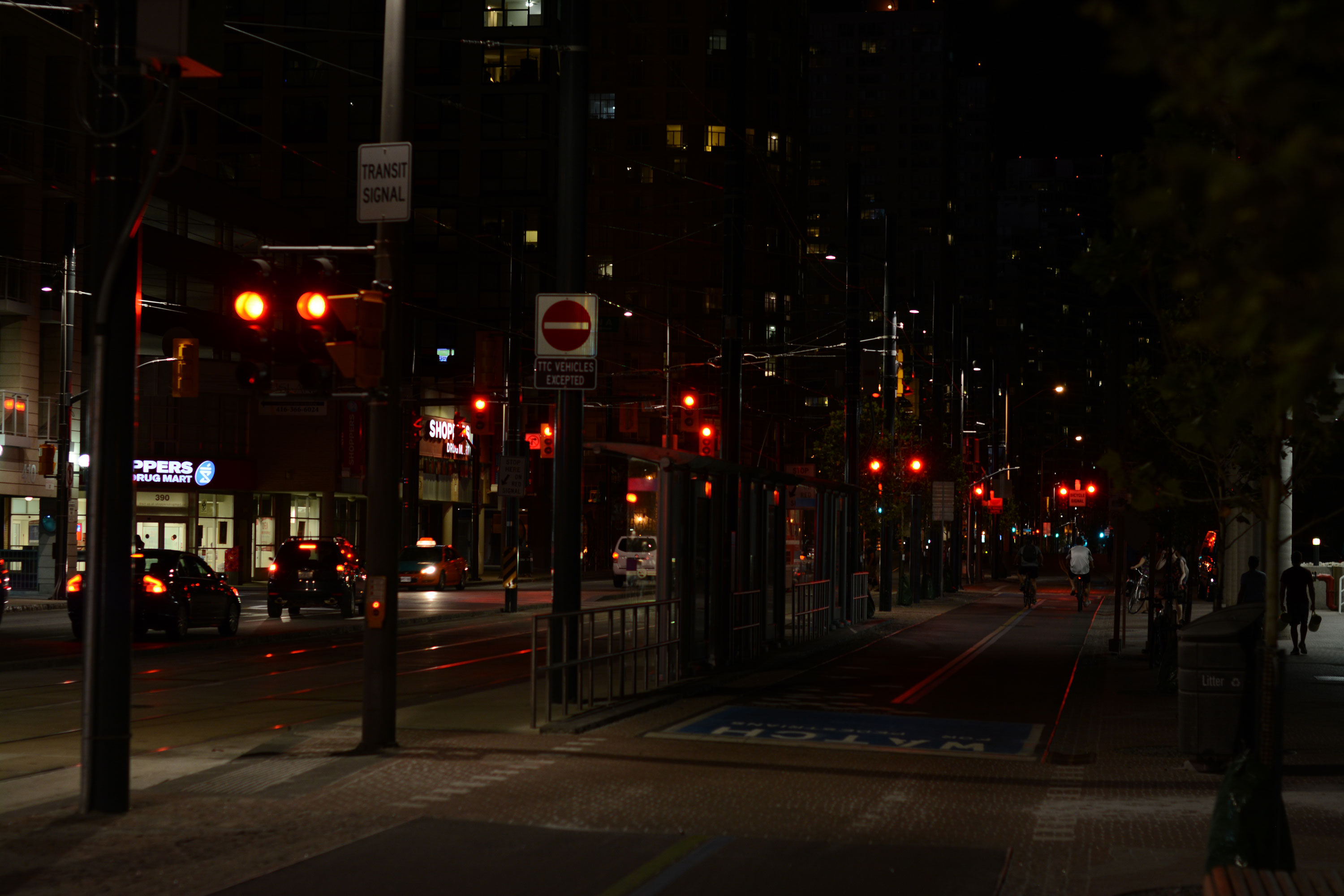
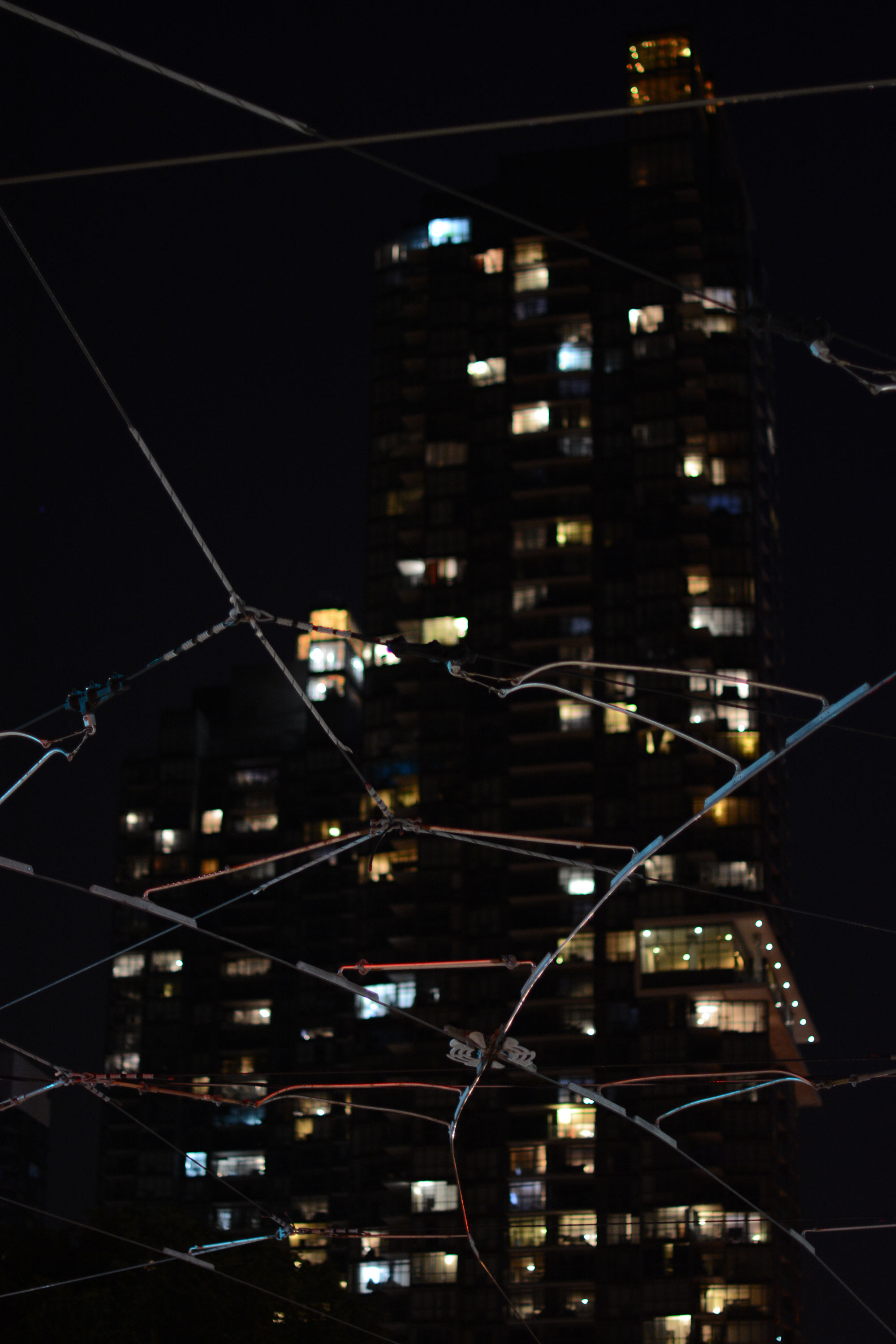
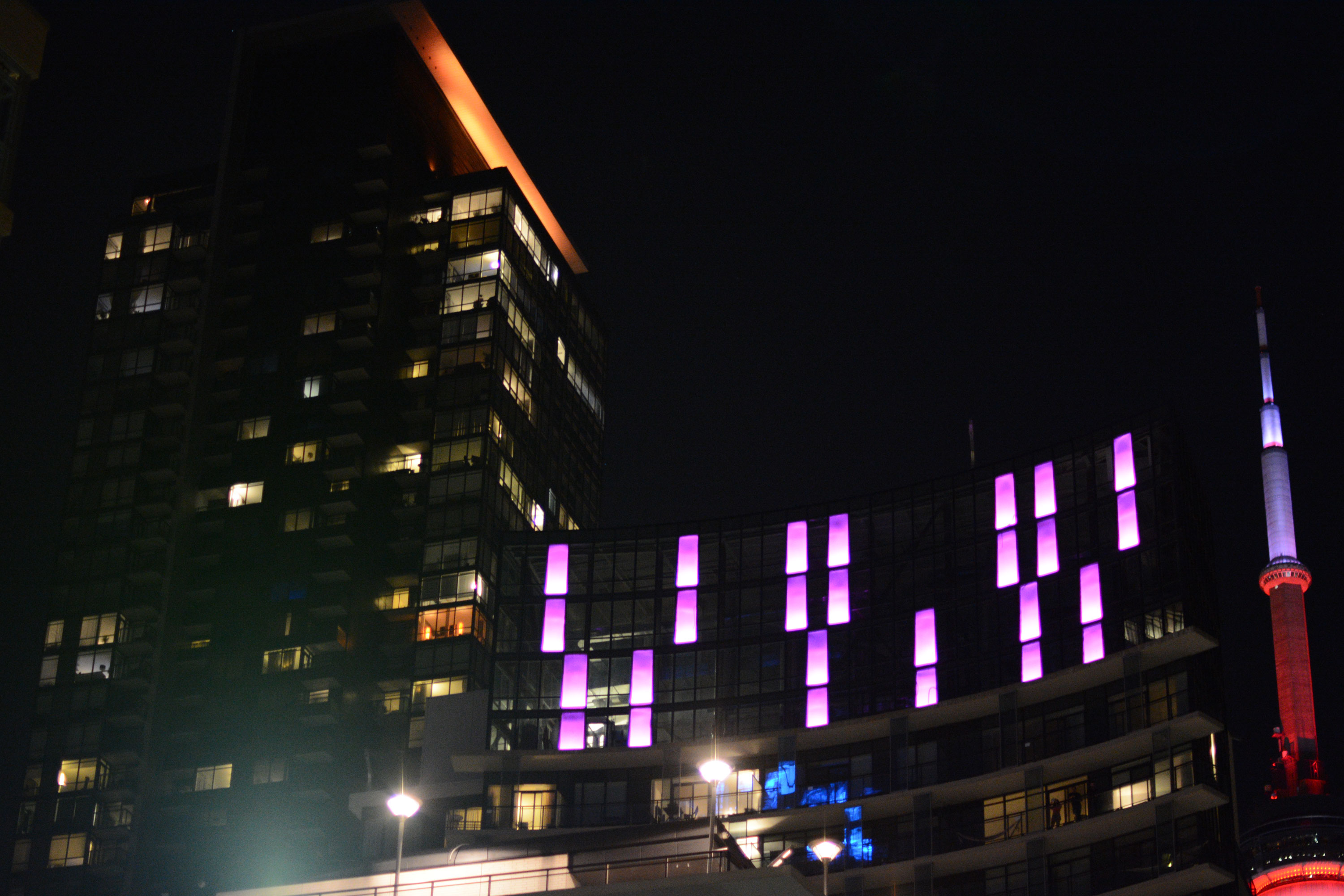
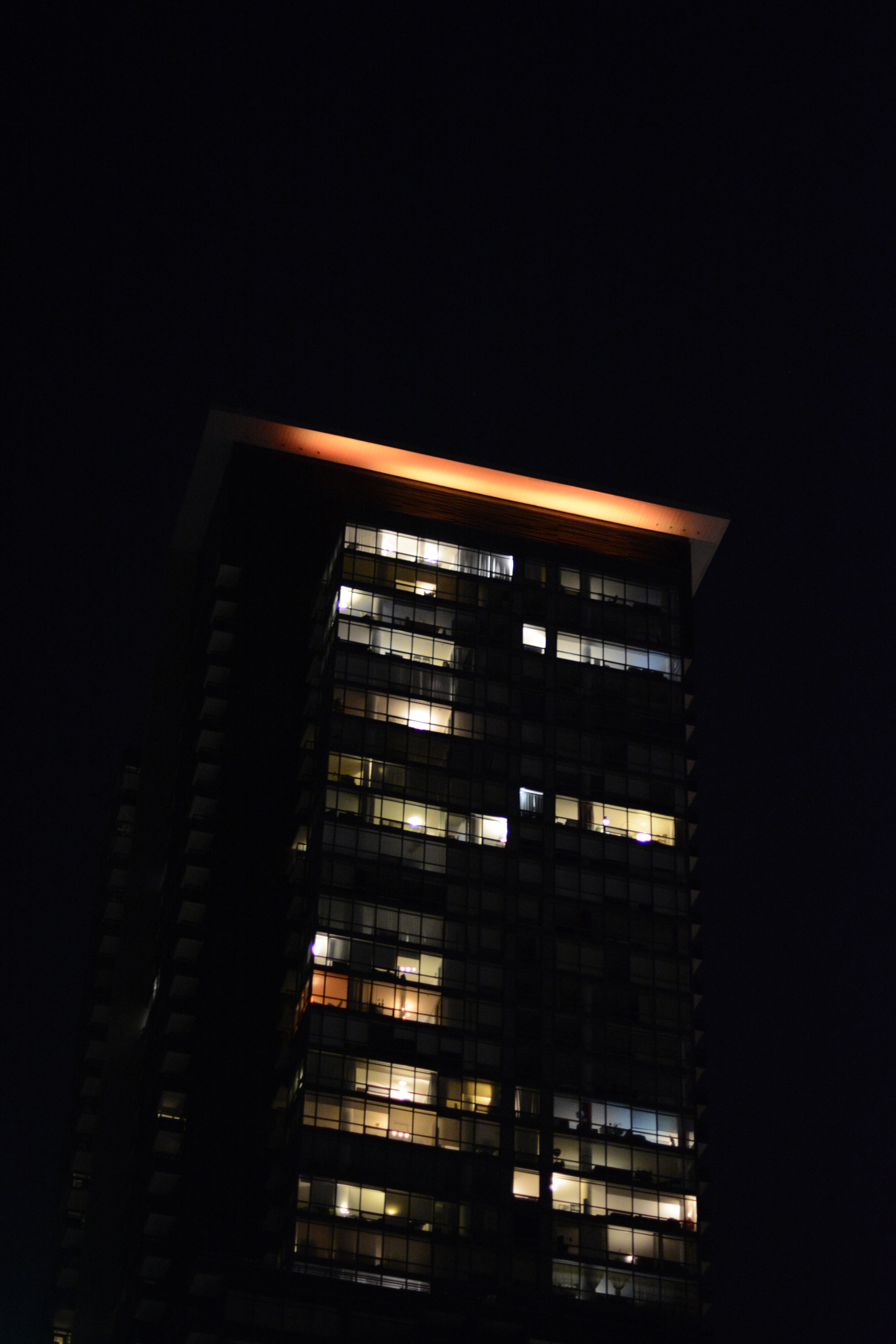
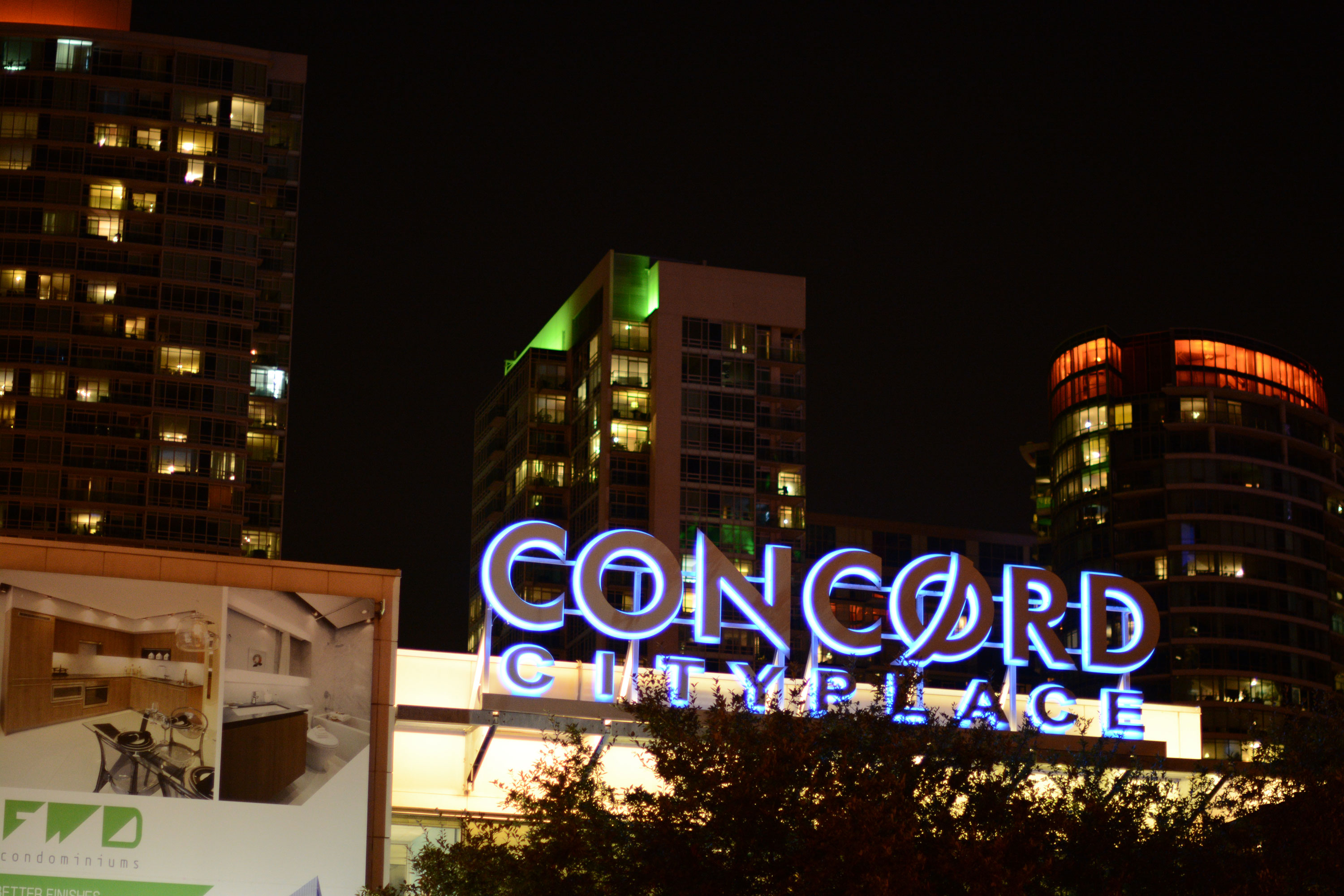
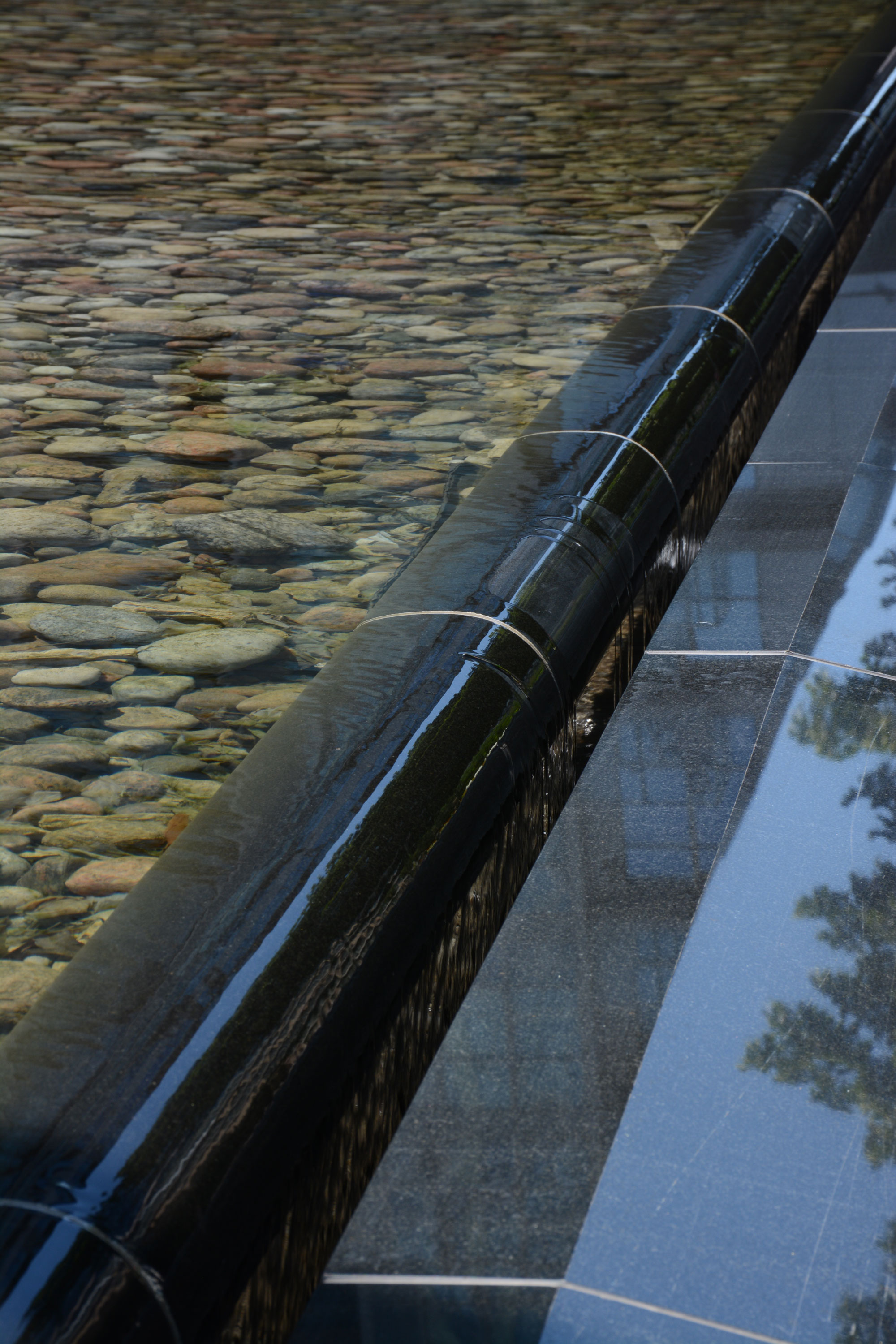
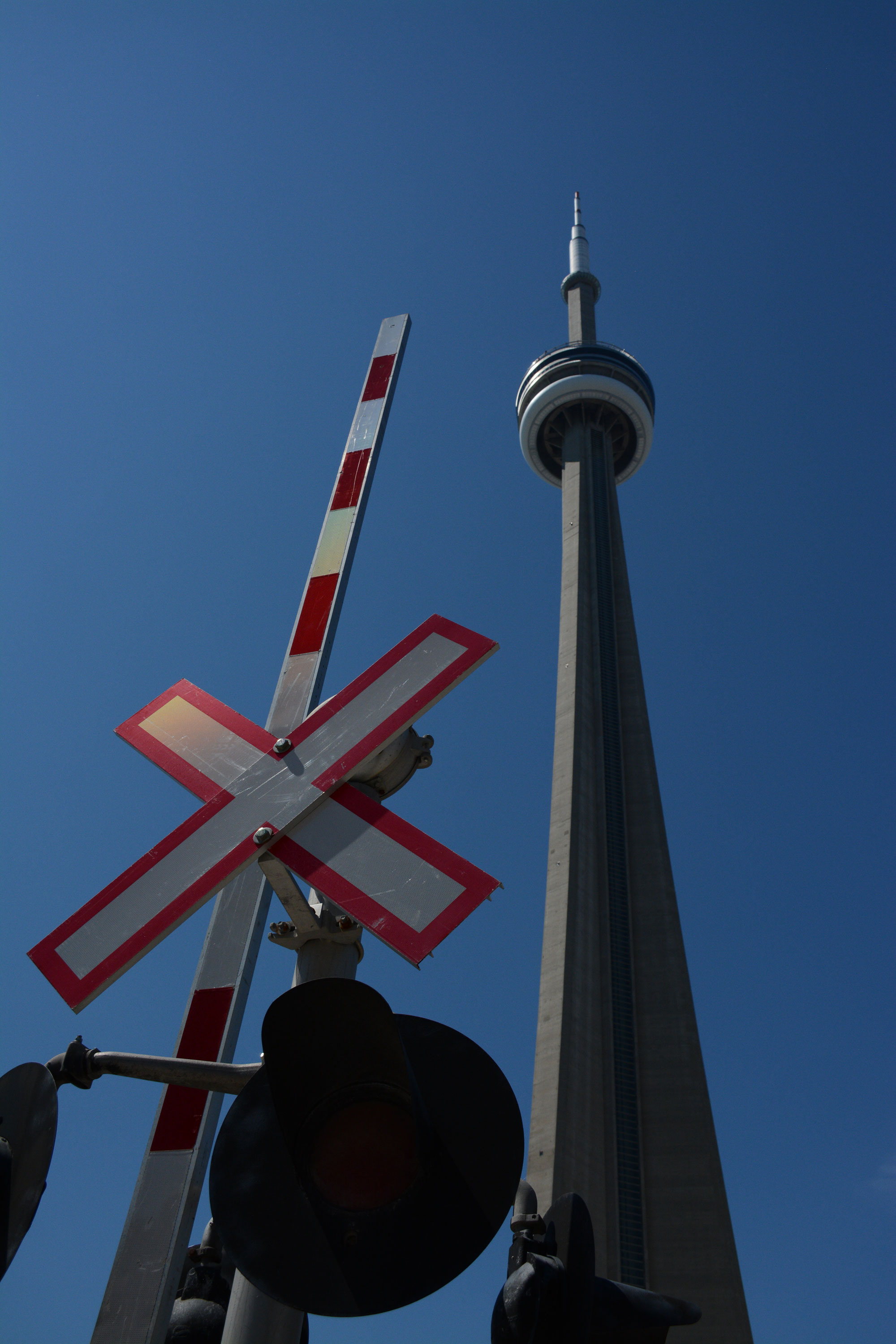
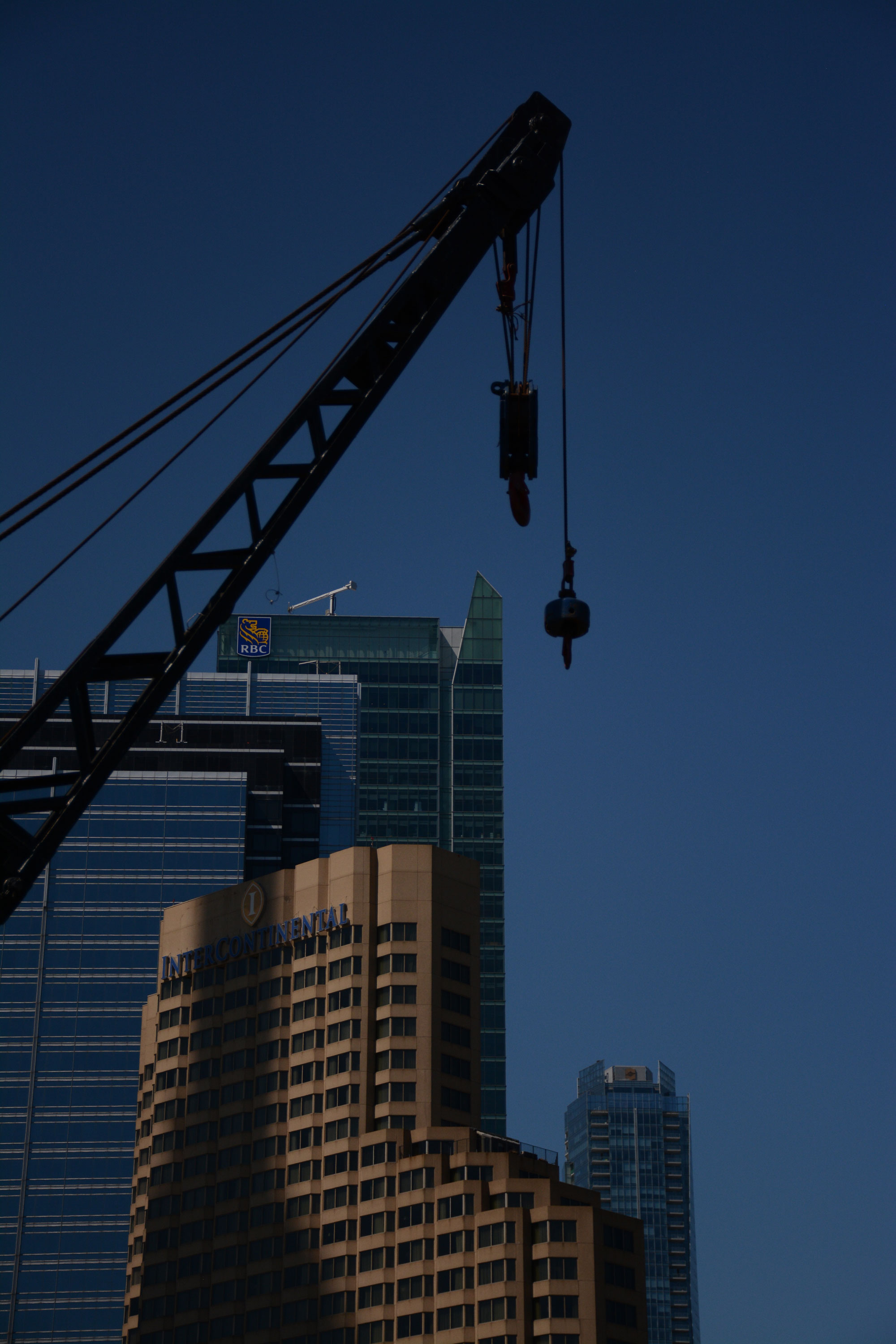
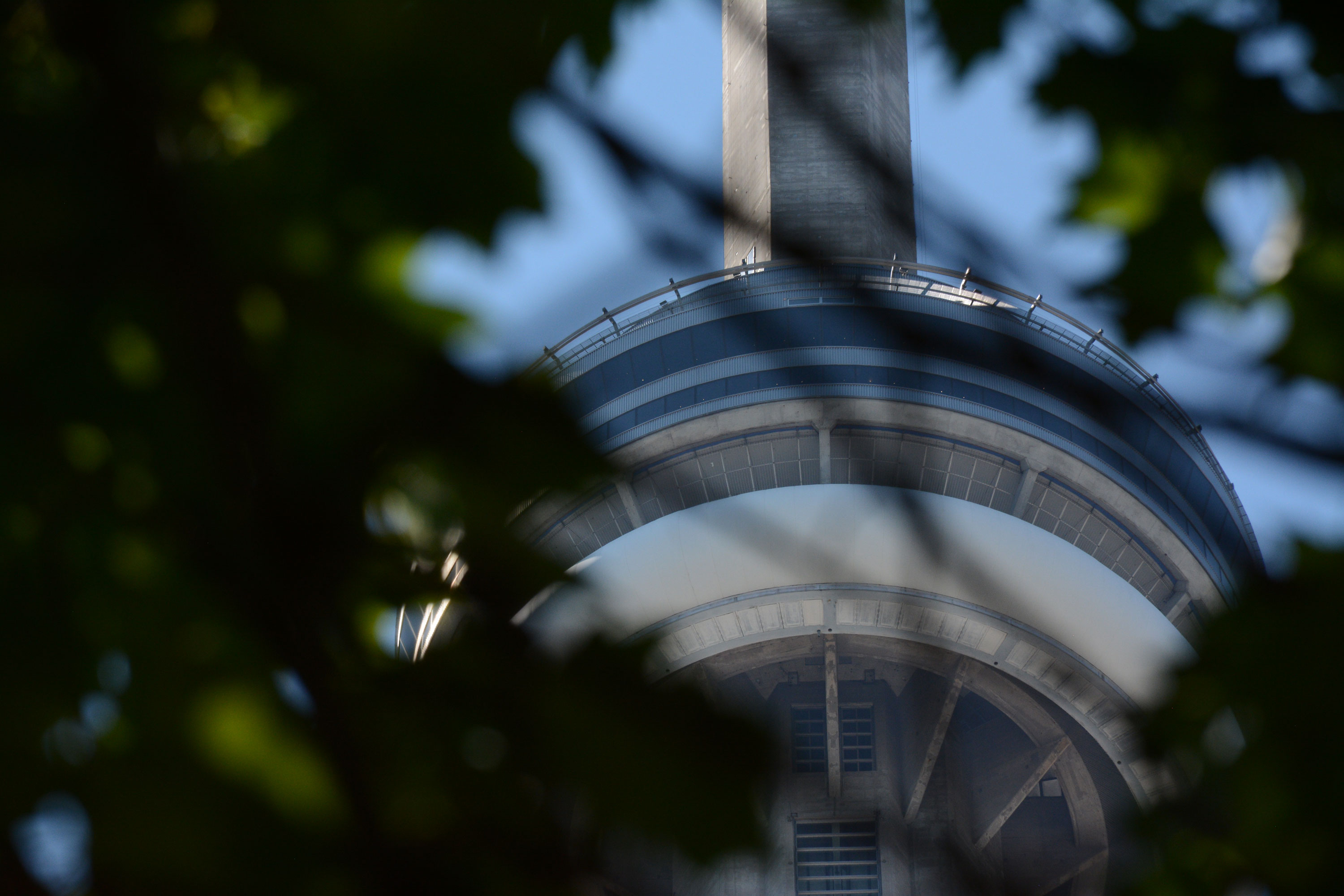
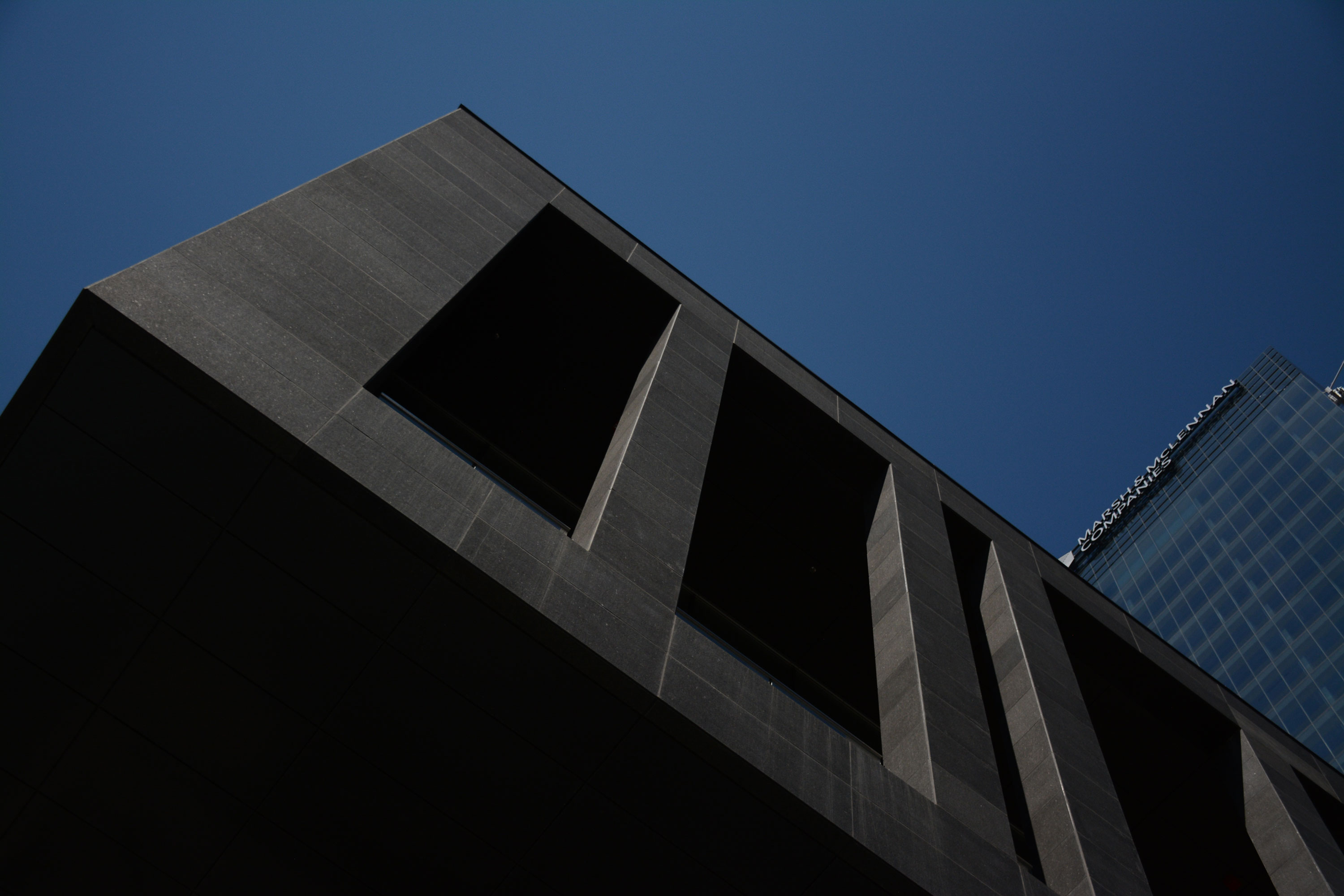
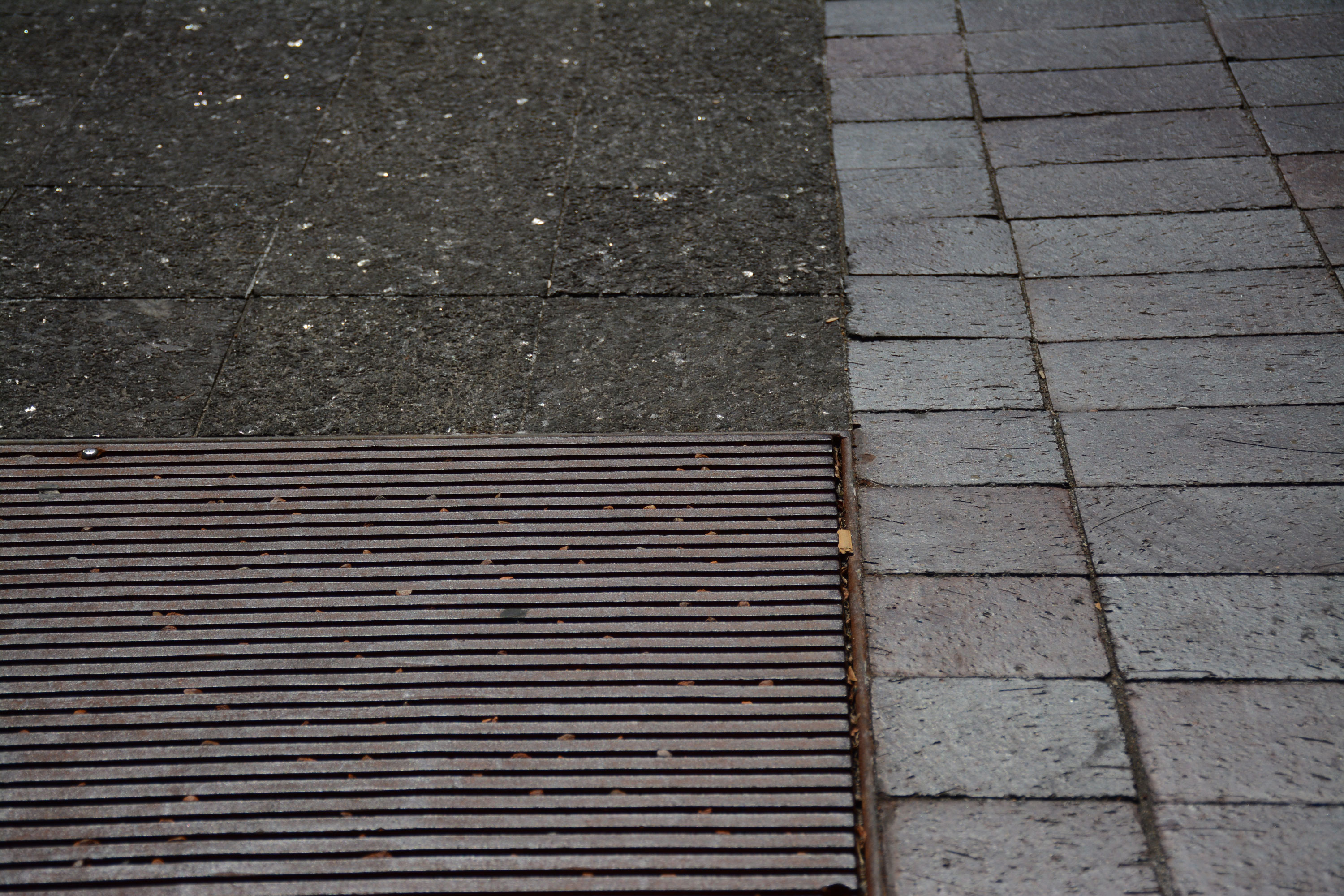
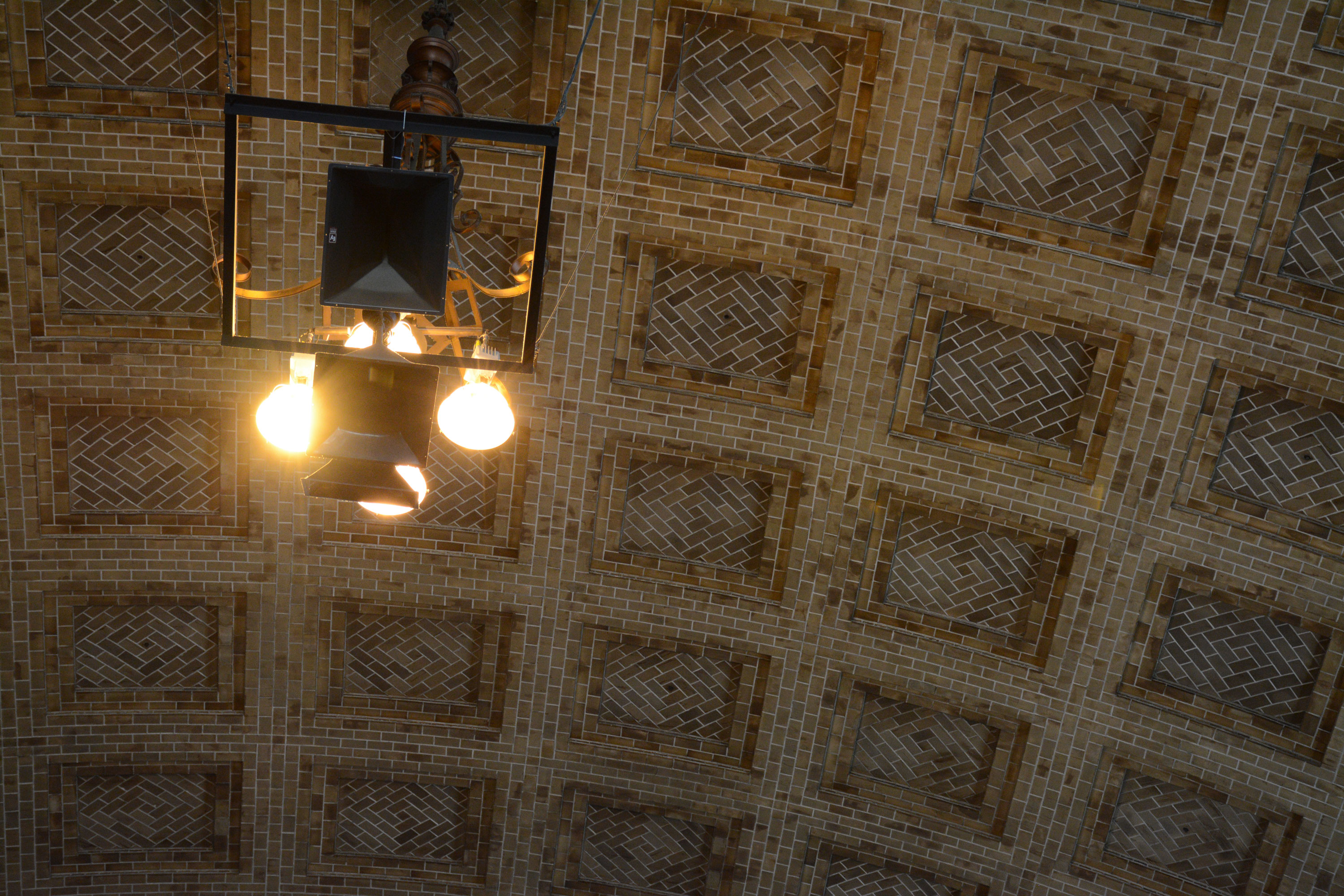
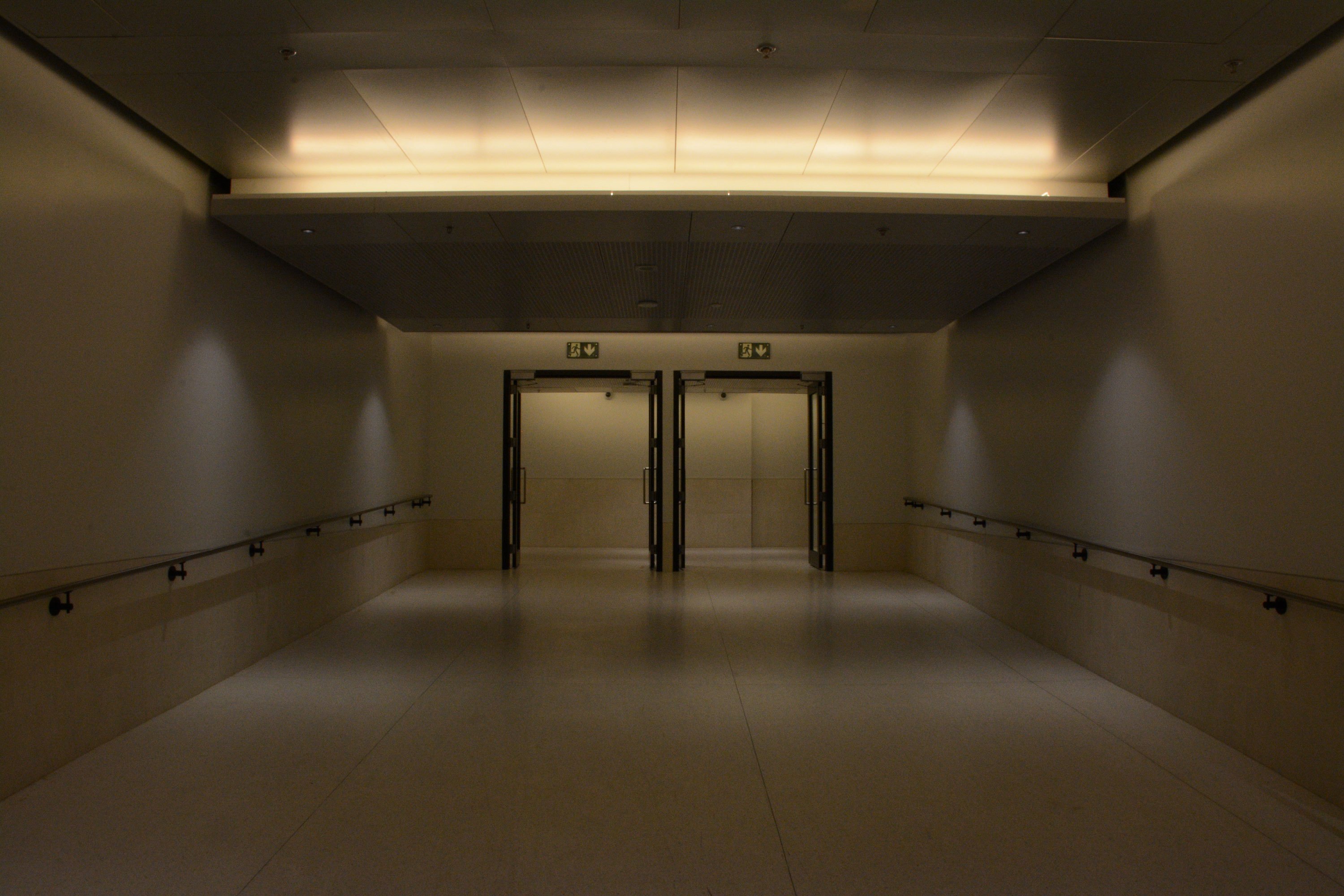
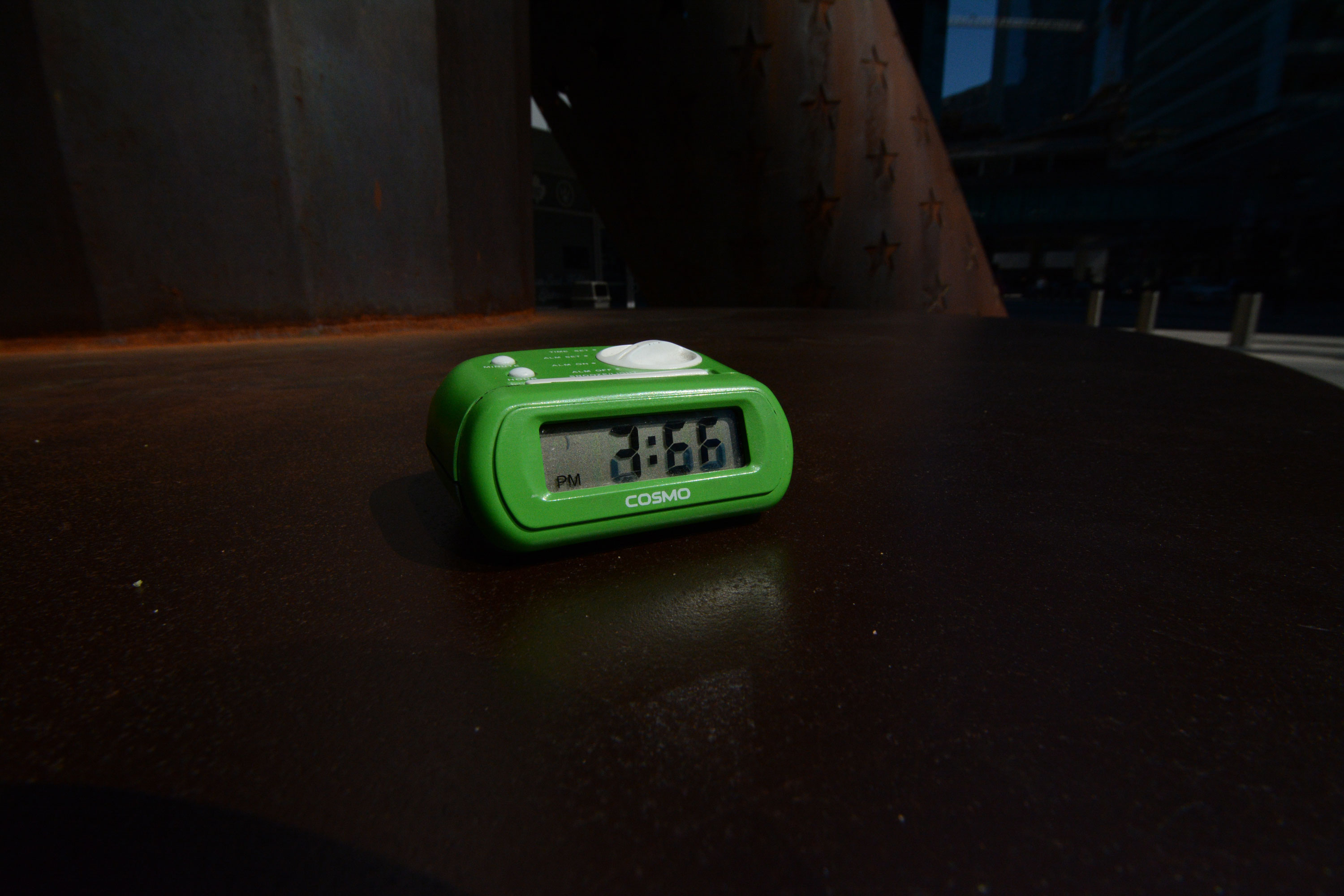
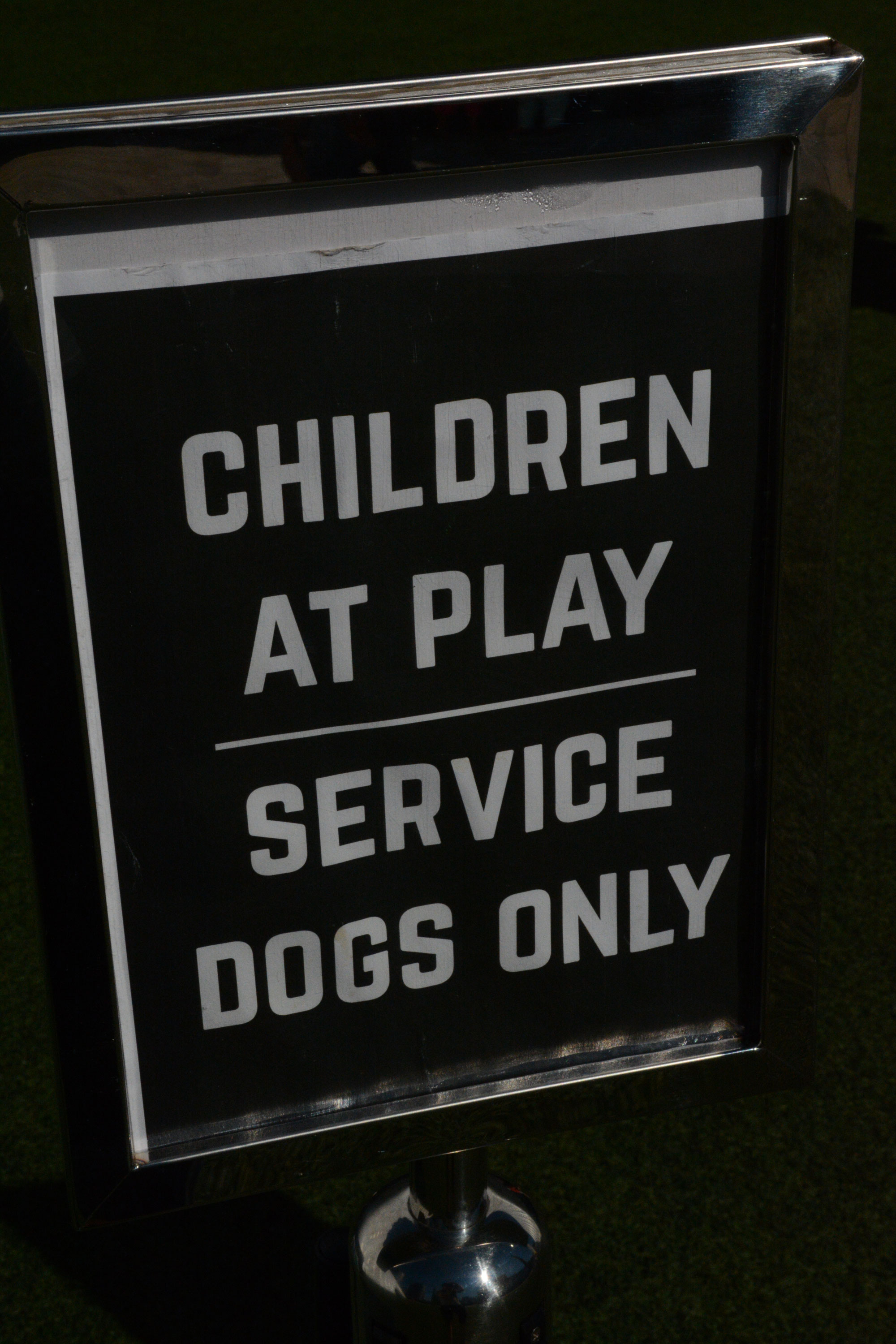
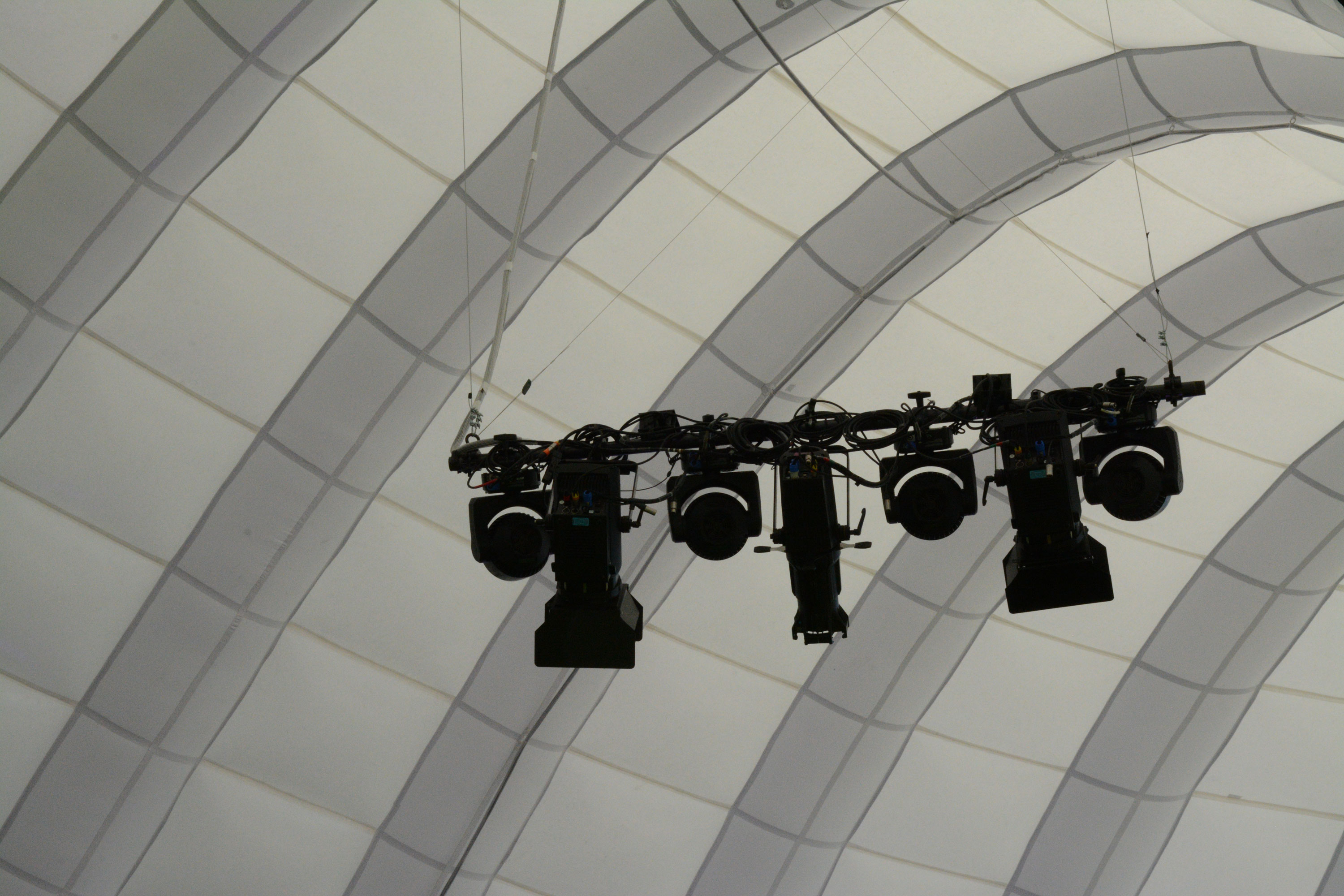
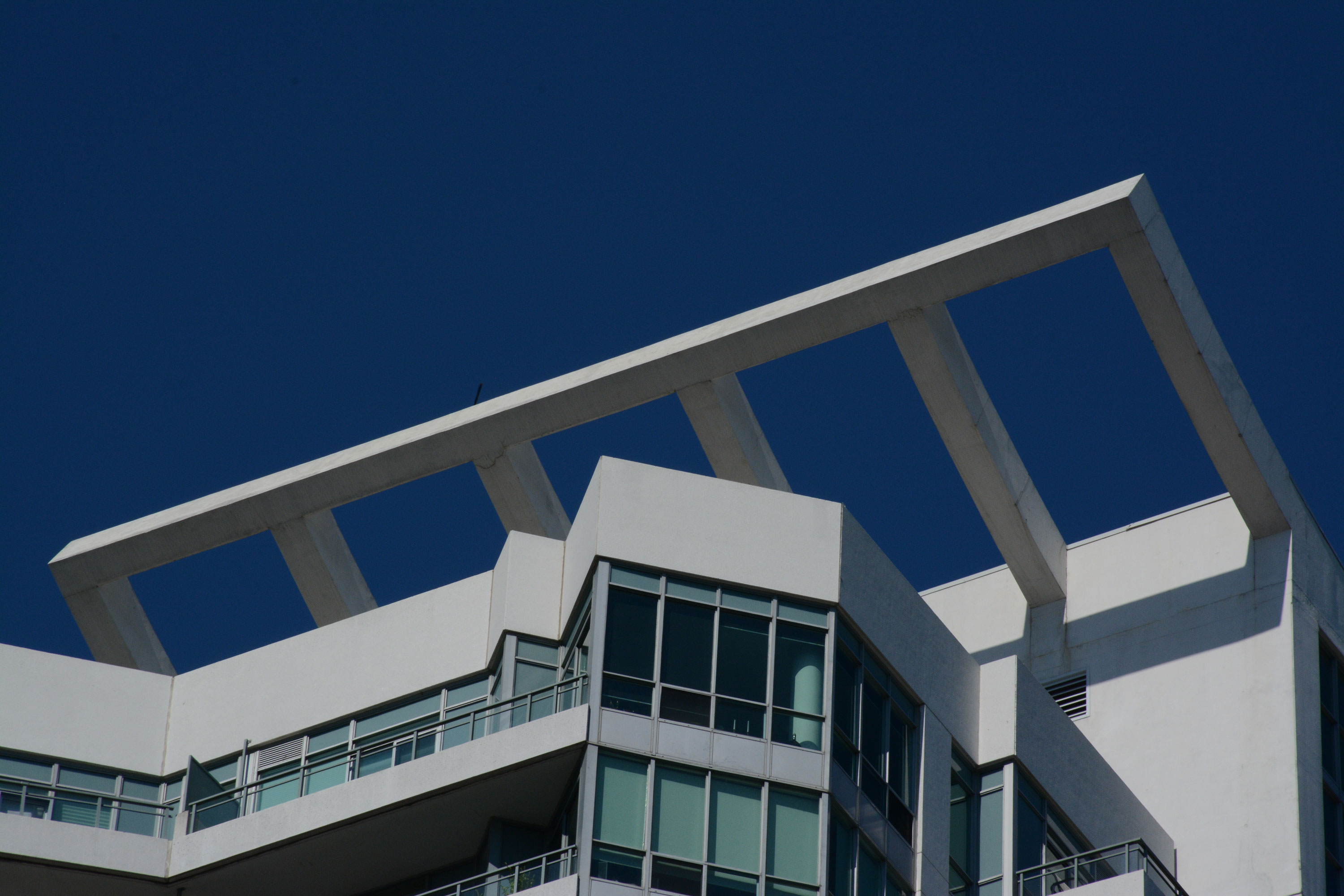
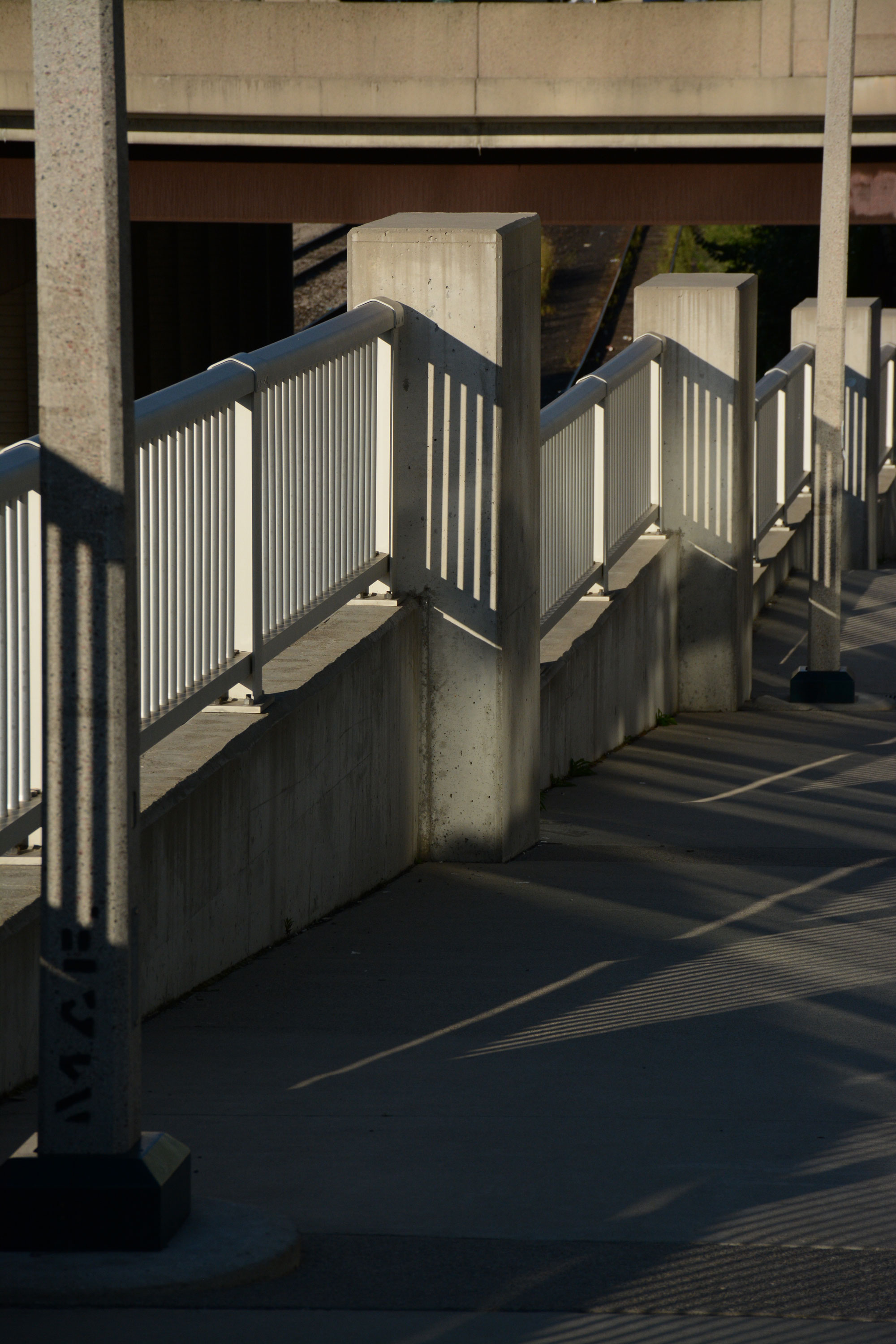
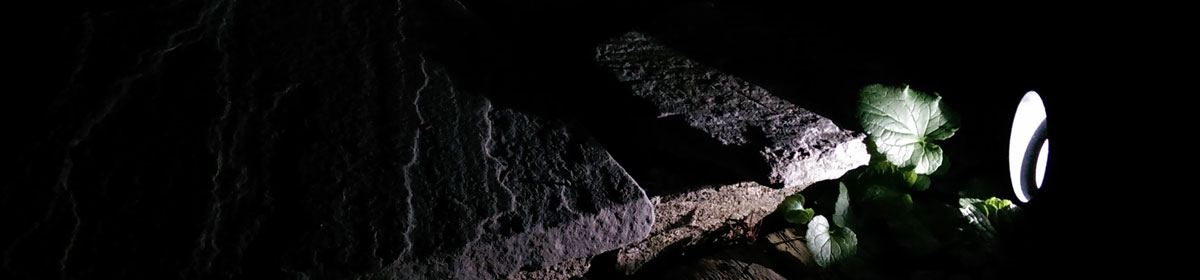
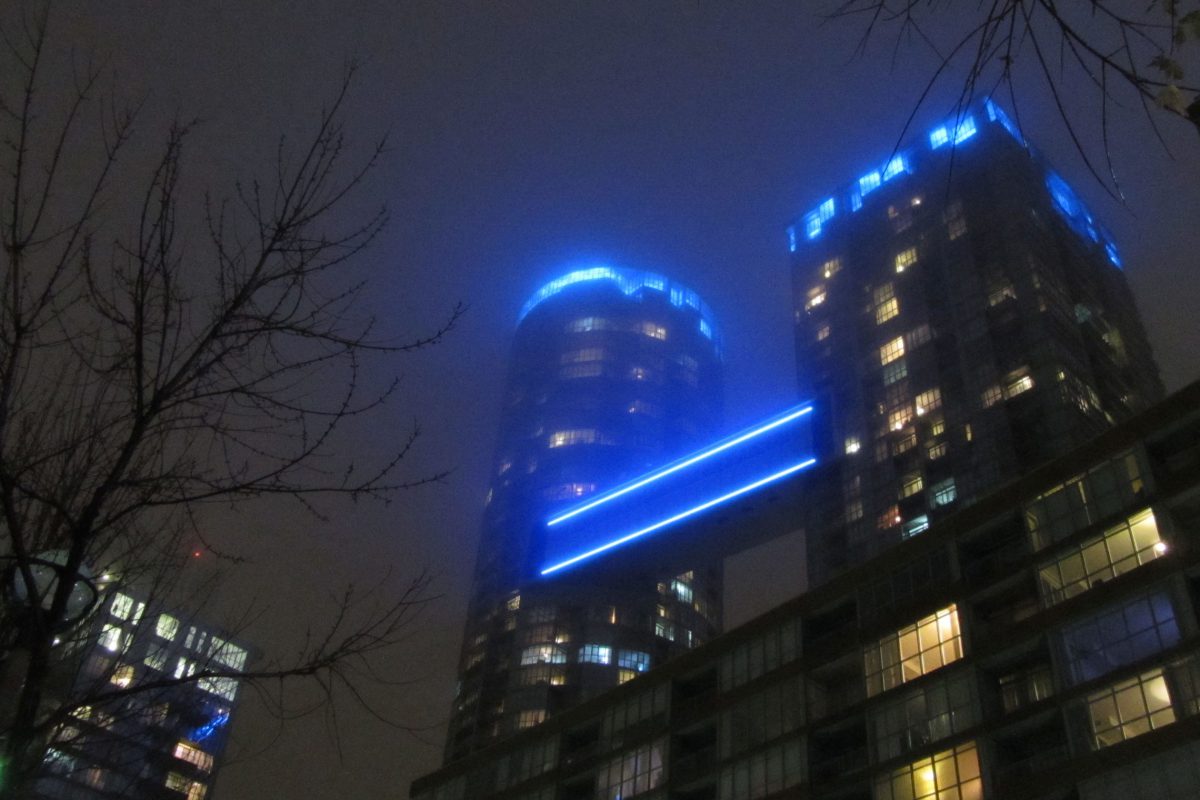
Lights out at CityPlace.

Walking back from finalizing the details for my new place I realized I’ve entered into what I call the lasts leading up to a move. In this case—the last weekend in my apartment. To celebrate I’m making a gigantic dinner made up of all the things I’ve collected from the various markets around the neighbourhood, eating as much of the food in the house until I feel like I can’t budge, and then forcing myself to make the fourteen to fifteen trips from the apartment to my car to fill it with stuff to move. Then I get to have fun and post pictures and write.

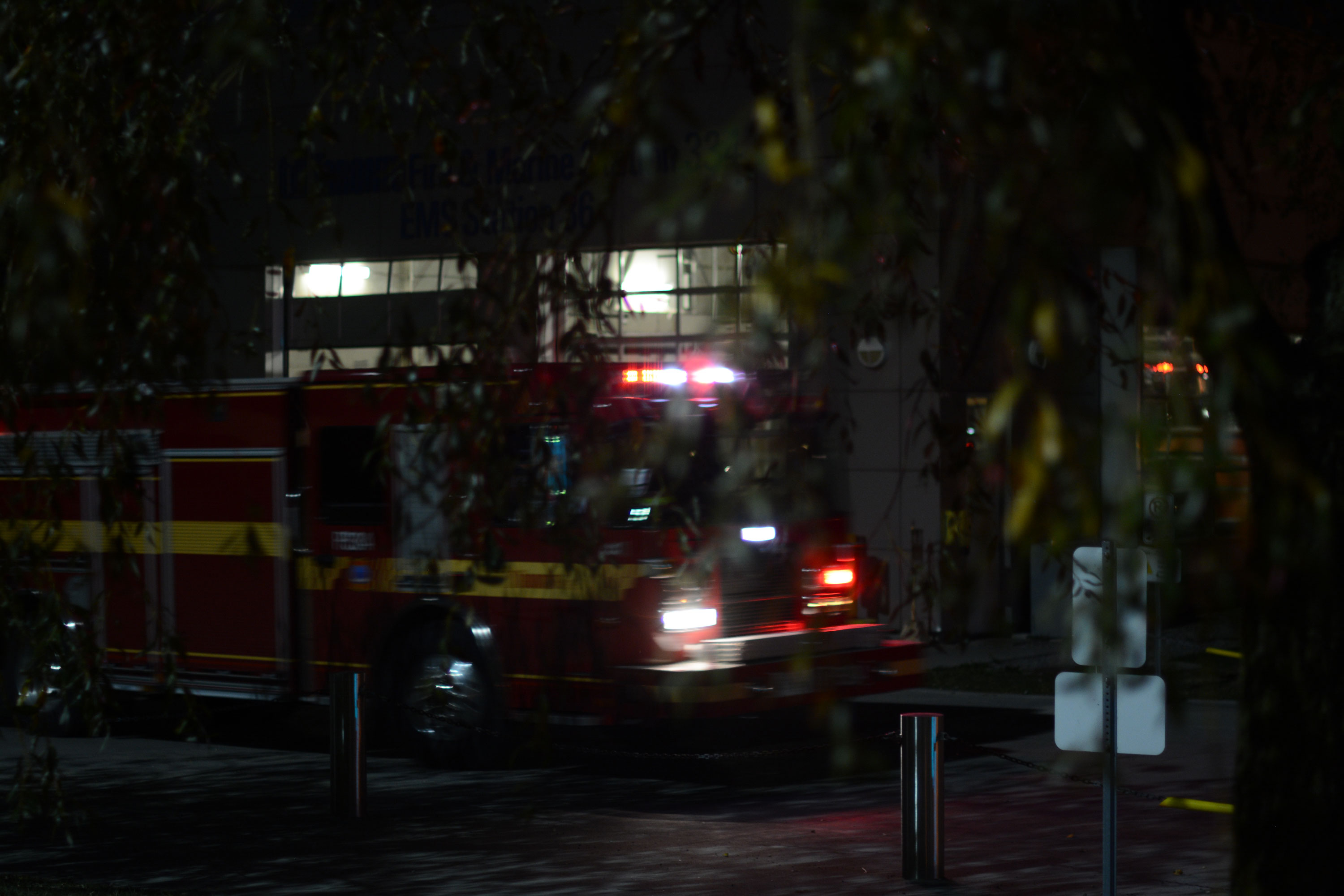
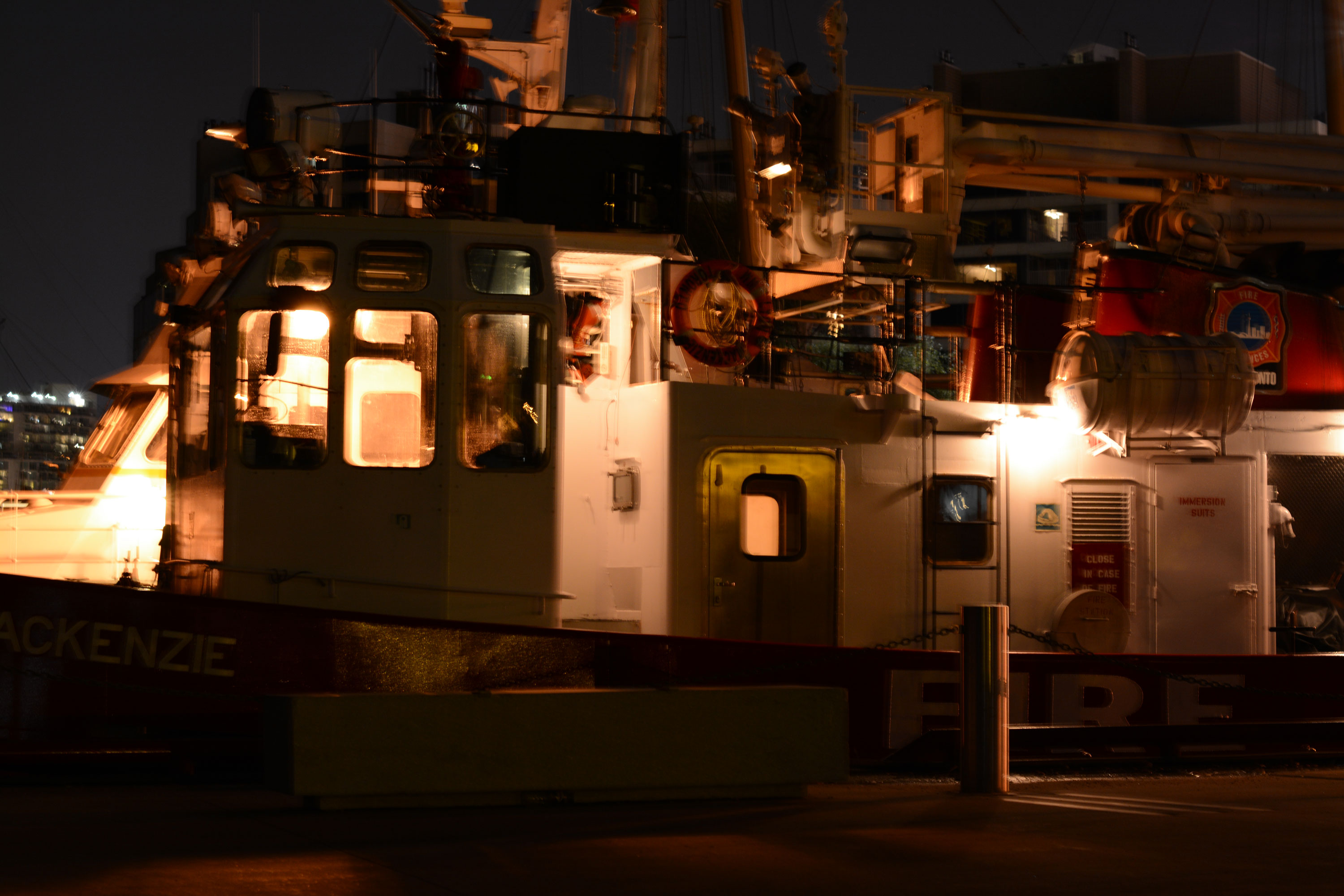
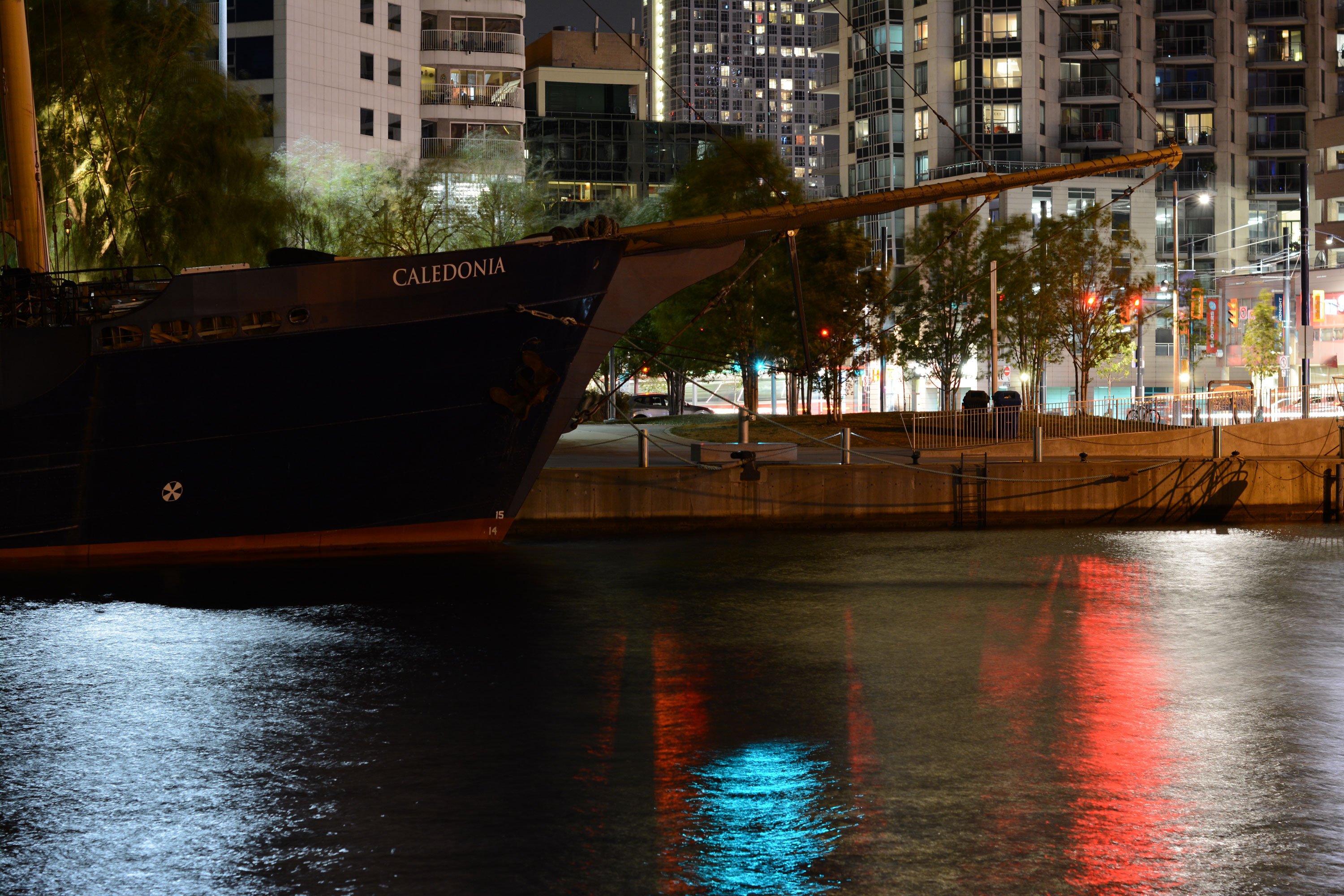
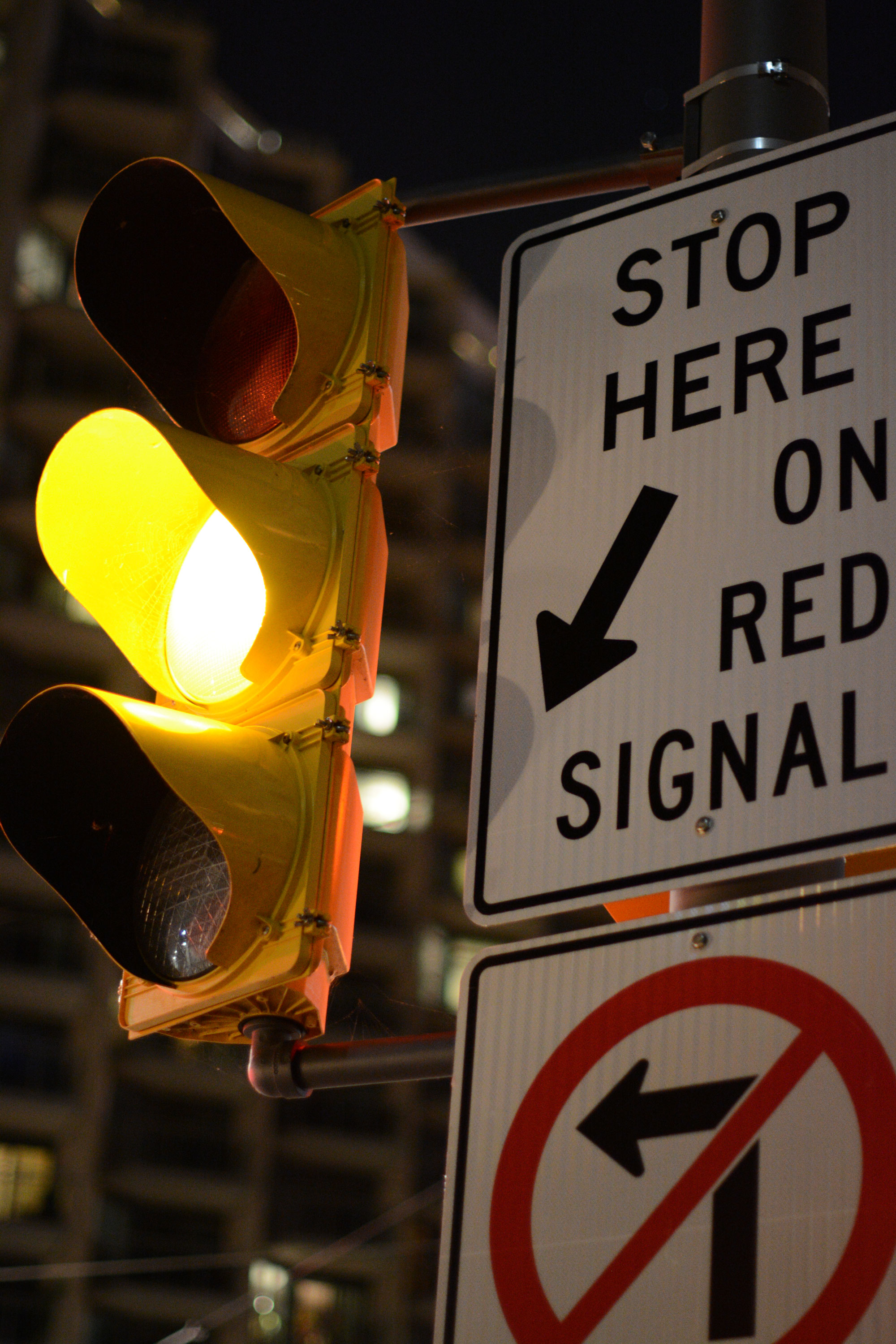
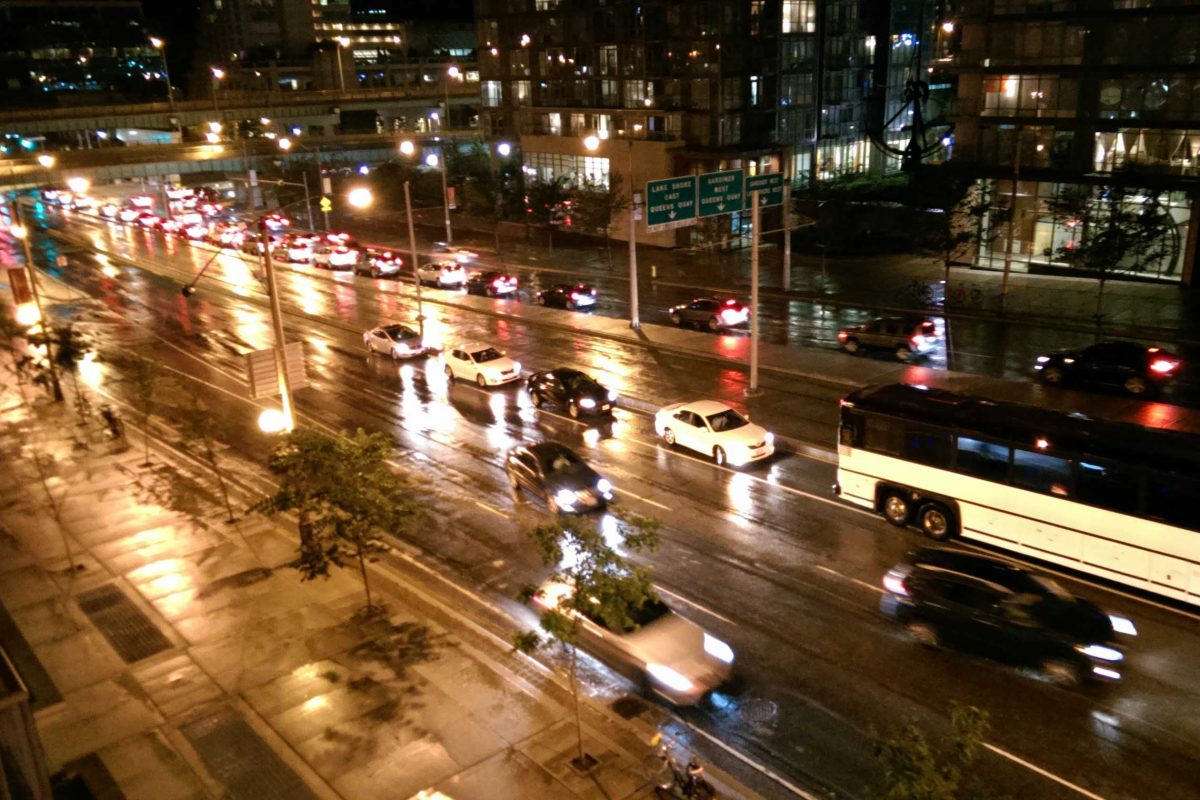
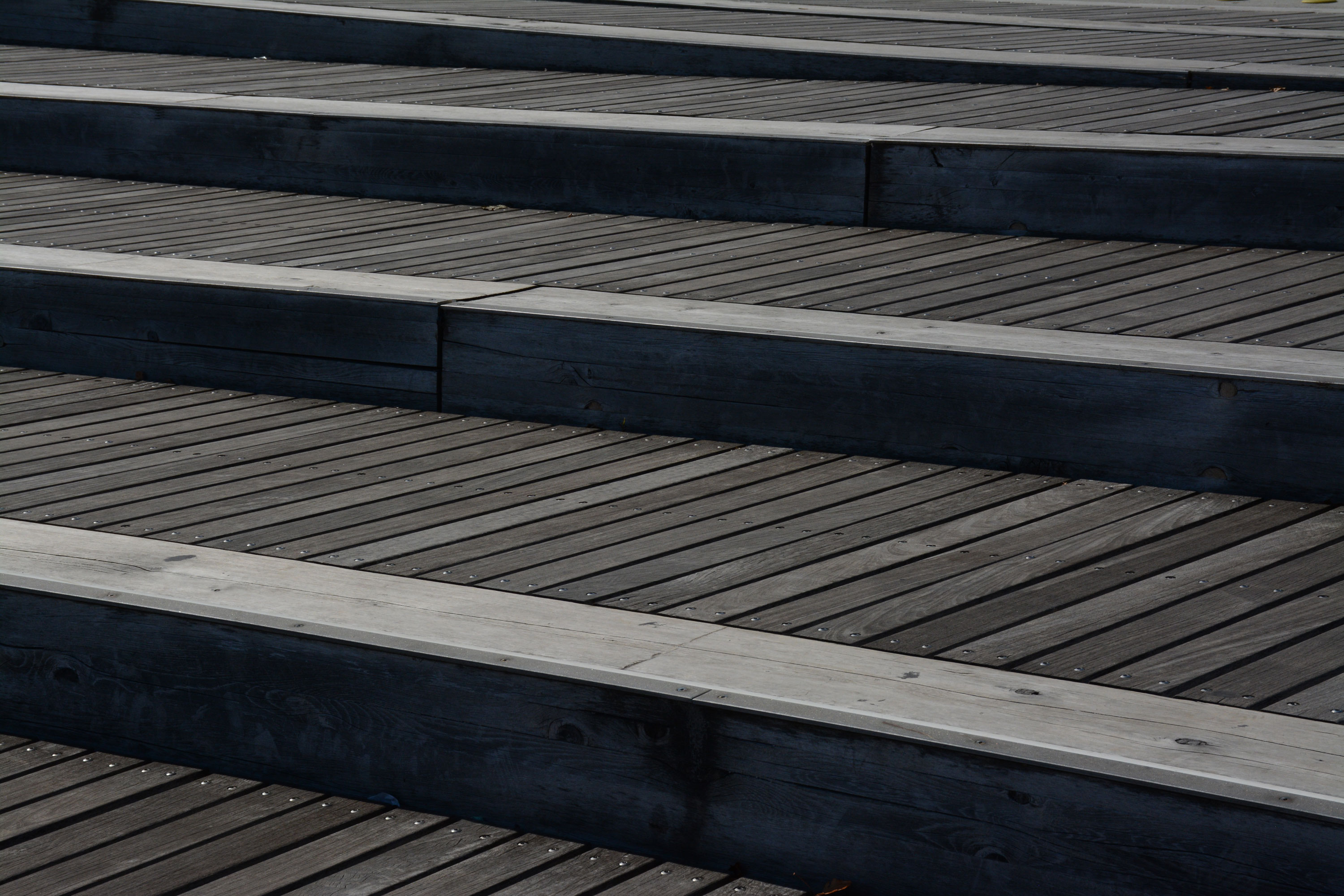
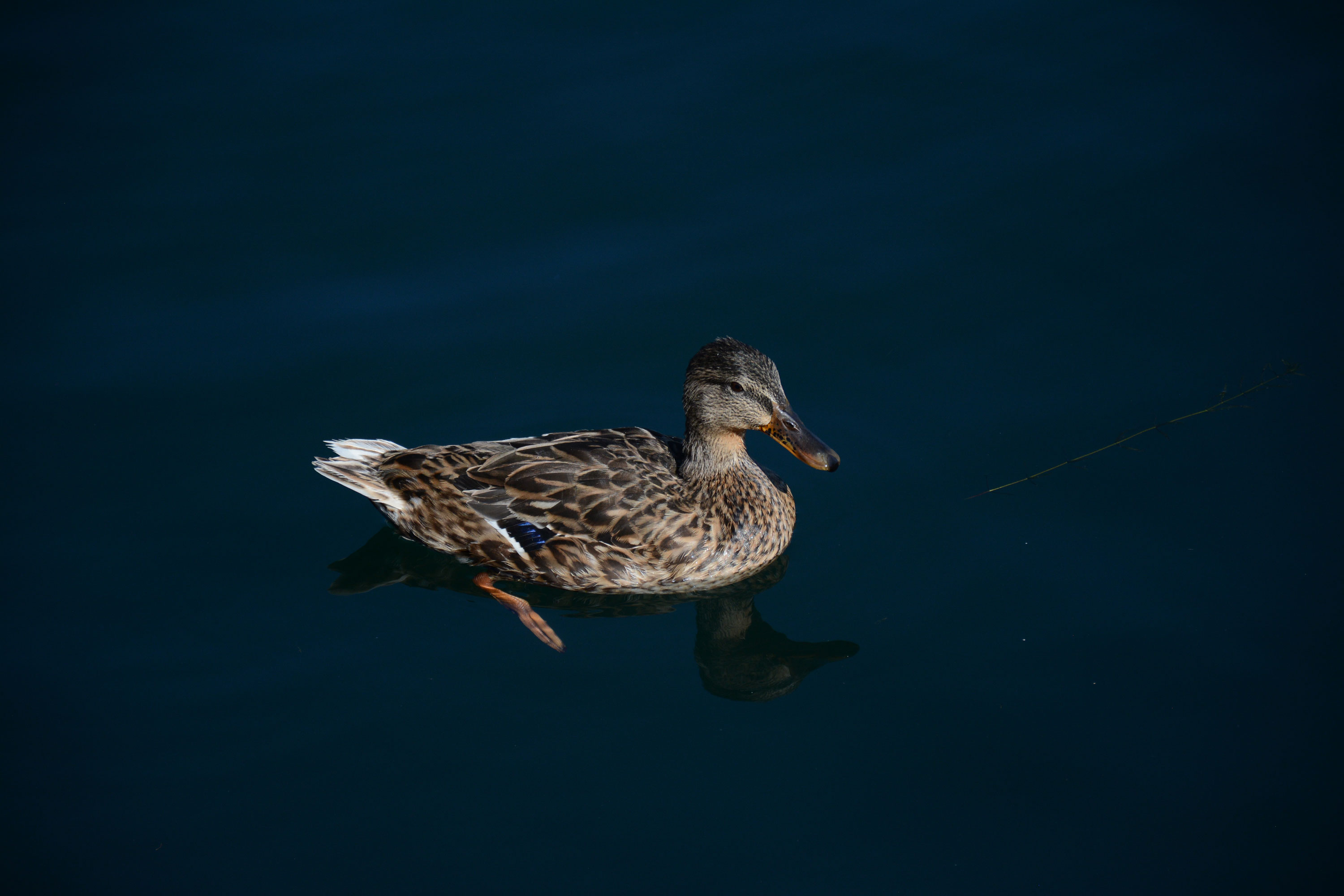
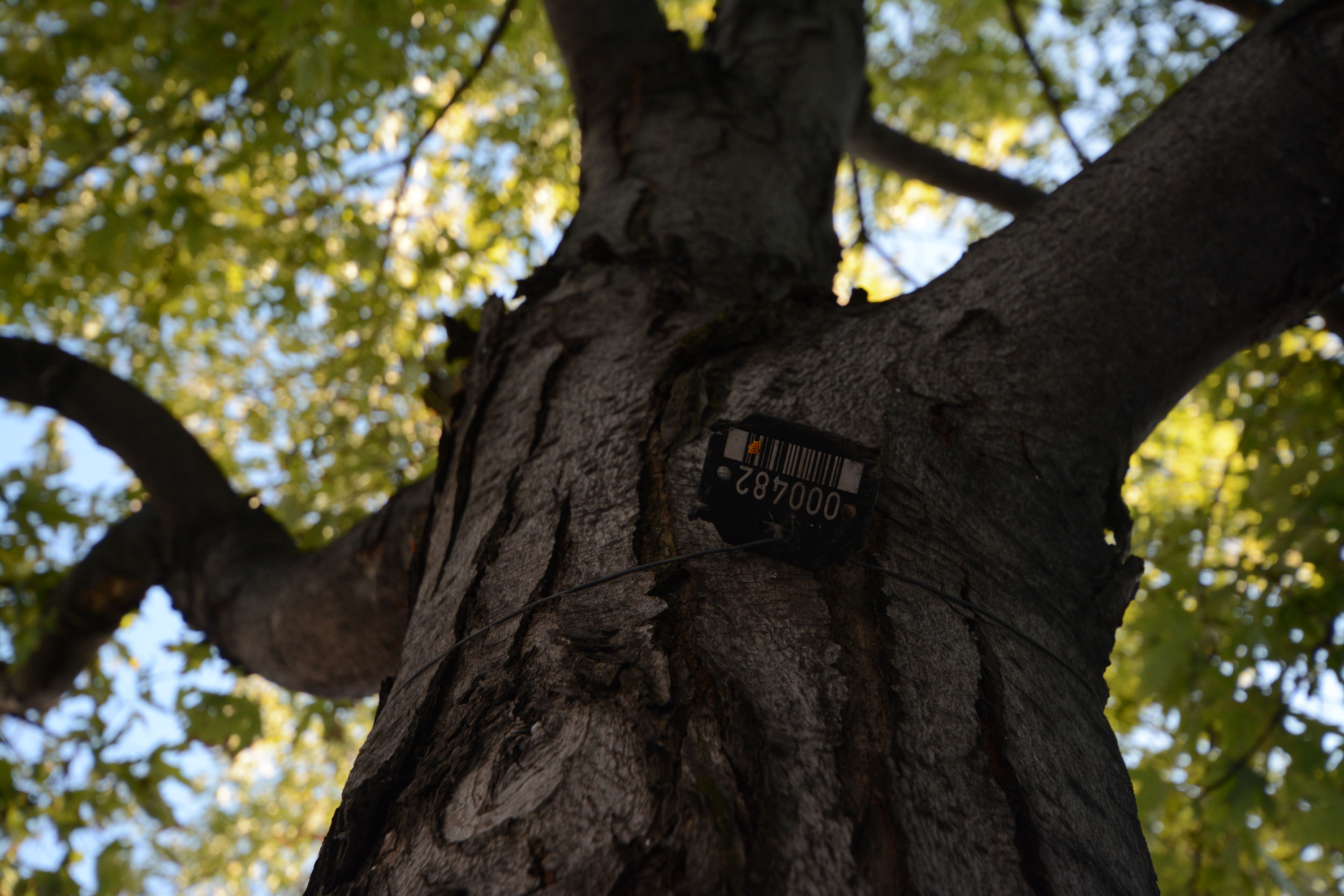
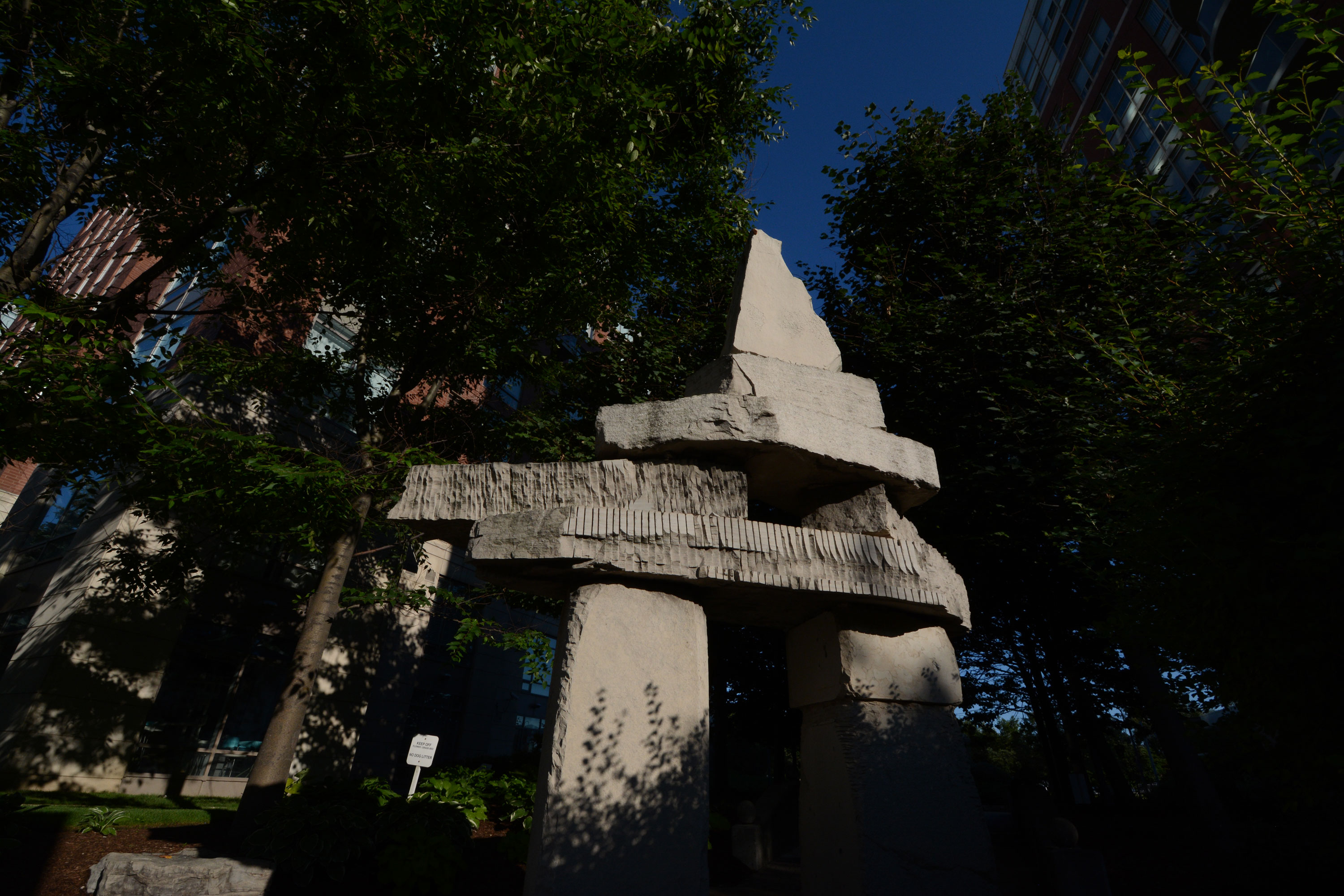
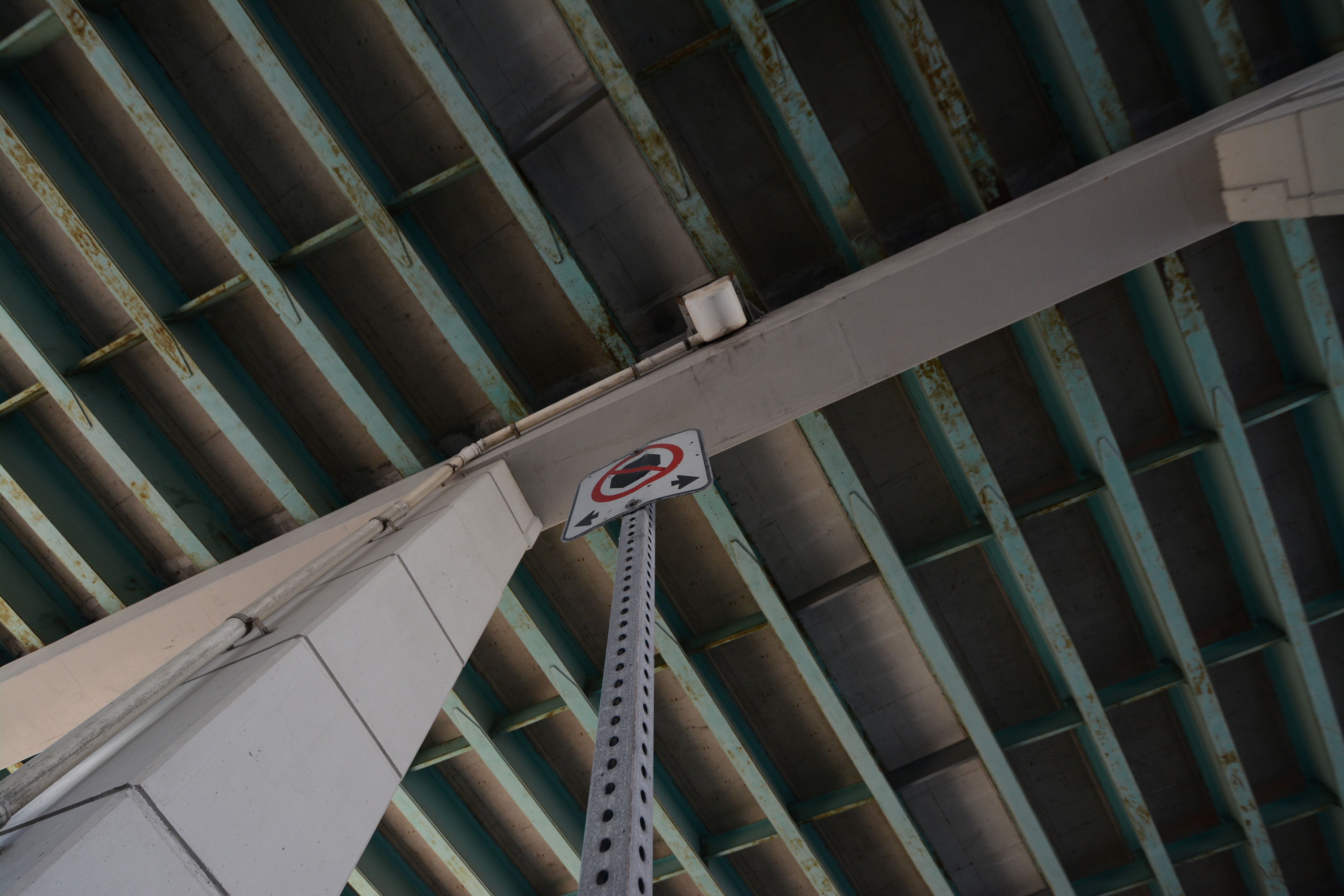
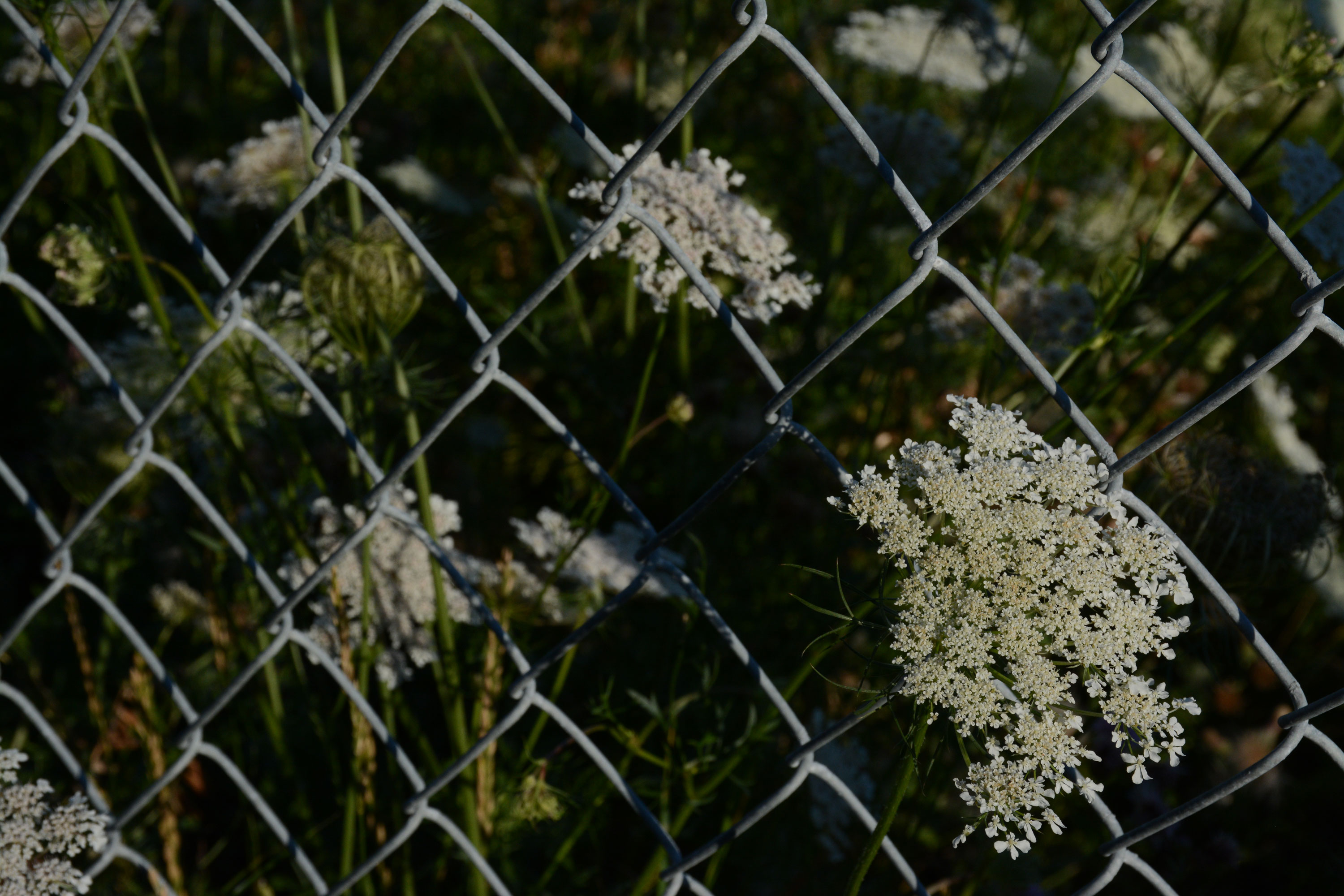
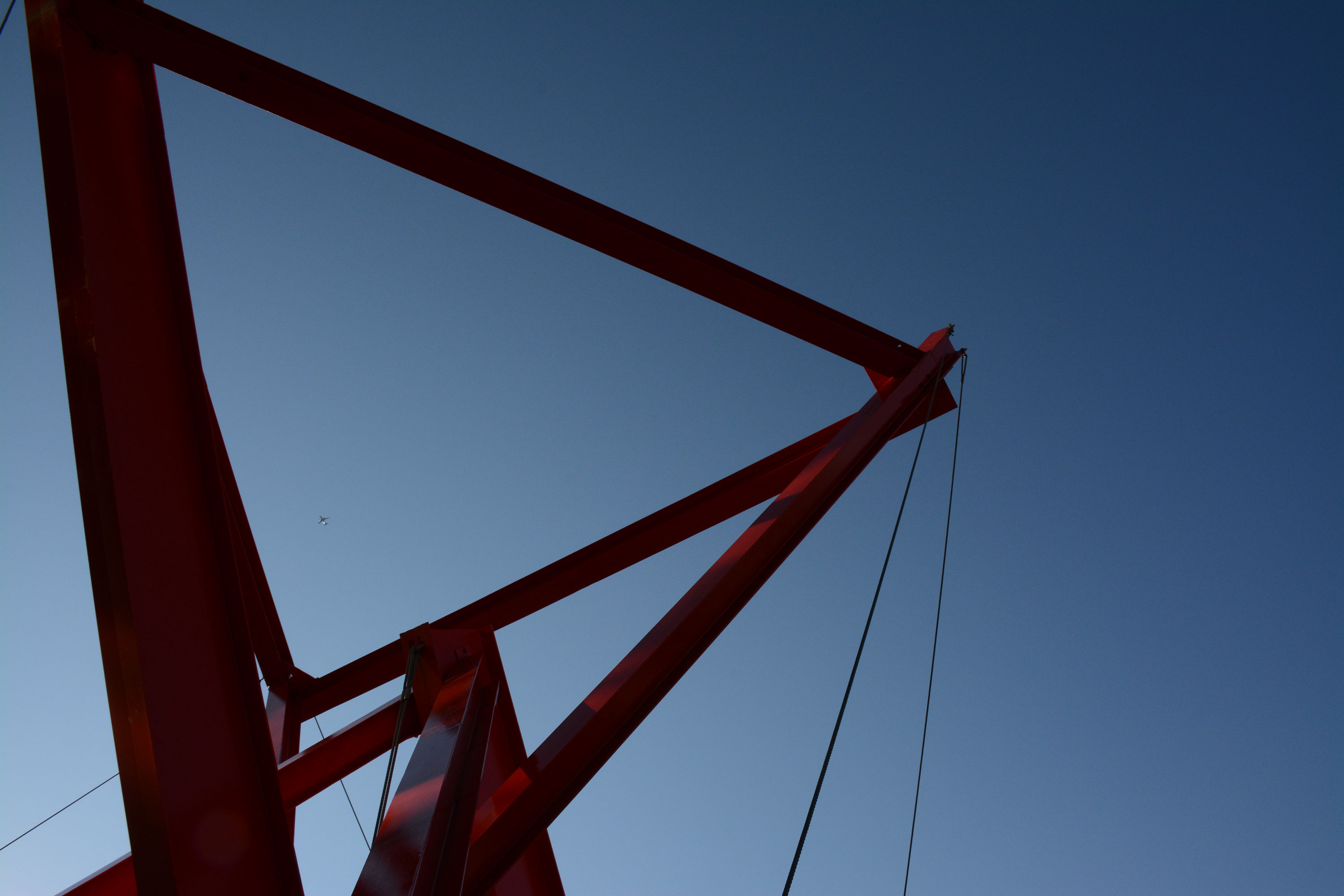
But—of course—before the pictures, some more words. In Part I my dad and I walked around CityPlace on a bright summer day. This time, along with my sister, we did a night shoot along Queens Quay on a warm summer night.

The exhaustion is setting in. When I sit and rally my thoughts for words they do not call back. I want to do something at least a little bit fun amidst the work I need to do this month. It’s almost over. I’ll I hear is sleep. But I want to write—finally I see them, the words I know will one day be sitting on a page. I can see the book. I see the beginning—the ending. It’s in my hands. I’ve done it. …I want to write.

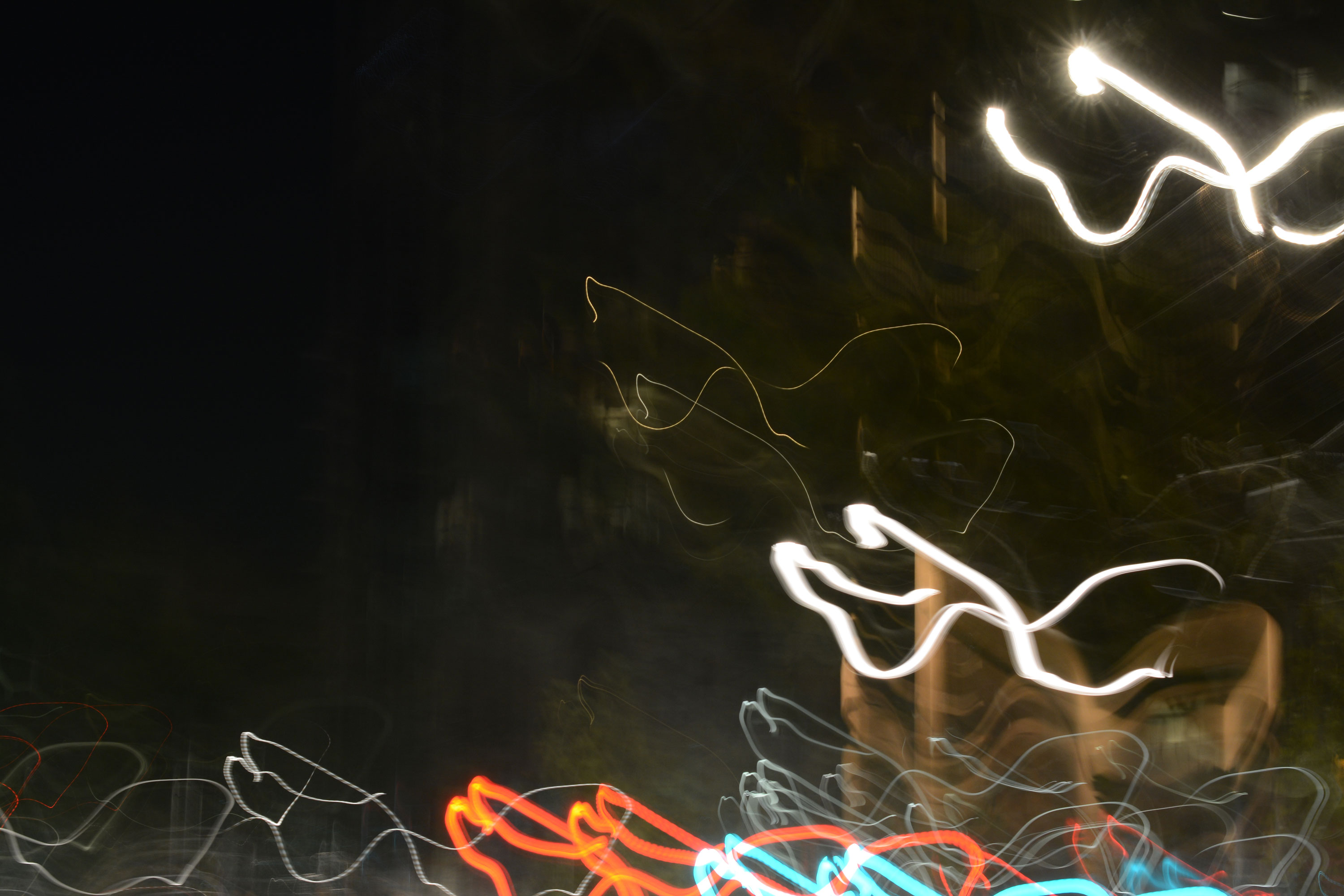
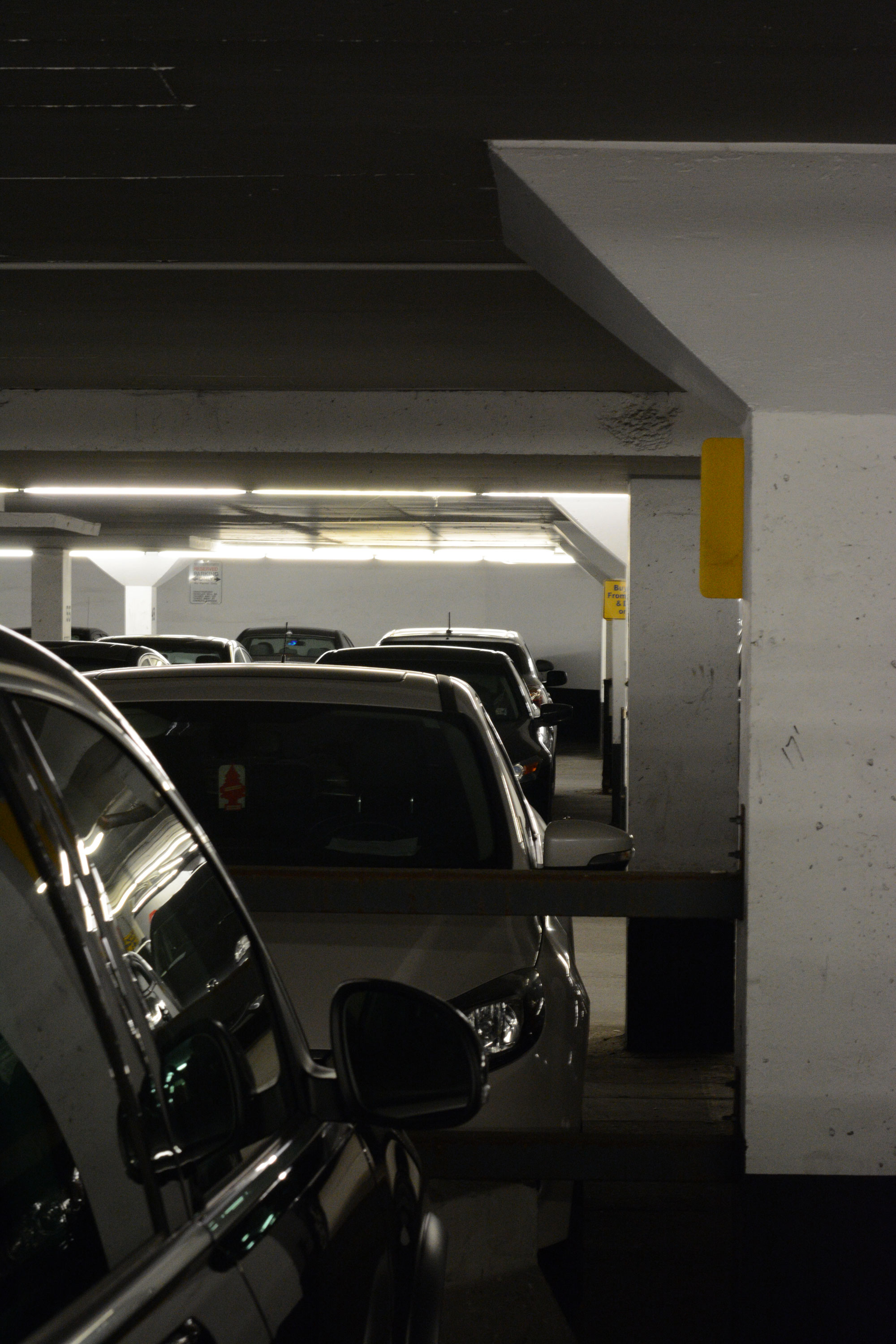
These pictures are from September of last year. At this time I’ve only just figured out the lack of proper darkness in my bedroom and over‐abundance of nighttime noise is slowly depriving me of the sleep I need each night to keep me from slipping away, but I don’t know how tired I actually am yet. Tonight I know I’m exhausted, but I understand why. Back then I didn’t. I can see it in the pictures. They feel tired. They’re unfocused. I see the lack of a solid foundation.

My photos are my notebooks and my compression algorithms. They are my bookmarks and placeholders. I write from what I feel and remember feeling when I see them. They are notes to my future self. For a while I couldn’t look at them because I didn’t like what they were saying. Now I understand I can’t pick and choose what I want to hear from myself. It works better when I just listen. What’s the point of time travel if you’re just going to argue with the past?

As I’m writing this I’m looking out over the street from my desk’s new position in front of the giant wall of glass that is the one side of my apartment. It’s better like this, without the giant couch filling the room and blocking the windows. I wish I’d done this sooner, but at least I get to enjoy the view for my last month and last weekend here. And I now know it’s perfectly possible to live without a couch.

It’s Monday night. I started this post on Saturday afternoon. This is how chaotic things have become—where I spend three days writing something and it ends up reading like the same: a little more clunky than I’d like. Normally I’ll write a post in one shot with very little editing. It all just ends up happening and I end up happy with it. I don’t really see it happening that way for this post, so I’m ending with some old writing from years ago inspired by some of the many the lasts in my life. Yes—it’s poetry. And it’s the best kind of poetry too: high school poetry.

…And after going through my computer I realize I only have a hard‐copy of this poem, and it’s packed. So—we’ll come back to that in a few days.

In the meantime…
Departures: Part I

I begin my farewell to CityPlace.

With school starting in September I’ve had to make one of those easy hard decisions. You know the ones… It’s perfectly clear what must be done—that’s the easy bit—it’s all the resultant work that’s hard. In this case it’s the easy but hard decision to move out of my apartment, a decision I needed to have made months ago, but one I am thankful I have made now. You can only spend so much time looking back at what you didn’t do before realizing the only time you’ll ever have to do or not do something is right now. As Col. Sandurz so eloquently put it, “You’re looking at now, sir. Everything that happens now is happening now.”
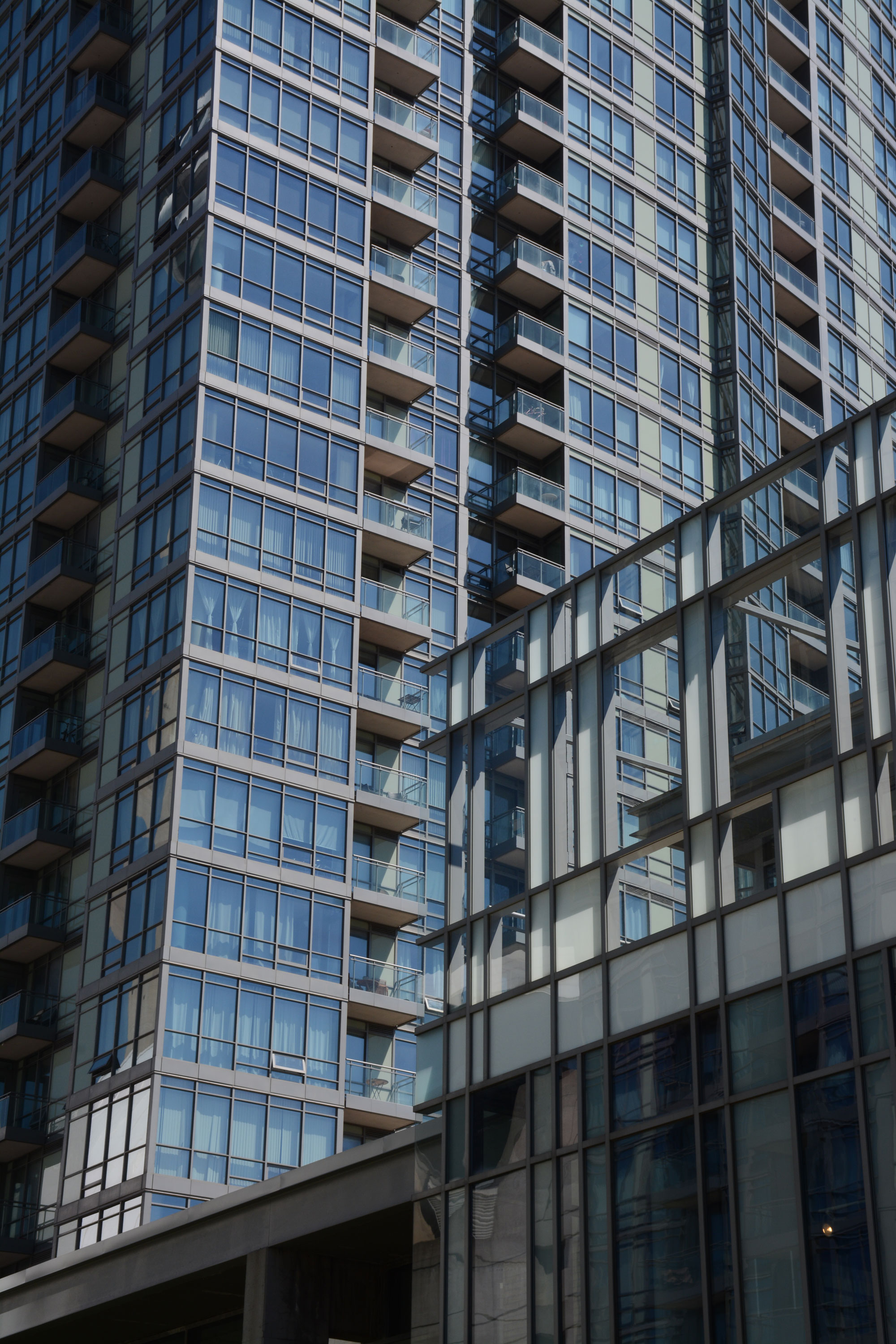
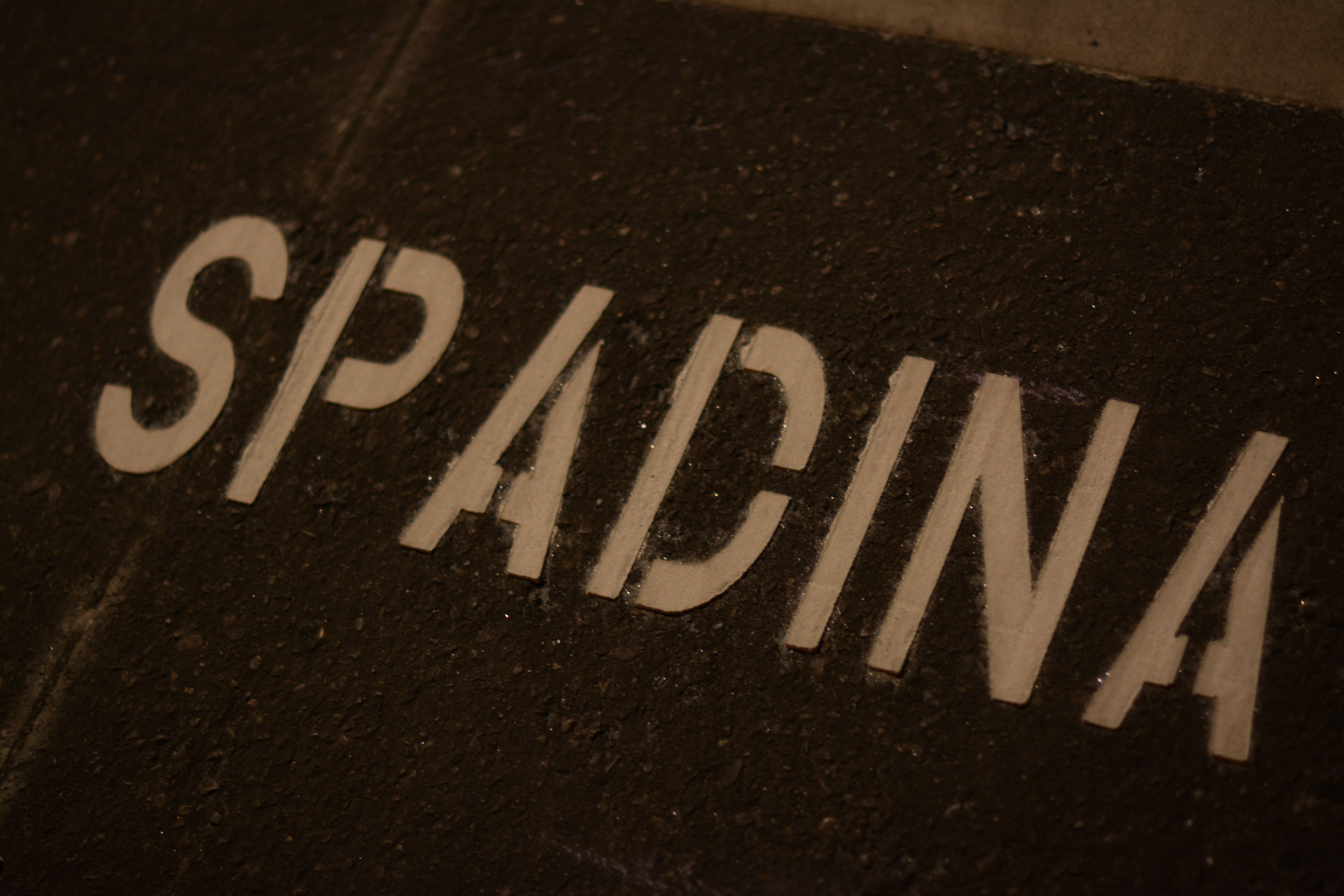
I’ve been here just over a year, here being a fourth floor apartment looking out over Spadina Ave in the largest residential development in the city to‐date: CityPlace. I read about this project while at my first job almost fifteen years ago. I saw the plans and the towers and I wondered what it would be like to live there. And here I am now having found out. Funny that… They hadn’t started building anything then, and they haven’t finished building everything now.
So what is it like to live here? In a word—loud. The noise makes me miss my house by the ravine in Scarborough. It was so peaceful. I felt like I was living right in the forest. But here my ravine is replaced with the traffic moving to and from Lake Shore Blvd and the Gardiner. It’s an amazing sight, but when I’m finished enjoying all the great cars I see from my windows, finished laughing at the hilariously terrible attempts some drivers make to get through what I’m sure is one of the worst intersections in the city, when I’ve watched the sea of fans fill the street after a Jays game, or people getting stuck in the streetcar right of way, at the end of the day, when I want things to be quiet, they aren’t. I sleep with ear plugs, and I can still hear the city.

However—despite the racket—I have loved living here. For the few things that bother me about this area there are far more things I’ll remember fondly, so in celebration of some of those things, it’s photography time! These first pictures are from an afternoon my dad and I spent last August on a brilliantly clear and hot summer’s day wandering around Roundhouse Park, South Core, and Queens Quay.

But before the pictures, some more words.

I take a lot of pictures. A lot. There are boxes of prints from my 35mm days. No one has seen them. It’s the same with digital. Gigabytes of files. And again—no one has seem them. I’ve never known how to show my photography because I’ve never known how to speak to it. I want to change that. So I’m going to start—now.

Things catch my eye and I want to capture what I see, but a lot of the time what I see isn’t the picture itself, it’s an element of the picture. Photography is often so sharp and literal, but when I look at what I like about my pictures it’ll be a shadow or form or texture or angle. I like the idea of breaking the literal image into something else—I’m struggling for the words here—but I like to derive abstract concepts from the literal form captured by the camera, to reduce the image into shapes and colours that just are and no longer represent what we see them as.

Pause as I notice the time—12:21am—and realize I still have three hours before I even need to think about going to bed. I love my afternoon work and night shift. I get to be creative during the day, work at night, and eat and sleep between in the gaps. And I get to finish this post.

I remember where my head was this day back in August—and it wasn’t anywhere good. I was unhappy at work. My job was unfulfilling, frustrating, and in hindsight, the working environment was abusive. I felt worthless despite knowing my worth. I wasn’t sleeping properly as I’d not yet started using the ear plugs, and again, in hindsight, I was forgetting who I was as a result of fatigue, but didn’t know it at the time. I thought it was normal to feel yourself fading away…

I look at where my head is at now, so far from where it was then, and I am happy to have made my easy hard decision to move. I’ll have more to say about my new neighbourhood in coming posts, suffice it to say it follows a rule it seems my places of the past have followed, and that’s I pass by them for years and then I’m living there. I’ve walked by this house so many times. I’ve walked through this area and wondered what it would be like to live there.

Actually—now that I think of it—my place now does not follow this rule. I’d never regularly be down in this part of the city before moving here. Maybe that’s why it never really felt right unpacking. Maybe that’s why my easy hard decision was actually easier to make than I thought it would be. Maybe all that time I’d been kept awake at night was by the noise of dreaming someone else’s dream.

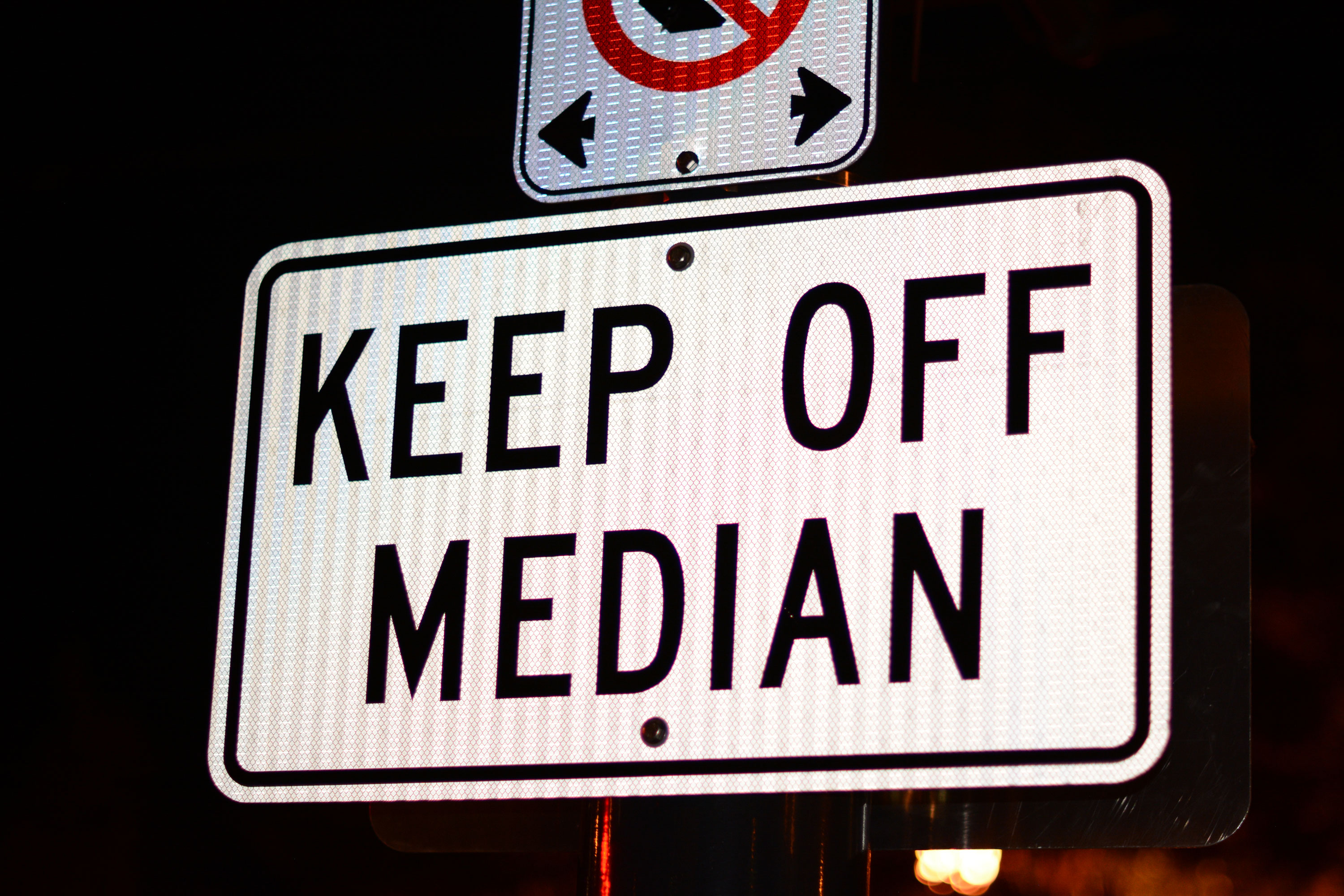
I give you CityPlace.

Copy Cat

What side of the door are you on?

The post from the other day was fun. I had no idea we’d end up were we did. Just write, and I did, and I ended up with new insight into a project I’ve been struggling with for the last couple of months.

Today’s insight comes to a project that’s over ten years old that I’ve never been happy with, and even at the end of this post, I’m still not going to be happy with it. Such is—as I’m told—the creative curse. Firstly—nuts to you. Anyone telling me anything is just the way it is because that’s how it is, is, in my opinion, partially wrong. Statistically the best they will ever be is almost right most of the time. Secondly—I’m not sure the creative curse applies when you’re trying to copy something someone else has done. By then it’s a commentary on the actually somewhat hilarious juxtaposition of the pride in your own work against knowing you could have done a better job ripping off someone else’s.

About a million years ago I was in a photography course during my first year of college. As part of an assignment we were to select a photographer from a website and then select a photo of theirs to attempt to copy in as many ways as we could—composition, theme, subject, whatever. It had to be as close to the original as we could get it.

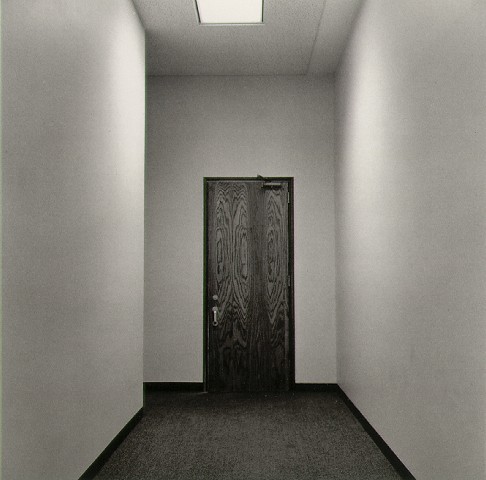
I was a bit of an ass back then, so I picked what looked like the easiest one from one of the first photographers listed: an untitled piece by Robert Adams. It’s a door. A door in Denver. And you can look at it on—I’m not joking—the exact same webpage I found it on a million years ago. Nothing has changed, not even the page where you can order a CD-ROM version of the site for… wait for it—$50USD. I’m not sure what’s funnier: the price itself or that for the price you get a CD-ROM sent to you in the mail of the site you’re already looking at.

Okay—so maybe I’m still a bit of an ass. Irregardlessly, a door is a door. How hard could it be to find a door at the end of a hallway, snap a picture, get it developed (remember this was a million years ago when that sort of stuff happened), scan it, slam it into Photoshop, crop, convert to black and white, punch up the grit for that low light, high ISO seventies interior chic, and be done with time to spare? I didn’t think it would be hard at all, so I put my time to spare at the beginning of the project and did other things ever-confident my low hanging door would be only a hallway away.

Turns out no such door existed in my halls. Ever-confidence was replaced with real-panic and I did a slap-dash copy cat job with no processing of what looked just like a door at the end a hallway yet somehow, impossibly, looked nothing like the original. Like a good racecar driver I’m going to start with blaming the equipment. At the time I would have been using a Canon AE-1 with a fixed 50mm lens which meant by the time I was far enough away from the door to get the floor and ceiling in the shot the door was way at the end of the hallway. Then I’ll blame the conditions, saying there wasn’t time for proper processing of the image. Then I’ll blame the track, saying I’d have been better off picking an Ansel Adams.

adamsUntitled pfDoor1

I did get an 80% on the assignment. Not bad—but I know I could have got a 95% or more if I’d put real effort into it. I don’t like knowing I could have done better. I’d much rather know I did my best and have that be the end of it.

So now I’ve got this original door looking back at me. And the more I look back at it the more impossible it becomes. I must find this impossible door. But where does one find something so desolate? So devoid and yet so contrived at the same time. It looks perfect, but there’s not a single piece of symmetry in the entire composition. Everything’s just a little bit off. It’s gorgeous in its visual dissonance. Beautiful in its offensive ordinarity. I hate it. And I must find it!

It’s now last year, a million years later, late spring, and I am walking down a hallway toward the door to the office I’m pretending to work at. I don’t like pretending to work there because at the time I think I actually am working there. As I walk I’m wondering why the company feels so desolate, so devoid yet so contrived. It looks perfect, but everything’s just a little bit off. I hate it…

Then I see the door.

adamsUntitled pfDoor2

I like to think I nailed the door. But this is the part I told you about at the beginning of the post where I say I’m still not happy with this project. I’m not. It still doesn’t look right. It’s just a door. How hard is it to find a door?

So I look again at the untitled door in Denver. And I see the door is only half of the picture. The rest of it is the hallway. The hallway is what makes this picture feel the way it does. It’s the hallway creating all the discomfort, all the dissonance. The door is perfect. It’s the only thing in the picture that is.

And then, for the first time in all the times I’ve looked at this door, I see a sliver of light coming from behind it. It’s actually open a little tiny bit. It’s been open all a long. All these years I’ve been looking for a closed door at the end of a hallway when it turns out I’ve been inside the room the entire time, a room I can leave and lock behind me. The hallway is beyond.

The door I’m looking for leads out—not in. And… it’s already open.

Road Trip

Focus—everything can become one thing with or without it.

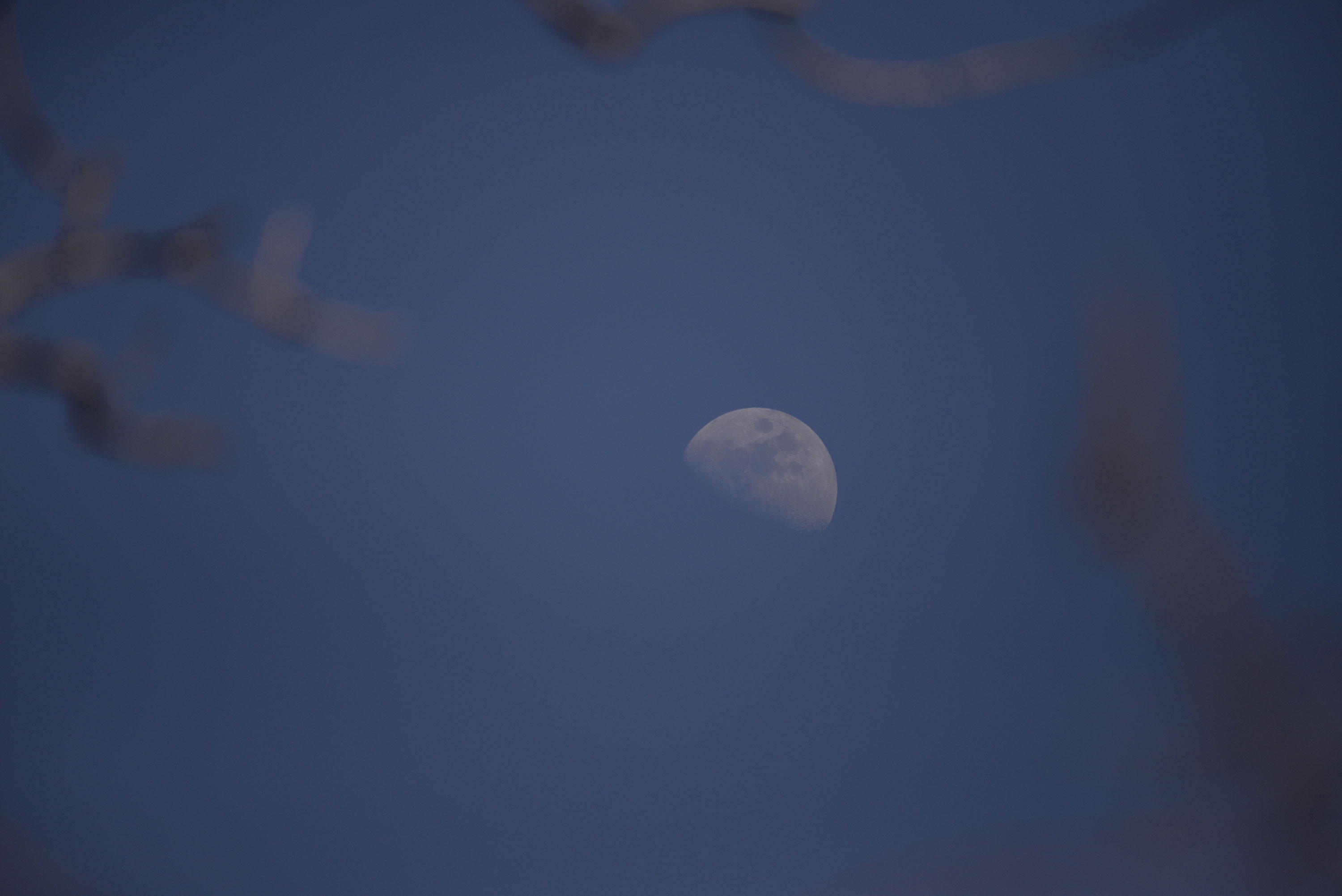
First off—the featured image is my new current favourite picture. I’m sure you recognize it, but it’s the first picture I’ve ever taken of the moon that’s looked like anything other than an over-exposed white circle in the night sky or a grey smudge in the day sky. It looks just like something I’d imagine the moon would look like. Just like in the books! No joke—there were goosebumps, heart skips, butterflies, pretty much all the cliché possible, existing in and on me when this image jumped into focus. I’d never been so close before. It was the best kind of awesome.

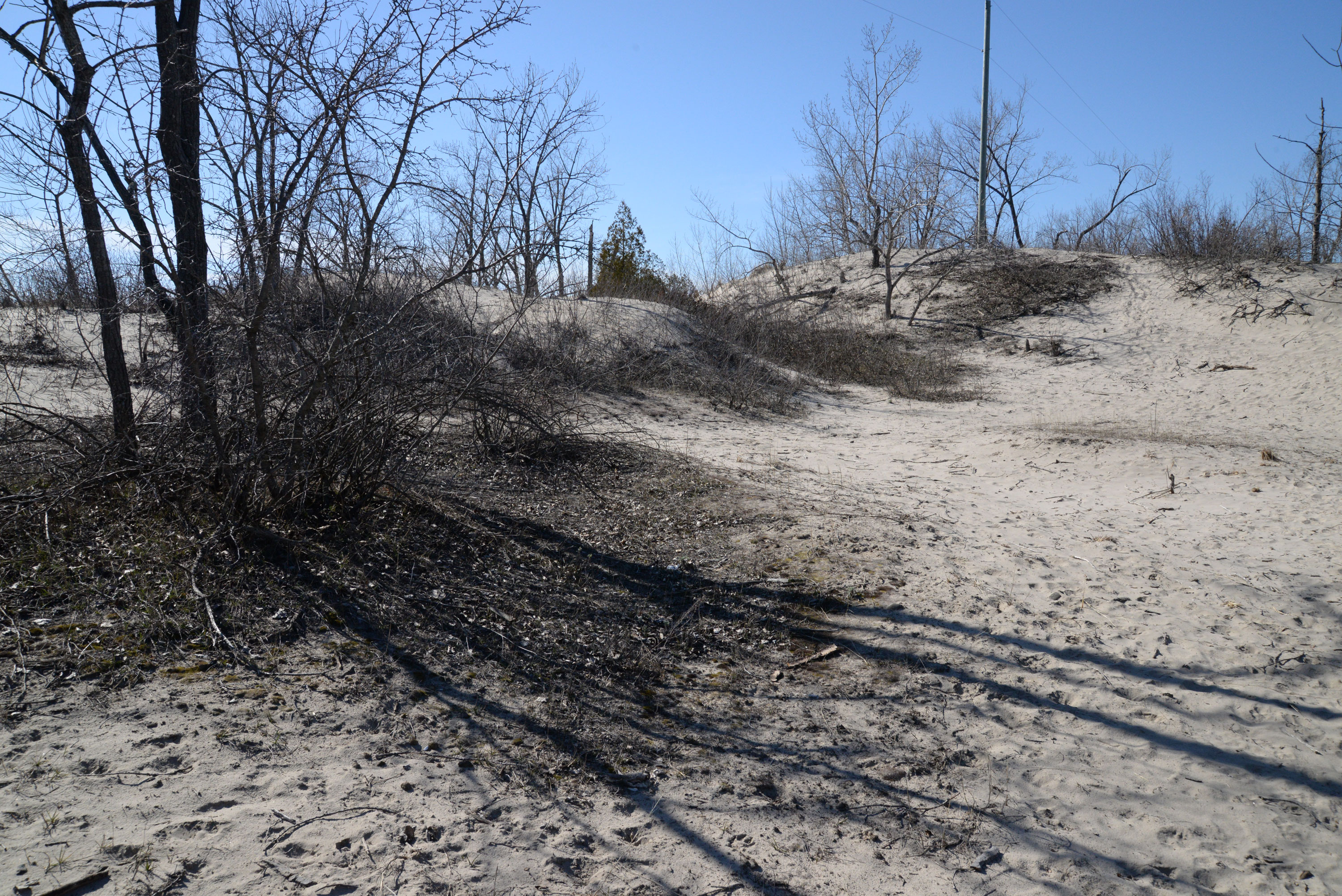
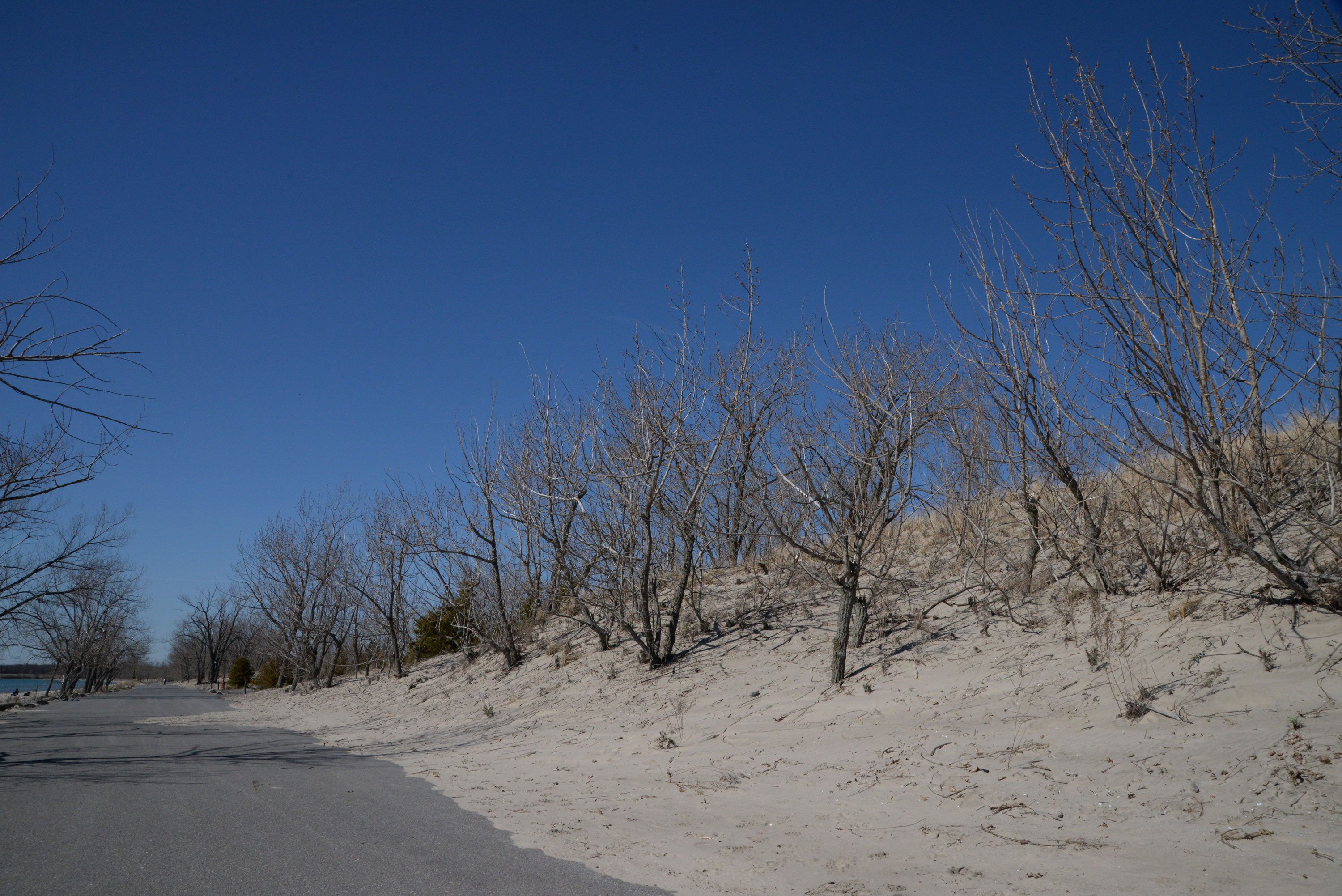
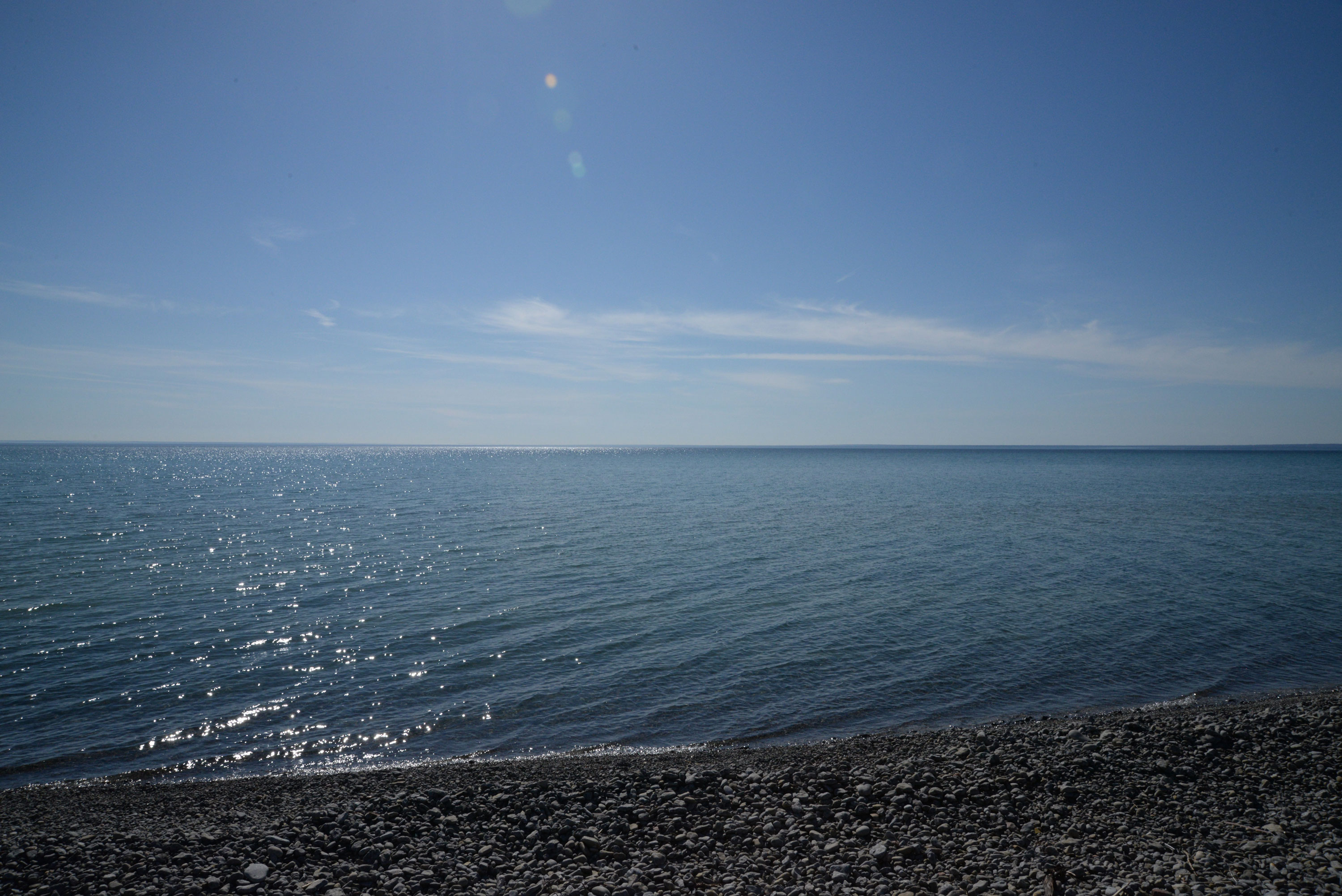
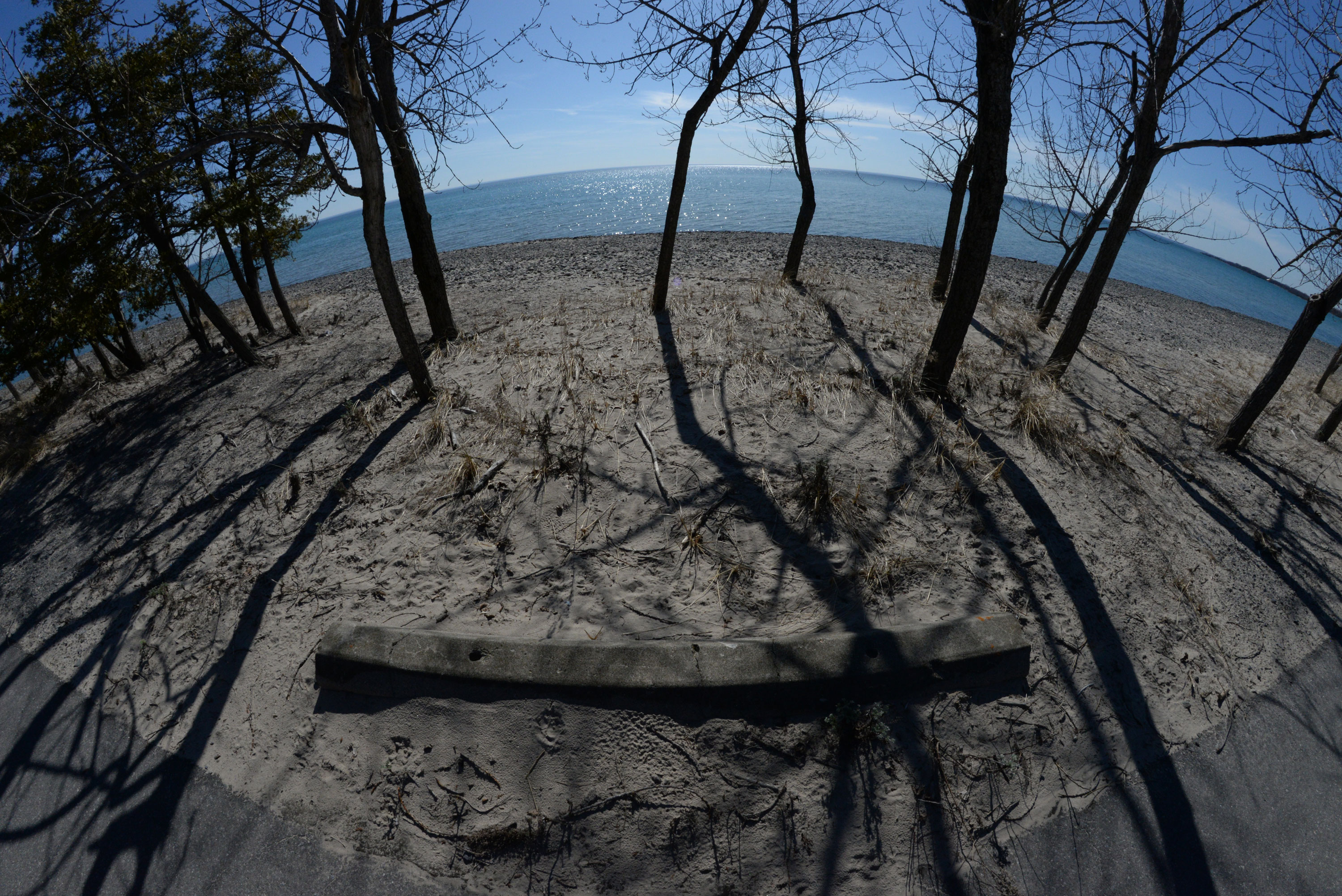
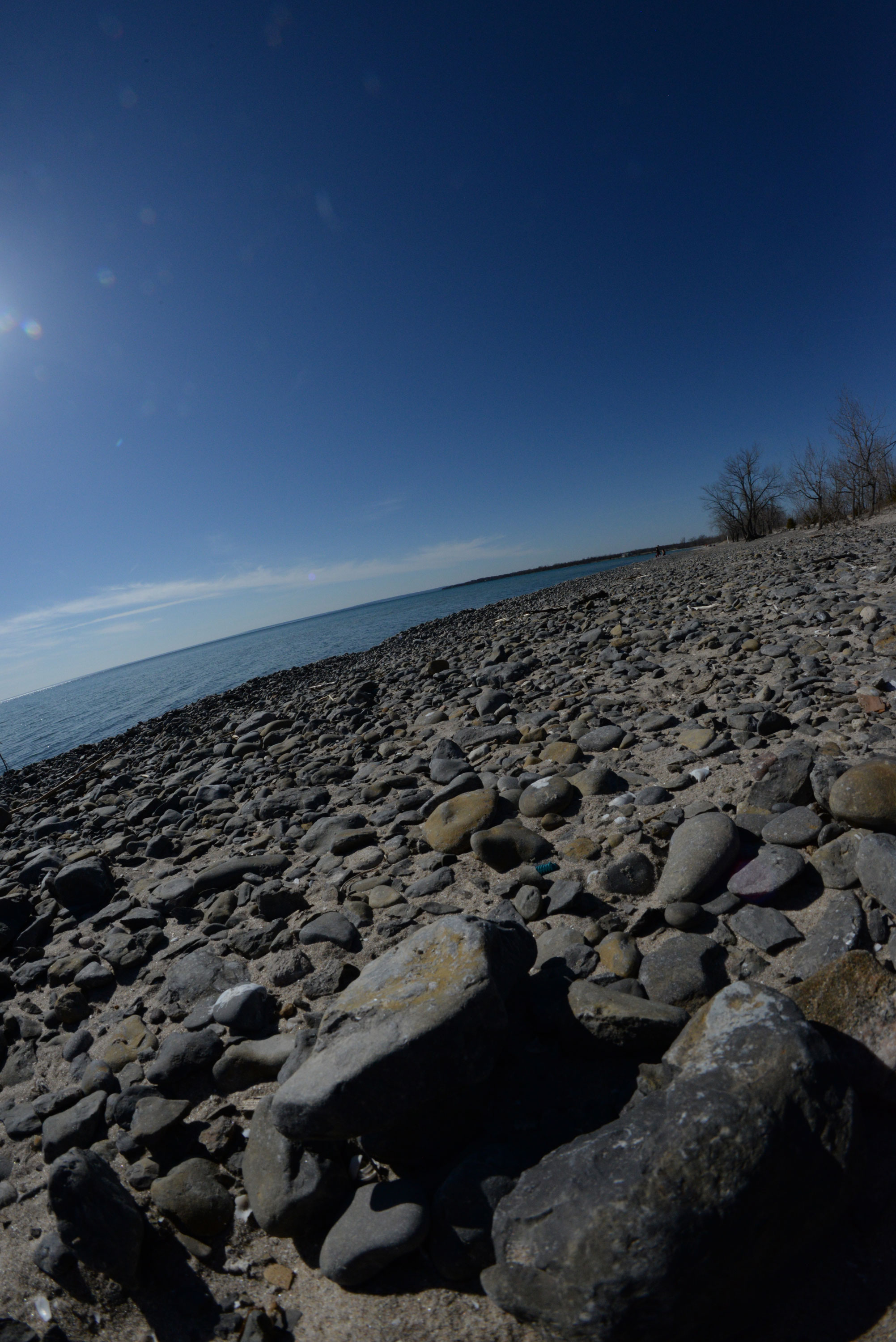
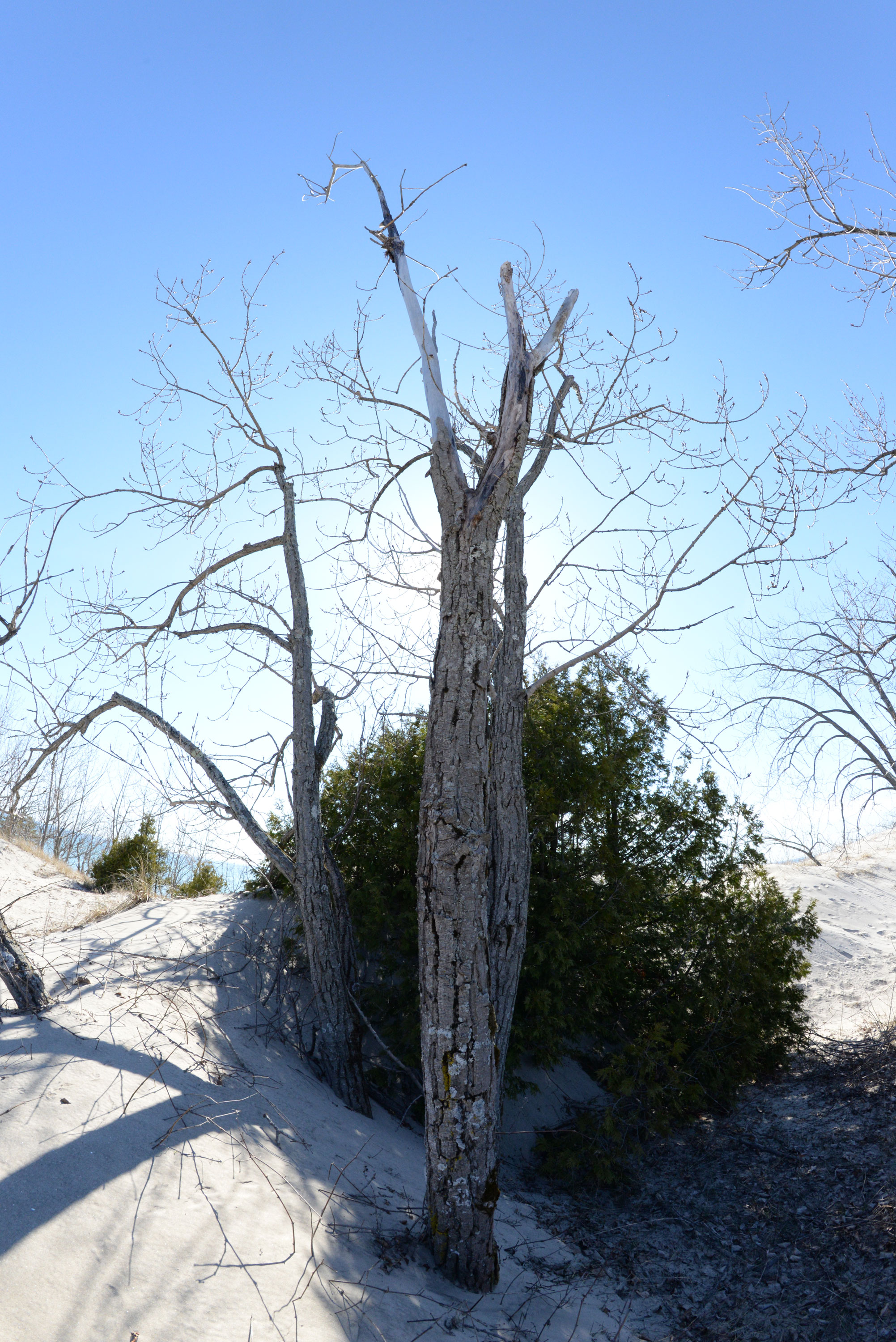
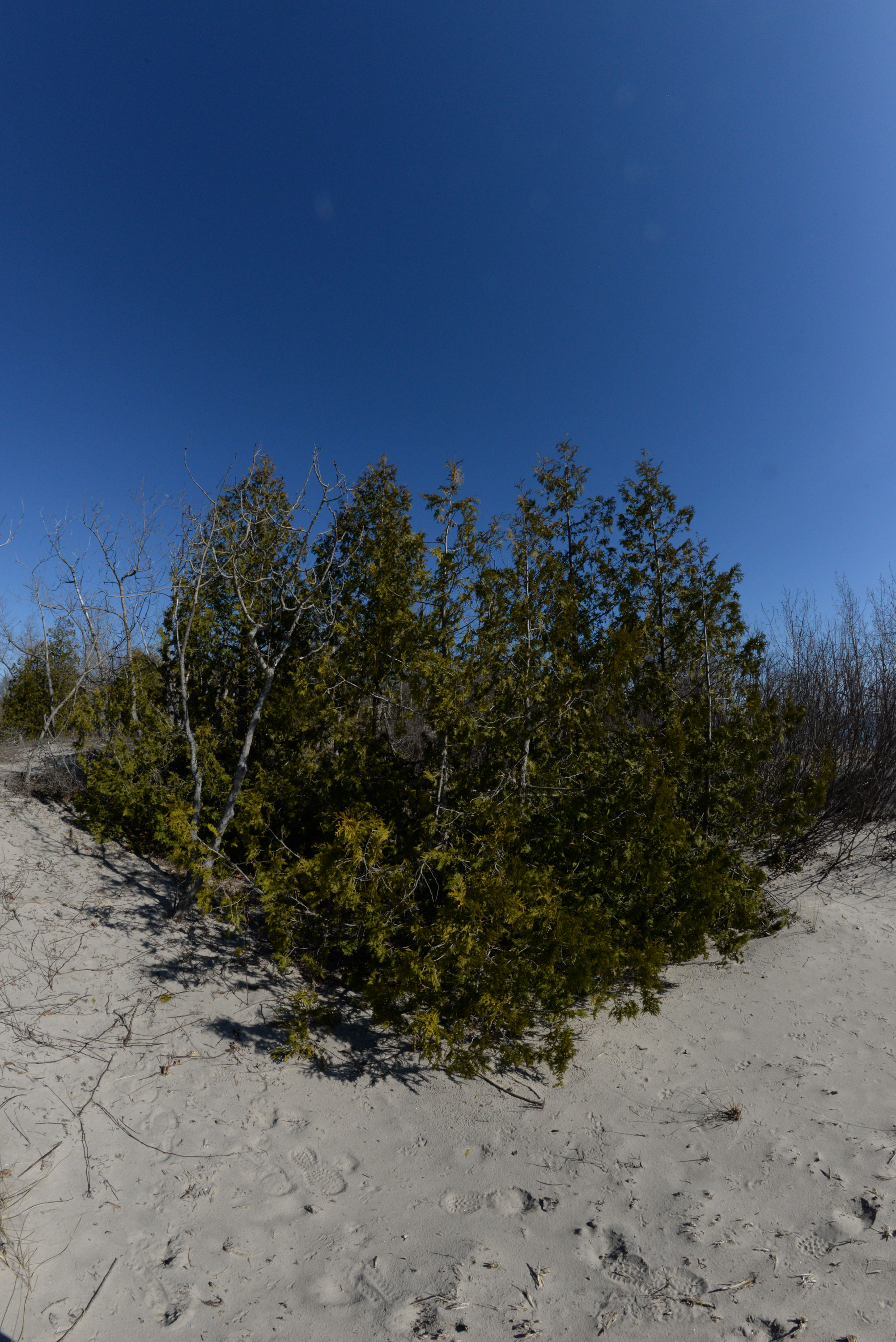
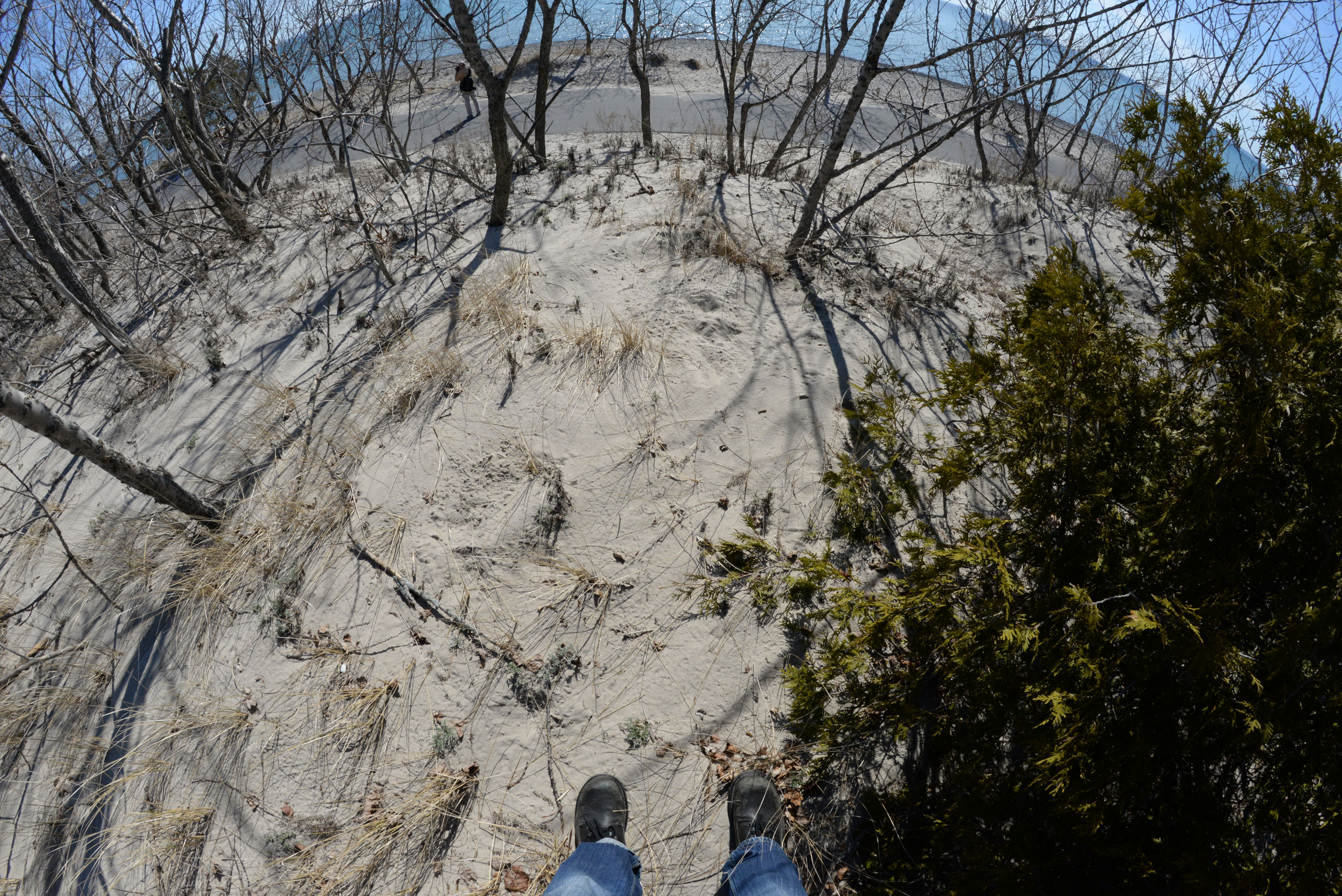
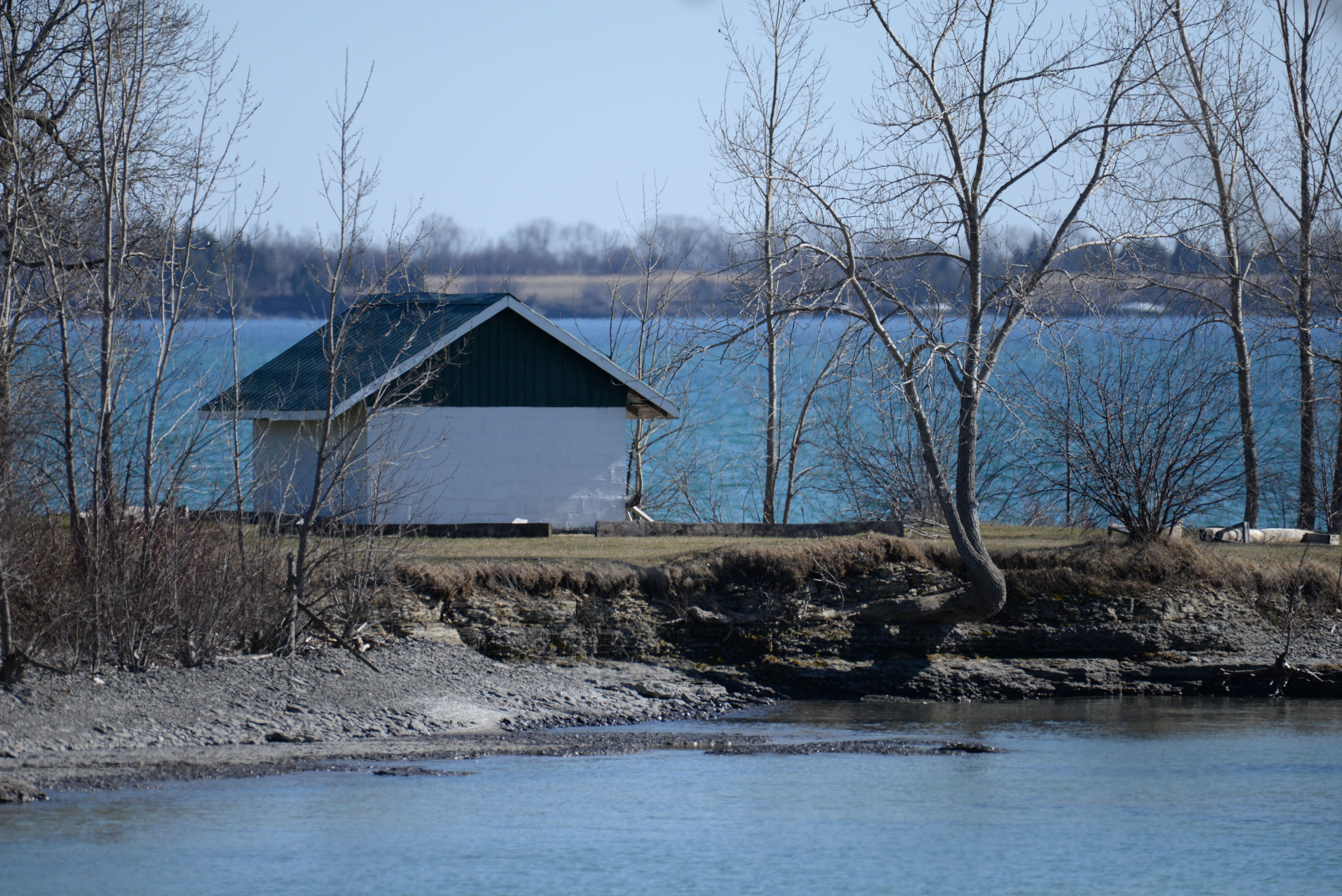
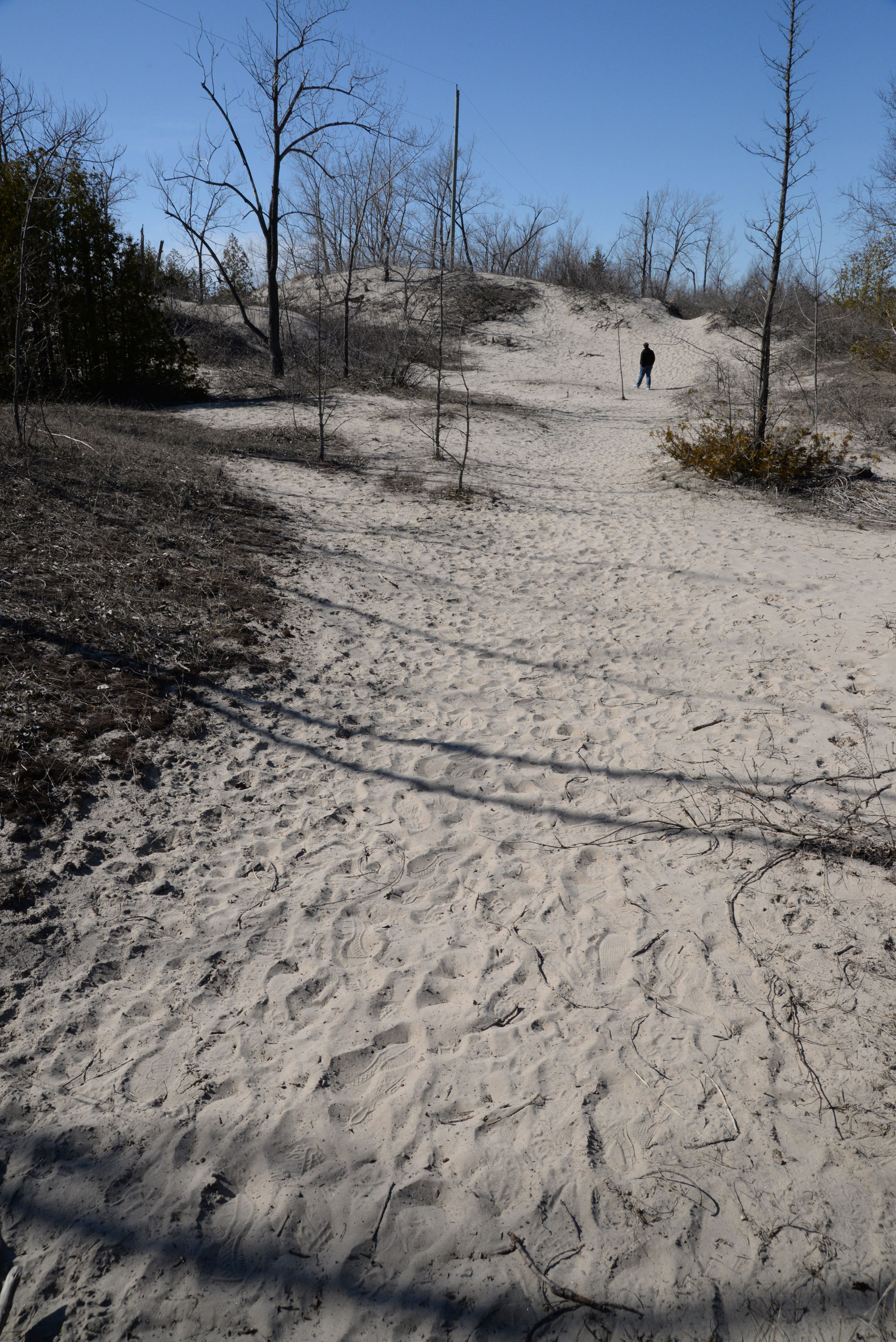
This is the moon as it appeared last Friday afternoon. I joined my younger brother and our parents for a little road trip to celebrate the long-awaited arrival of their new car—a slick Subaru Outback 3.6R—and it’s a great road trip car: powerful, comfortable, and the stereo is also a GPS. Before heading back to the city we stopped at a small provincial park by the lake to enjoy the beautiful and near-impossibly warm spring day.

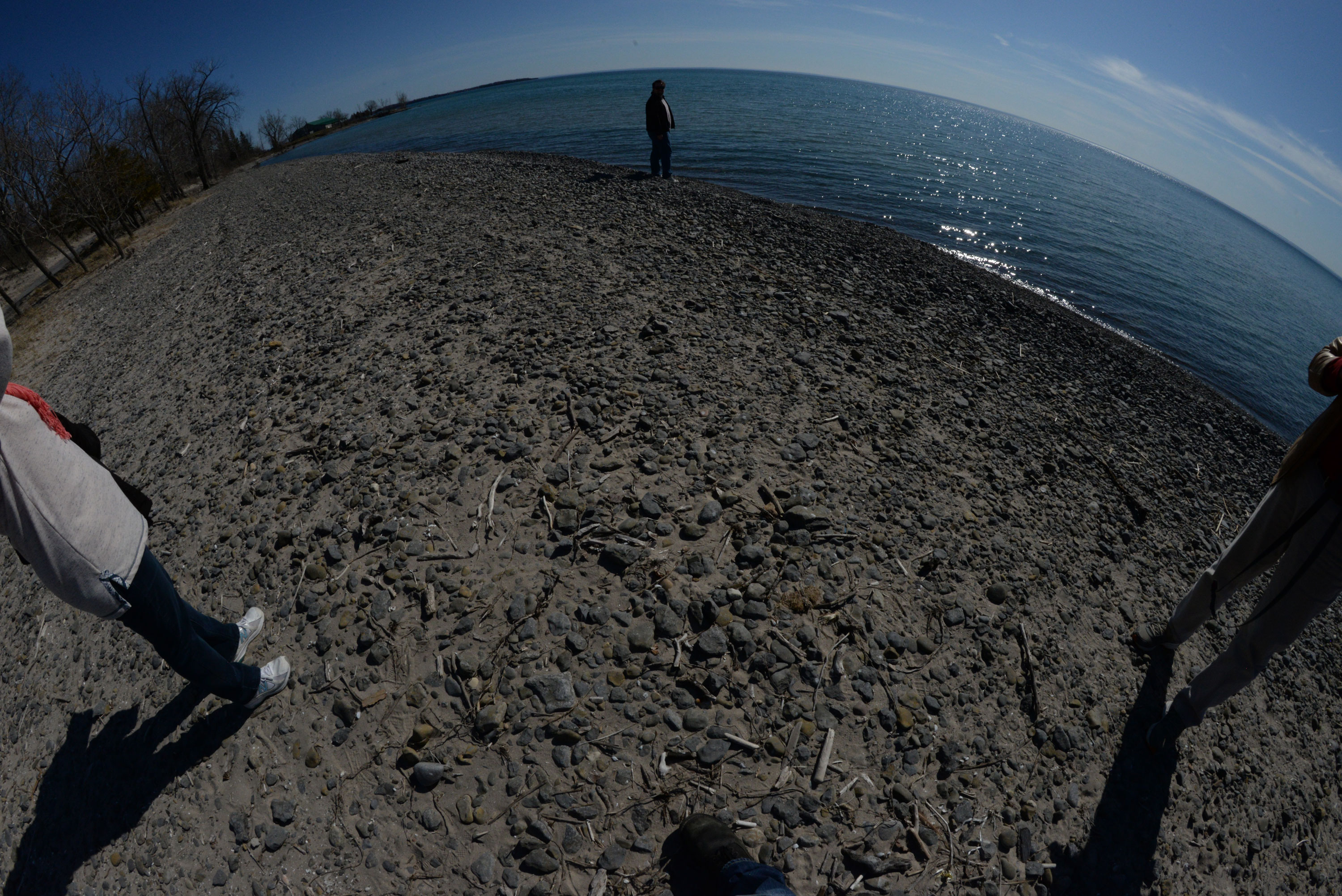
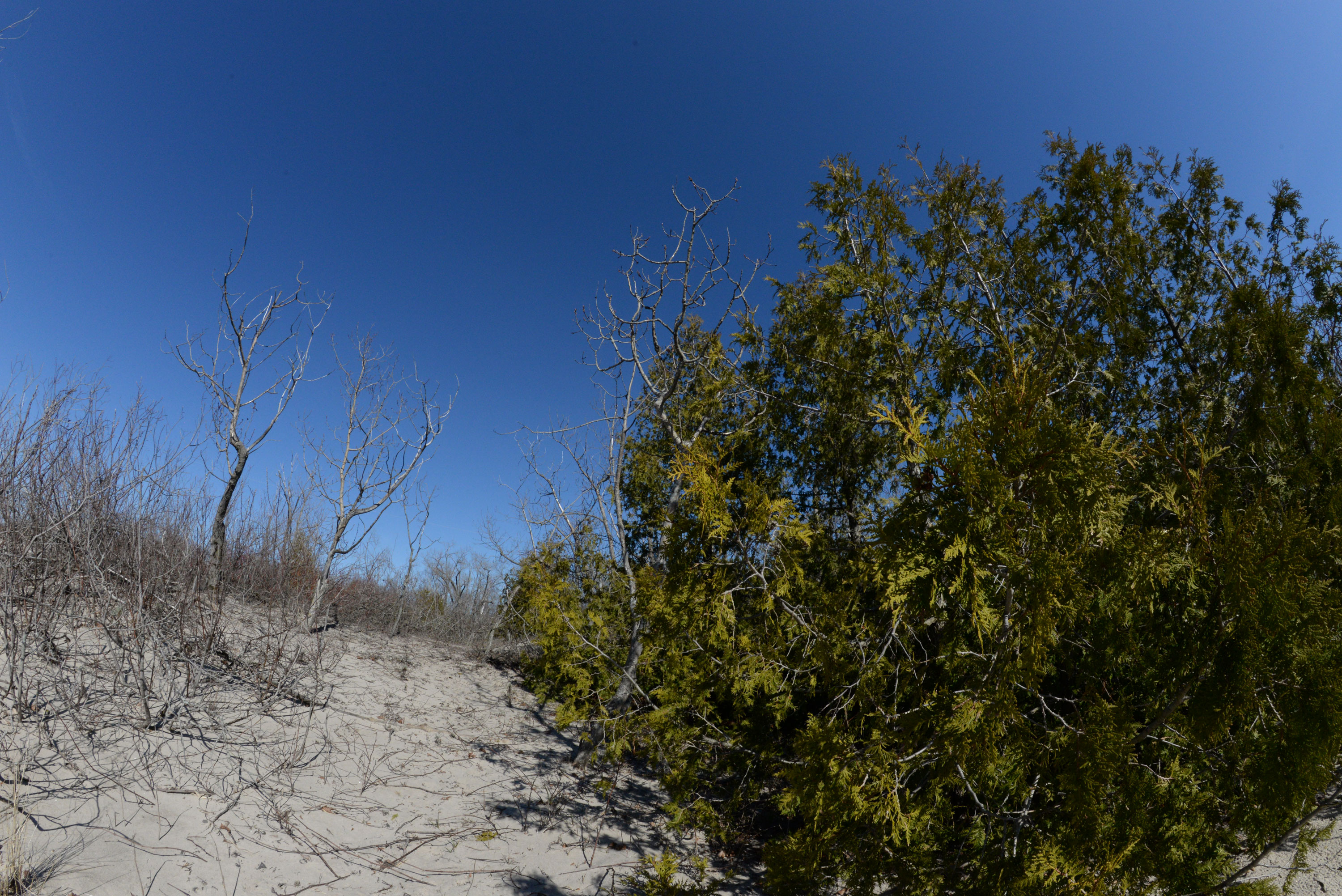
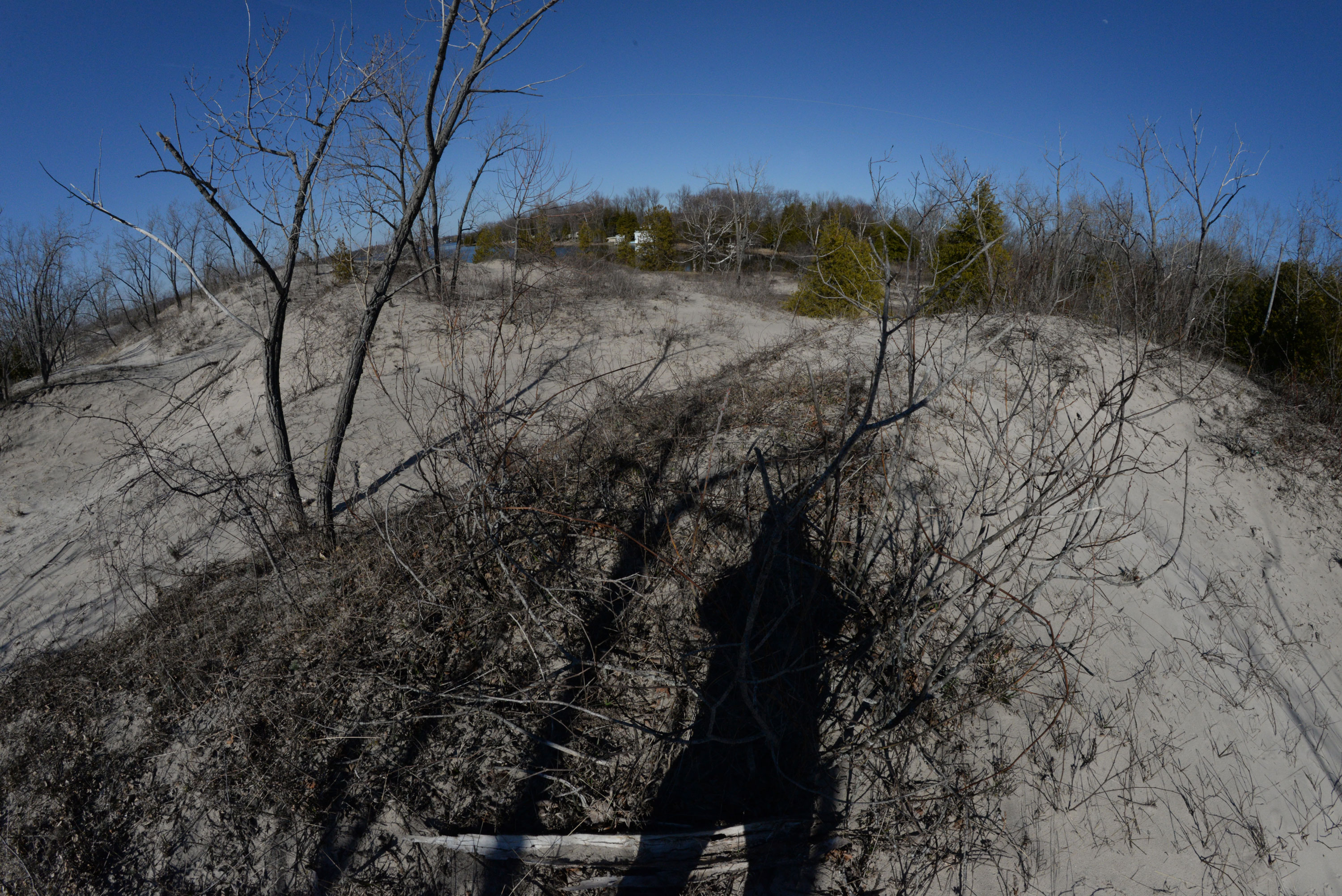
My dad lent me one of his digital cameras while we walked around. I’m still having to relearn a little photography as years of cameraphones have made me lazy in some ways, yet incredibly capable in others—particularly when it comes to working with limited exposure settings and at the edges comically distorted short lenses.

I started off with underexposing everything. The sun was blaring overhead, there was barely a cloud in the sky, and we were at the beach. There was too much light everywhere, and even though the camera knows this, I always tell it to assume there is even more light than there is because there usually is. There was also too much everything everywhere. Yet there was nothing I could seem to fit in the camera—I problem I often have if it’s been a while. I tell myself I’ve lost my eye and am blind to simple truth of photography: take the picture. It was Zoo Signs all over again!

I change lenses three times, moving from a wider angle to a fisheye to the longest lens I’ve ever used. And the nickle drops: focus. My cameraphones, as fun as they are, have altered my view. I’ve lost my sense of depth, the ability to focus on a subject amidst a busy field of vision to the exclusion of all else. My last few years of pictures have been flat and without focus despite appearing not blurred. A curious realization: Am I’m seeing everything and missing just as much as I do?

I like the fisheye, bending reality back onto itself—I always get a kick out of it. HAL-vision I like to call it, for the days when I feel like a neurotic computer from the past future. I’ve used the lens before—it’s fun.

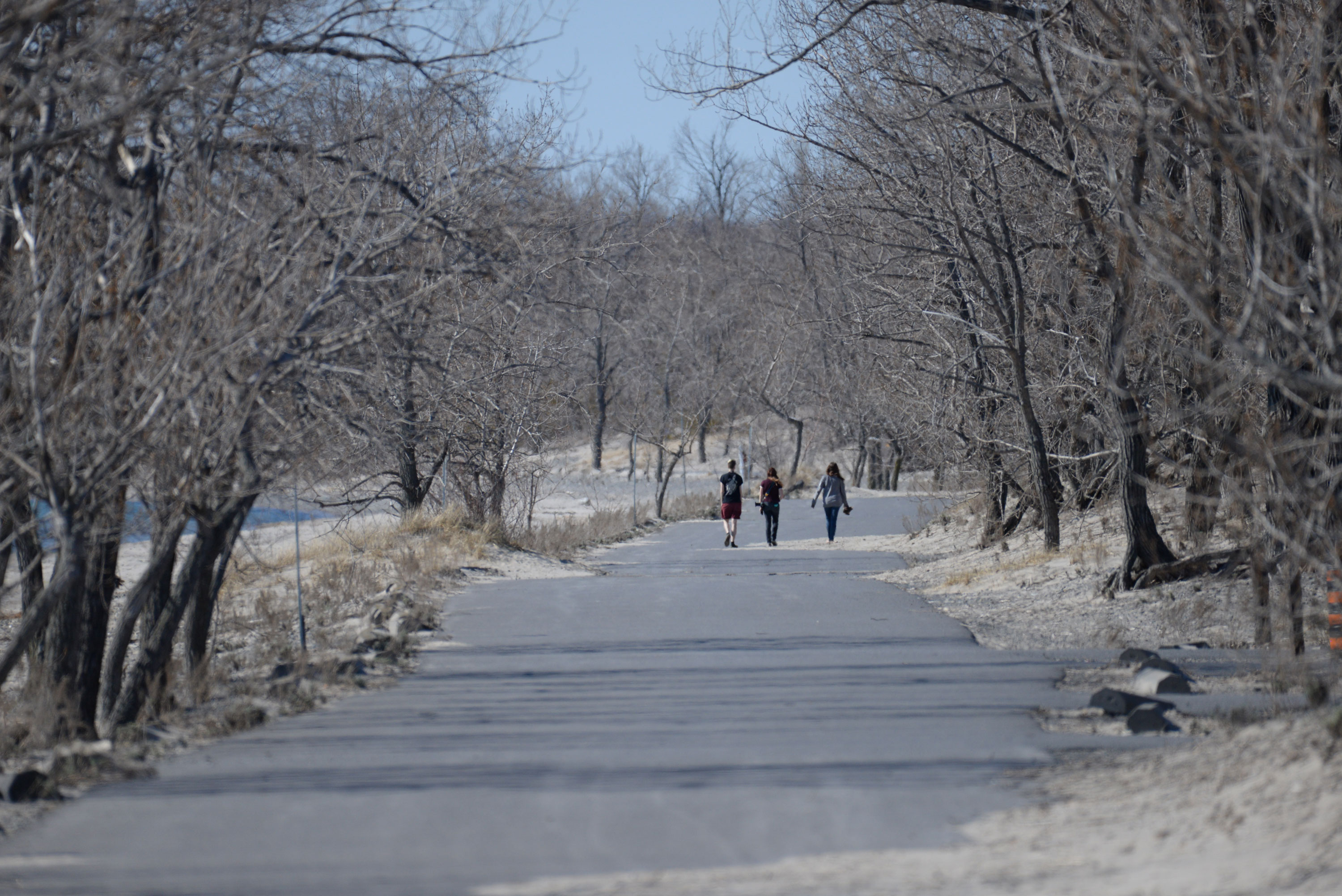
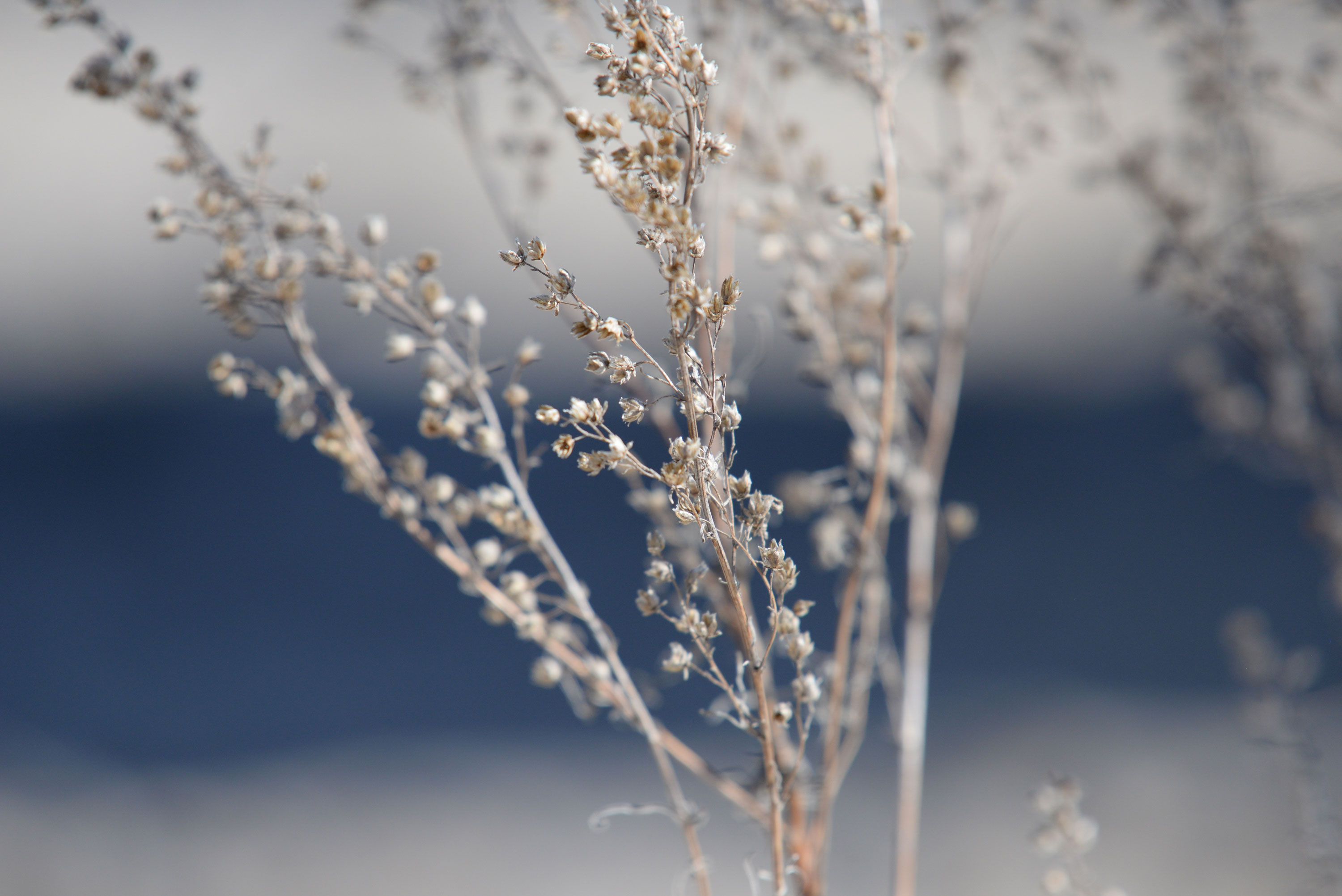
But the long lens—a 200-500mm zoom—is a new animal to understand. On a DX sensor camera it multiplies out to around 750mm. Plus it’s fast. And you can get so close from so far away. Too much depth is replaced with too little until you realize that’s the point. It’s a sort of intimacy at a distance, as if a lens could be lonely. And it’s only until you get even closer do you realize the loneliness is just a trick of the eye—a consequence of an immensely shallow depth of field. I’m in love.

As we’re wrapping up my dad has a surprise: a teleconverter for the 500mm lens which on the DX will give it an effective length of about 1275mm. I decide in the moment I’ll use it to take exactly one picture of the moon—to me it’s special to be able to look at it so closely, and I’ve always found the moon out during the middle of the day to be a little magical as well. Why not? It’s usually a night gig.

With my featured picture photo now taken, and my family’s road trip finishing up, it looks like we’re headed back to where we started—but I’ve always figured the sign of a good road trip is not to be where you were when you began even though you come back to the same place.

Photography & Jollie

I see another side to one of the most hyper-active dogs I’ve ever known.

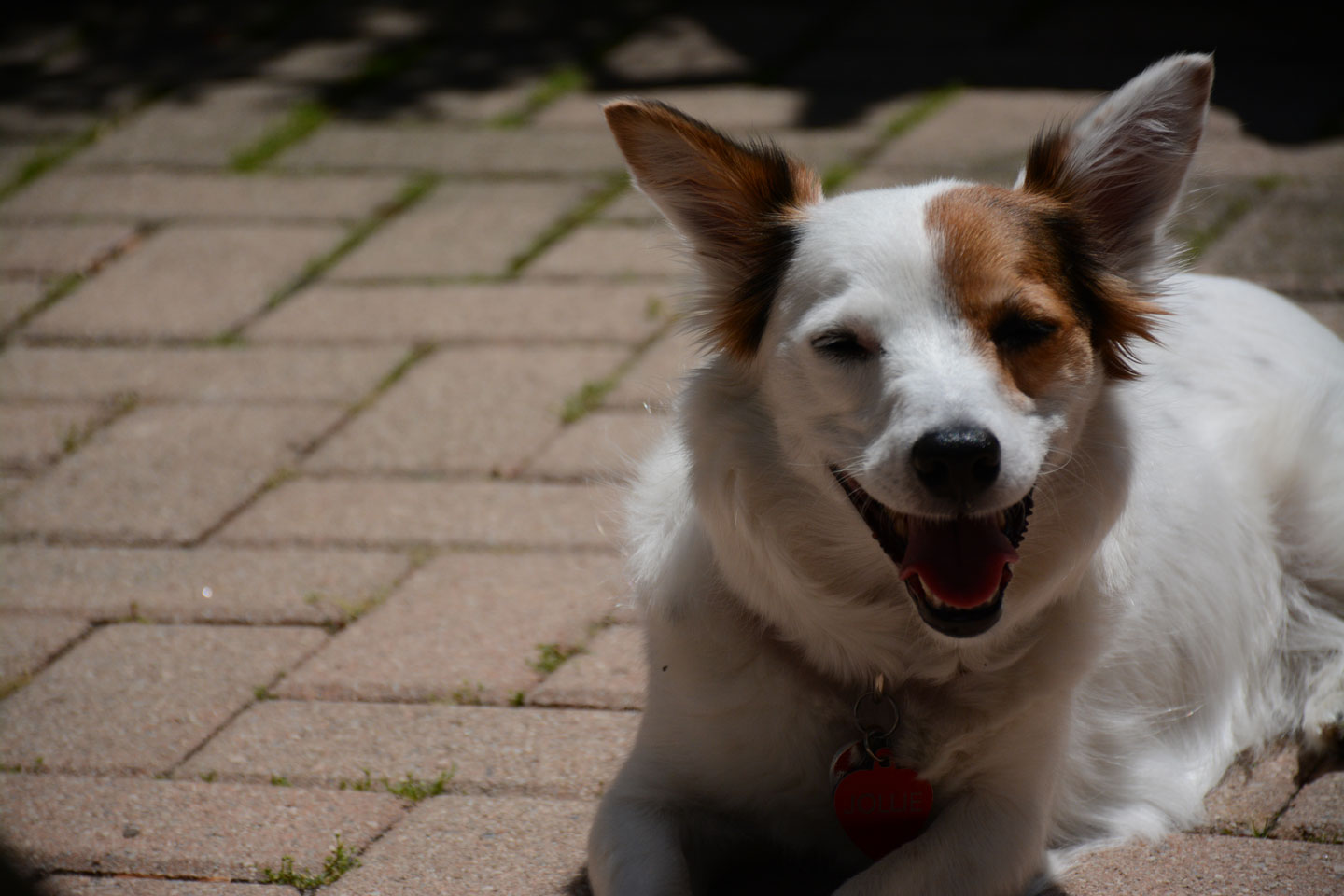
This is Jollie.

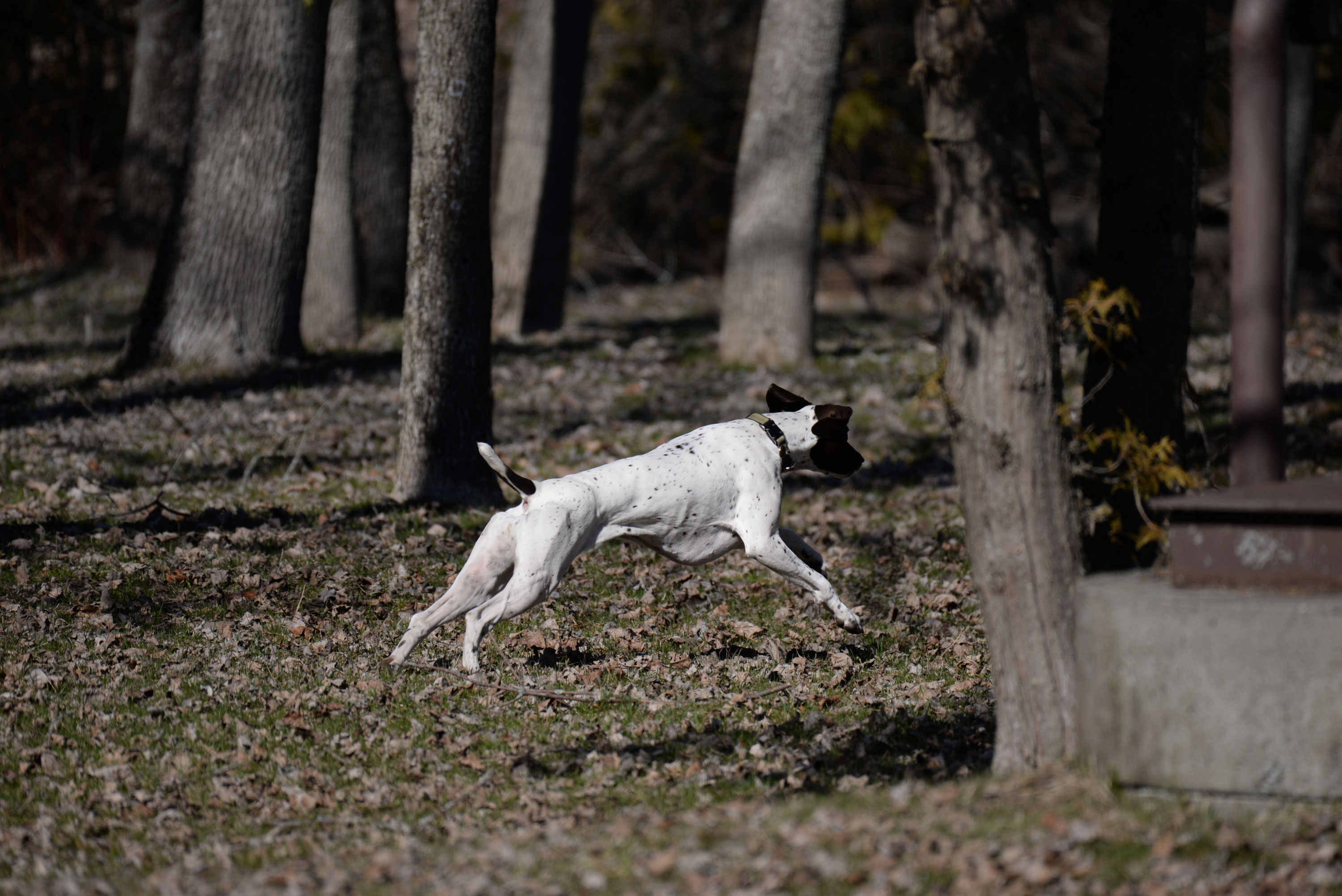
She’s a Border Jack—a mix of a Border Collie and a Jack Russell Terrier specifically bred for the high-energy dog sport of flyball, and she does her namesake and breed proud. Jollie is a immensely happy creature, too happy for her body to contain at times, her excitement boiling over into frantic barking and anxious trembling. It doesn’t make any sense until you see her run. She runs fast and deliberately, with clarity of purpose.

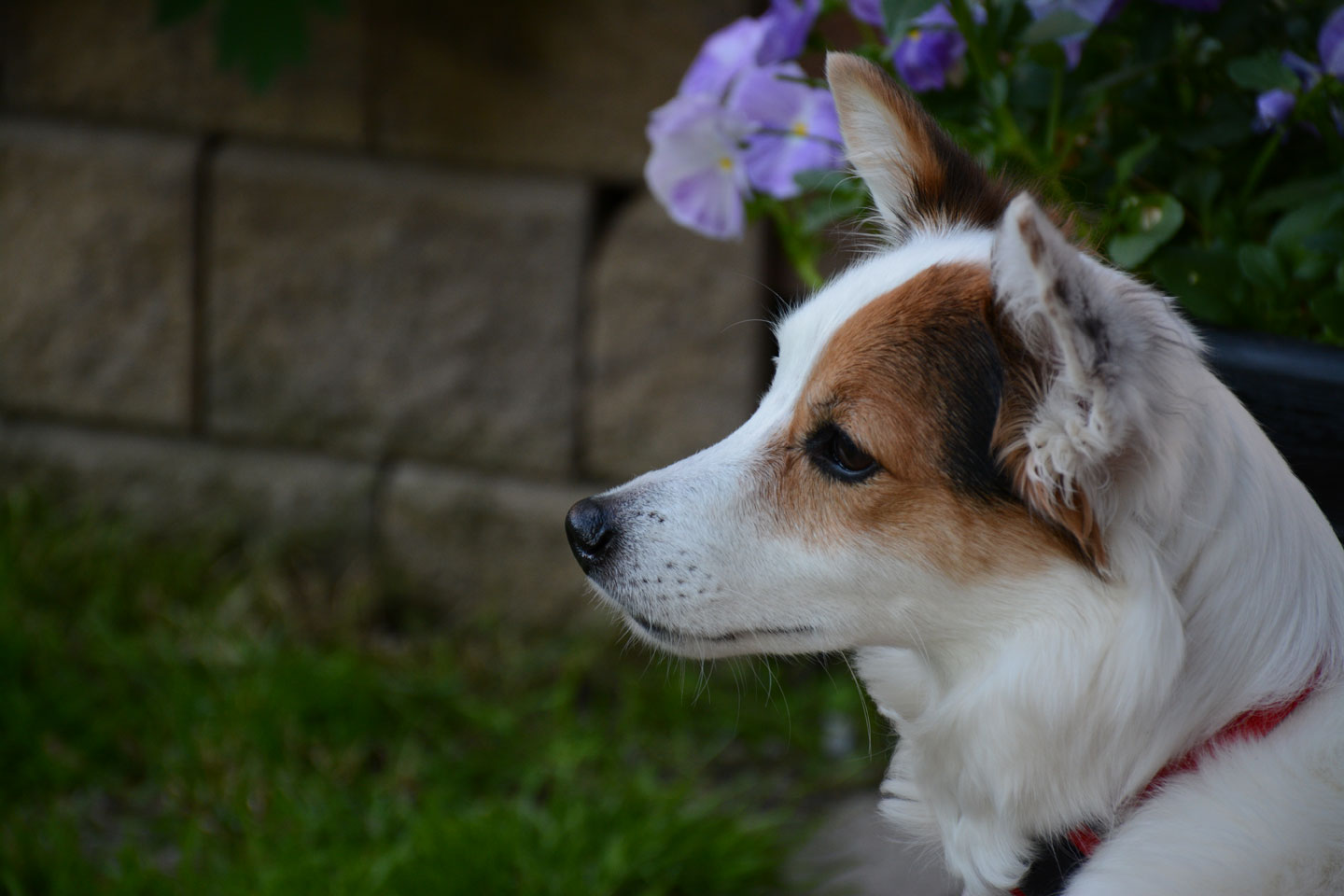
Photography has this way of slowing things down. It’s one of the things I love about it. It can suggest chaos beyond anything imaginable, but still only one moment at a time. It can also capture what we also might miss otherwise: a moment of tranquility amongst the chaos, a perspective we are rarely offered.

This is also Jollie.

B47_8121